Artwork
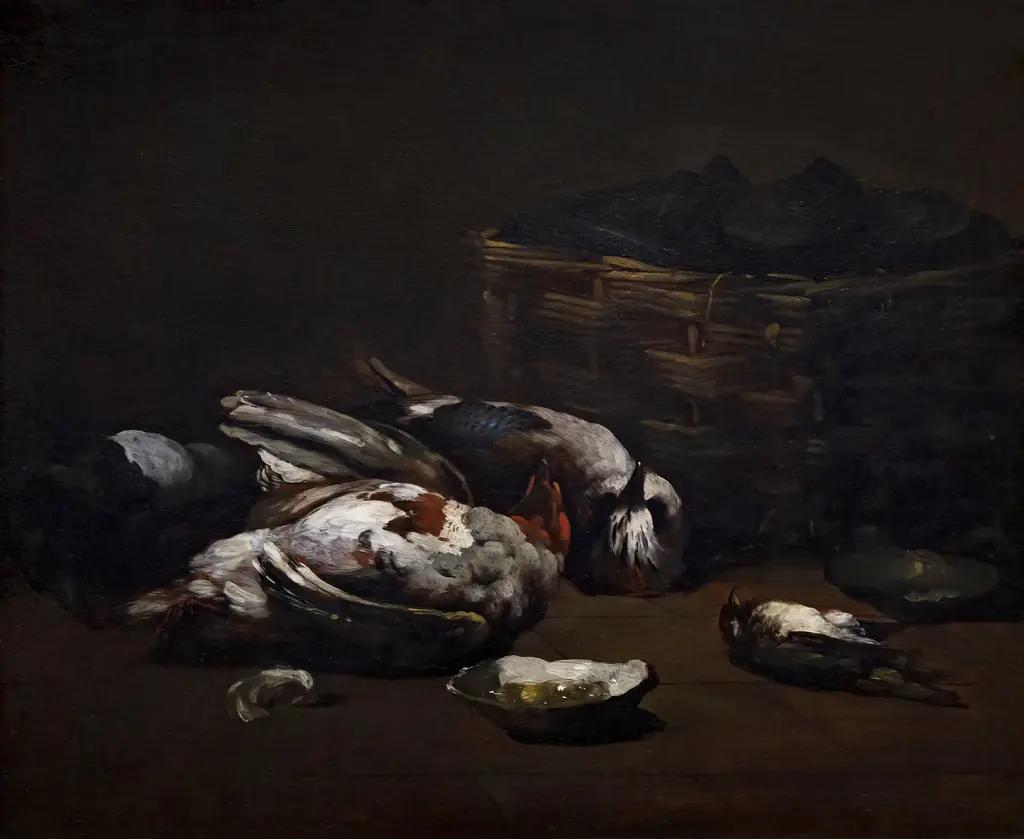
Still Life with Dead Birds and a Basket of Oysters
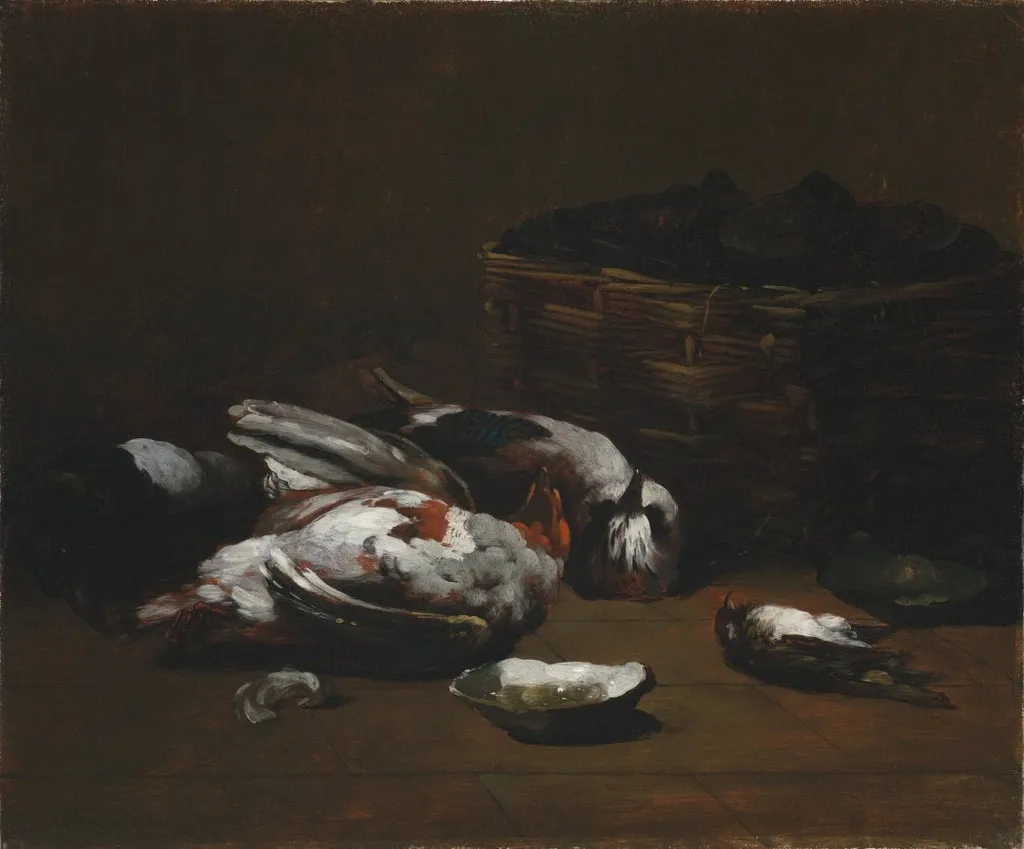
Still Life with Dead Birds and a Basket of Oysters is an unspecified painting by the Impressionist artist Germain Théodule Clément Ribot. It dates from 1870 and is held in the collection of the Cleveland Museum of Art.
About this work
Overview
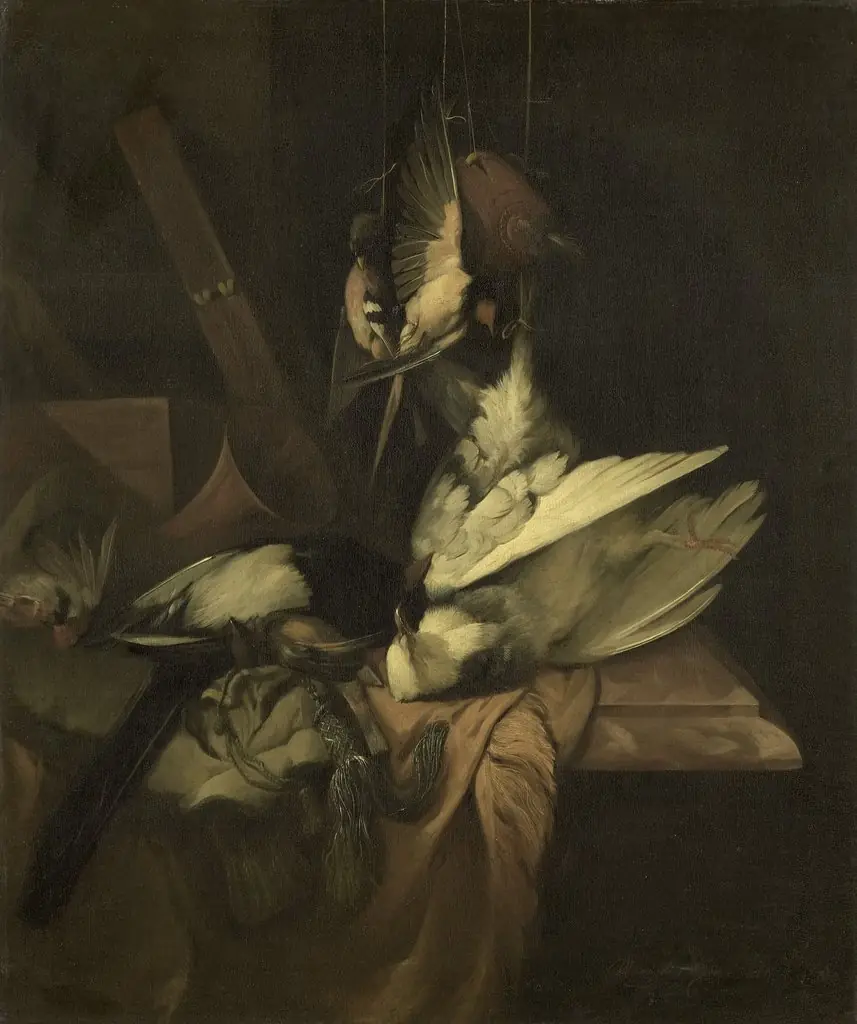
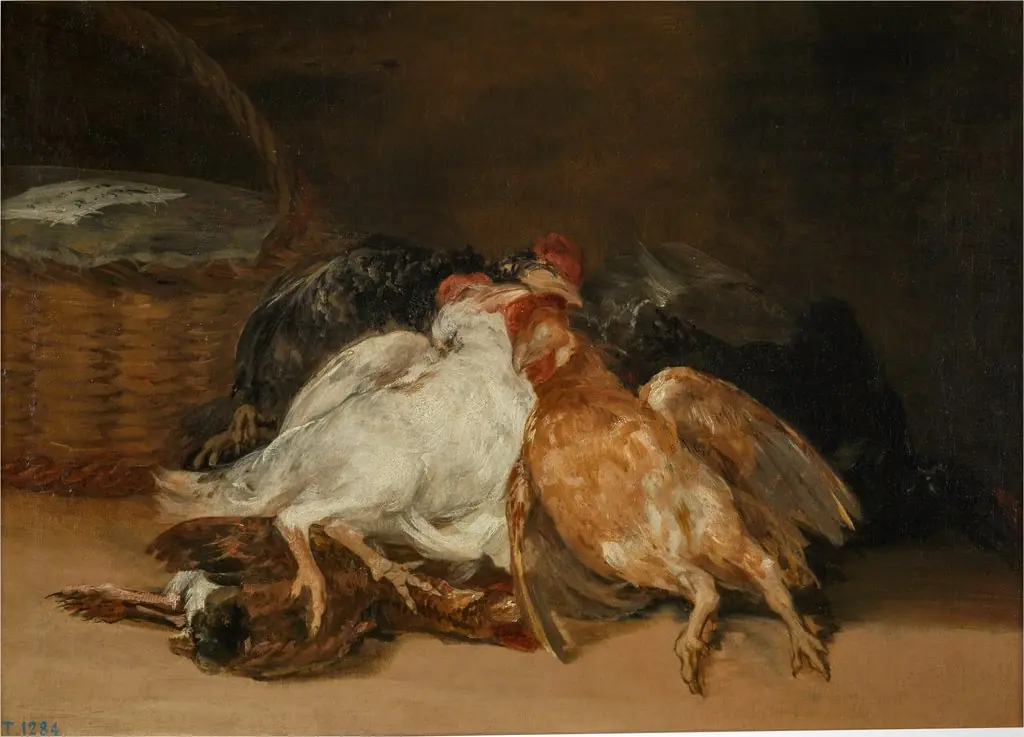
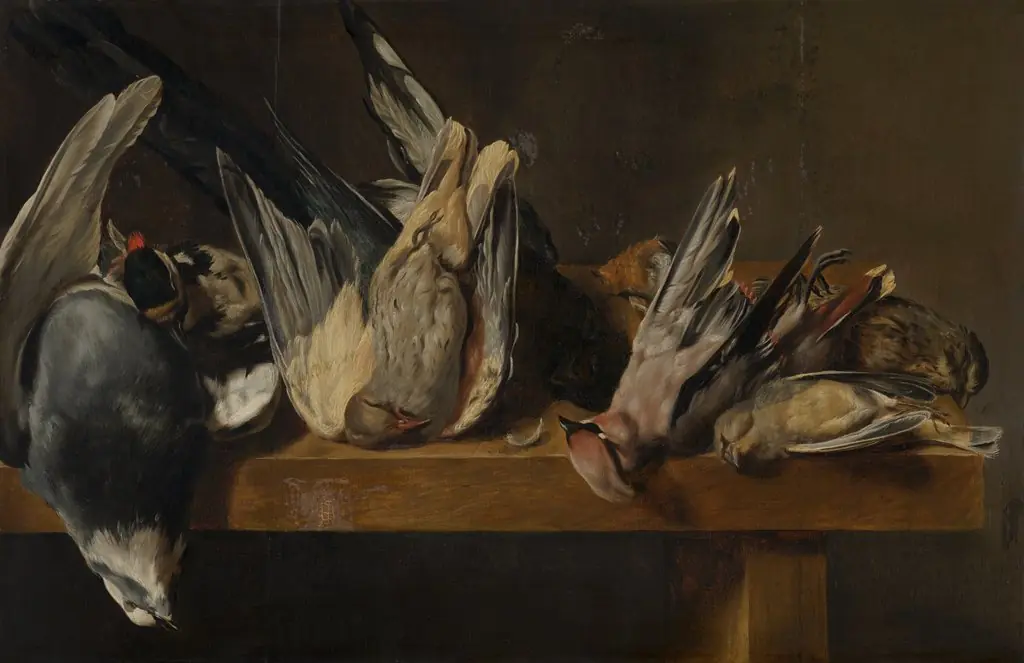
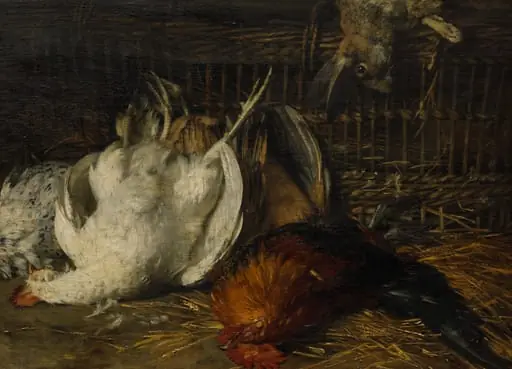
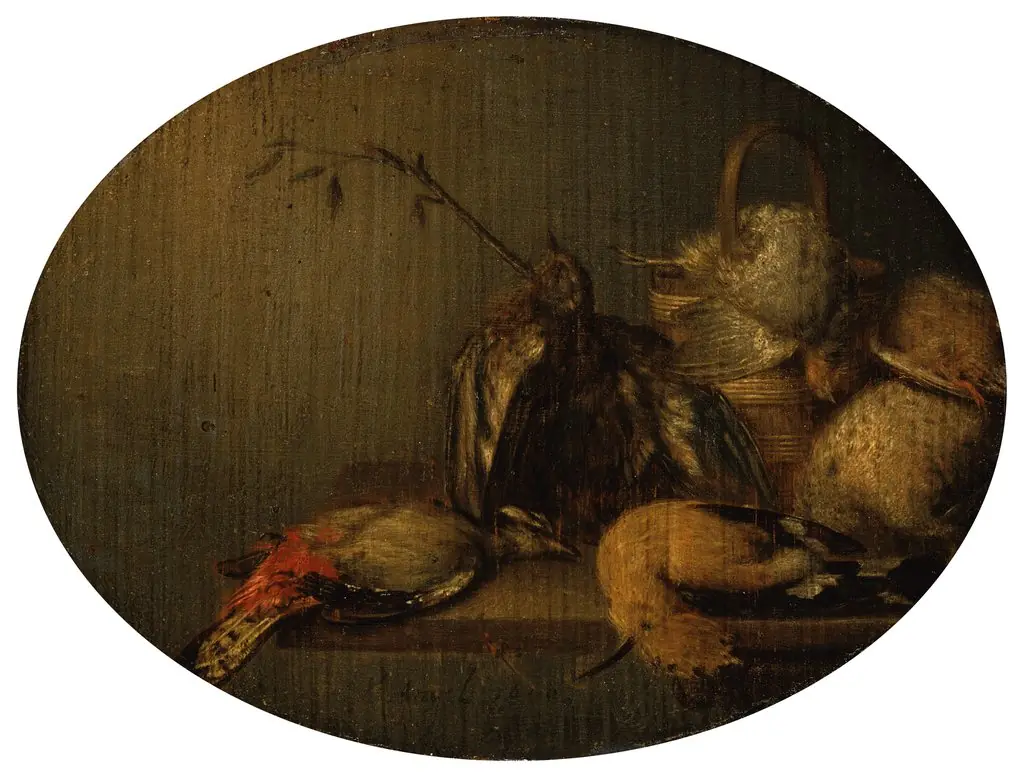
Germain Ribot’s Still Life with Dead Birds and a Basket of Oysters presents a quiet, unadorned arrangement of game and seafood against a deep brown backdrop.
Germain Ribot’s Still Life with Dead Birds and a Basket of Oysters presents a quiet, unadorned arrangement of game and seafood against a deep brown backdrop. The composition centers on a woven basket of shellfish, flanked by several deceased birds, their forms rendered with quiet precision. The scene suggests a moment just before culinary preparation, capturing the mundane reality of domestic food sourcing in 19th-century France.
Subject & Meaning
The painting juxtaposes the perishable bounty of land and sea — oysters, a magpie, a partridge, a jay, and a sparrow — to evoke the cycle of sustenance and death. These animals, once wild or domesticated, now lie still, their presence implying the labor behind daily meals. The absence of human figures heightens the sense of quiet anticipation, as if the kitchen waits for the next act of preparation.
Technique & Style
Ribot employs chiaroscuro to model the forms with subtle gradations of light and shadow, lending volume to the wicker basket and the birds’ feathers. The light, falling from the left, catches the glossy shells of the oysters and the sheen of the magpie’s breast, while deeper tones recede into the background. His brushwork is restrained, favoring texture over flourish, aligning with the unembellished realism of his genre subjects.
History & Provenance
Germain Ribot, son of the more widely recognized Théodule-Augustin Ribot, focused on domestic and rural scenes, often overlooked in favor of his father’s peasant narratives. This painting, like much of his work, remained in private hands until entering a public collection. It is now held by The Cleveland Museum of Art, where it represents a lesser-known but significant strand of French still-life painting from the late 1800s.
Context
In late 19th-century France, still lifes often carried moral or symbolic weight, but Ribot’s approach was more observational than allegorical. His work reflects a broader trend among regional artists who documented everyday life without romanticism. The inclusion of game birds and shellfish speaks to regional diets and the domestic economy, where food procurement was closely tied to seasonal availability and local trade.
Legacy
Though overshadowed by his father’s fame, Germain Ribot’s quiet still lifes contributed to the evolution of naturalistic genre painting in France. His focus on ordinary, unglamorous subjects — the raw materials of the kitchen — offered a counterpoint to more theatrical or idealized depictions of food. Today, his work is valued for its understated honesty and technical restraint.
Artist & collection
Artist
Germain Théodule Clément Ribot
Germain Théodule Clément Ribot (1845–1893) was a French artist, born in Paris.