Artwork
Italian Joust of Peace
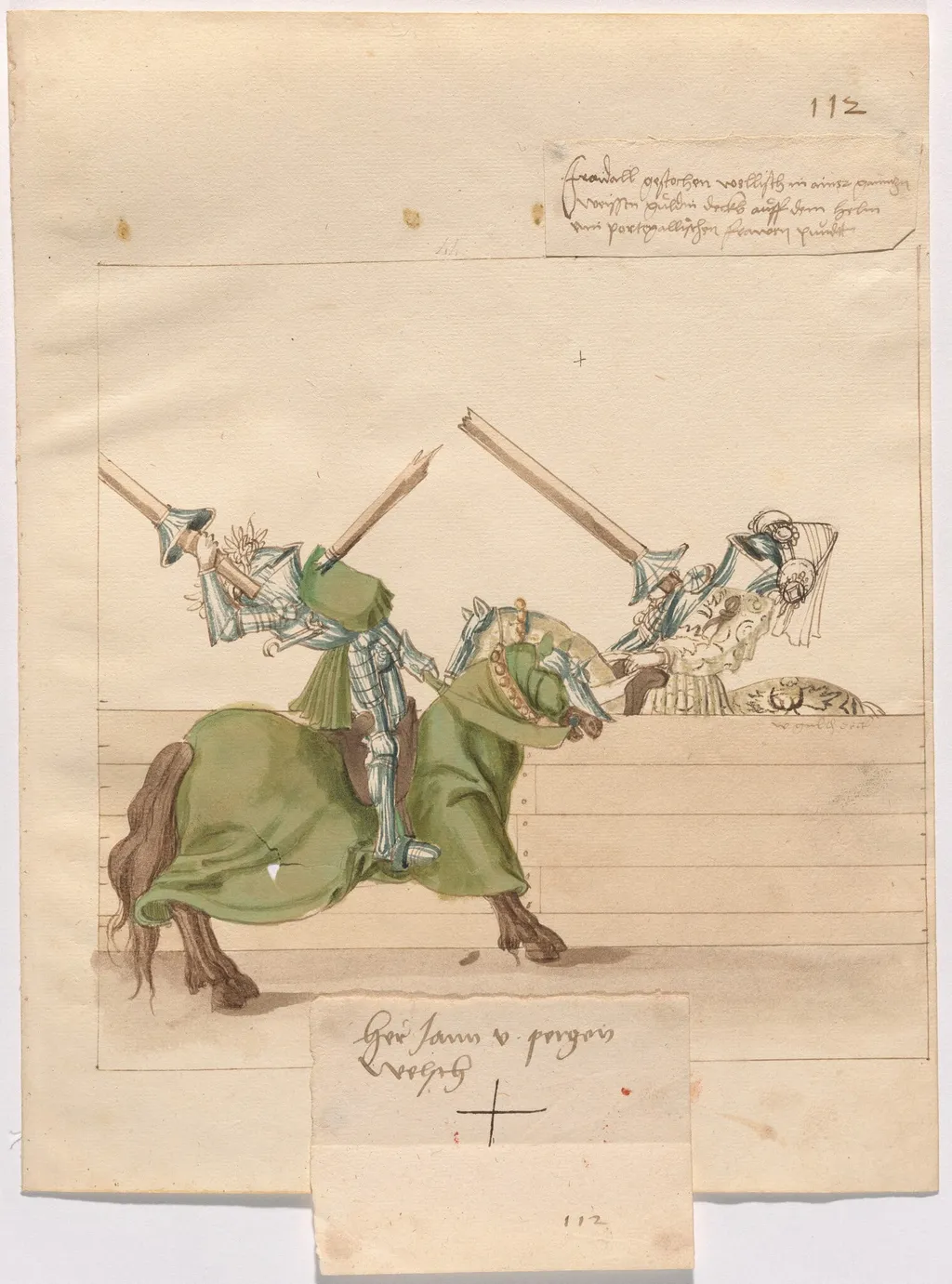
Italian Joust of Peace is an ink drawing by the Renaissance artist German 16th Century. It dates from 1514 and is held in the collection of the National Gallery of Art.
About this work
Overview
The delicate interplay of line and wash lends the scene a sense of both immediacy and quiet solemnity, characteristic of Northern Renaissance draftsmanship.
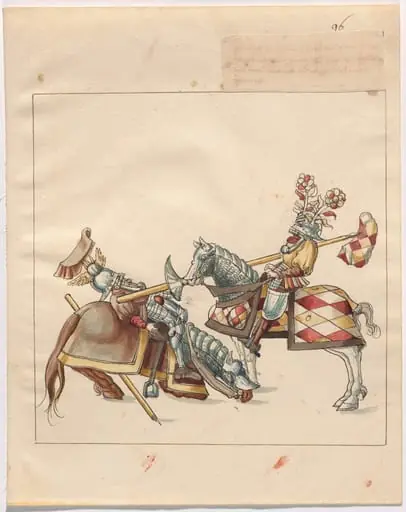
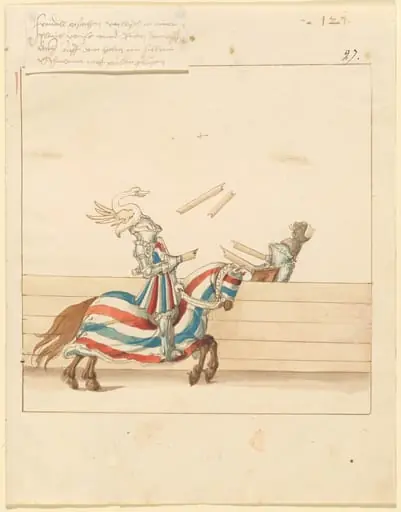
This drawing, created by a German artist in the 16th century, captures a moment from a ceremonial joust using pen, black ink, watercolor, and black chalk on laid paper. The composition centers on two armored riders in mid-charge, their lances meeting in a splintering collision. The delicate interplay of line and wash lends the scene a sense of both immediacy and quiet solemnity, characteristic of Northern Renaissance draftsmanship.
Subject & Meaning
The scene depicts a joust, a ritualized equestrian contest popular among European nobility. Though visually dynamic, the title 'Joust of Peace' suggests a ceremonial or symbolic performance rather than a combative duel. The intact armor and controlled violence imply a display of chivalric order, where strength is channeled into spectacle rather than destruction.
Technique & Style
The artist employs fine, precise ink lines to define armor and horse anatomy, while translucent watercolor washes suggest metallic sheen and atmospheric depth. Black chalk underdrawing adds tonal weight, particularly in shadows and folds. The restrained palette and fluid brushwork convey motion without theatricality, emphasizing the precision of movement over dramatic flourish.
History & Provenance
The work resides in the collection of the National Gallery of Art in Washington, D.C., acquired as part of a broader assemblage of Northern Renaissance drawings. Its origin traces to a German artistic milieu familiar with Italian courtly traditions, likely produced for a patron interested in chivalric pageantry or as a study for larger commissions.
Context
In early 16th-century Europe, jousts were staged events blending martial skill with political theater. German artists often documented such spectacles, influenced by Italian Renaissance ideals of harmony and form. This drawing reflects cross-cultural exchange, merging Northern attention to detail with Italianate elegance in depicting noble ritual.
Legacy
The drawing stands as a quiet testament to the artistic documentation of chivalric culture during a period of transition. Its technical refinement and restrained emotion align it with the work of contemporaries like Albrecht Dürer, who similarly elevated preparatory drawing to a refined art form, preserving the aesthetics of a fading medieval tradition.
Artist & collection

Artist
A German artist from the late 1500s drew lively scenes of knights clashing in parades and mock battles.

![Abraham Entertaining the Angels [verso], by German 16th Century](https://artifactworldgallery.com/img/german-16th-century--abraham-entertaining-the-angels-verso--69d1b25f4eba0a53-w320.webp)
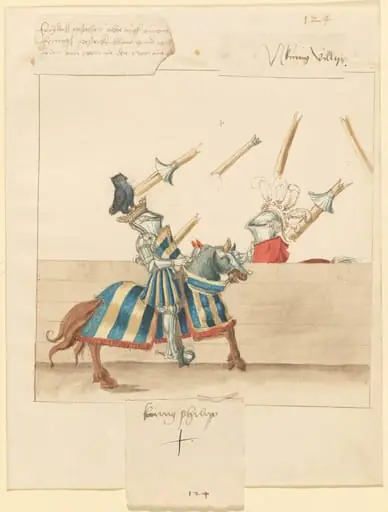 Italian Joust of Peace
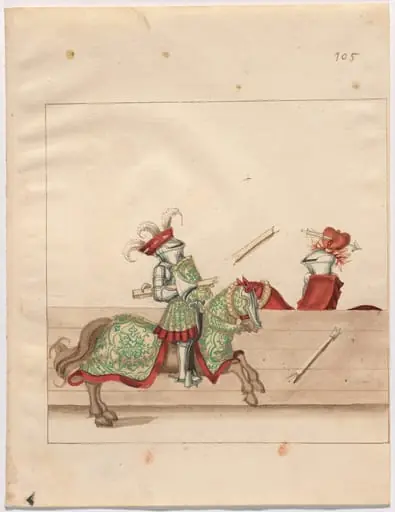 Italian Joust of Peace
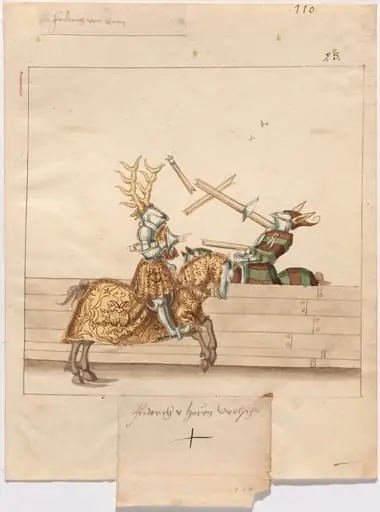 Italian Joust of Peace
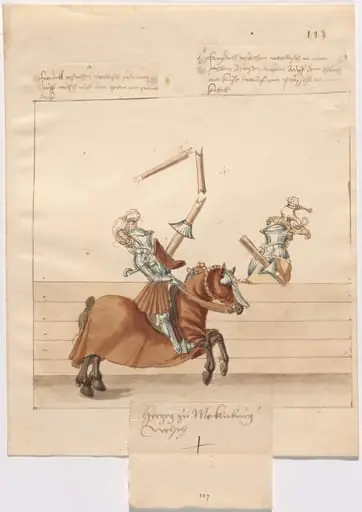 Italian Joust of Peace
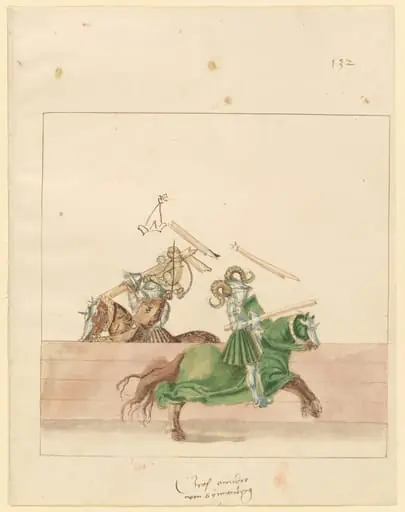 Italian Joust of Peace
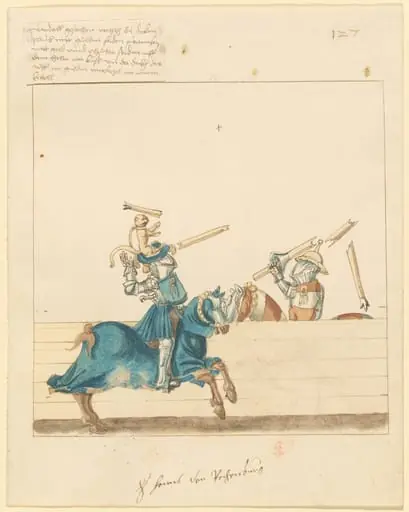 Italian Joust of Peace
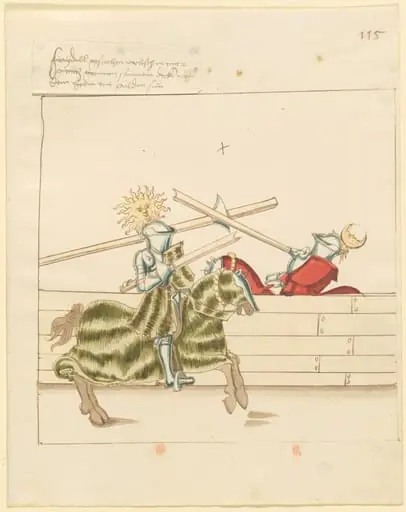 Italian Joust of Peace
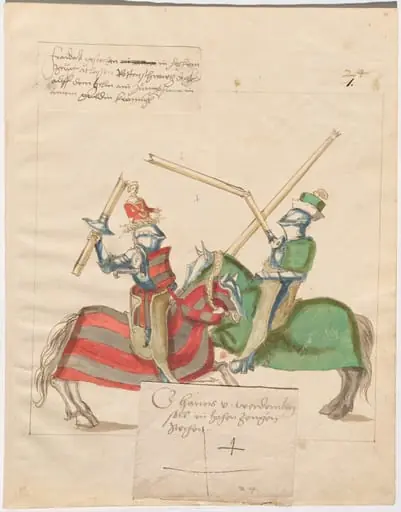 German Joust of Peace in High Saddles
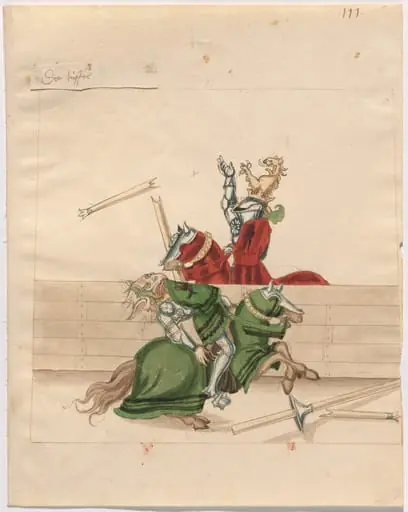 Italian Joust of Peace
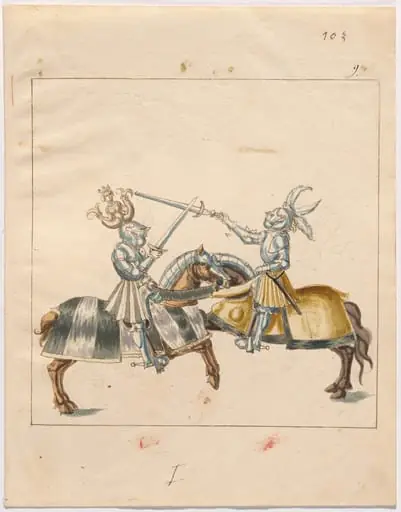 Mock Joust of War in Reinforced Field Armor
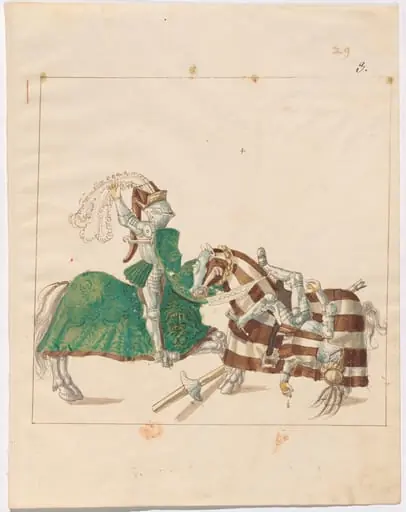 Joust of Peace in Leg Armor
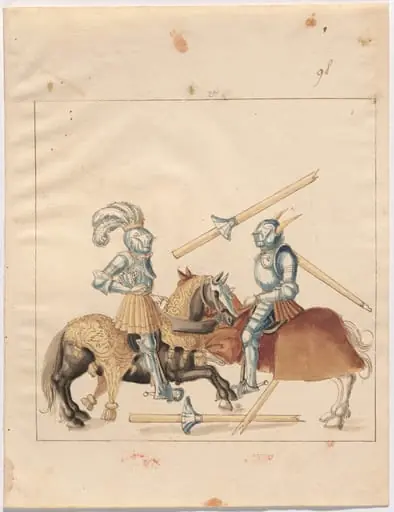 Mock Joust of War in Reinforced Field Armor