Artwork
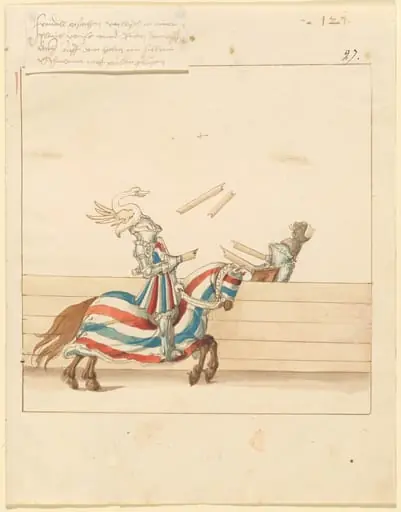
Mock Joust of War with Flying Shields and Without Bevors
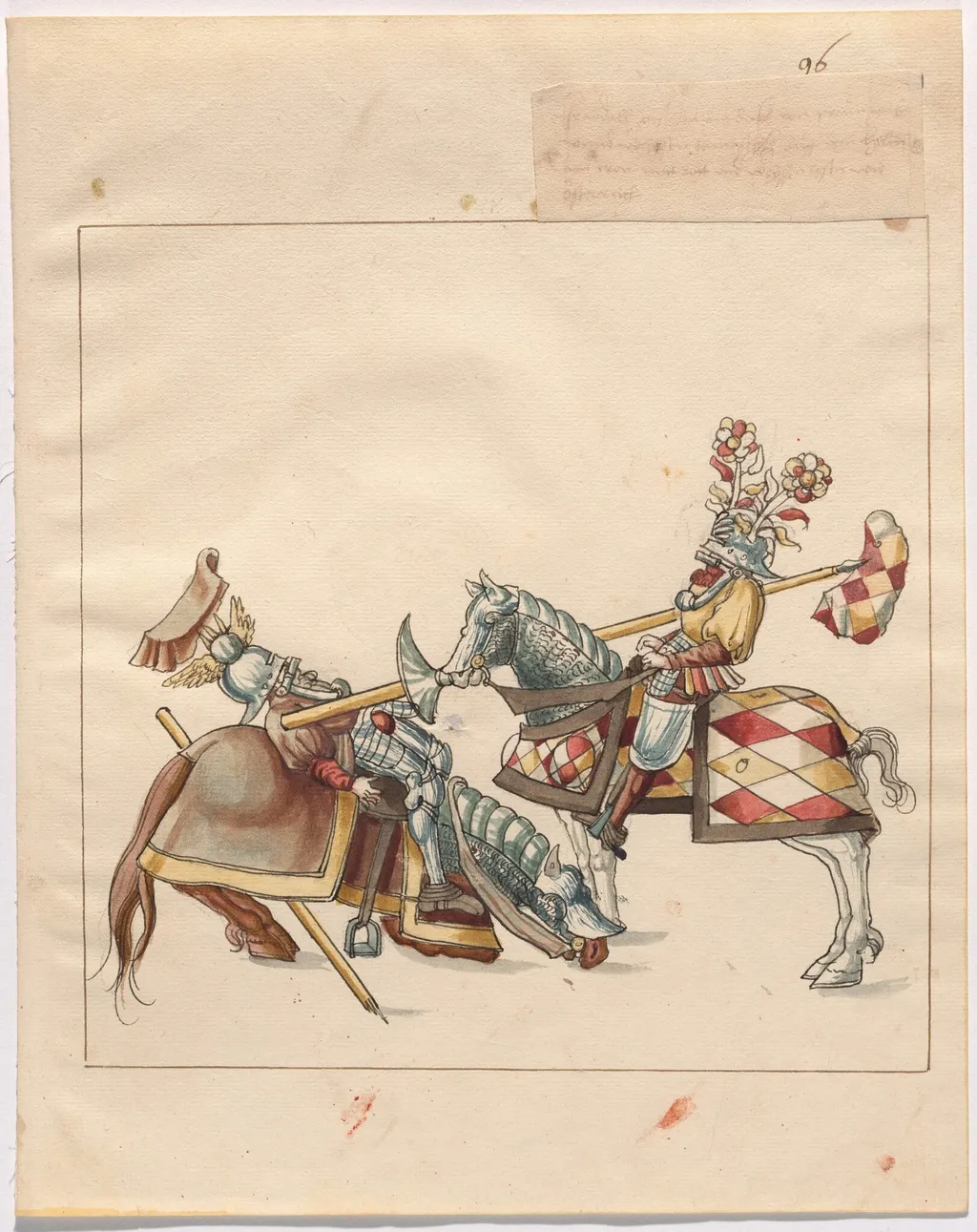
Mock Joust of War with Flying Shields and Without Bevors is a chalk drawing by the Renaissance artist German 16th Century. It dates from 1514 and is held in the collection of the National Gallery of Art.
About this work
The scene is drawn with pen, brown ink, and watercolor over black chalk.
This painting shows armored horses and riders in a jousting scene.
It's a detailed scene with flying shields and shields without bevors.
The scene is drawn with pen, brown ink, and watercolor over black chalk.
The painting is small, measuring 33.1 × 26.2 cm.
It depicts a jousting scene from the German 16th century.
The artist used a mix of techniques to create this scene.
You can learn more at the museum: National Gallery of Art, Washington.
Overview
This drawing depicts a jousting scene with armored horses and riders, created using a combination of pen, brown ink, watercolor, and black chalk on laid paper. It measures 33.1 × 26.2 cm.
Subject & Meaning
The scene represents a 'mock joust of war' from 16th-century Germany, characterized by flying shields and shields without bevors, highlighting the martial customs of the time.
Technique & Style
The artist employed a range of techniques, layering pen and brown ink with watercolor over a black chalk underdrawing to achieve a detailed and intricate representation of the jousting scene.
History & Provenance
The drawing is now held at the National Gallery of Art, Washington, indicating its significance within the historical and cultural context of its creation.
Artist & collection

Artist
A German artist from the late 1500s drew lively scenes of knights clashing in parades and mock battles.

![Abraham Entertaining the Angels [verso], by German 16th Century](https://artifactworldgallery.com/img/german-16th-century--abraham-entertaining-the-angels-verso--69d1b25f4eba0a53-w320.webp)
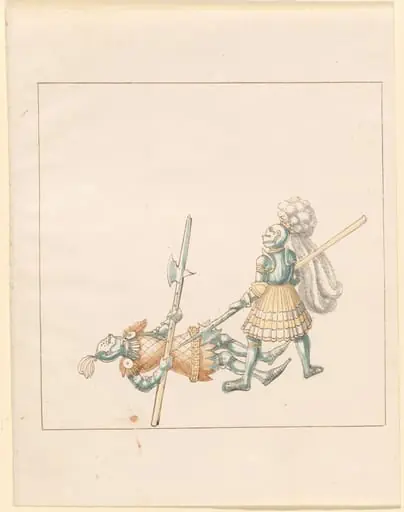
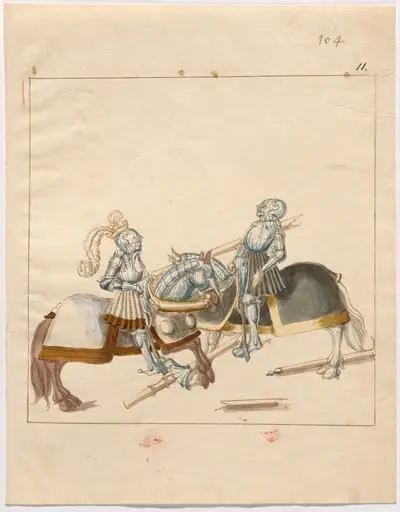 Mock Joust of War in Reinforced Field Armor
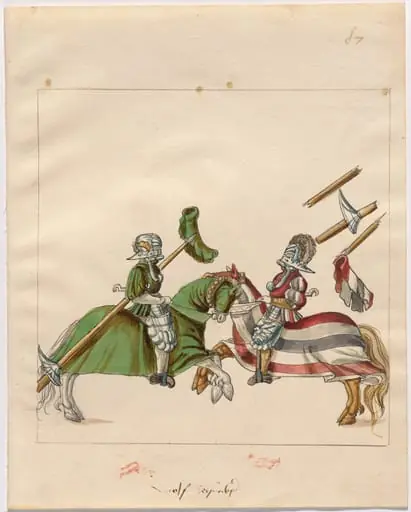 Mock Joust of War with Flying Shields and Without Bevors
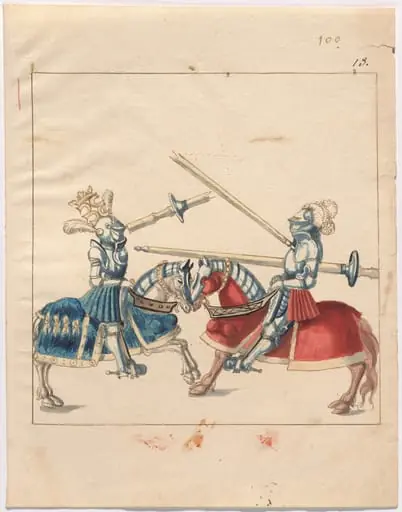 Mock Joust of War in Reinforced Field Armor
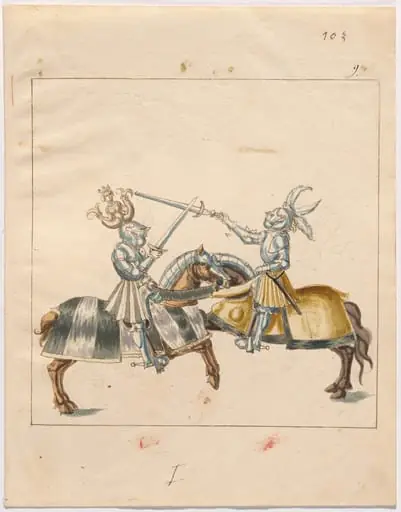 Mock Joust of War in Reinforced Field Armor
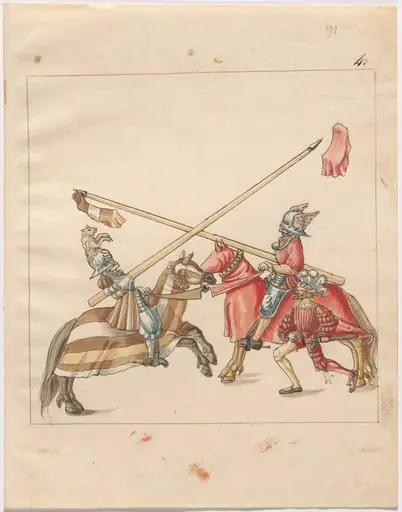 Mock Joust of War with Flying Shields and Without Bevors
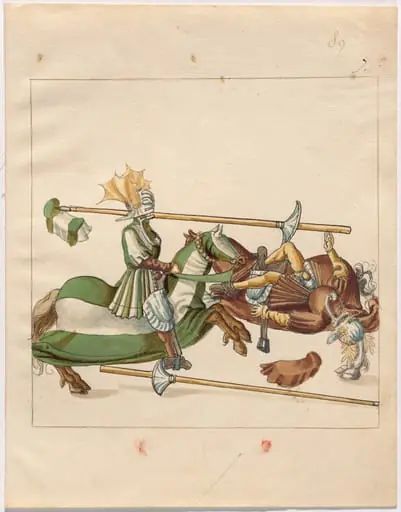 Mock Joust of War with Flying Shields and Without Bevors
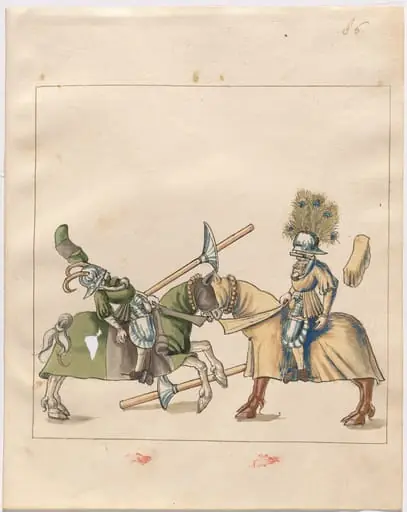 Mock Joust of War with Flying Shields and Without Bevors
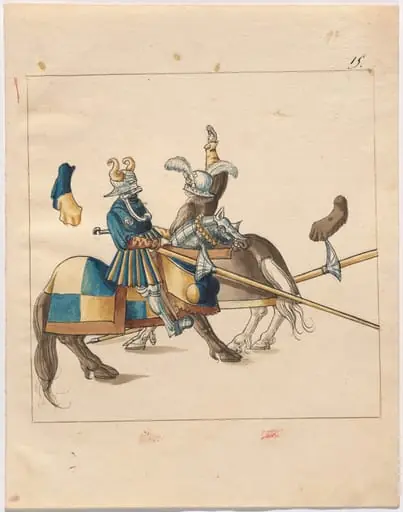 Mock Joust of War with Flying Shields and Without Bevors
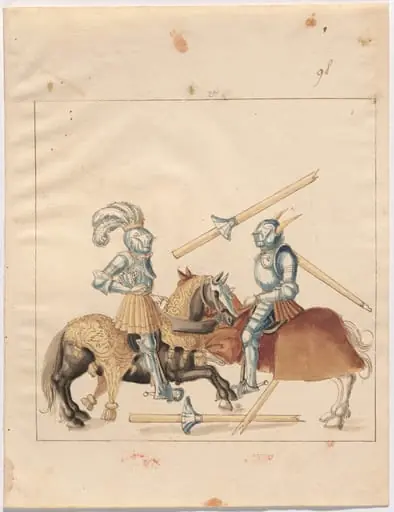 Mock Joust of War in Reinforced Field Armor
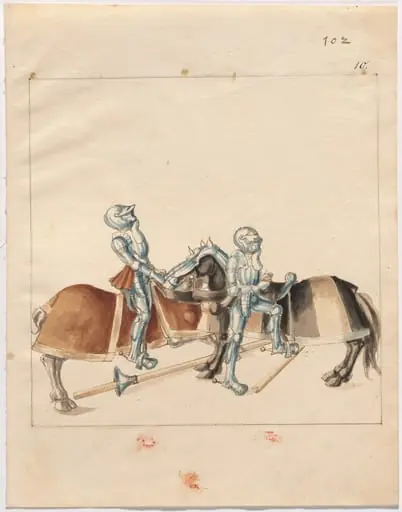 Mock Joust of War in Reinforced Field Armor
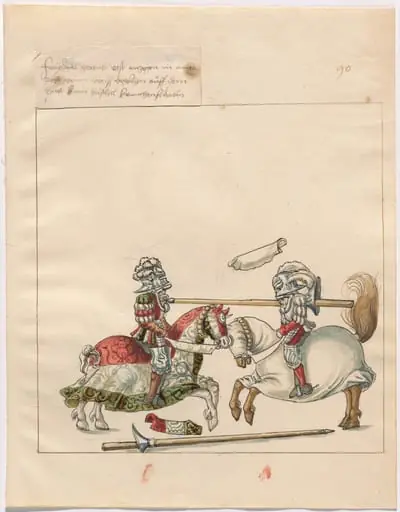 Mock Joust of War with Flying Shields and Without Bevors
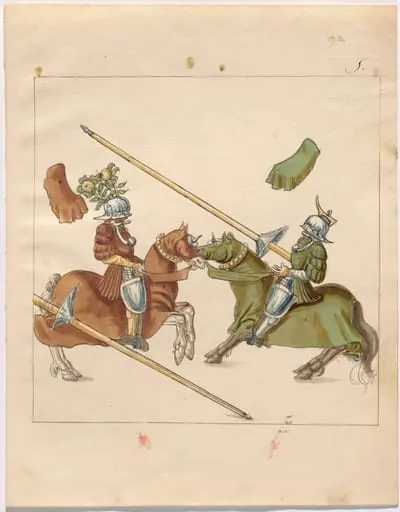 Mock Joust of War with Flying Shields and Without Bevors