Artwork
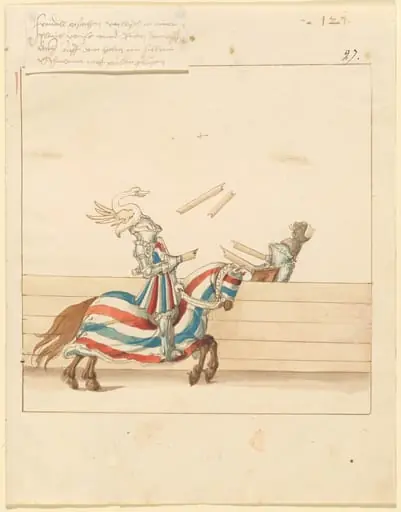
Mock Joust of War with Flying and Exploding Shields
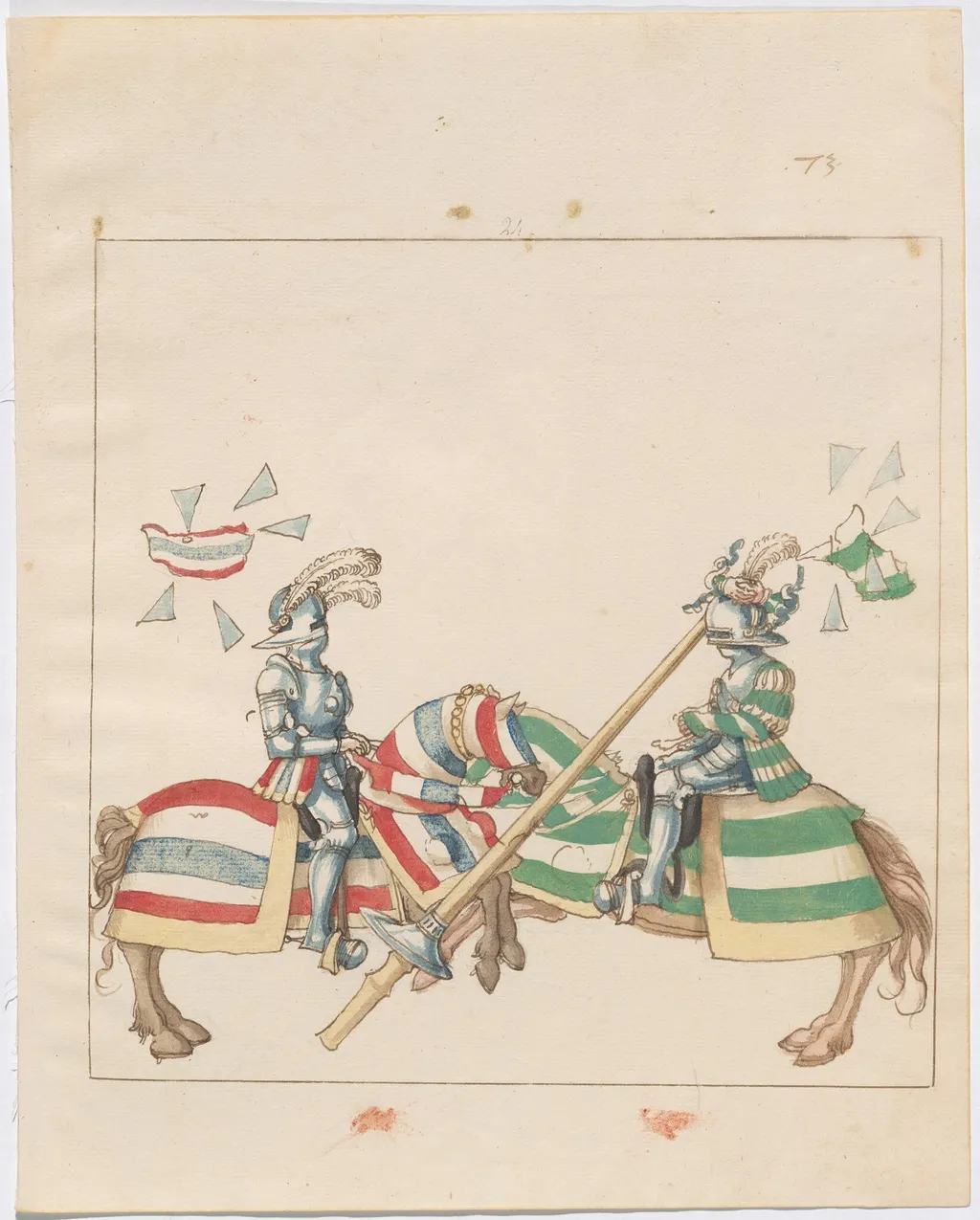
Mock Joust of War with Flying and Exploding Shields is a watercolor drawing by the Renaissance artist German 16th Century. It dates from 1514 and is held in the collection of the National Gallery of Art.
About this work
Overview
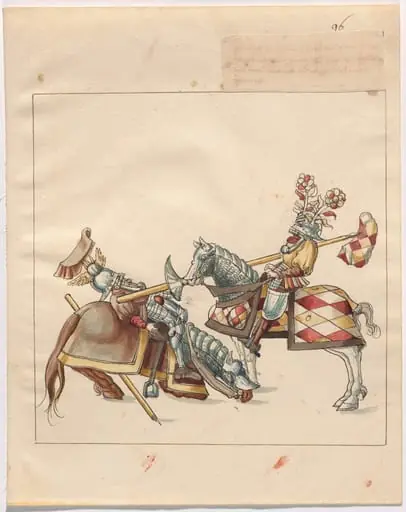
This drawing captures a ceremonial joust between two armored knights on horseback, rendered in pen, brown ink, and watercolor over black chalk and leadpoint.
This drawing captures a ceremonial joust between two armored knights on horseback, rendered in pen, brown ink, and watercolor over black chalk and leadpoint. The composition centers the figures against a neutral background, emphasizing their motion and attire. The use of watercolor adds subtle chromatic emphasis, distinguishing the knights’ tunics—red-and-white and green-and-white—while the underlying chalk and leadpoint provide structural definition.
Subject & Meaning
The scene depicts a mock tournament, likely a chivalric display rather than a real battle. Such events were common in Renaissance courts as demonstrations of skill, honor, and pageantry. The absence of spectators or landscape suggests the focus is on the ritualized confrontation itself, highlighting the knights’ readiness and the symbolic nature of their contest.
Technique & Style
The artist employed layered drawing methods: black chalk for initial contours, leadpoint for fine details, and pen with brown ink for definition. Watercolor was applied selectively to enhance the tunics and armor, introducing restrained color without overwhelming the linear precision. The technique reflects a blend of preparatory draftsmanship and decorative finish typical of courtly illustrative practices.
History & Provenance
The work’s origin is tied to Renaissance Italy, likely produced in a workshop associated with noble patronage. Though the artist remains unidentified, the medium and style align with drawings made for ceremonial records or entertainment programs. No documented provenance exists prior to its inclusion in modern collections, suggesting it may have circulated privately before institutional acquisition.
Context
During the 16th century, jousting retained cultural significance even as its military relevance declined. Elaborate tournaments became theatrical events, often choreographed to celebrate marriages, coronations, or alliances. This drawing fits within a broader tradition of visual documentation of such spectacles, serving both as record and artistic interpretation of aristocratic ritual.
Legacy
As a surviving example of Renaissance equestrian illustration, the drawing contributes to understanding how courtly events were visually encoded. Its technical refinement and restrained coloration reflect the period’s emphasis on controlled expression. While not widely known, it remains a valuable artifact for studying the intersection of martial tradition and artistic practice in early modern Europe.
Artist & collection

Artist
A German artist from the late 1500s drew lively scenes of knights clashing in parades and mock battles.

![Abraham Entertaining the Angels [verso], by German 16th Century](https://artifactworldgallery.com/img/german-16th-century--abraham-entertaining-the-angels-verso--69d1b25f4eba0a53-w320.webp)
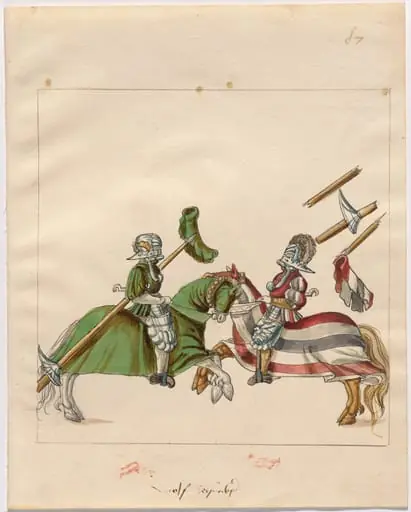 Mock Joust of War with Flying Shields and Without Bevors
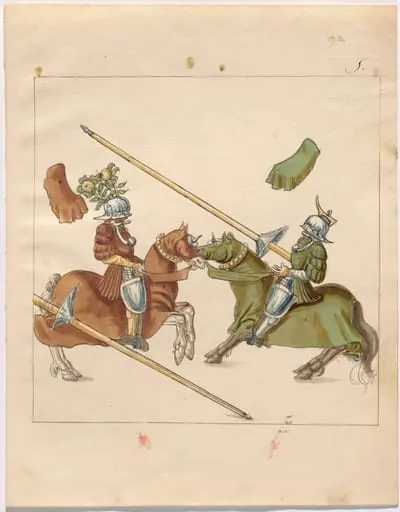 Mock Joust of War with Flying Shields and Without Bevors
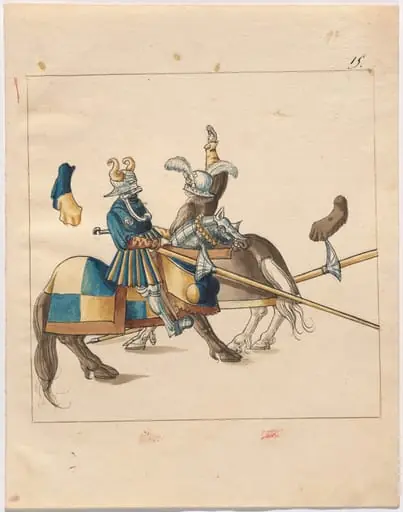 Mock Joust of War with Flying Shields and Without Bevors
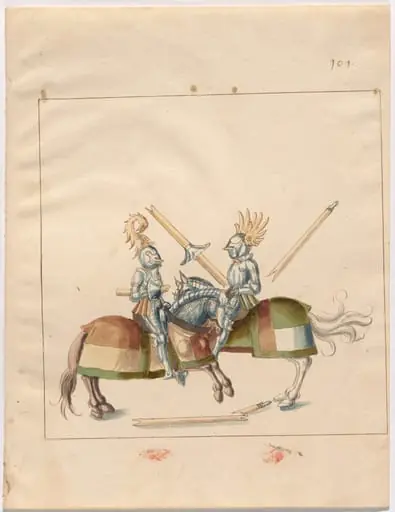 Mock Joust of War in Reinforced Field Armor
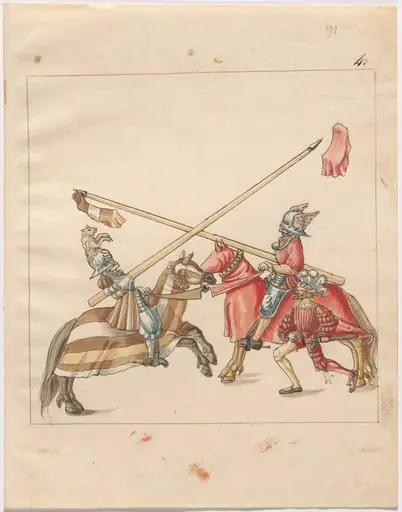 Mock Joust of War with Flying Shields and Without Bevors
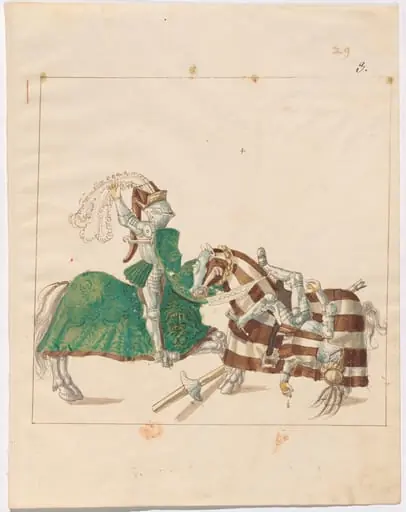 Joust of Peace in Leg Armor
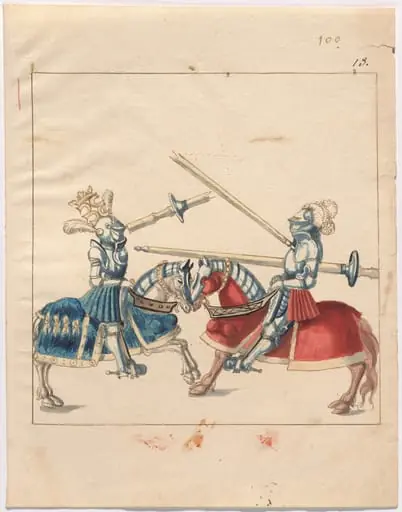 Mock Joust of War in Reinforced Field Armor
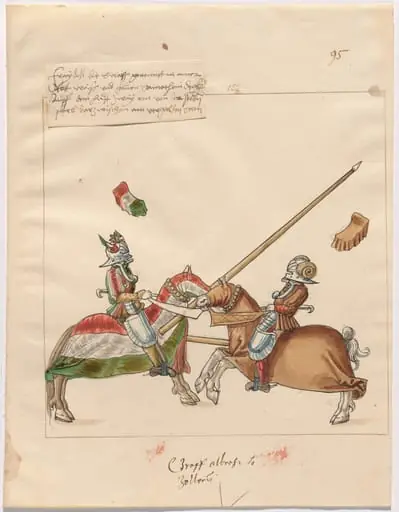 Mock Joust of War with Flying Shields and Without Bevors
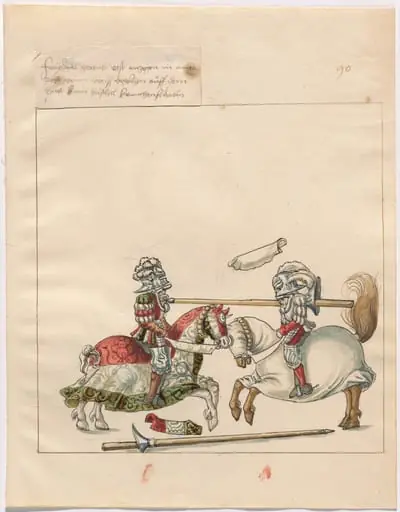 Mock Joust of War with Flying Shields and Without Bevors
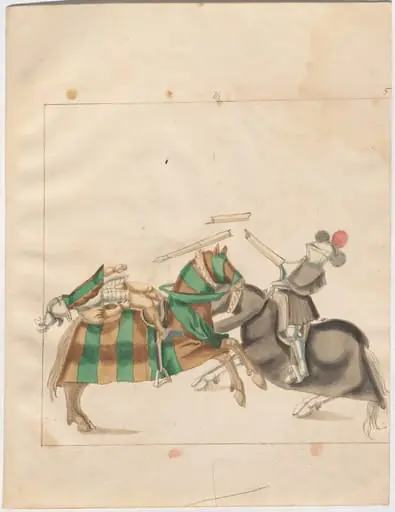 Mixed Jousts of War and Peace
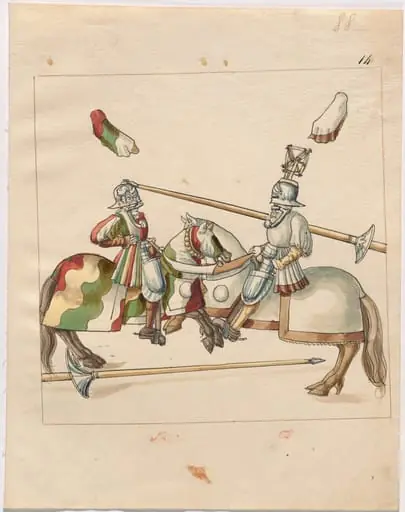 Mock Joust of War with Flying Shields and Without Bevors