Artwork
Profile of a Man with Sidewhiskers
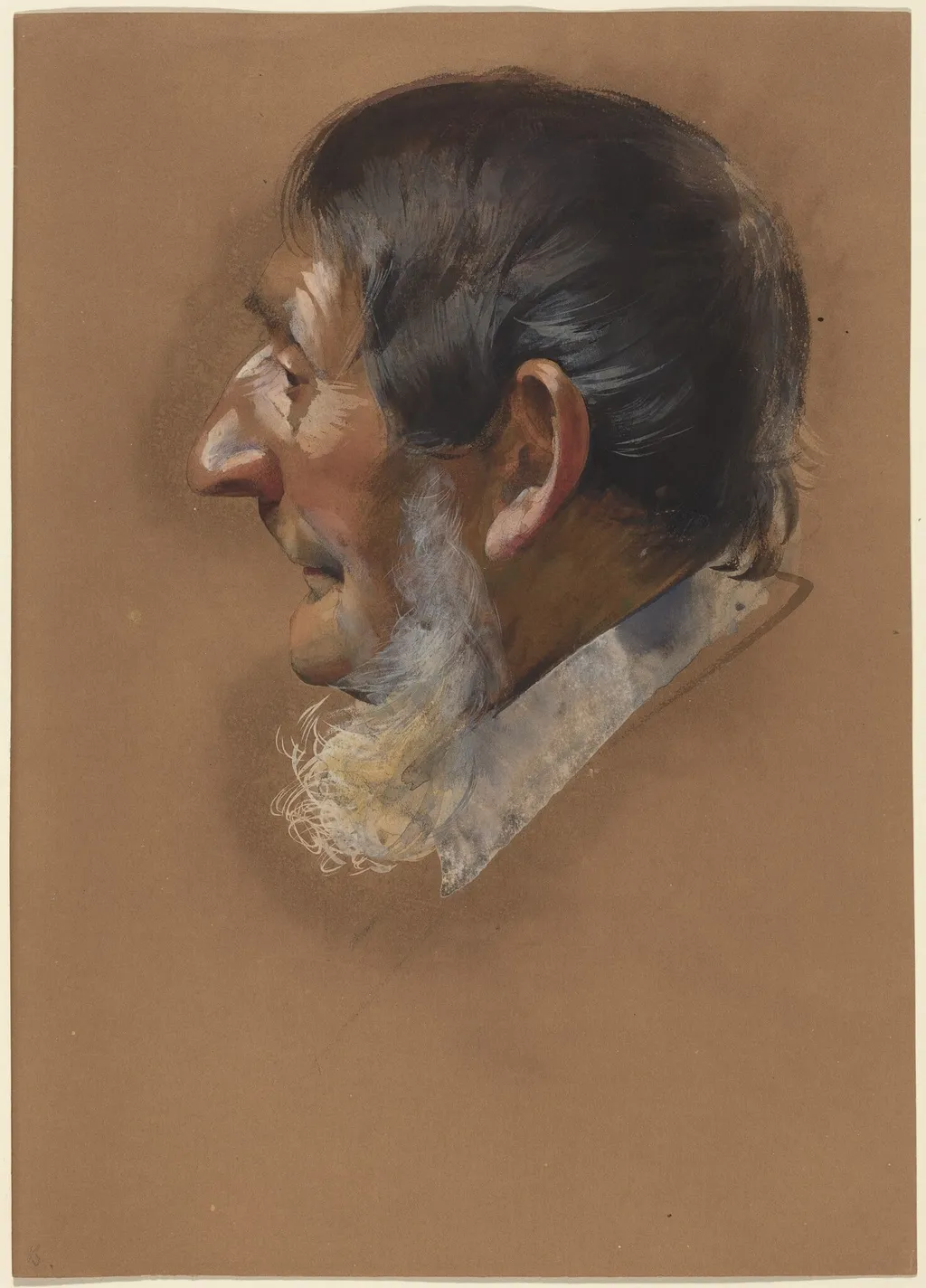
Profile of a Man with Sidewhiskers is a gouache drawing by the Impressionist artist German 19th Century. It dates from 1850 and is held in the collection of the National Gallery of Art. This portrait is a delicate drawing in gouache and watercolor on tan wove paper, depicting a man in strict profile.
About this work
Overview
Rendered with subtle tonal shifts, the work captures the contours of a face marked by dark hair and a white beard, dressed in a simple white collared shirt.
This portrait is a delicate drawing in gouache and watercolor on tan wove paper, depicting a man in strict profile. Rendered with subtle tonal shifts, the work captures the contours of a face marked by dark hair and a white beard, dressed in a simple white collared shirt. The eyes are lowered, conveying quiet introspection. The neutral expression and restrained palette emphasize form over narrative, characteristic of intimate portraiture from the period.
Subject & Meaning
The identity of the sitter remains unknown, but the dignified bearing and meticulous rendering suggest a person of modest social standing, possibly a scholar or artisan. The downward gaze and stillness invite contemplation rather than engagement, avoiding theatricality. The absence of contextual elements focuses attention on the individual’s presence, suggesting a personal, perhaps private, record rather than a public commemoration.
Technique & Style
The artist employed gouache for opaque highlights and watercolor for translucent washes to model the face with quiet precision. Light falls gently across the brow, cheek, and beard, defining volume without harsh contrast. The tan paper serves as a midtone, reducing the need for broad shading. Fine brushwork and controlled layering reflect a mastery of water-based media, prioritizing subtlety over dramatic effect.
History & Provenance
The drawing is held in the collection of the National Gallery of Art in Washington, D.C. Its provenance prior to acquisition is not publicly documented, but its materials and style align with 18th- or early 19th-century European portrait studies. It likely originated as a standalone work, not part of a larger series, and was preserved for its technical refinement and human presence.
Context
During the late 1700s and early 1800s, watercolor and gouache were increasingly used for intimate portraiture, especially among artists trained in academic traditions but seeking lighter, more spontaneous methods. This piece reflects a trend toward personal, unadorned depictions, contrasting with grand oil portraits of nobility. Such works often circulated among families or served as preparatory studies.
Legacy
Though unsigned and unattributed, the drawing exemplifies the quiet sophistication of water-based portraiture in its era. It contributes to the broader understanding of how artists captured individuality without grandeur, using minimal means. Its preservation in a major institution underscores its value as a study in restraint, technique, and the expressive potential of humble materials.
Artist & collection

Artist
This artist left only tiny, perfect fragments—endpapers and saints, no bigger than a postcard.

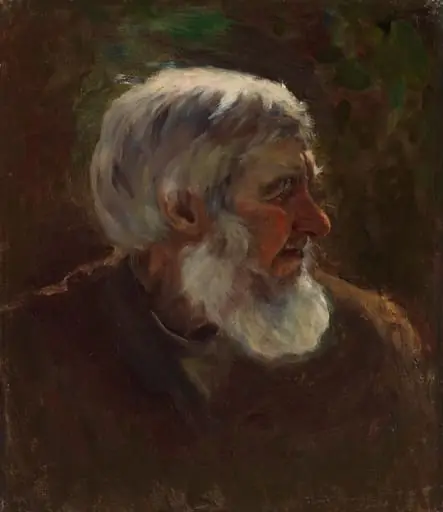 Vanha mies profiilissa, luonnos teokseen Sadun prinsessa
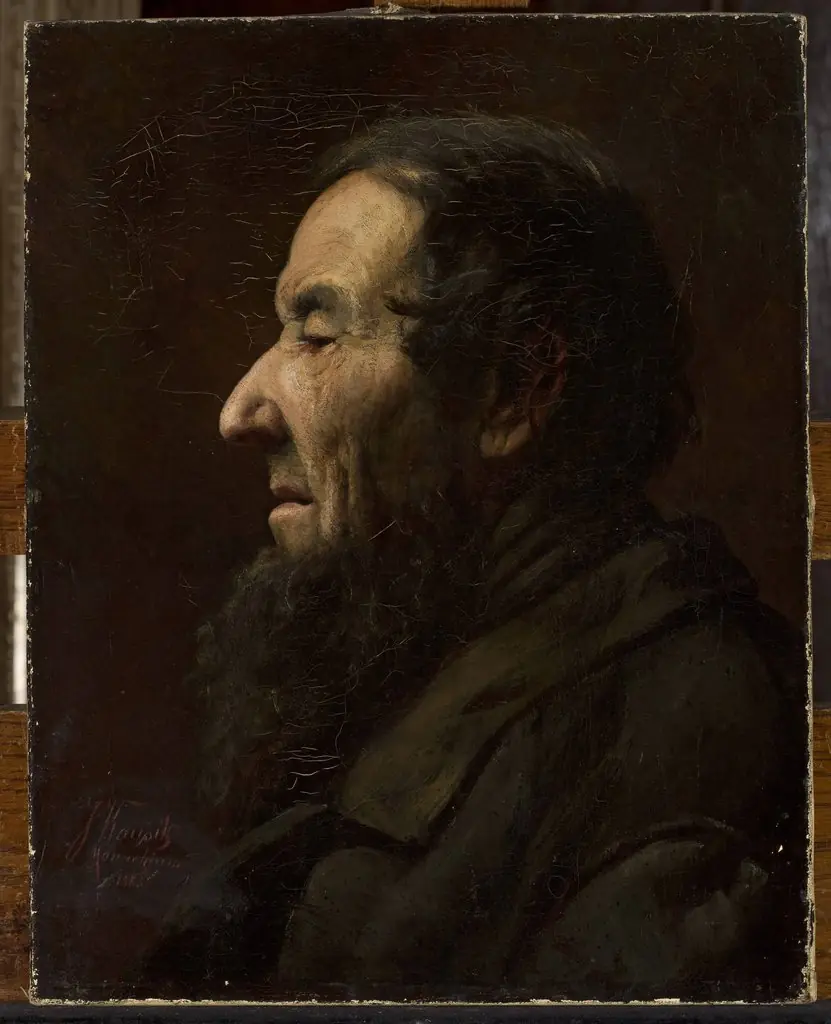 Male portrait in profile, study
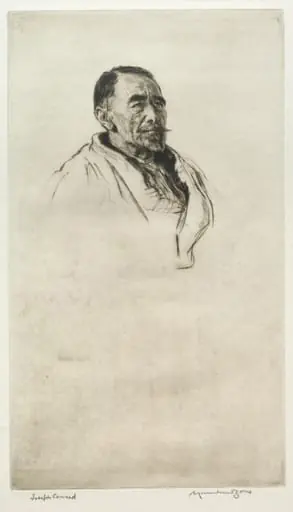 Arthur Joseph Conrad
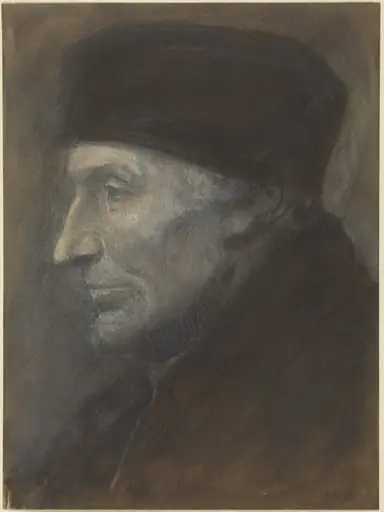 Head of a Man with a Skullcap
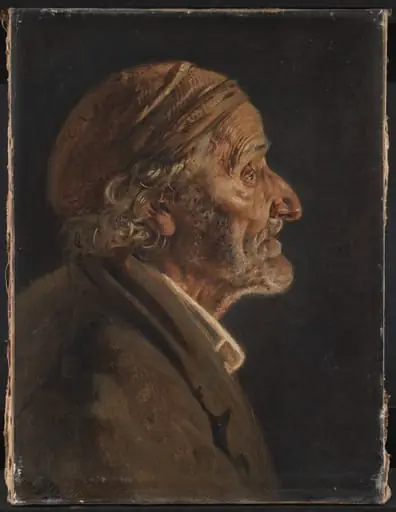 A Neapolitan Fisherman
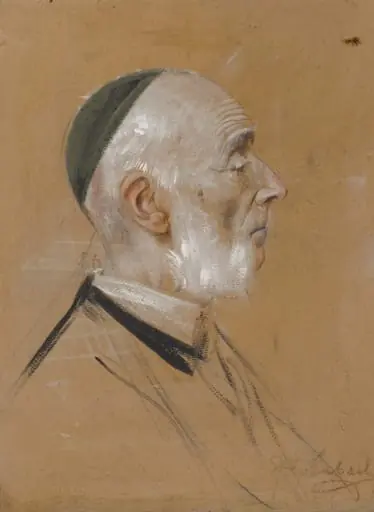 Karl Eduard von Liphart
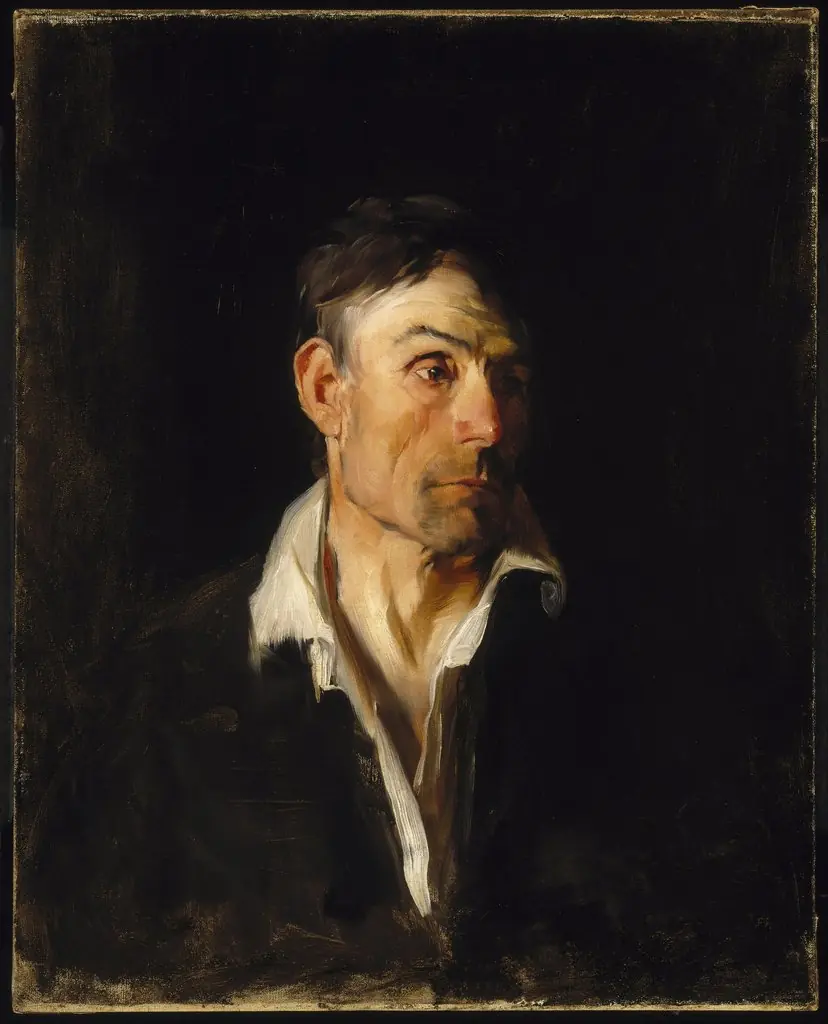 Portrait of a Man (Richard Creifelds)
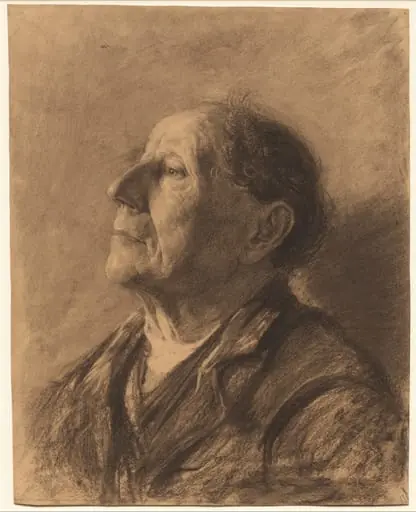 Portrait of an Old Man
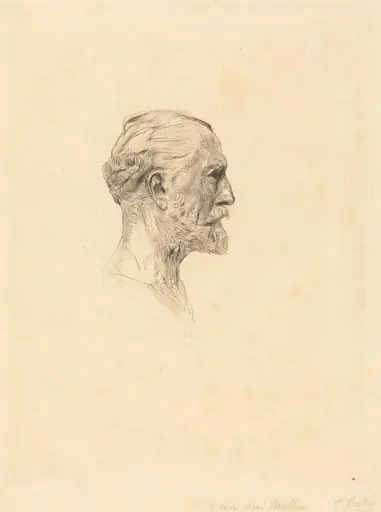 Antonin Proust
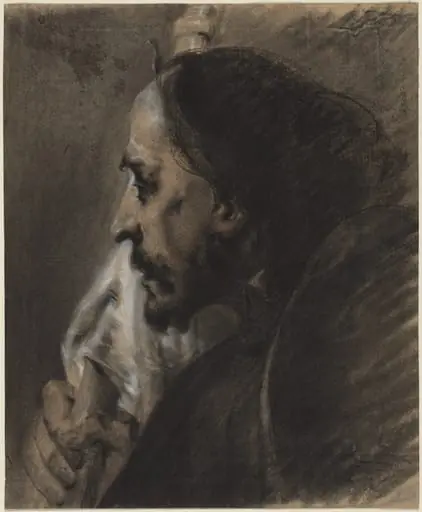 Saint James Major
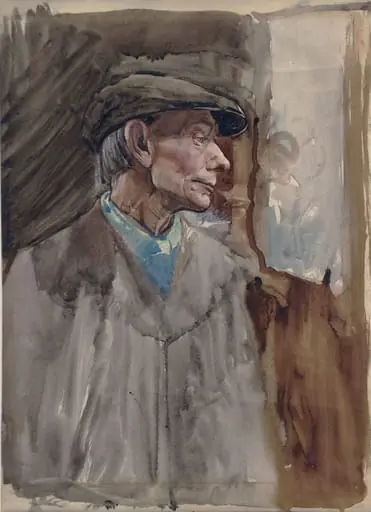 Man in a Cap
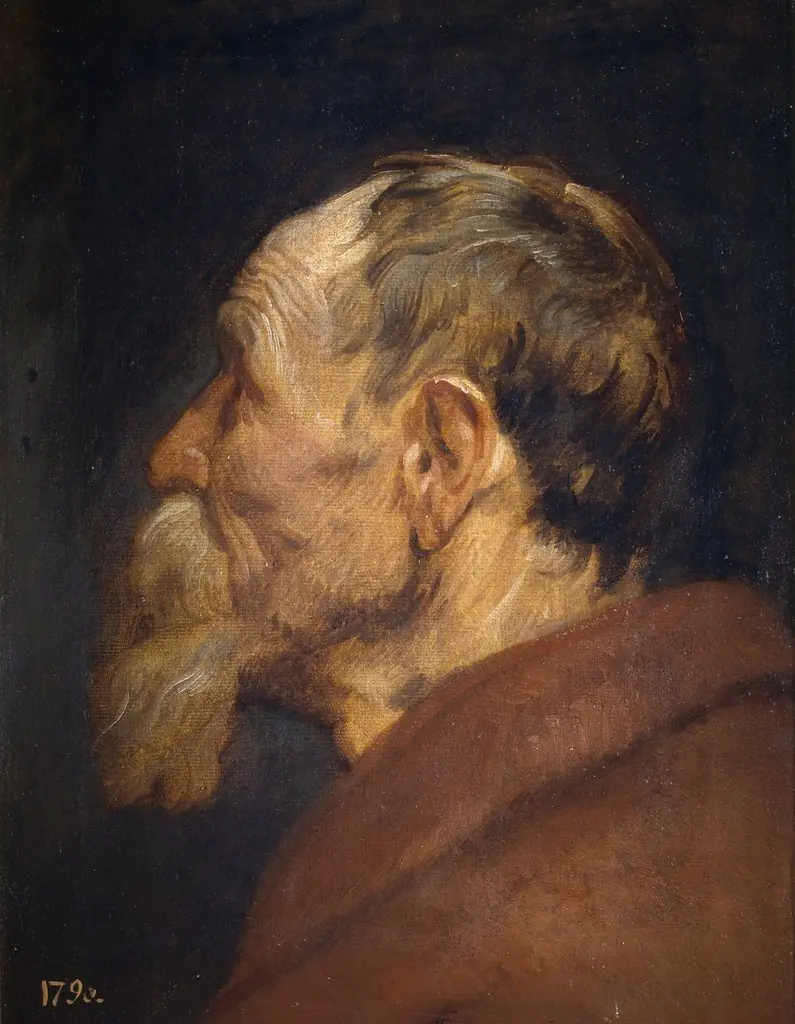 The Head of an Old Man