Artwork
Peisaj cu batoză
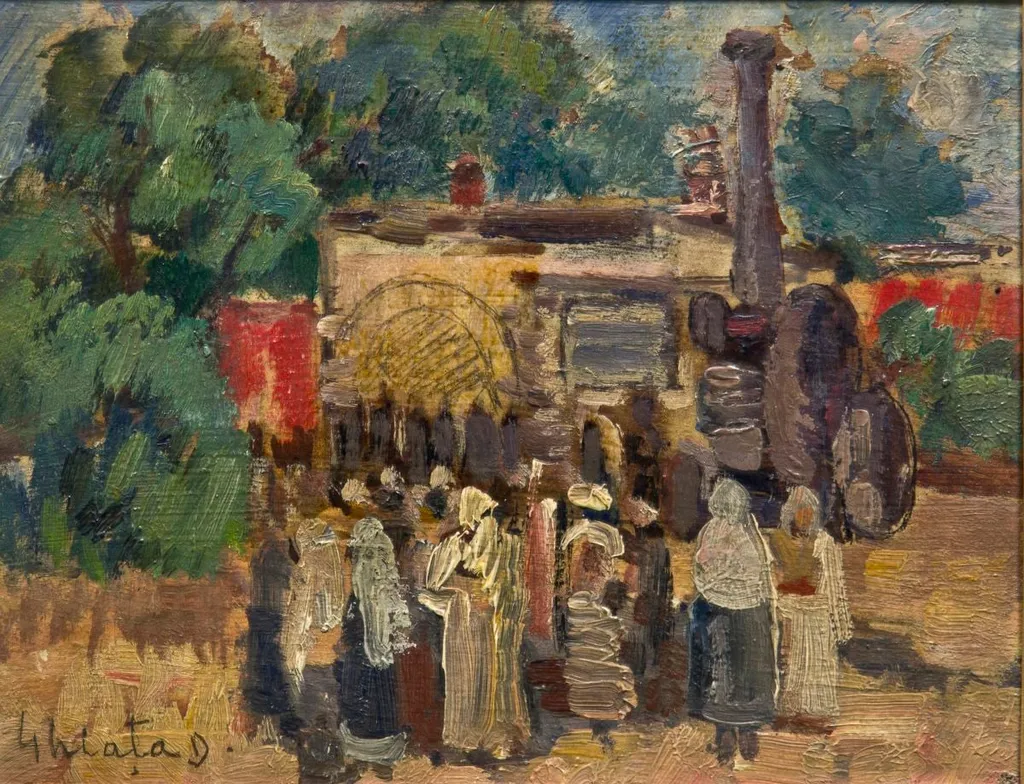
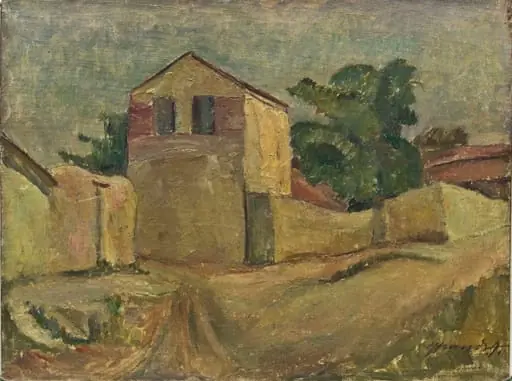
Peisaj cu batoză is a print by Dumitru Ghiață. It dates from 1938 and is held in the collection of the National Museum of Art of Romania.
About this work
Overview
Rendered in a restrained palette and loose brushwork, the painting avoids romanticism, instead presenting a quiet, unembellished moment in rural time.
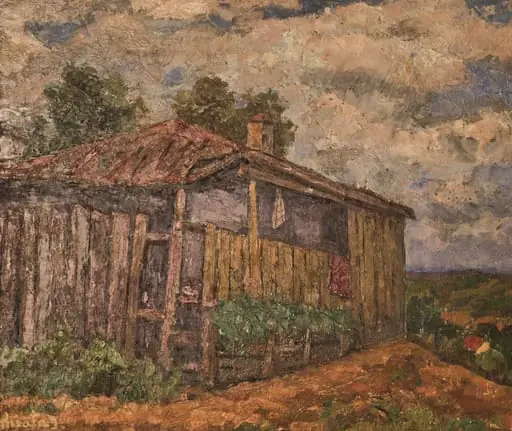
Painted around 1938 by Romanian artist Dumitru Ghiață, Peisaj cu batoză is a landscape depicting a rural scene centered on an industrializing element: a large, stationary machine. The work belongs to Ghiață’s broader exploration of the Romanian countryside, where traditional life intersects with emerging technology. Rendered in a restrained palette and loose brushwork, the painting avoids romanticism, instead presenting a quiet, unembellished moment in rural time.
Subject & Meaning
The scene shows a group of figures gathered near a heavy, chimneyed machine with a large side wheel, likely a water pump or agricultural engine. Dressed in period-appropriate attire, they stand in a field under scattered trees, suggesting a pause in labor. The machine, neither glorified nor vilified, becomes a neutral presence—integrated into the land rather than dominating it. The painting conveys a sense of quiet coexistence between human routine and mechanical intrusion.
Technique & Style
Ghiață employs a simplified, synthetic approach to form, with visible, economical brushstrokes that suggest rather than define detail. Colors are muted—earthy browns, soft greens, and grayed tones—creating a subdued atmosphere. The composition avoids dramatic perspective, favoring a flattened plane reminiscent of folk art traditions. This stylistic restraint aligns with his broader rejection of academic embellishment in favor of direct, observational representation.
History & Provenance
Created in the late 1930s, the painting emerged during a period when Romanian artists were redefining national identity through depictions of rural life. Ghiață, active in the interwar years, was part of a generation that sought authenticity beyond urban modernism. While specific ownership history is not widely documented, the work remains representative of his oeuvre, held in Romanian public collections and studied for its quiet commentary on rural transformation.
Context
In 1930s Romania, mechanization slowly reached agricultural communities, often met with ambivalence. Ghiață’s work reflects this transitional moment without overt judgment. His focus on everyday rural scenes—contrasting with the more dramatic nationalism of some contemporaries—positions him as an observer of quiet change. The painting aligns with broader European trends of realism and regionalism, yet retains a distinctly Romanian sensibility rooted in local experience.
Legacy
Ghiață’s Peisaj cu batoză contributes to a body of work that redefined Romanian landscape painting through its unadorned honesty. His synthesis of folk aesthetics and modernist simplification influenced later generations seeking to ground national art in lived rural reality. Though not widely exhibited internationally, the painting remains a touchstone in Romanian art history for its understated portrayal of a changing countryside.
Artist & collection
Artist
Dumitru Ghiață (22 September 1888 – 3 July 1972) was a Romanian landscape painter.