Artwork
Piață în Bucșinescu
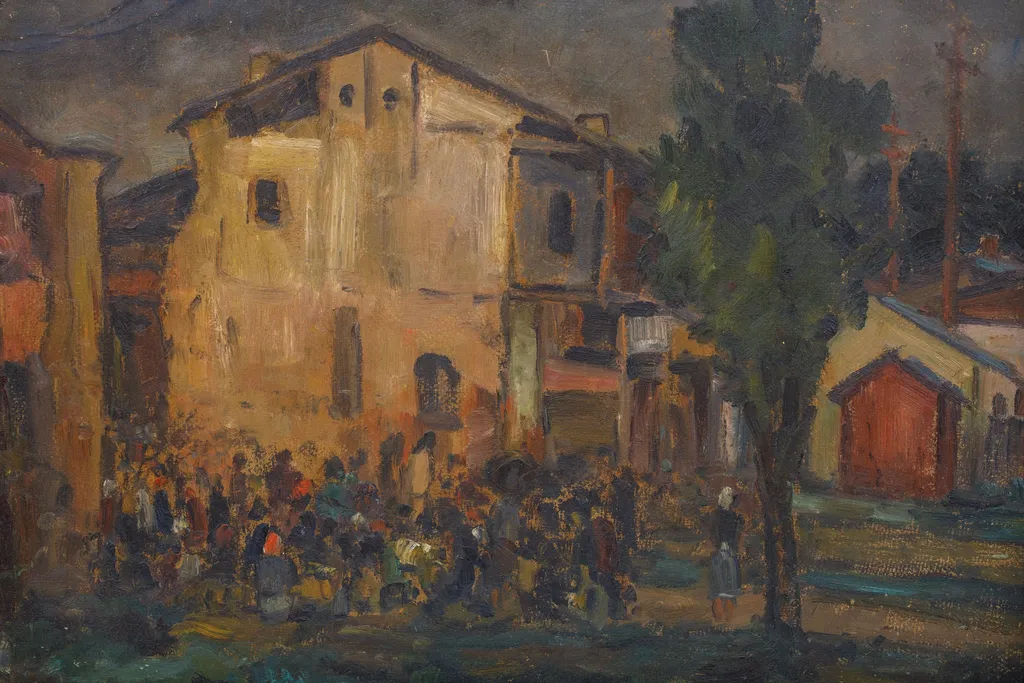
Piață în Bucșinescu is a print by Agafiței Costache. It dates from 1955 and is held in the collection of the Moldova National Museum Complex.
About this work
Overview
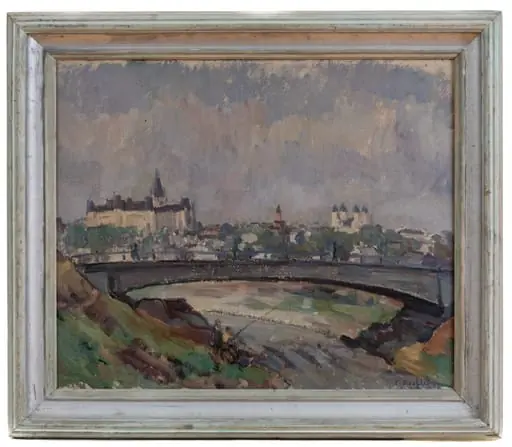
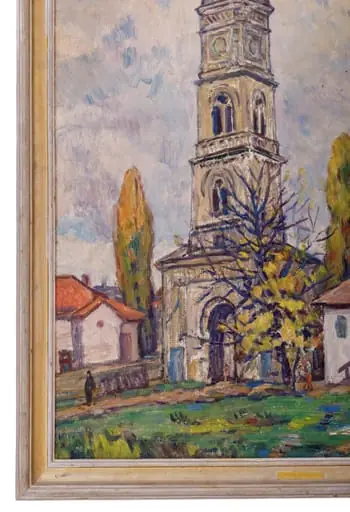
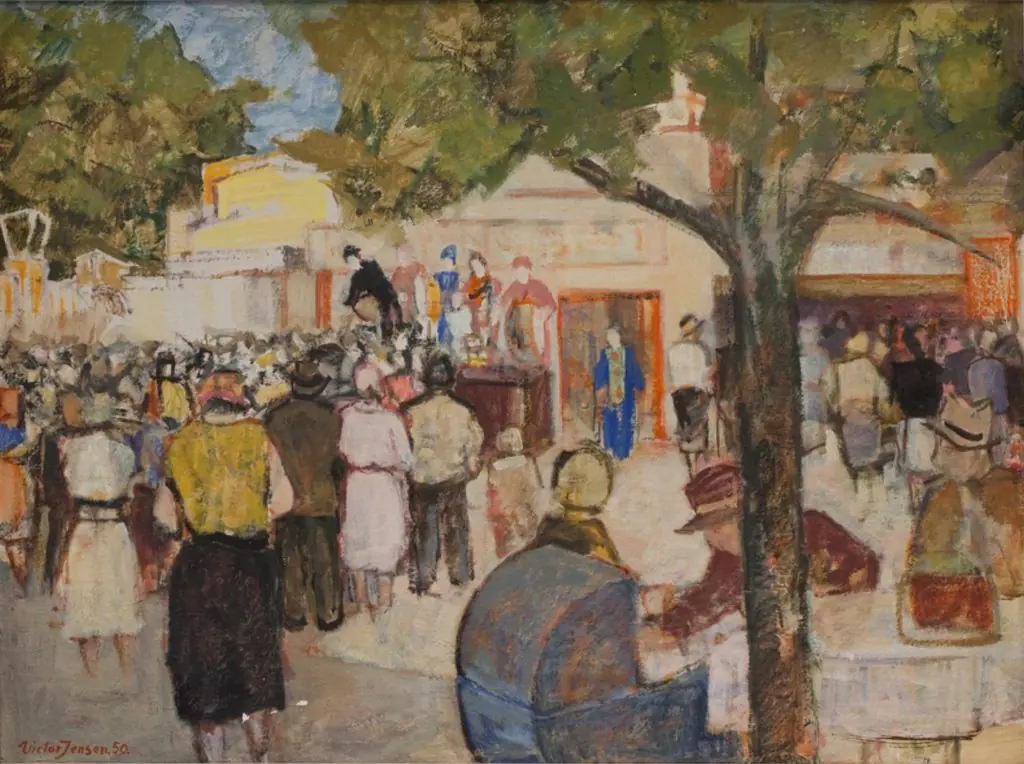
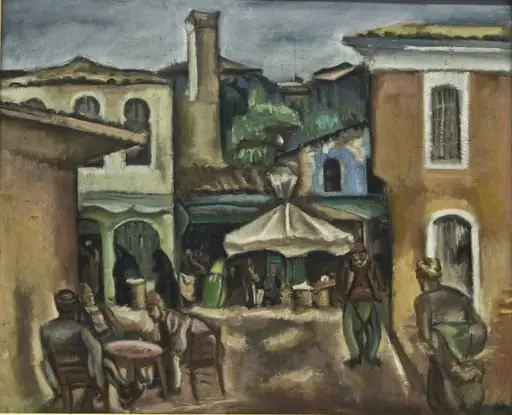
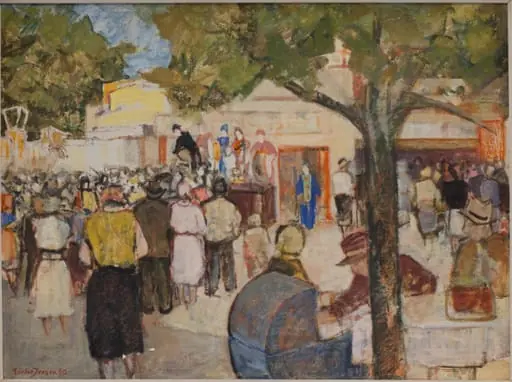
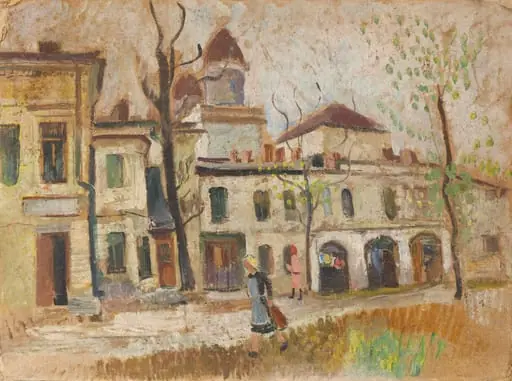
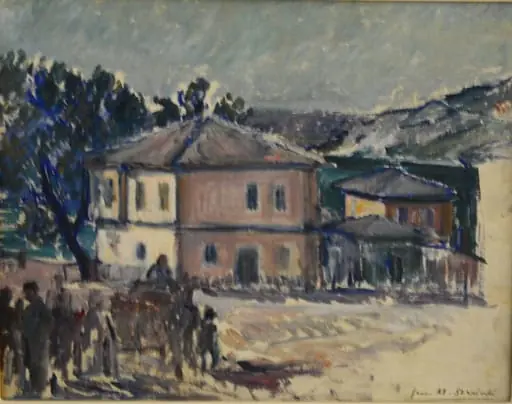
Piață în Bucșinescu, dated around 1955, is a painting by Romanian artist Agafiței Costache that captures a moment in a small-town square. The composition centers on a dense gathering of figures interacting within a confined urban space, framed by modest buildings and a dominant tree. The scene conveys quiet rhythm rather than chaos, suggesting daily life in postwar rural Romania.
Subject & Meaning
The painting portrays ordinary citizens engaged in routine activities—conversing, standing, moving—without clear narrative focus. The absence of dramatic action or symbolic elements points to a documentary impulse, valuing the unremarkable rhythms of communal life. The tree, rooted in the foreground, may symbolize continuity amid social change, anchoring the transient human activity.
Technique & Style
The sky, rendered in a somber grey, contrasts with the warmer ground tones, enhancing depth and directing attention to the crowd.
Costache employs muted earth tones for the buildings and figures, creating a cohesive, grounded palette. Brushwork is loose yet deliberate, suggesting movement without fine detail. The sky, rendered in a somber grey, contrasts with the warmer ground tones, enhancing depth and directing attention to the crowd. Light is diffuse, avoiding sharp shadows, contributing to an atmosphere of quiet simultaneity.
History & Provenance
The painting emerged during a period of state-directed cultural production in Romania, when artists were encouraged to depict everyday labor and communal life. While not widely exhibited internationally, Piață în Bucșinescu remains part of private and institutional collections within Romania, reflecting its regional significance rather than national prominence.
Context
Created in the mid-1950s, the work aligns with socialist realism’s emphasis on collective life, though it avoids overt propaganda. Costache’s focus on a provincial square, rather than industrial or agricultural labor, suggests a more personal, observational approach. The scene reflects the persistence of traditional town structures amid rapid modernization efforts in postwar Romania.
Legacy
Agafiței Costache’s body of work, including this painting, contributes to a quieter strand of Romanian art that prioritizes local observation over ideological messaging. While not widely studied outside national circles, Piață în Bucșinescu endures as a modest yet resonant record of everyday social space in mid-20th-century Romania.
Artist & collection
Artist
Agafiței Costache made prints and paintings of everyday Romanian life in the mid-20th century.