Artwork
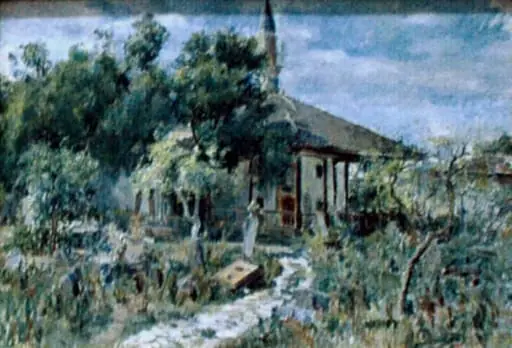
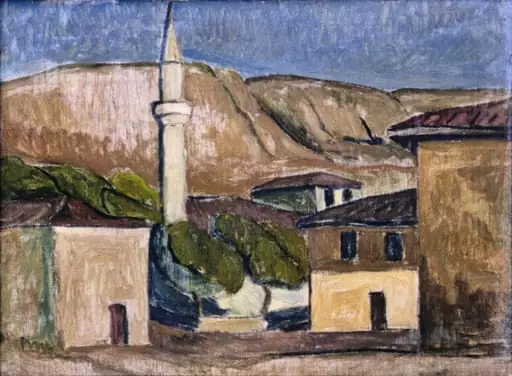
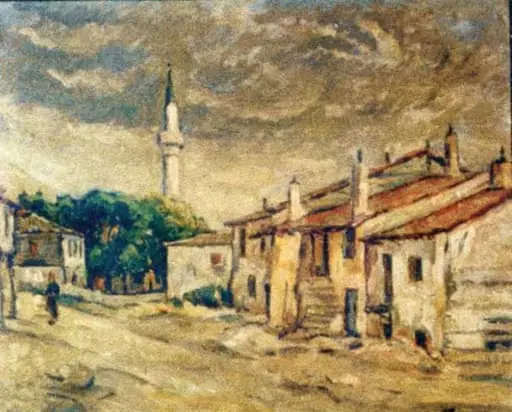
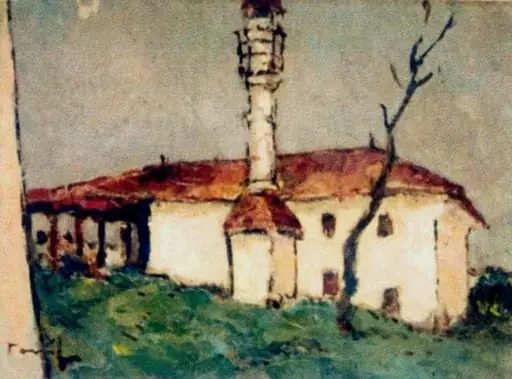
Peisaj cu moschee
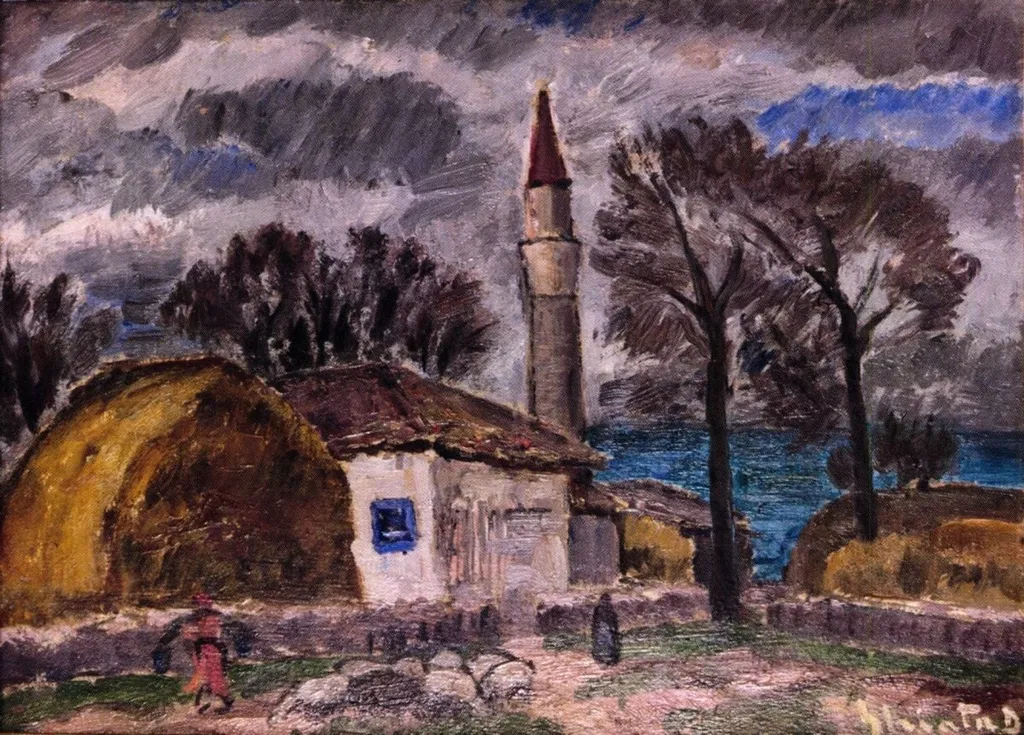
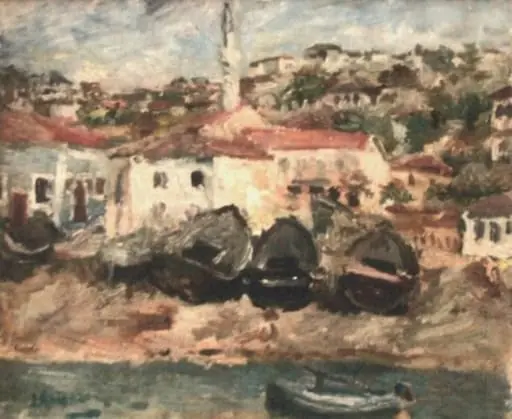
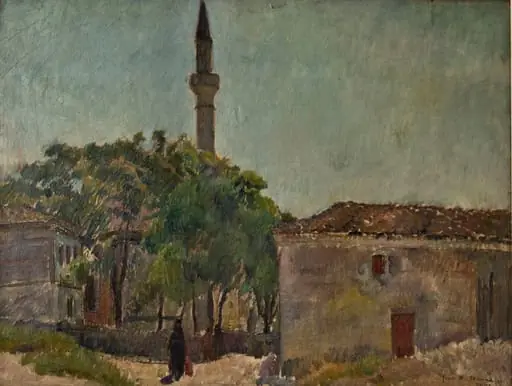
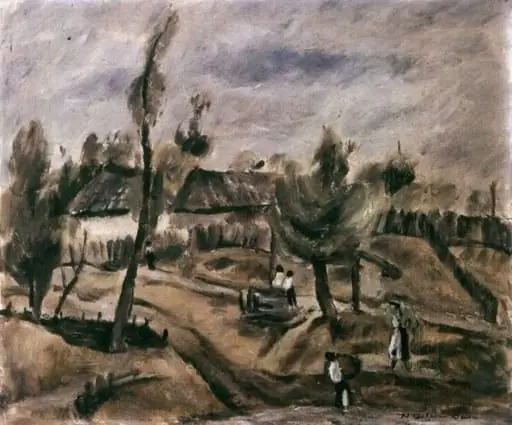
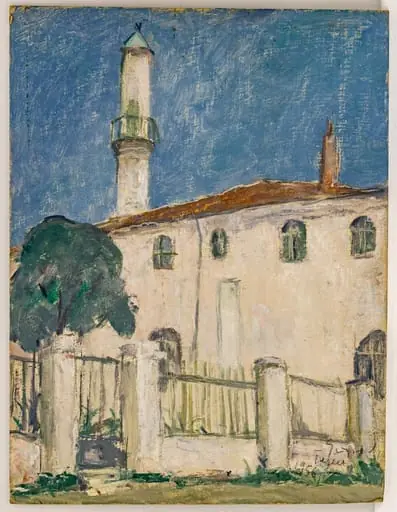
Peisaj cu moschee is an unspecified painting by Dumitru Ghiață. It dates from 1938 and is held in the collection of the Bucharest Municipality Museum.
About this work
Overview
Ghiață, born in 1888 in Colibași, favored unadorned depictions of local life, avoiding romanticism in favor of direct observation and structural clarity.
Dumitru Ghiață’s *Peisaj cu moschee*, dated around 1938, is a landscape painting that captures a quiet rural scene in southern Romania. Executed with a restrained palette and textured brushwork, it reflects the artist’s consistent focus on everyday environments. Ghiață, born in 1888 in Colibași, favored unadorned depictions of local life, avoiding romanticism in favor of direct observation and structural clarity.
Subject & Meaning
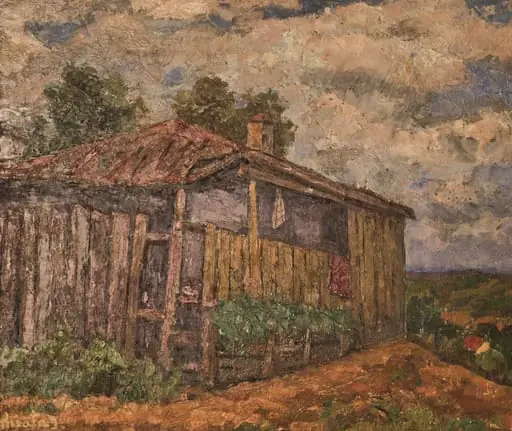
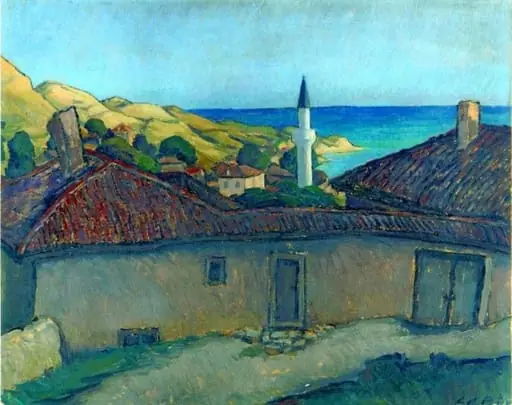
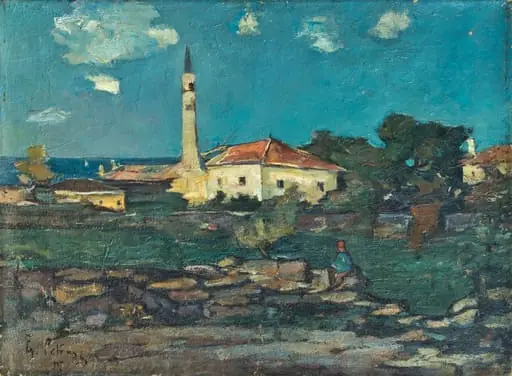
The painting presents a modest white structure with a slender, pointed tower, interpreted as a mosque, situated beside a path where two figures walk. The building is rendered without ornamental detail, suggesting its integration into the landscape rather than its religious function. The figures are indistinct, emphasizing solitude and routine over narrative. The scene conveys a sense of quiet endurance, rooted in the rhythms of rural existence.
Technique & Style
Ghiață employed thick, uneven brushstrokes, particularly in the sky and foliage, creating a tactile, almost sculptural surface. The sky’s dark, agitated texture contrasts with the solid, simplified forms of the building and path. His approach—leaning toward synthesis rather than realism—reduces natural elements to essential shapes, aligning with a broader interwar tendency to distill folk motifs into structured compositions.
History & Provenance
Created during Romania’s interwar period, the work emerged from a cultural moment when artists sought to define a national visual language through regional subjects. Ghiață, active in southern Romania, drew from local environments and vernacular architecture. While specific ownership history is not documented, the painting is recognized as part of his broader body of work centered on rural life and landscape.
Context
In the 1930s, Romanian artists increasingly turned to indigenous themes as a counterpoint to European modernism. Ghiață’s work, though not formally aligned with any movement, resonated with this trend through its focus on provincial scenes and modest architecture. The mosque, a rare subject in his oeuvre, hints at the multicultural fabric of southern Dobruja, where Muslim and Orthodox communities coexisted.
Legacy
Ghiață’s *Peisaj cu moschee* exemplifies a quiet, unpretentious strand of Romanian modernism that prioritized authenticity over spectacle. His use of texture and simplified form influenced later generations interested in regional identity. Though not widely exhibited, the painting remains a representative example of how rural landscapes were reinterpreted through a personal, materially grounded aesthetic during the interwar years.
Artist & collection
Artist
Dumitru Ghiață (22 September 1888 – 3 July 1972) was a Romanian landscape painter.