Artwork
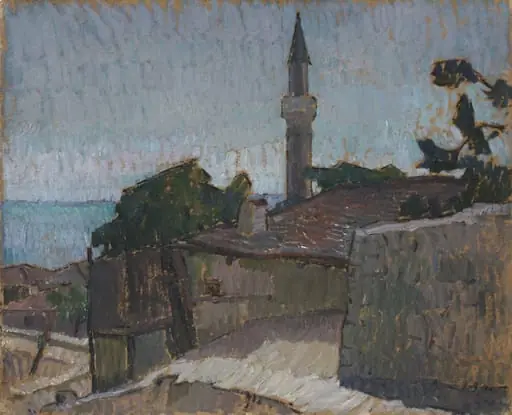
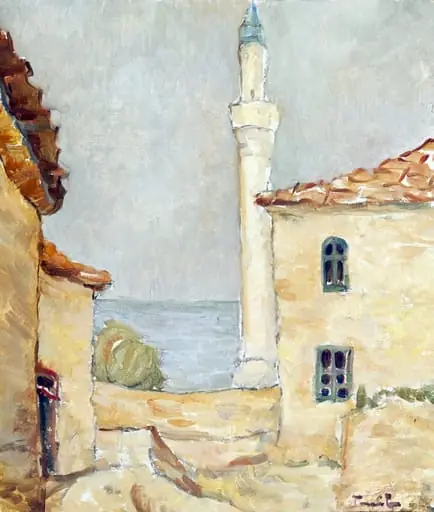
Balcic - Peisaj cu minaret
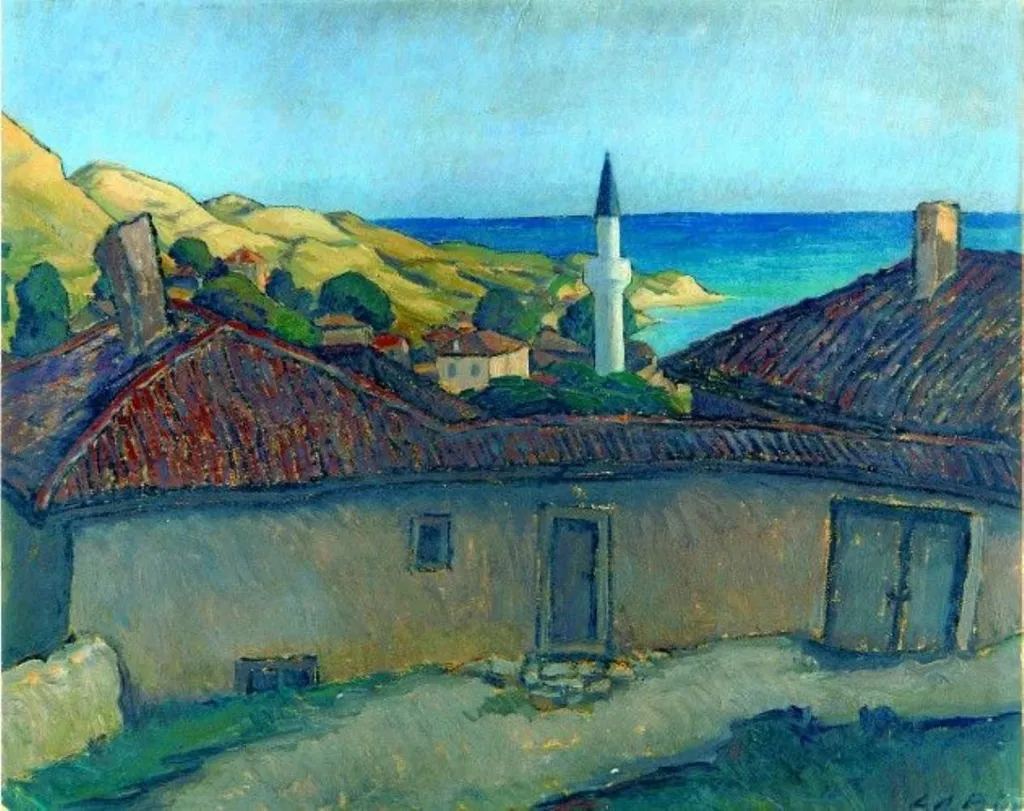
Balcic - Peisaj cu minaret is an unspecified painting by Leon Alexandru Biju. It is held in the collection of the Colecție particulară - Elveția.
About this work
Overview
A muted palette of browns, greens, and blues anchors the composition, while the sea and pale sky recede into the distance, creating a sense of calm isolation.
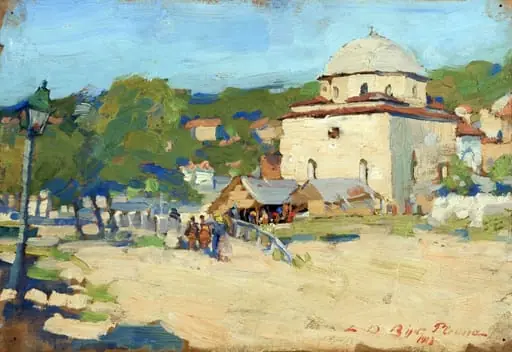
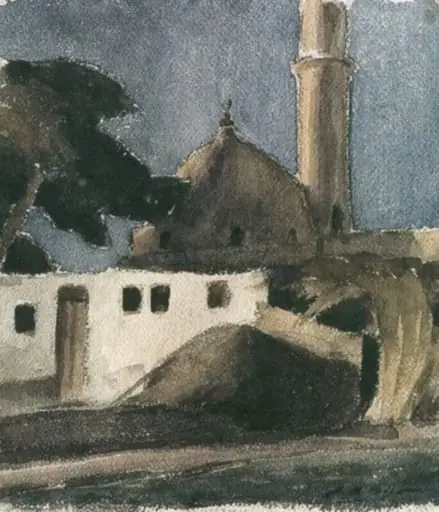
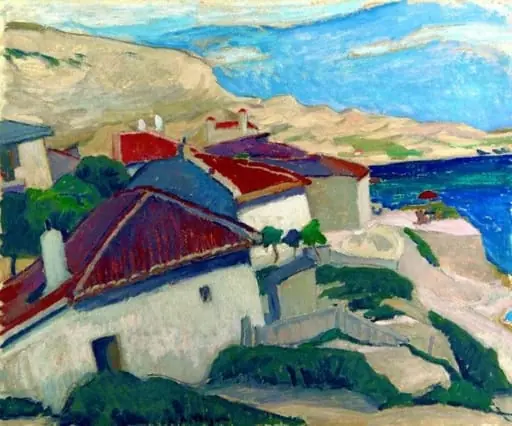
This painting depicts a quiet coastal settlement in Balchik, characterized by its modest architecture and a prominent minaret rising above the rooftops. The scene is rendered with a tactile quality, using thickly applied paint to suggest the texture of stone, rusted metal, and natural terrain. A muted palette of browns, greens, and blues anchors the composition, while the sea and pale sky recede into the distance, creating a sense of calm isolation.
Subject & Meaning
The minaret, a clear marker of Islamic architecture, anchors the town’s cultural identity within a landscape shaped by the Black Sea coast. Its verticality contrasts with the low, horizontal lines of the buildings and walls, suggesting a quiet coexistence of human habitation and spiritual presence. The absence of figures emphasizes solitude and timelessness, inviting contemplation rather than narrative.
Technique & Style
The artist employs impasto to build surface texture, particularly in the stone wall and roof, giving physical weight to the scene. Brushstrokes are deliberate and uneven, capturing the roughness of weathered materials without idealizing them. The sky and sea are rendered with looser, thinner applications, creating a subtle contrast that draws attention to the solidity of the built environment.
History & Provenance
Painted during the period when Balchik was part of Romania, the work reflects the region’s multicultural character under interwar administration. It likely stems from the artist’s direct observation of the town, possibly during a visit or extended stay. The painting’s origins remain undocumented beyond its title and visual content, but it aligns with regional landscape traditions of the time.
Context
Balchik, situated on Romania’s Black Sea coast, was historically a crossroads of Ottoman, Bulgarian, and Romanian influences. The presence of a minaret in a predominantly Christian country highlights the layered religious history of the region. This painting captures a moment of quiet coexistence, before later political shifts altered the town’s demographic and architectural landscape.
Legacy
The work contributes to a modest but significant body of interwar Romanian landscape painting that documented lesser-known towns with observational honesty. It avoids romanticism, instead preserving the texture and tone of everyday life. While not widely exhibited, it remains a quiet testament to the region’s architectural and cultural complexity during a period of transition.
Artist & collection
Artist
Leon Alexandru Biju made small prints and paintings of quiet places: Balchik’s shoreline, still lifes with old religious objects, and bare trees in winter.