Artwork
The Fruit Market
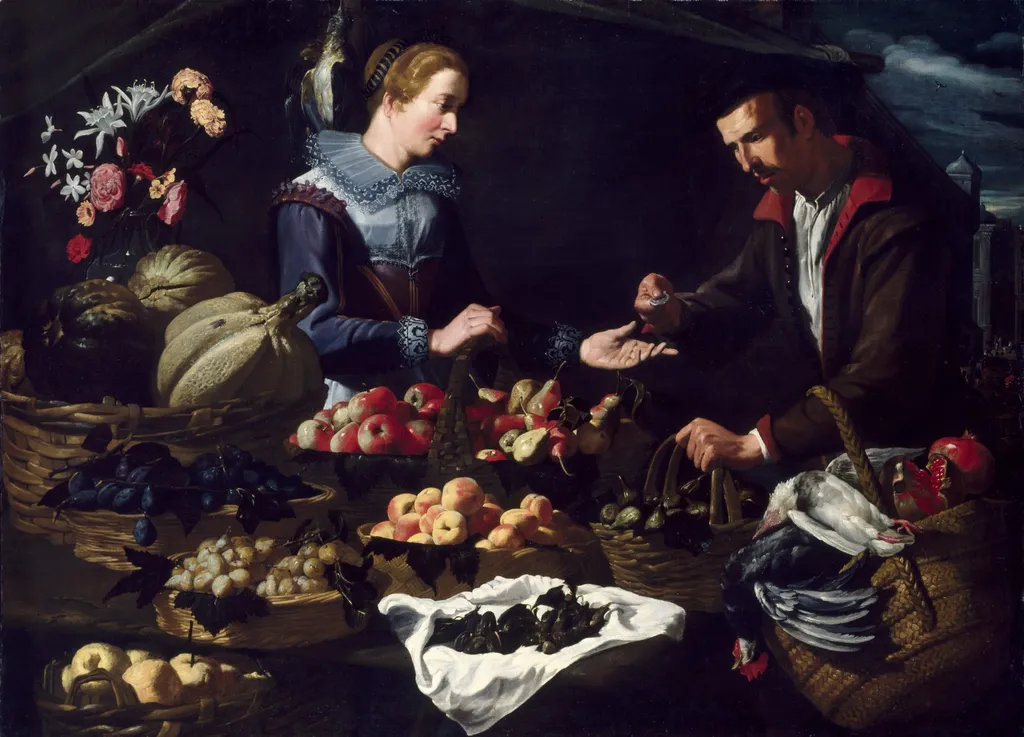
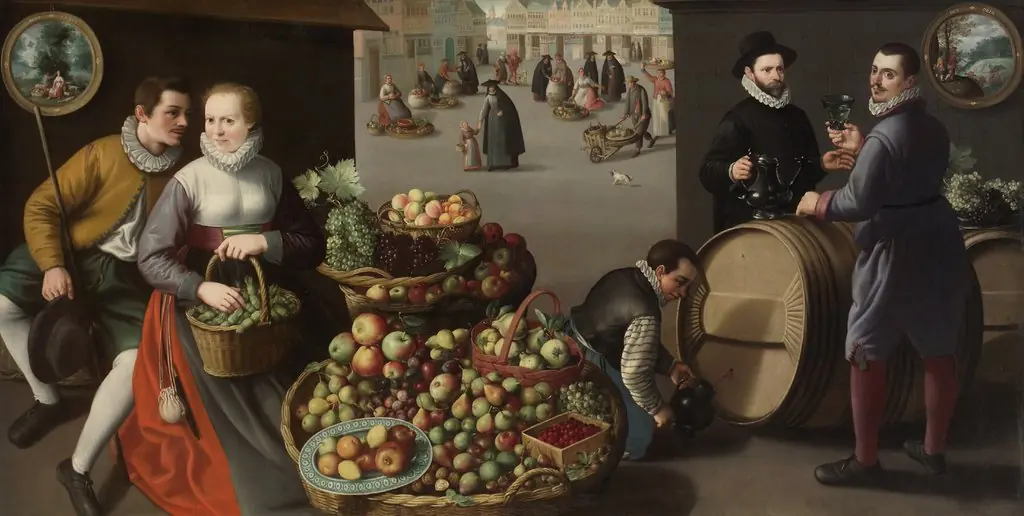
The Fruit Market is an oil painting by the Early Baroque Italian artist Giacomo Legi. It dates from 1625 and is held in the collection of the Museum of Fine Arts, Houston.
About this work
Overview
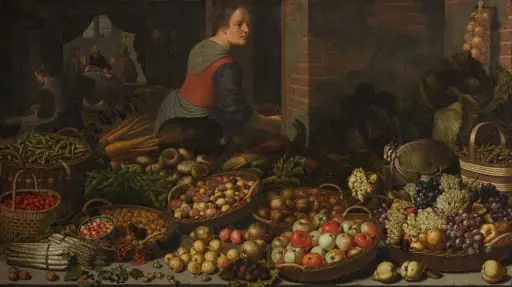
Created in 1625 by Giacomo Legi, *The Fruit Market* is an oil painting that captures a bustling stall laden with fruit and vegetables. The composition centers on a man and a woman, each holding a basket, set against a table overflowing with apples, pears, squash and other produce. The work exemplifies the early Baroque interest in everyday commercial scenes.
Subject & Meaning
The painting presents a domestic market scene, emphasizing the tactile richness of fresh food and the social interaction of buyers. The figures, dressed in modest contemporary attire, suggest a realistic glimpse into 17th‑century market life, while the abundance of produce may allude to themes of prosperity and the sensory pleasures of the material world.
Technique & Style
Legi employs a detailed, naturalistic approach typical of early Italian Baroque still lifes. The oil medium allows for luminous color contrasts—deep reds, blues and earthy browns—that render the fruit with convincing texture and volume. Careful modeling of light across the surfaces creates a three‑dimensional effect, enhancing the immediacy of the scene.
History & Provenance
Born in Flanders and active mainly in Milan, Legi was known for market and still‑life subjects during the first half of the 17th century. *The Fruit Market* entered the Museum of Fine Arts, Houston, where it remains in the permanent collection, providing a representative example of Legi’s work within an American public institution.
Own this work as a print
Artist & collection
Artist
Giacomo Legi (±1600, Liège, Prince-Bishopric of Liège or Antwerp - between 1640 and 1645, Milan) was a Baroque painter of Flemish descent who was active principally in northern Italy during the first half of the 17th century.