Artwork
Kitchen Scene, with Jesus in the House of Martha and Mary in the background
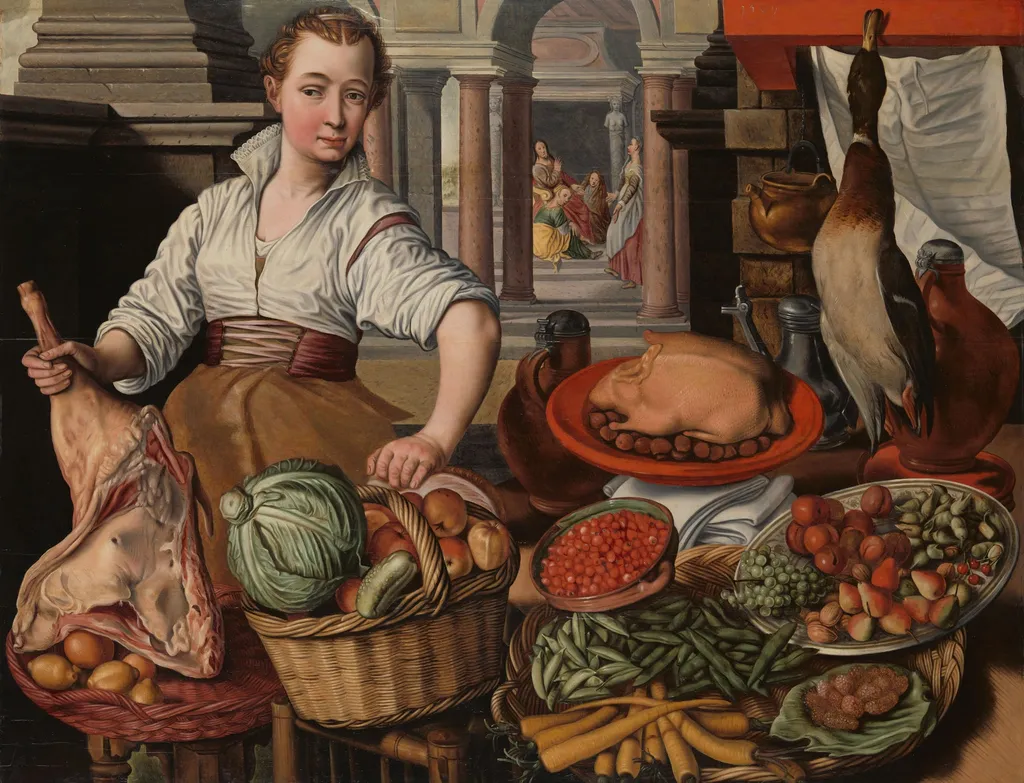
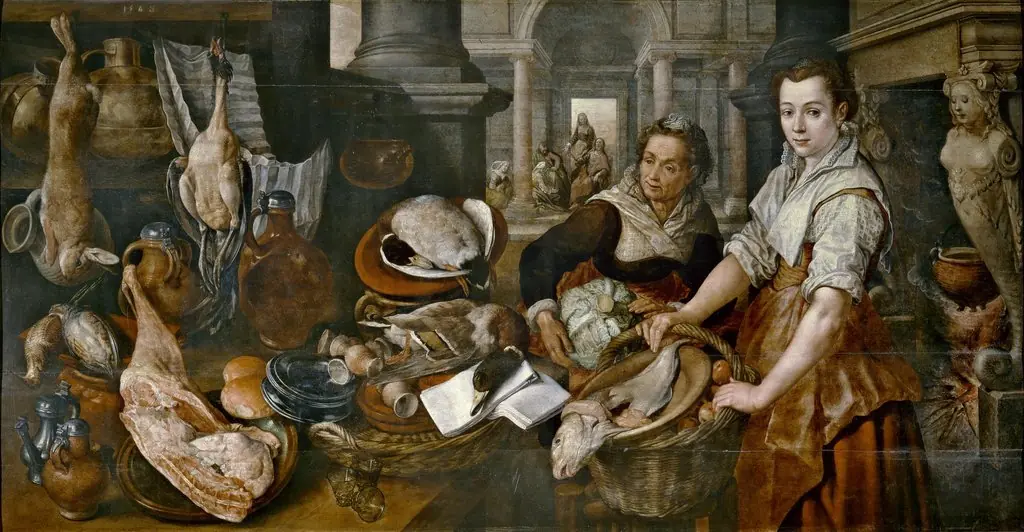
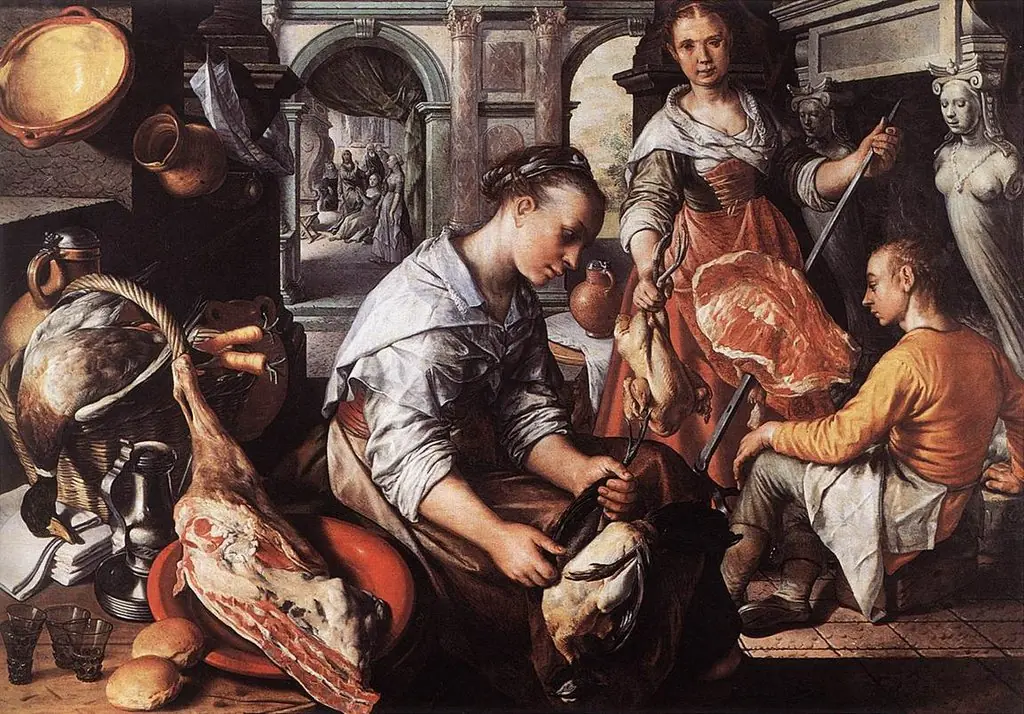
Kitchen Scene, with Jesus in the House of Martha and Mary in the background is an unspecified painting by the Northern Renaissance artist Unknown. It dates from 1569 and is held in the collection of the Rijksmuseum. This painting presents a vivid domestic interior dominated by the routines of kitchen labor.
About this work
Overview
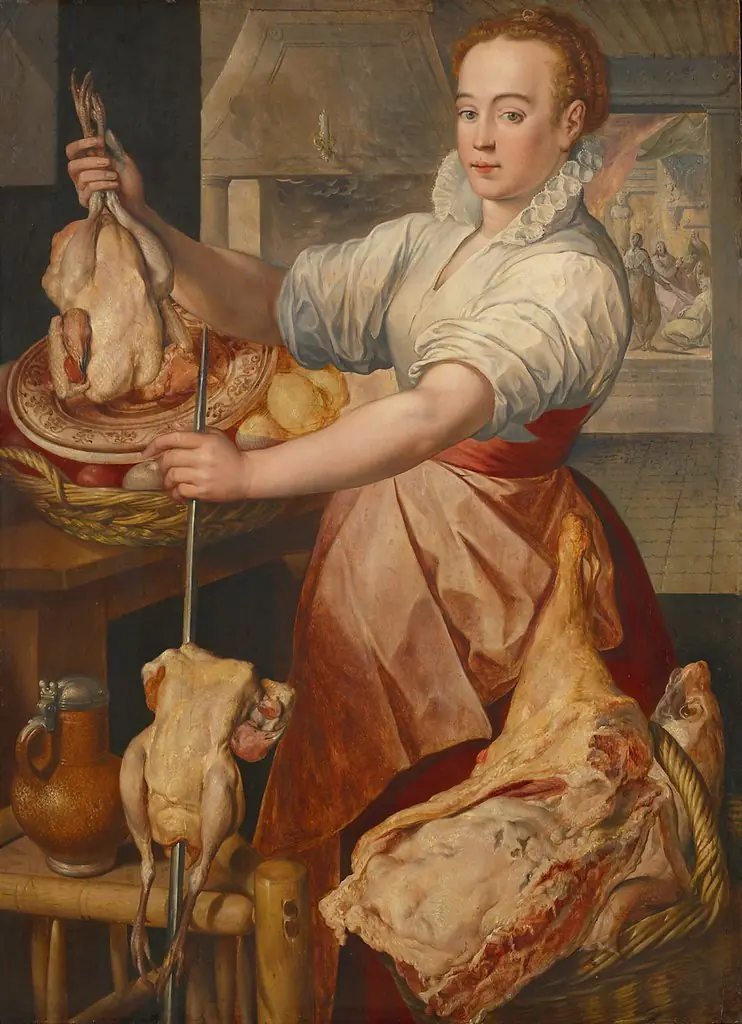
A servant holds a ham while vegetables tumble from a basket, and poultry, fruit, and ceramic vessels clutter the table.
This painting presents a vivid domestic interior dominated by the routines of kitchen labor. A servant holds a ham while vegetables tumble from a basket, and poultry, fruit, and ceramic vessels clutter the table. Behind them, barely discernible, a biblical scene unfolds: Jesus speaking with Martha and Mary. The composition deliberately minimizes the sacred moment, subordinating it to the immediacy of everyday activity.
Subject & Meaning
The foreground depicts the mundane tasks of food preparation, grounding the image in the material world. The background alludes to Luke 10:38–42, where Mary chooses spiritual attention over domestic duty. By shrinking this moment to a distant vignette, the artist suggests a tension between worldly responsibilities and spiritual ideals—perhaps implying how daily life obscures or displaces religious contemplation.
Technique & Style
The painter employs sharp detail and naturalistic lighting to render textures of meat, skin, pottery, and foliage with precision. The background scene is rendered in softer tones and reduced scale, creating visual distance. This contrast in focus and size directs the viewer’s attention toward the kitchen’s tangible objects, reinforcing the primacy of the physical over the spiritual in the composition’s hierarchy.
History & Provenance
The work originates from the Dutch Golden Age, likely painted in the early 17th century by an artist trained in genre painting traditions. It reflects the period’s fascination with domestic interiors and moral undertones in everyday scenes. Its early ownership remains undocumented, but it aligns with collections of Dutch burghers who valued art that mirrored their own lives and values.
Context
During this era, Dutch painters frequently embedded religious narratives within secular settings, appealing to a Protestant audience wary of overt ecclesiastical imagery. The kitchen, as a site of moral and spiritual testing, became a common metaphor. This painting exemplifies how faith was not always depicted in grand altarpieces but woven into the fabric of ordinary existence.
Legacy
The painting’s subtle inversion of sacred and mundane themes influenced later genre works that layered meaning within domestic spaces. Its approach to scale and focus—making the spiritual background an afterthought—became a quiet motif in Northern European art, encouraging viewers to consider where attention truly lies in daily life.
Artist & collection

 Domestic Scene
 Giacomo and Cardinal Marco, investing Andrea, Abbot of San Zeno, with his Benefice
 The Nymph of Fontainebleau
 Portrait of a Woman
 Madonna and Child with Saints in the Enclosed Garden
 Venus and Minerva
 Family Group of Four on Sofa
 Wall painting from Room H of the Villa of P. Fannius Synistor at Boscoreale