Artwork
Narcissus
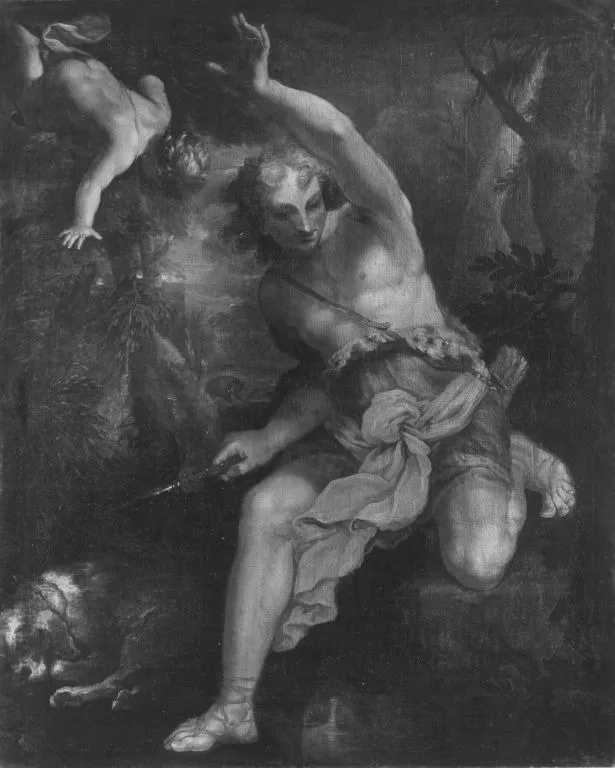
Narcissus is an unspecified painting by the Early Baroque Italian artist Gian Lorenzo Bernini. It dates from 1639 and is held in the collection of the Alte Pinakothek.
About this work
Overview
Created in 1639, *Narcissus* belongs to the early Italian Baroque and illustrates a scene from classical mythology. The work is part of the Alte Pinakothek’s collection, where it is presented as a study of youthful beauty and self‑reflection through dramatic lighting.
Subject & Meaning
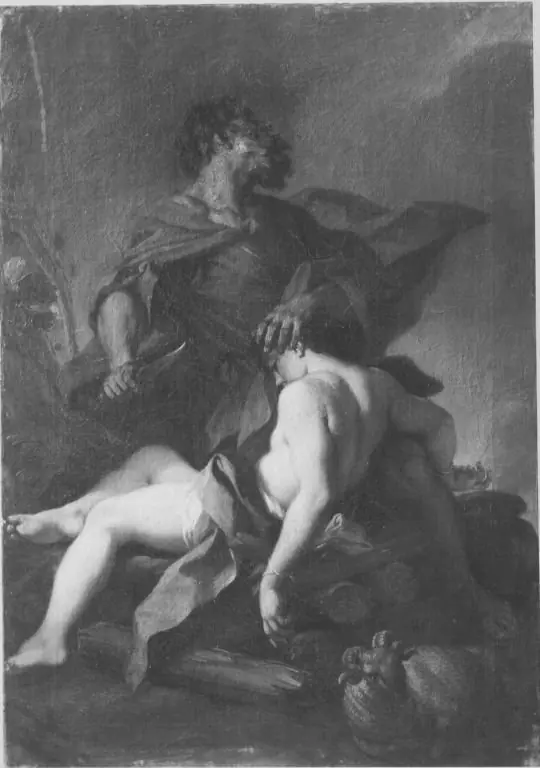
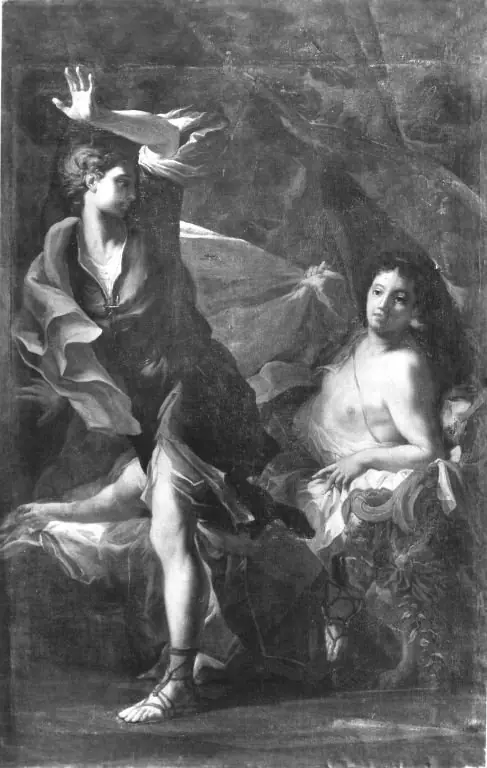
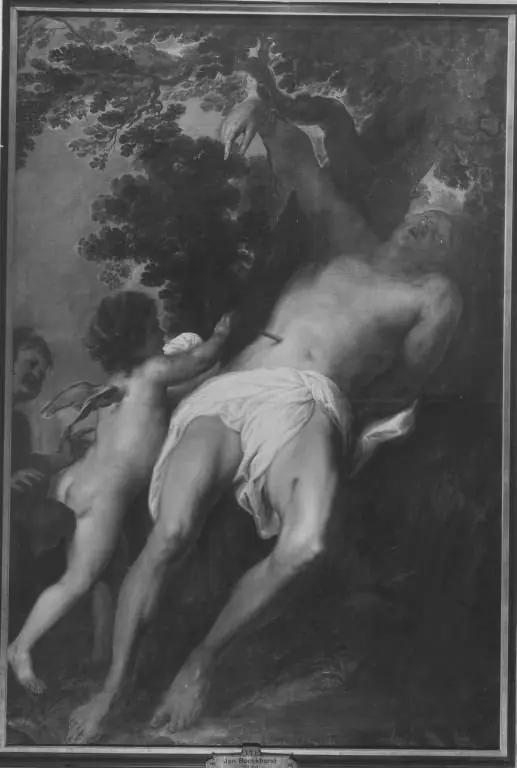
The composition shows a half‑naked young man reclining on his side, his gaze directed downward, hair spilling over his shoulder. The figure’s pose and the title reference the myth of Narcissus, suggesting themes of vanity and introspection, while the shadowy arms in the background hint at unseen forces or inner turmoil.
Technique & Style
Bernini employs a stark chiaroscuro, juxtaposing illuminated flesh against a dark, swirling backdrop. The intense light falls on the torso, giving the skin an almost luminous quality, while the surrounding shadows recede, creating depth and emphasizing the solitary figure.
History & Provenance
The painting was produced during Bernini’s prolific period in the late 1630s, a time when he was expanding beyond sculpture into painting and architecture. It entered the Alte Pinakothek’s holdings later, though the precise acquisition path remains undocumented.
Context
*Narcissus* reflects the Baroque fascination with dramatic contrast and emotional intensity, aligning with contemporary works that explored mythological subjects through theatrical lighting. Its focus on a single, isolated figure mirrors the period’s interest in personal experience within grand narratives.
Artist & collection
Artist
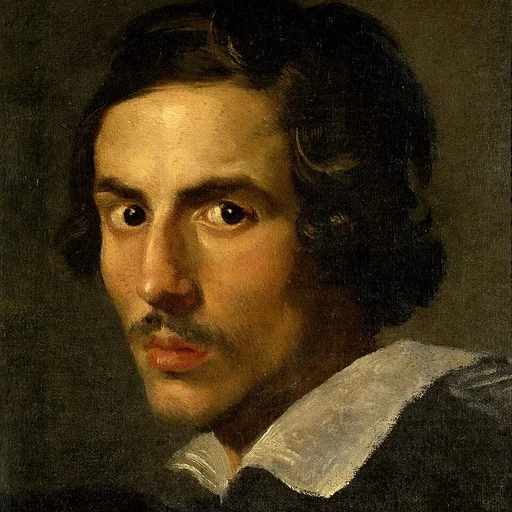
Gian Lorenzo (or Gianlorenzo) Bernini (UK: , US: ; Italian: ; Italian Giovanni Lorenzo; 7 December 1598 – 28 November 1680) was an Italian sculptor, architect, painter and city planner.