Artwork
Elizabeth Beltzhoover Mason
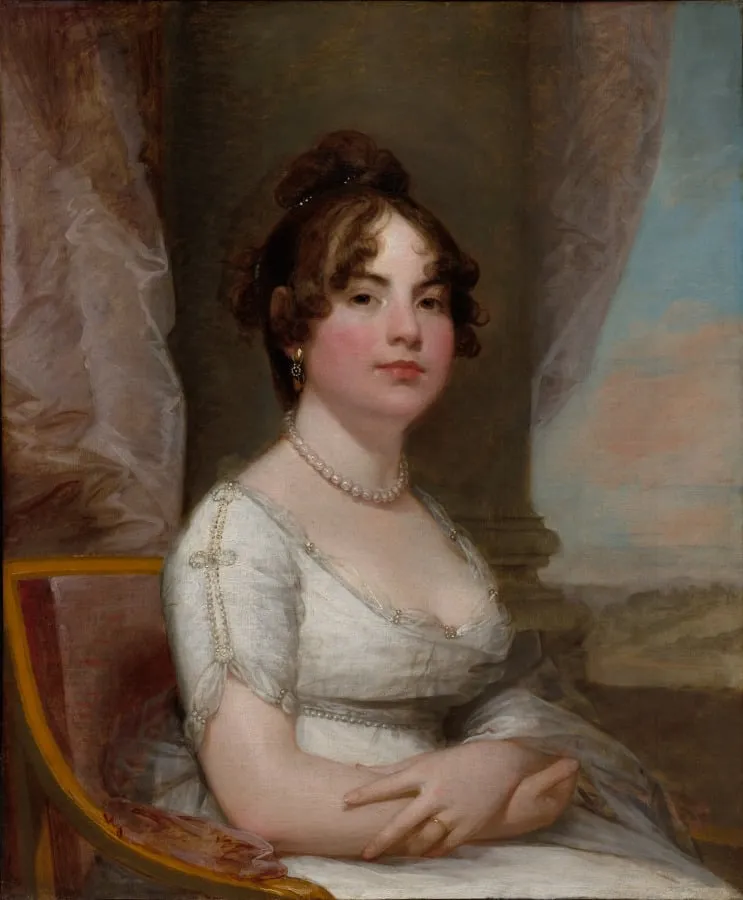
Elizabeth Beltzhoover Mason is an unspecified painting by the American Impressionist artist Gilbert Stuart. It dates from 1804 and is held in the collection of the Cleveland Museum of Art. The portrait presents a woman in a pale, high‑waisted gown, her hair arranged in soft ringlets and a pearl necklace accentuating her attire.
About this work
Gilbert Stuart painted many wealthy Americans, but this woman’s husband owned a Maryland plantation worked by enslaved people.
Here’s a fresh try—counted at 100 words:
A woman in a pale dress sits against a dark background, her pearls glowing. Her hair tumbles in soft curls, and she looks down at us with calm confidence. The high waist of her dress was the latest style in 1800.
Gilbert Stuart painted many wealthy Americans, but this woman’s husband owned a Maryland plantation worked by enslaved people. The portrait shows her elegance, not the world that made it possible.
If you like this quiet power, look up more portraits by Gilbert Stuart (American, 1755–1828).
Overview
The portrait presents a woman in a pale, high‑waisted gown, her hair arranged in soft ringlets and a pearl necklace accentuating her attire. Set against a dark background, she gazes downward with a composed confidence, her chin slightly raised. The work exemplifies the refined portraiture typical of early‑19th‑century American elite.
Subject & Meaning
The sitter, Elizabeth Beltzhoover Mason, is depicted as a figure of genteel poise, embodying the social aspirations of her class. Her assured expression and elegant dress convey both personal dignity and the status afforded by her family’s wealth, while subtly reflecting the gendered expectations of women in her social circle.
Technique & Style
Executed by Gilbert Stuart, the painting employs his characteristic loose brushwork and keen attention to fabric texture. The contrast between the luminous pearls and the dark backdrop highlights the sitter’s features, while the high‑waisted silhouette aligns with contemporary fashion trends around 1800.
History & Provenance
Stuart, a leading portraitist of the young republic, painted Mason during a period when his clientele comprised affluent Americans. Her husband, a prominent Maryland lawyer and Jeffersonian official, owned a plantation that, according to a 1807 inventory, enslaved roughly 185 individuals, underscoring the economic foundation of the family’s patronage.
Context
The portrait reflects the intersection of personal representation and the broader socioeconomic structures of early America. While the sitter’s elegance is foregrounded, the wealth enabling such commissions was directly tied to plantation labor and the institution of slavery prevalent in Maryland at the time.
Artist & collection

Artist
Gilbert Stuart (né Stewart; December 3, 1755 – July 9, 1828) was an American painter born in the Rhode Island Colony who is widely considered one of America's foremost portraitists.

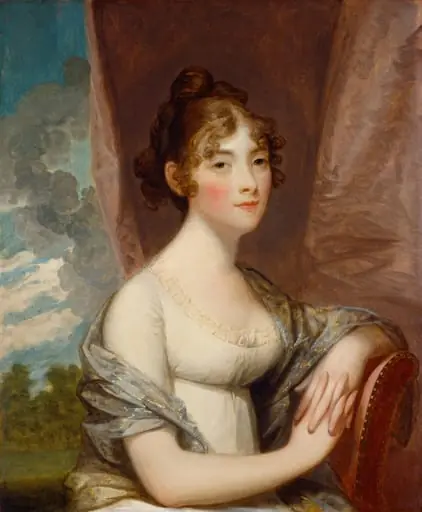 Ann Barry
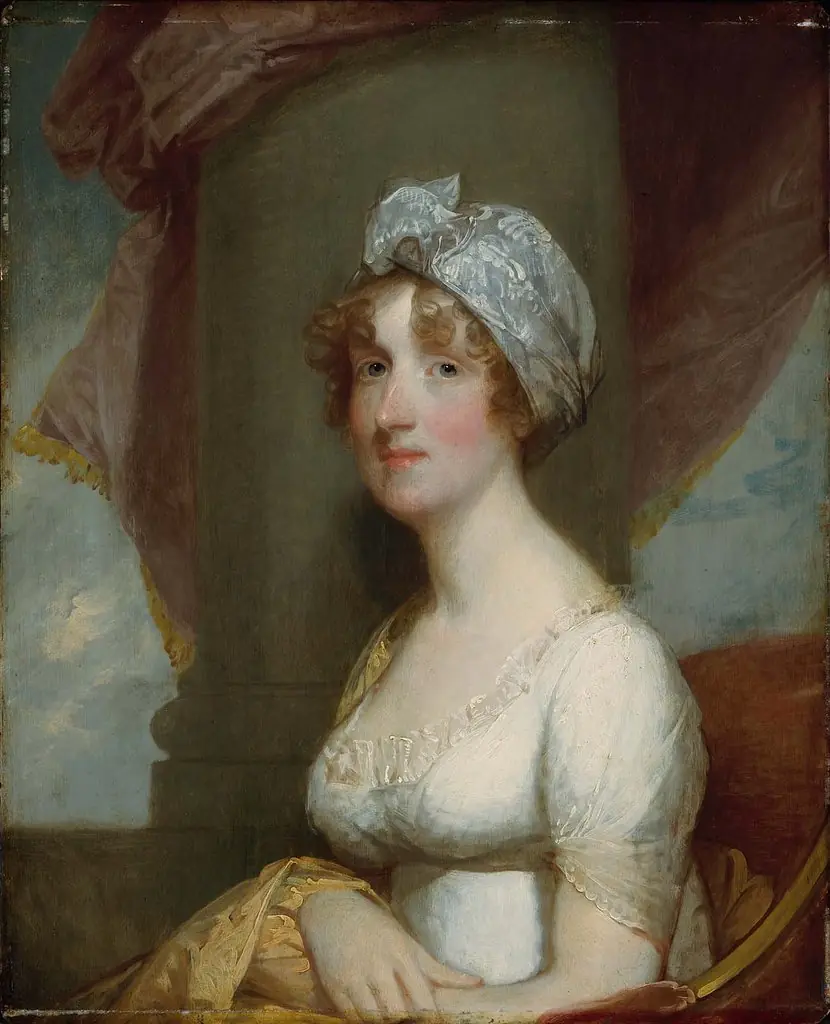 Mrs. Thomas Bartlett (Hannah Gray Wilson)
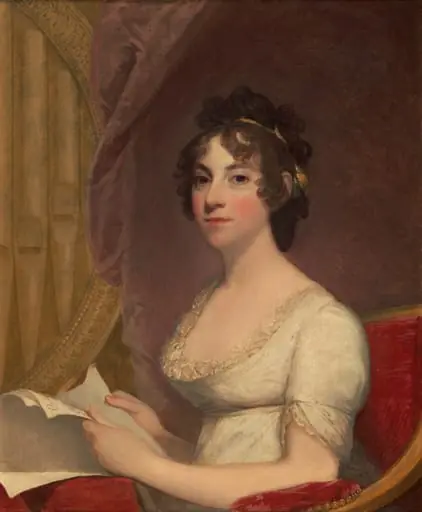 Anna Maria Brodeau Thornton (Mrs. William Thornton)
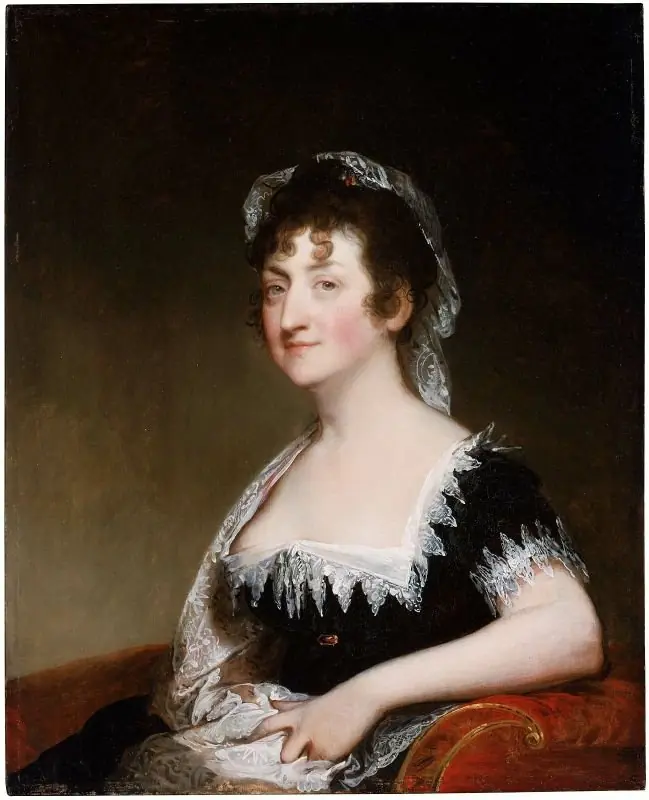 Mrs. James Swan (Hepzibah Clark).
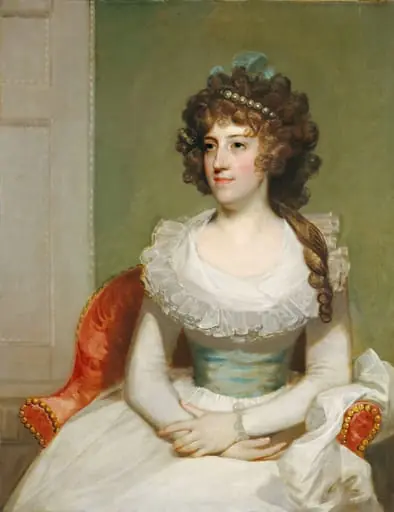 Matilda Caroline Cruger
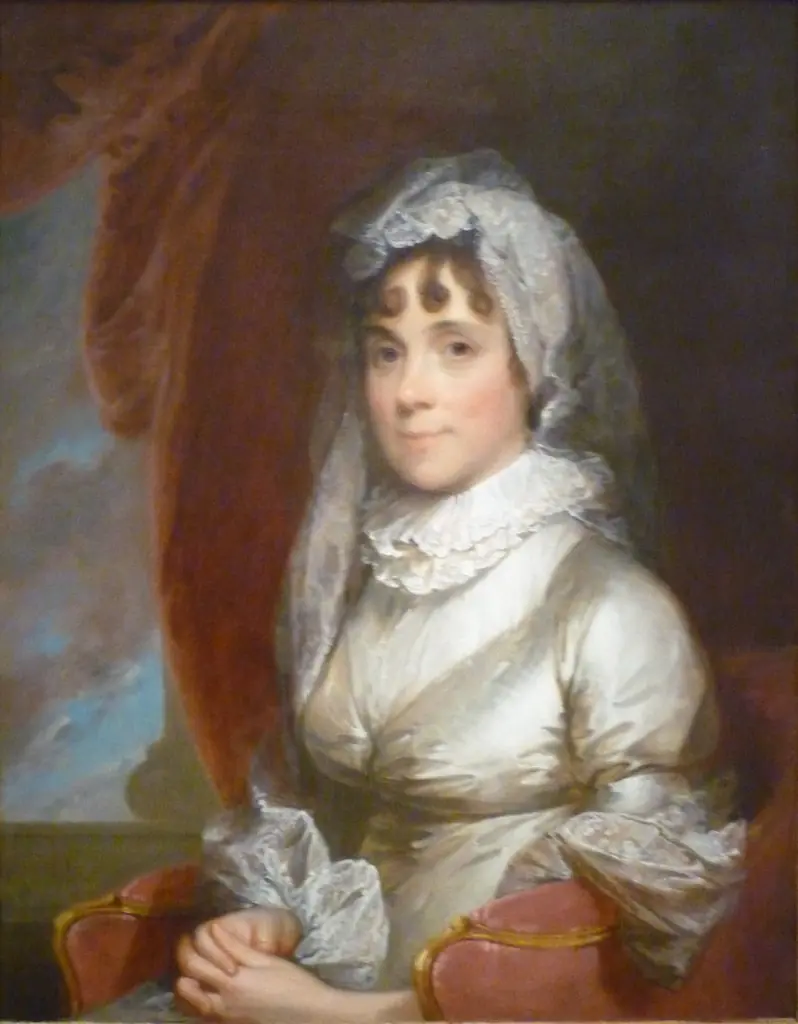 Portrait of Elizabeth Chipman Gray
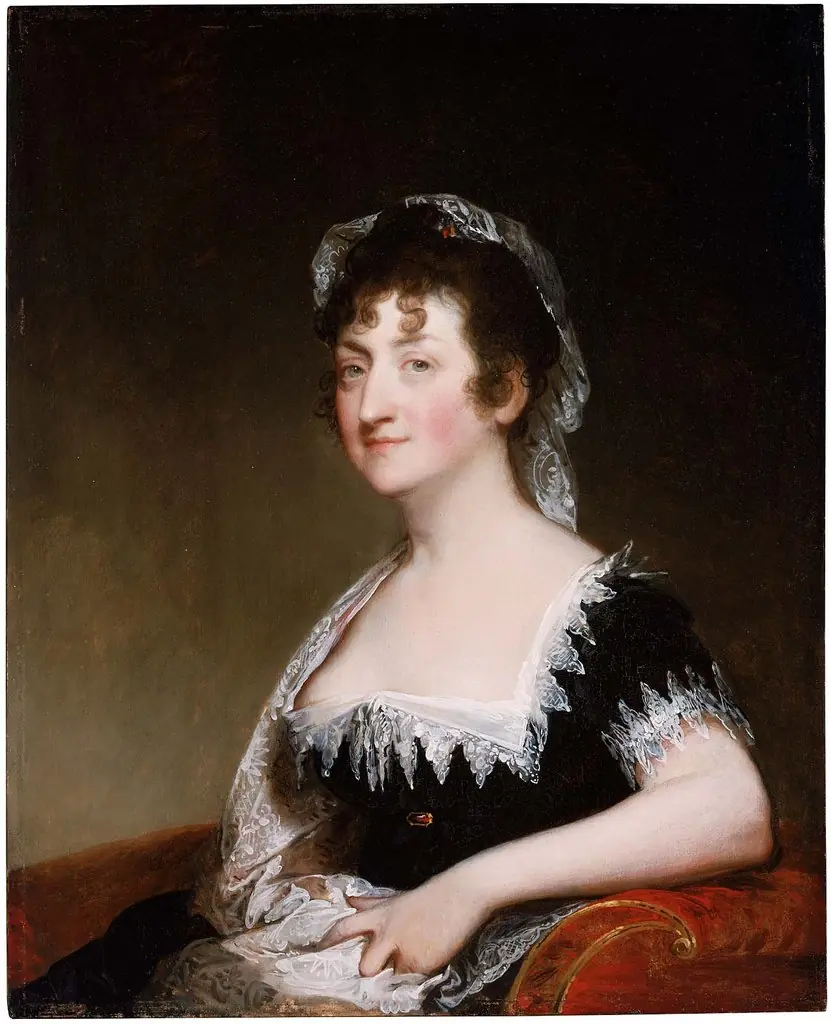 Mrs. James Swan (Hepzibah Clarke)
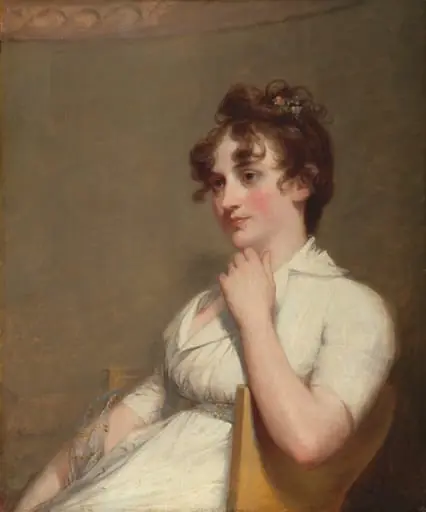 Eleanor Parke Custis Lewis (Mrs. Lawrence Lewis)
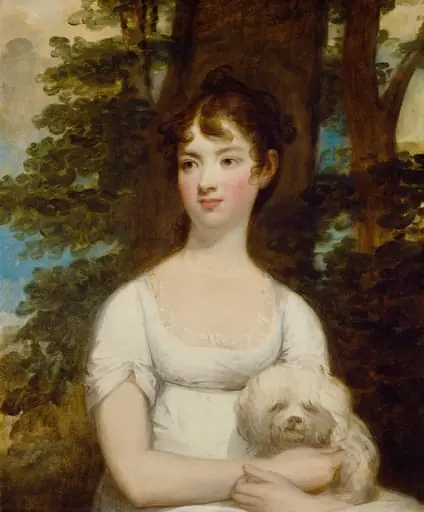 Mary Barry
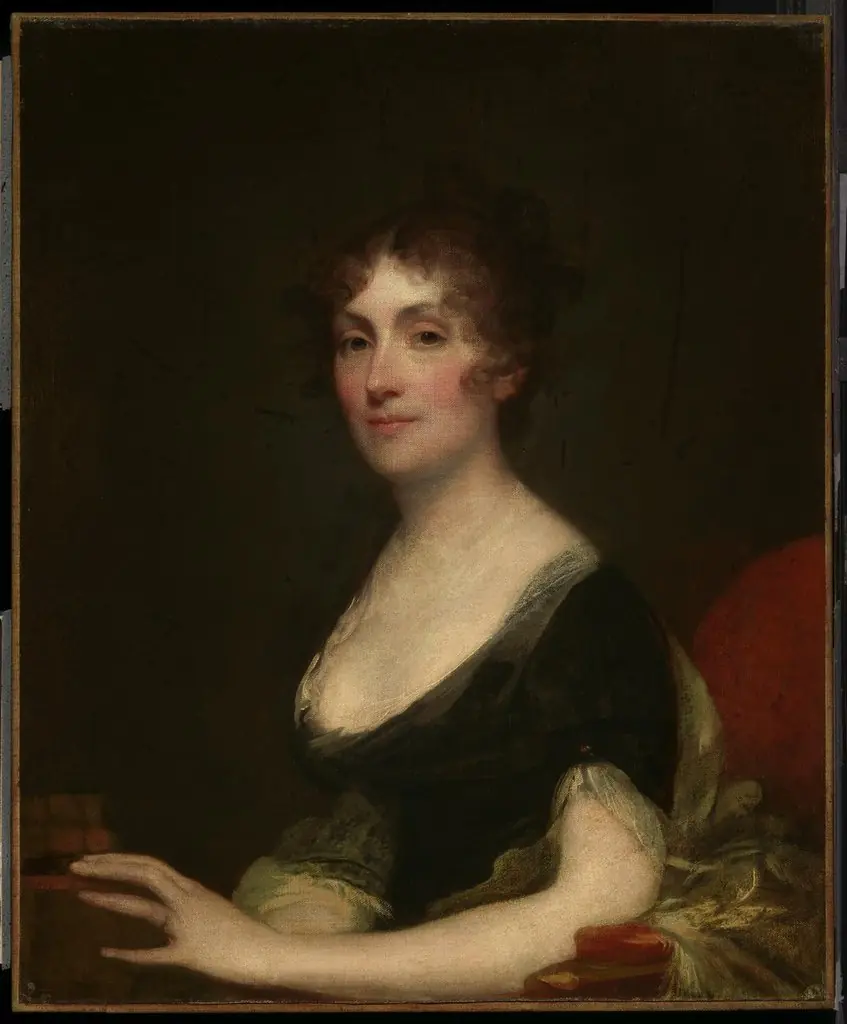 Mrs. Perez Morton (Sarah Wentworth Apthorp)