Artwork
Portrait of Richard Barrington, Later Fourth Viscount Barrington
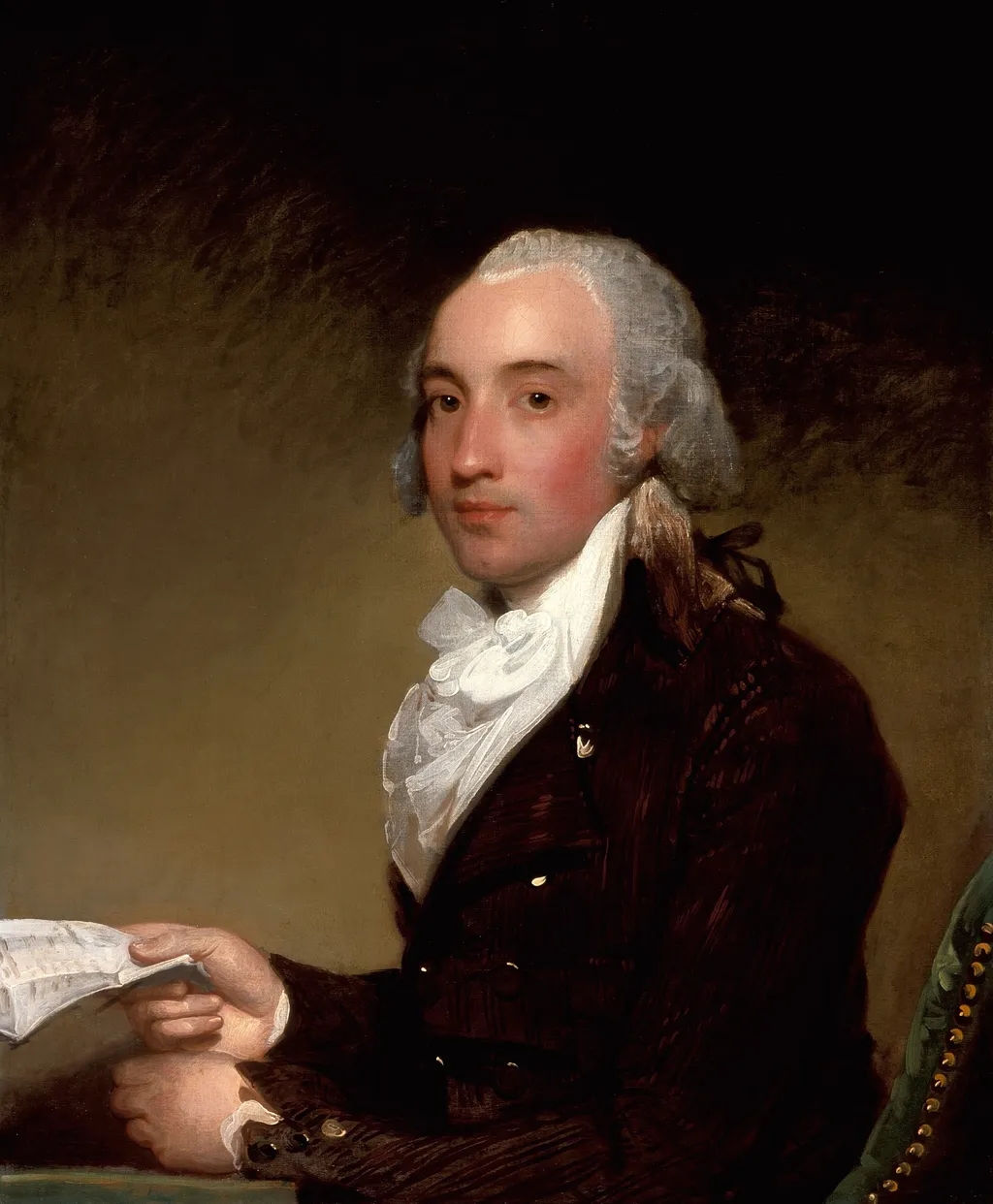
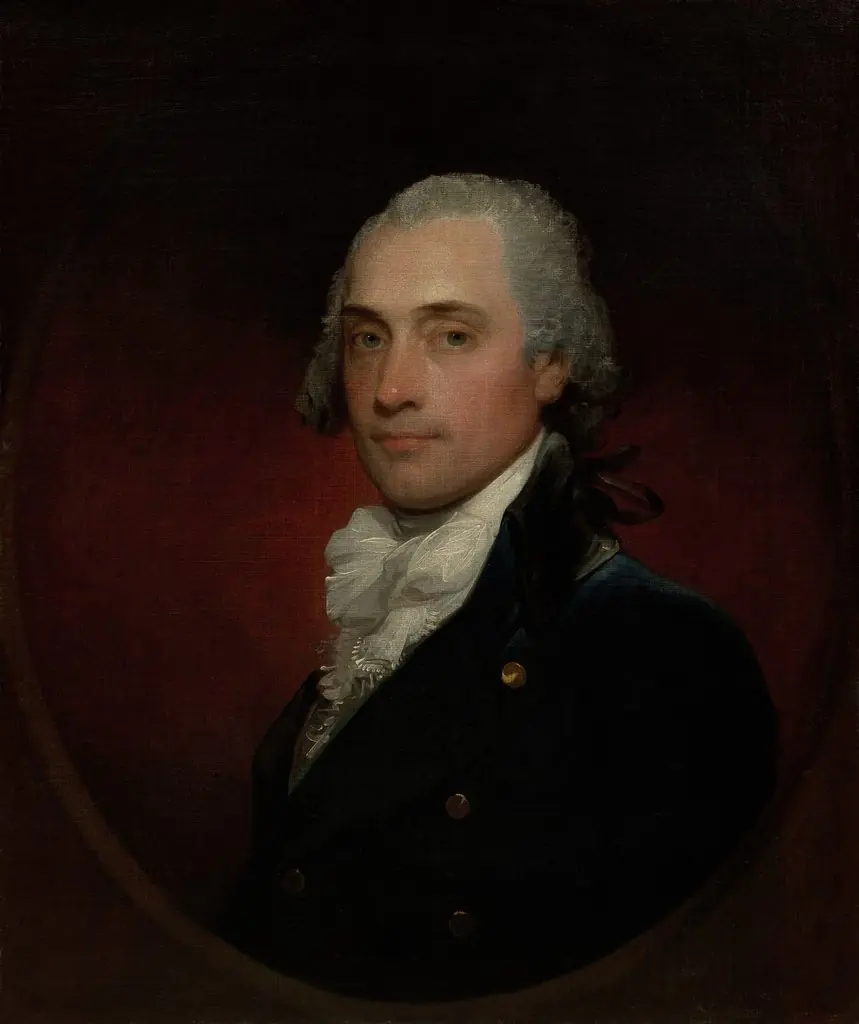
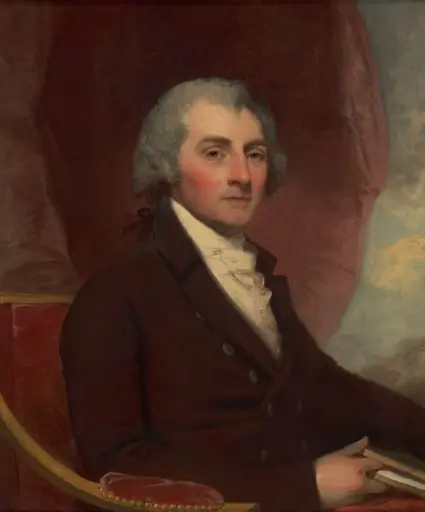
Portrait of Richard Barrington, Later Fourth Viscount Barrington is an oil painting by the American Impressionist artist Gilbert Stuart. It dates from 1797 and is held in the collection of the Los Angeles County Museum of Art.
About this work
The level of detail in the painting invites the viewer to explore the subject's expression and attire, making it a compelling piece to study.
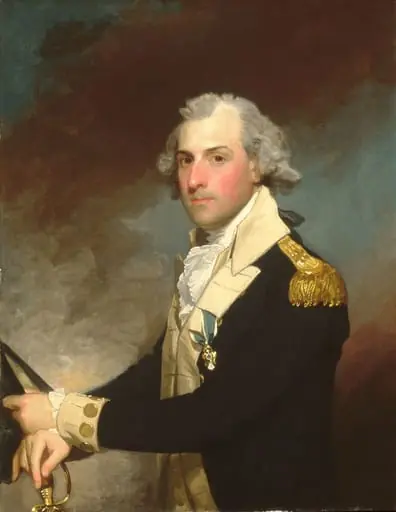
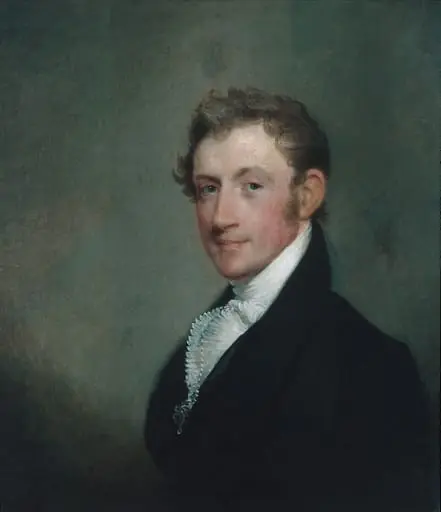
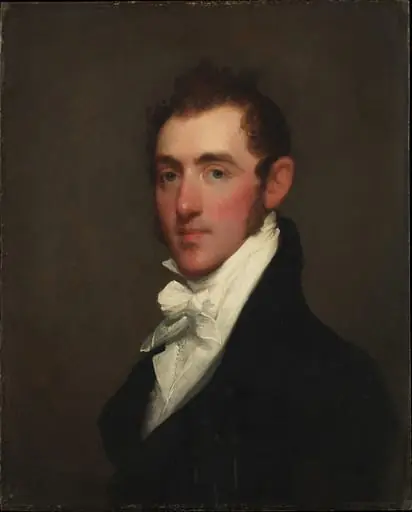
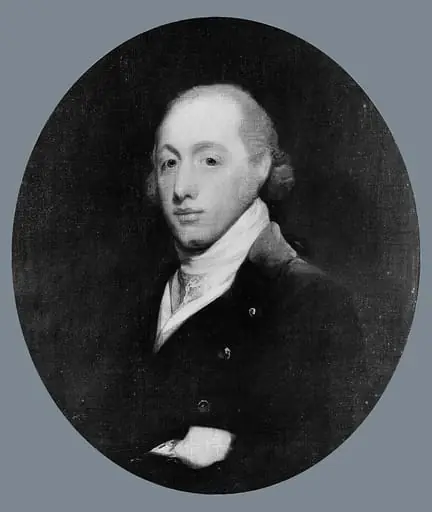
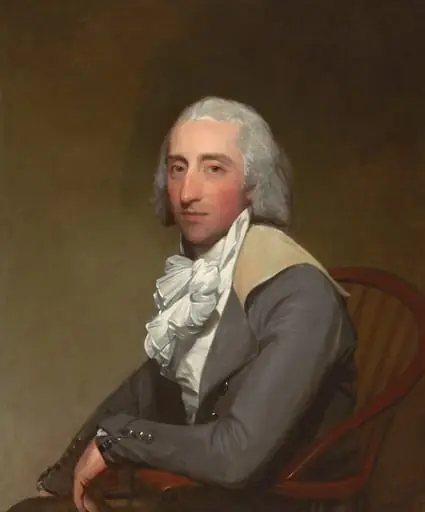
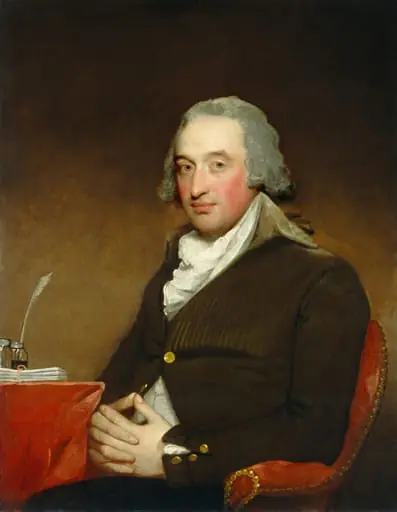
This portrait depicts a man in a dark jacket with a white ruffled shirt, holding a piece of paper in his right hand. He has light-colored hair and is positioned in front of a plain background.
The man's attire and hairstyle suggest a formal setting, possibly from the late 18th century. The artist's use of oil paint creates a sense of depth and texture in the subject's clothing and hair.
The level of detail in the painting invites the viewer to explore the subject's expression and attire, making it a compelling piece to study. If you're interested in learning more about the artist behind this work, you might want to look up Gilbert Stuart.
Overview
Painted in 1797 by American artist Gilbert Stuart, this oil portrait captures Richard Barrington, who would later become the fourth Viscount Barrington. Stuart, trained in London and active across both sides of the Atlantic, was known for his precise rendering of aristocratic and political figures. The work belongs to the Los Angeles County Museum of Art’s collection and reflects Stuart’s skill in conveying presence through subtle facial expression and refined detail.
Subject & Meaning
Richard Barrington, a British nobleman and politician, is depicted in formal attire, holding a document that suggests his engagement in public or legal affairs. His composed demeanor and direct gaze convey authority without ostentation. The plain background focuses attention on his posture and clothing, reinforcing his status through restraint rather than ornament. The portrait functions as both a personal likeness and a statement of social standing in late 18th-century Britain.
Technique & Style
Stuart employed oil paint to achieve nuanced textures in the subject’s white ruffled shirt and dark jacket, using layered glazes to suggest fabric weight and light reflection. His brushwork is controlled yet fluid, particularly in the rendering of light hair and the soft contours of the face. The absence of elaborate setting emphasizes psychological presence over environmental context, aligning with Stuart’s preference for intimate, lifelike portraiture over theatrical composition.
History & Provenance
Commissioned during Stuart’s time in Europe, the portrait was likely painted while Barrington was in London or while Stuart was traveling among British elites. After Barrington’s death, the painting remained within family holdings before entering public collection. Its acquisition by LACMA in the 20th century ensured its preservation and accessibility, marking its transition from private aristocratic possession to institutional heritage.
Context
In the late 1790s, transatlantic cultural exchange was strong, with American artists like Stuart gaining recognition in Britain. Portraiture served as a key medium for affirming social identity among the landed gentry. Barrington’s image reflects this trend: a British nobleman portrayed by an American artist trained in European traditions, illustrating the interconnectedness of elite networks across the Atlantic during the post-Revolutionary era.
Legacy
Stuart’s portrait of Barrington exemplifies his broader contribution to transatlantic portraiture, bridging American and British artistic practices. While less famous than his depictions of American presidents, this work demonstrates his consistent ability to capture individual character with clarity and dignity. It remains a reference point for understanding how elite identity was visually constructed in the late 18th century beyond national borders.
Own this work as a print
Artist & collection

Artist
Gilbert Stuart (né Stewart; December 3, 1755 – July 9, 1828) was an American painter born in the Rhode Island Colony who is widely considered one of America's foremost portraitists.