Artwork
Sculpture No. 1
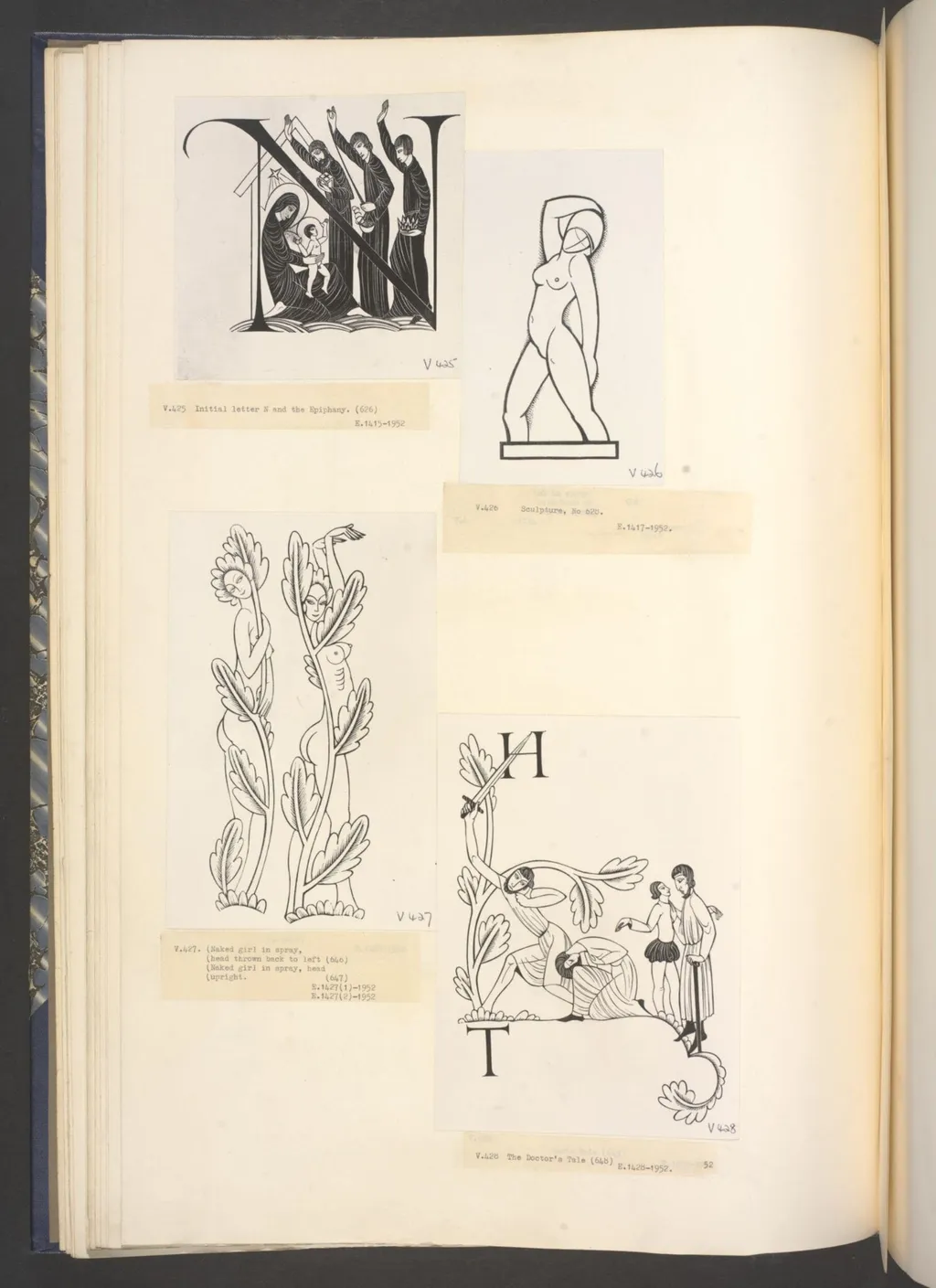
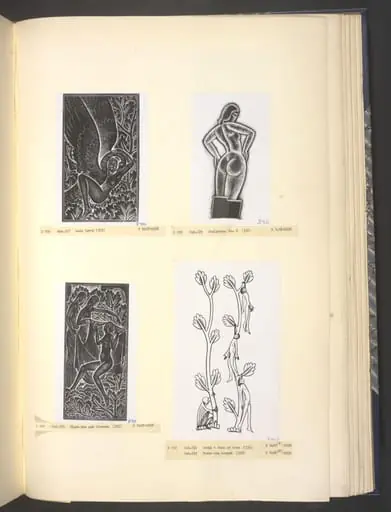
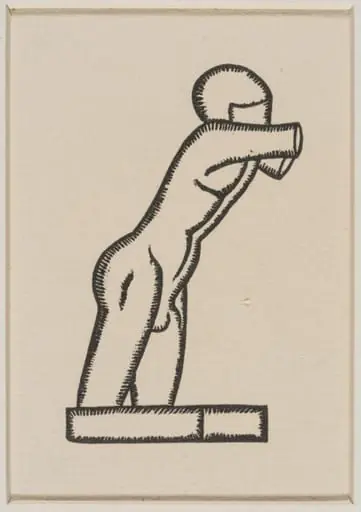
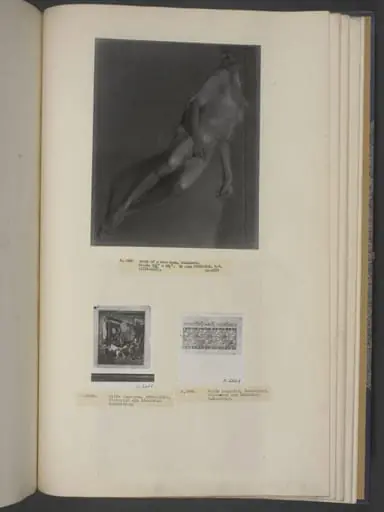
Sculpture No. 1 is an ink print by Eric Gill. It dates from 1930 and is held in the collection of the Victoria and Albert Museum. Sculpture No.
About this work
The title of this work is Sculpture No. 1, created by Eric Gill in 1930.
It's a wood engraving, which is a technique where a design is cut into a wooden block. Eric Gill was a skilled engraver and sculptor who worked on many notable projects, including public buildings in the UK.
To learn more about wood engraving and its applications, look up the technique of engraving.
Overview
Though the title suggests a three-dimensional form, the work exists as a two-dimensional impression carved into wood.
Sculpture No. 1, created in 1930 by Eric Gill, is a wood engraving that reflects his dual practice as a sculptor and printmaker. Though the title suggests a three-dimensional form, the work exists as a two-dimensional impression carved into wood. Gill’s engagement with engraving allowed him to translate sculptural ideas into intimate, finely detailed compositions, bridging his work in stone and his printed output.
Subject & Meaning
The subject of Sculpture No. 1 is abstract, evoking a simplified human form through geometric reduction. Gill often used minimal contours to suggest anatomy without literal representation, aligning with his interest in classical ideals and spiritual austerity. The piece does not depict a specific narrative but rather embodies his broader exploration of form, proportion, and the sacred in everyday shapes.
Technique & Style
As a wood engraving, the work was produced by incising lines into the end grain of a hardwood block, allowing for fine, precise marks. Gill’s technique emphasized clean, sharp contrasts between inked and uninked areas, characteristic of his disciplined approach. His style fused medieval influences with modernist simplification, rejecting ornamental excess in favor of structural clarity and tactile economy.
History & Provenance
Created during a period of intense productivity, Sculpture No. 1 emerged from Gill’s studio at Ditchling, where he balanced artistic output with religious devotion and manual labor. The work was likely made for private circulation or as part of a series exploring sculptural forms in print. Its provenance remains largely undocumented, reflecting its modest scale and non-commissioned nature compared to his public monuments.
Context
In the 1930s, Gill was deeply involved in the British Arts and Crafts movement and the Catholic revival in art. His wood engravings often served devotional or literary purposes, appearing in limited-edition books and religious publications. Sculpture No. 1 fits within this context as a quiet meditation on form, distinct from the monumental public works that later defined his public legacy.
Legacy
While Gill’s technical contributions to engraving and typography remain influential, his personal conduct, revealed in posthumous biographies, has profoundly altered the reception of his work. Sculpture No. 1 is now viewed with critical awareness, its formal purity existing alongside the ethical complexities of its creator. The work endures not as a symbol of moral authority, but as a product of a deeply conflicted artistic life.
Artist & collection
Artist
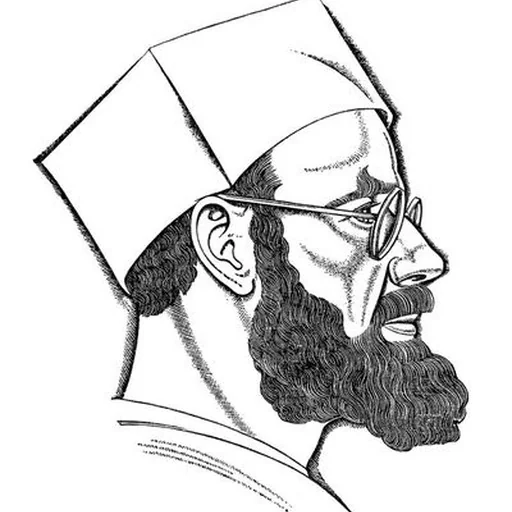
Arthur Eric Rowton Gill (22 February 1882 – 17 November 1940) was an English sculptor, letter cutter, typeface designer, and printmaker.