Artwork
Thirlestaine House, Cheltenham
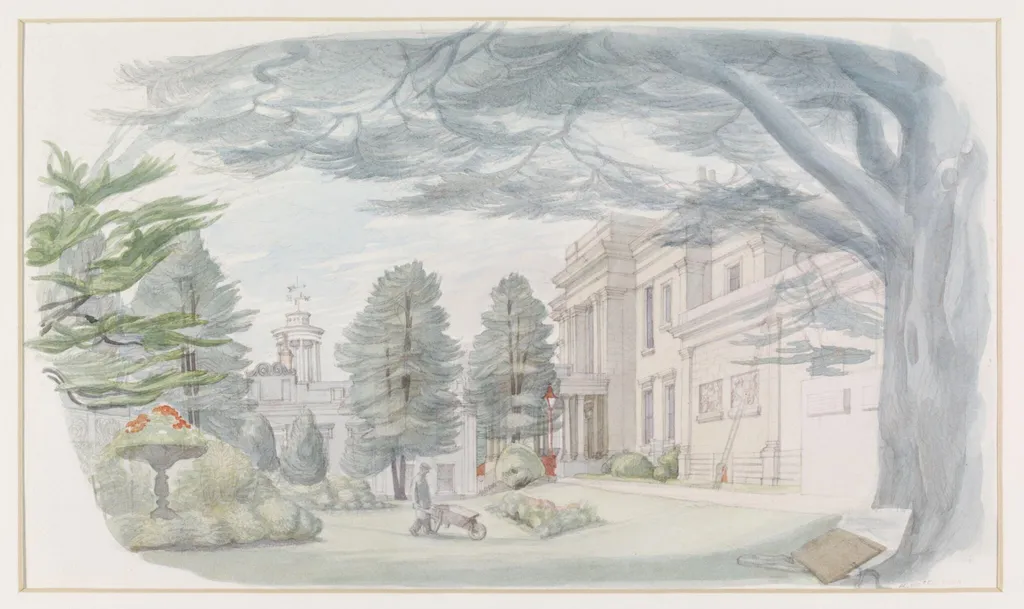
Thirlestaine House, Cheltenham is a watercolor work on paper by Ginger. It dates from 1942 and is held in the collection of the Victoria and Albert Museum.
About this work
Overview
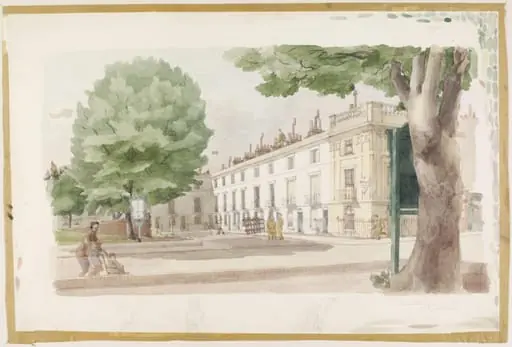
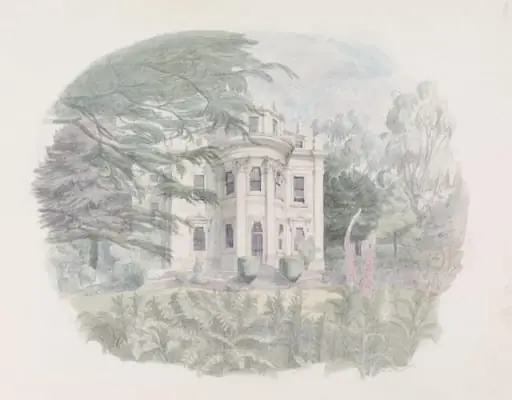
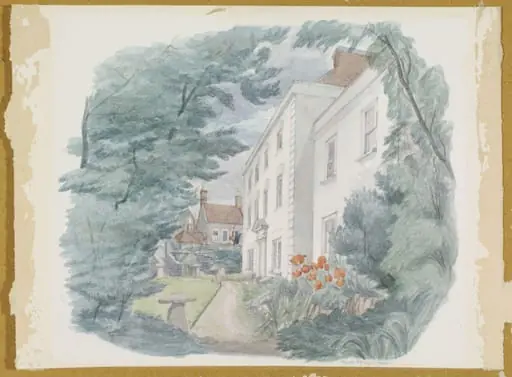
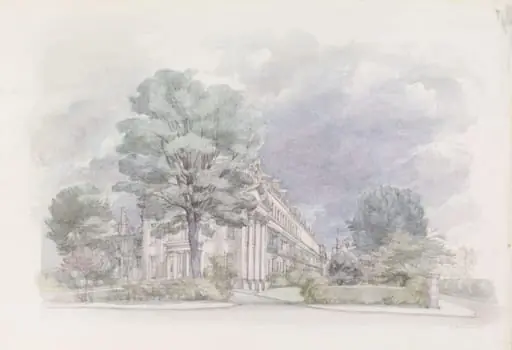
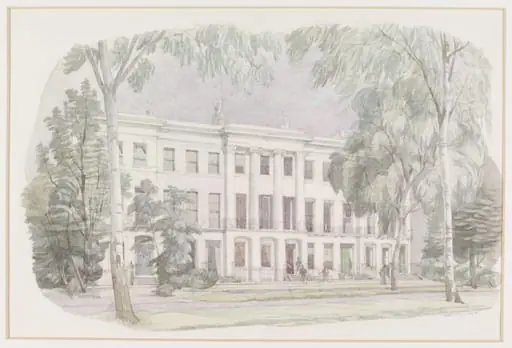
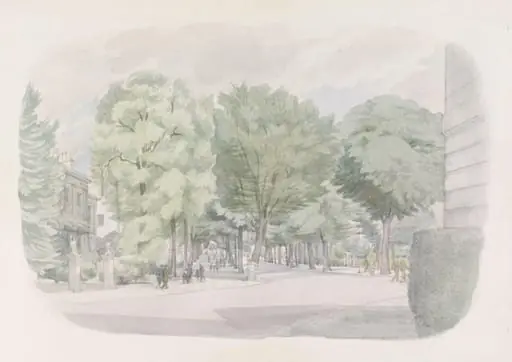
Thirlestaine House, Cheltenham is a watercolour painting created by Ginger in 1942, capturing a serene moment in the estate's garden. The work is characterized by meticulous detail, depicting a large white house, lush vegetation, and a gardener at work, set against a light blue, cloudy sky.
Subject & Meaning
The painting's subject is Thirlestaine House, but its meaning extends beyond the depiction of a specific location. It reflects the wartime effort to document and preserve British heritage and national identity, subtly incorporating the artist's presence through their portfolio in the foreground.
Technique & Style
Executed in watercolour, the piece showcases Ginger's attention to detail and skill in the medium. The level of intricacy, from leafy foliage to floral accents, highlights the artist's dedication to traditional watercolour practices, which the *Recording Britain* project aimed to support.
History & Provenance
Commissioned under the *Recording Britain* scheme during World War II, this watercolour was part of a broader initiative funded by the Pilgrim Trust and led by Sir Kenneth Clark. The project's goals included documenting at-risk landscapes and supporting artists amidst wartime challenges.
Context
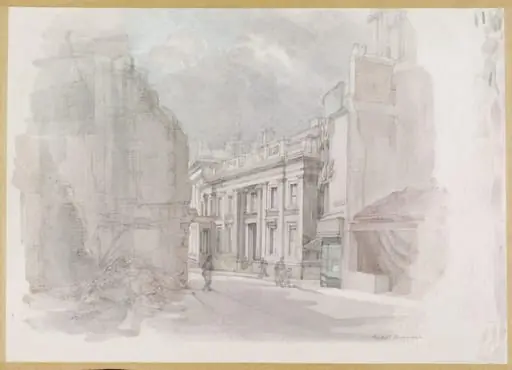
Created amidst the turmoil of the Second World War, Thirlestaine House, Cheltenham, serves as a record of a moment in British history. It reflects concerns over the preservation of national heritage in the face of bomb damage, urbanization, and rural change.
Artist & collection