Artwork
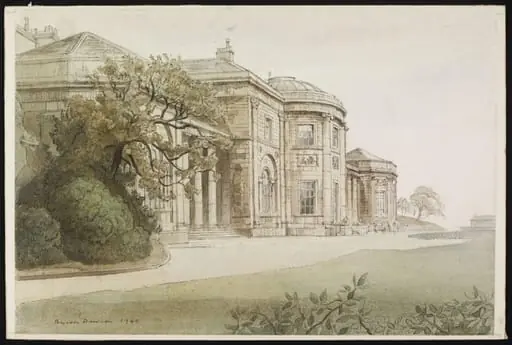
Treasurer's Office, Clifton
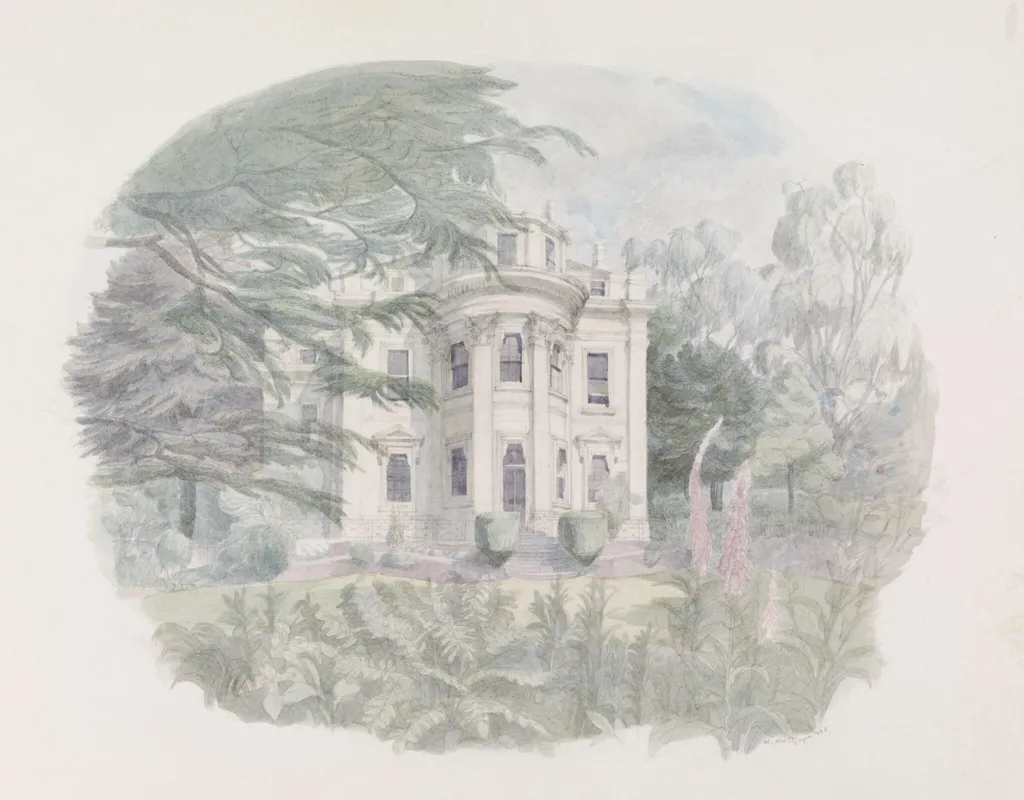
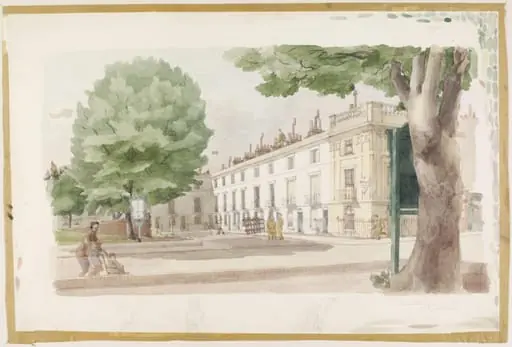
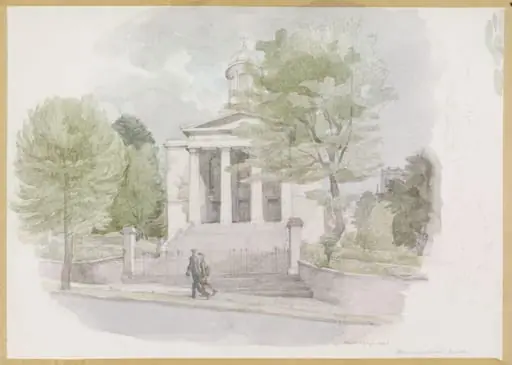
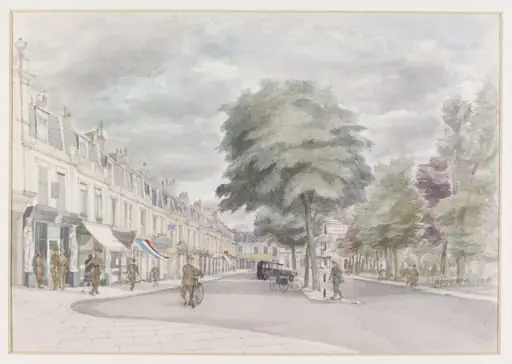
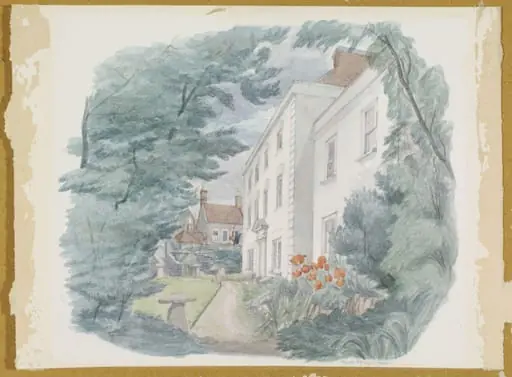
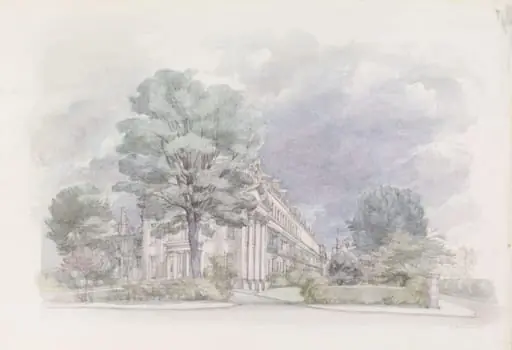
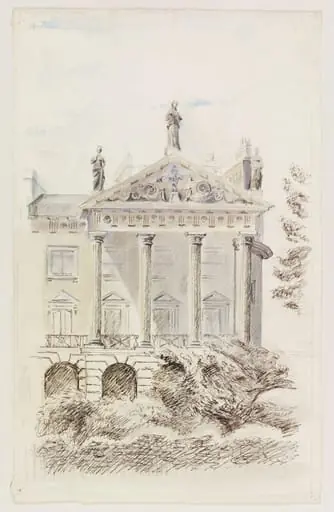
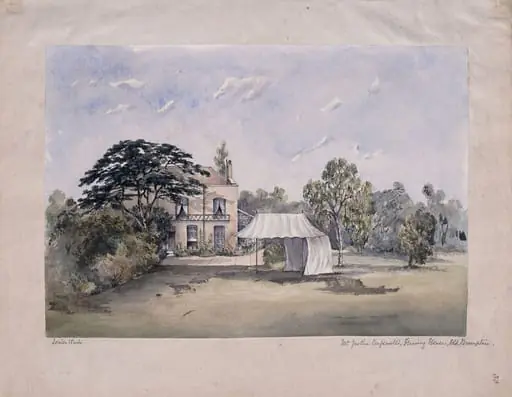
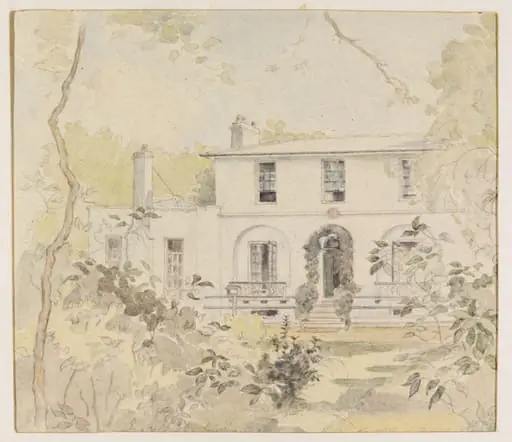
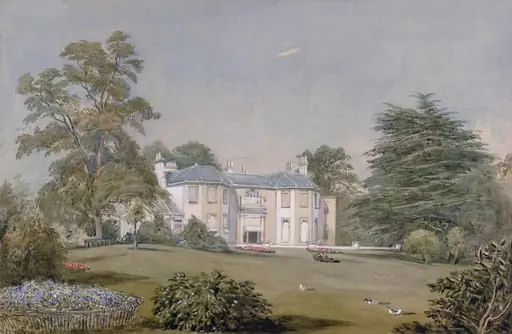
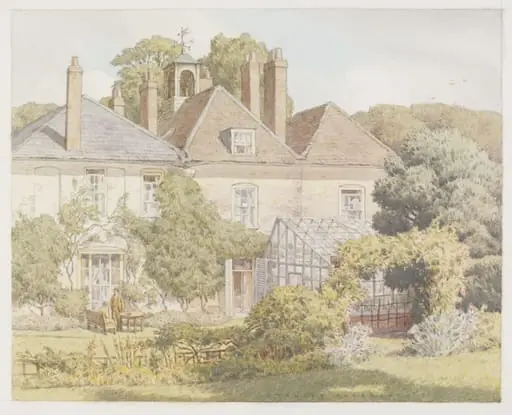
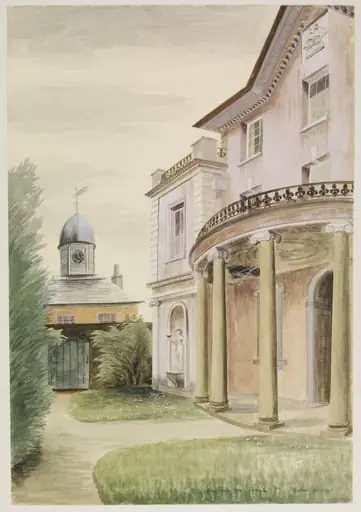
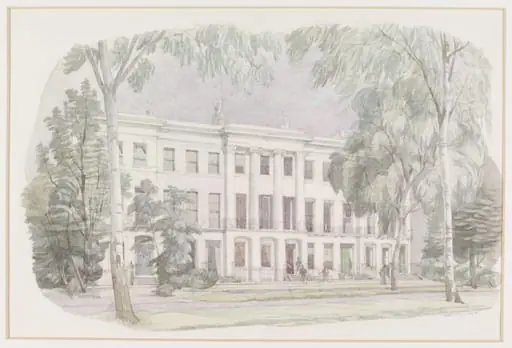
Treasurer's Office, Clifton is a watercolor work on paper by the Social Realist artist Ginger. It dates from 1942 and is held in the collection of the Victoria and Albert Museum.
About this work
Overview
The work was produced as part of the Recording Britain initiative, a wartime effort to preserve visual records of the country’s architectural heritage.
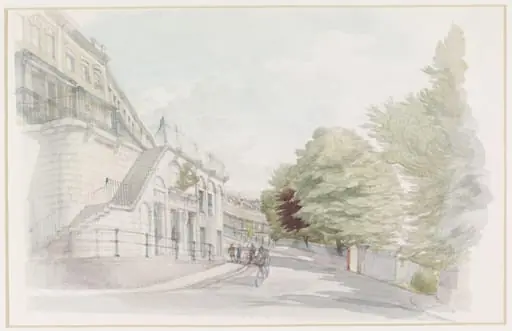
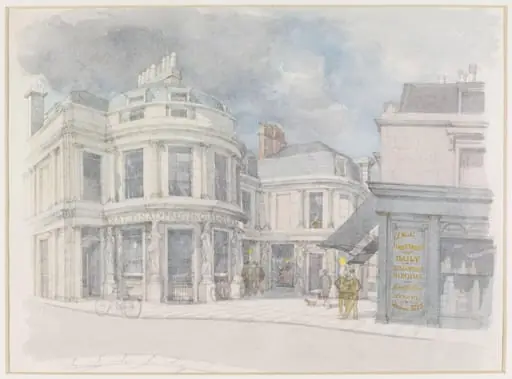
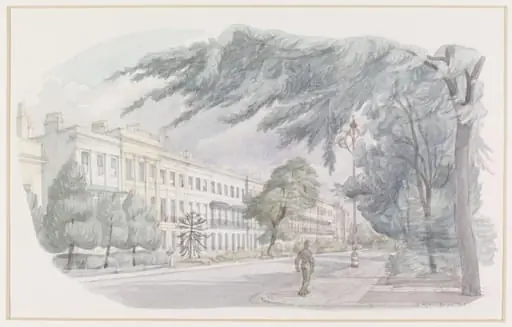
This 1942 watercolour by Ginger captures the Treasurer’s Office in Clifton, Bristol, viewed from its garden. Executed in delicate washes, the scene is softly framed by foliage along the lower edge and flanking trees. The paper’s natural texture remains visible in places, contributing to a muted, atmospheric quality. The work was produced as part of the Recording Britain initiative, a wartime effort to preserve visual records of the country’s architectural heritage.
Subject & Meaning
The building, a stately structure with classical columns and large windows, is partially obscured by dense greenery, suggesting a quiet intimacy between architecture and nature. Rather than presenting a formal portrait, the image evokes a personal, contemplative encounter — a moment of stillness amid wartime disruption. The framing vegetation implies enclosure and concealment, reinforcing themes of preservation and quiet resilience.
Technique & Style
Ginger employed transparent watercolour washes with minimal detail, allowing the white of the paper to suggest light and air. Soft edges and subtle gradations create a hazy, almost impressionistic effect. Shadows beneath trees and shrubs add depth without harsh contrast. The technique prioritizes mood over precision, reflecting the project’s emphasis on emotional resonance rather than topographical accuracy.
History & Provenance
Commissioned in 1942 under the Recording Britain scheme, this work was one of hundreds produced by artists employed by the Pilgrim Trust under the direction of Sir Kenneth Clark. The project aimed to document at-risk landscapes and buildings during the Second World War. The painting entered the Victoria and Albert Museum’s collection as part of this national archive, preserved for its historical and cultural value.
Context
Created during the height of wartime Britain, the Recording Britain project responded to fears of cultural loss from bombing and urban change. Artists were sent across the country to record vernacular architecture, rural scenes, and historic sites. This watercolour reflects a broader effort to affirm national identity through the quiet endurance of place, even as the nation faced uncertainty.
Legacy
The Recording Britain collection remains a vital visual record of mid-20th-century British landscapes. Ginger’s work, like others in the series, offers a gentle counterpoint to wartime propaganda — not heroic or grand, but intimate and observant. Today, it contributes to ongoing discussions about heritage, memory, and the role of art in times of crisis.
Artist & collection