Artwork
Dancer = Propeller = Sea
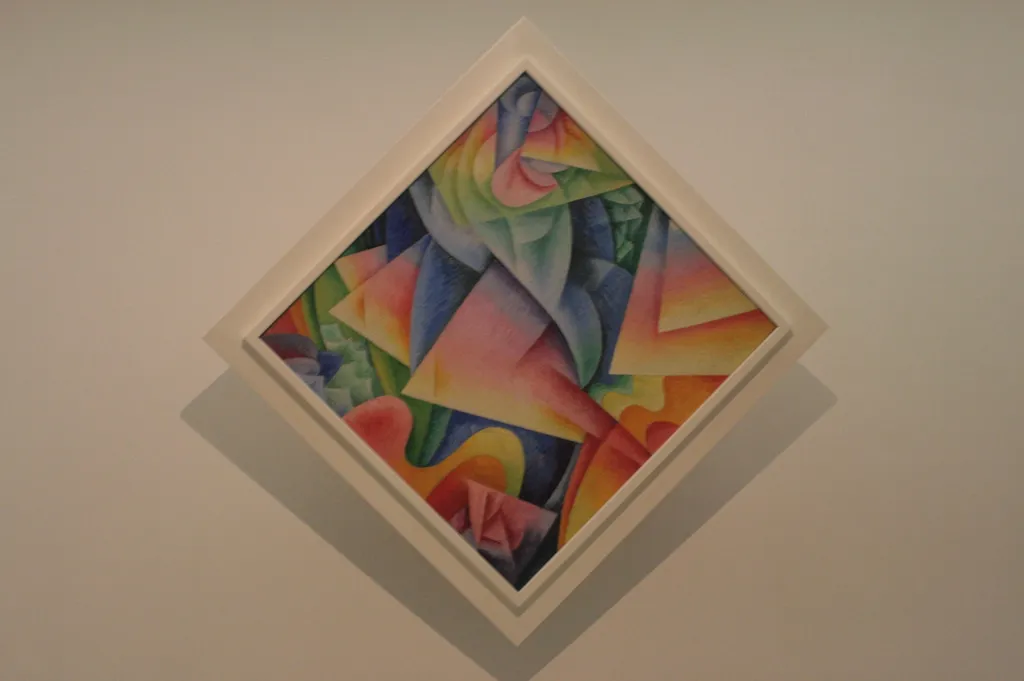
Dancer = Propeller = Sea is an oil painting by Gino Severini. It dates from 1915 and is held in the collection of the Metropolitan Museum of Art.
About this work
Overview
Gino Severini’s 1915 oil painting *Dancer = Propeller = Sea* presents a square canvas saturated with interlocking planes of pink, blue, green and yellow. The composition is wholly abstract, lacking a discernible background, and relies on overlapping geometric shapes that appear both rigid and fluid. The title alludes to motion, yet the work itself remains a static arrangement of color and form.
Subject & Meaning
The threefold title suggests a conceptual link between a dancer’s poised gesture, a propeller’s rotation, and the undulating surface of the sea. By equating these disparate elements, Severini evokes the Futurist fascination with speed, energy and the synthesis of natural and mechanical forces, inviting viewers to sense movement through visual rhythm rather than literal depiction.
Technique & Style
Executed in oil on canvas, the painting employs bold, saturated hues applied in flat, overlapping shapes that generate a sense of depth through juxtaposition.
Executed in oil on canvas, the painting employs bold, saturated hues applied in flat, overlapping shapes that generate a sense of depth through juxtaposition. Edges shift between crisp delineation and softened transition, creating a tension between solidity and fluidity. This approach reflects Severini’s exploration of abstraction, aligning with Futurist aesthetics that prioritize dynamism over representational accuracy.
History & Provenance
Created during the height of the Italian Futurist movement, the work emerged while Severini divided his practice between Paris and Rome, cities that shaped his artistic trajectory. Though specific ownership records are limited, the painting forms part of Severini’s broader oeuvre that includes experiments in mosaic and fresco, underscoring his versatility across media.
Context
*Dancer = Propeller = Sea* belongs to a period when Futurist artists sought to capture the spirit of modernity, industrialization and the kinetic energy of contemporary life. Severini’s abstraction aligns with contemporaneous efforts to break from traditional representation, positioning the canvas as a visual field where motion is implied through compositional dynamics rather than narrative content.
Artist & collection
Artist
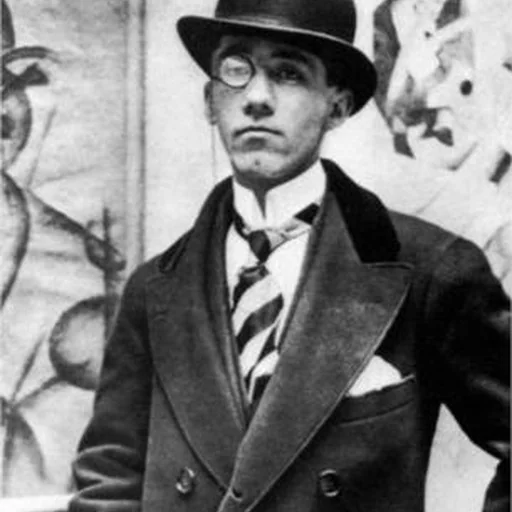
Gino Severini (7 April 1883 – 26 February 1966) was an Italian painter and a leading member of the Futurist movement.
