Artwork
Landscape
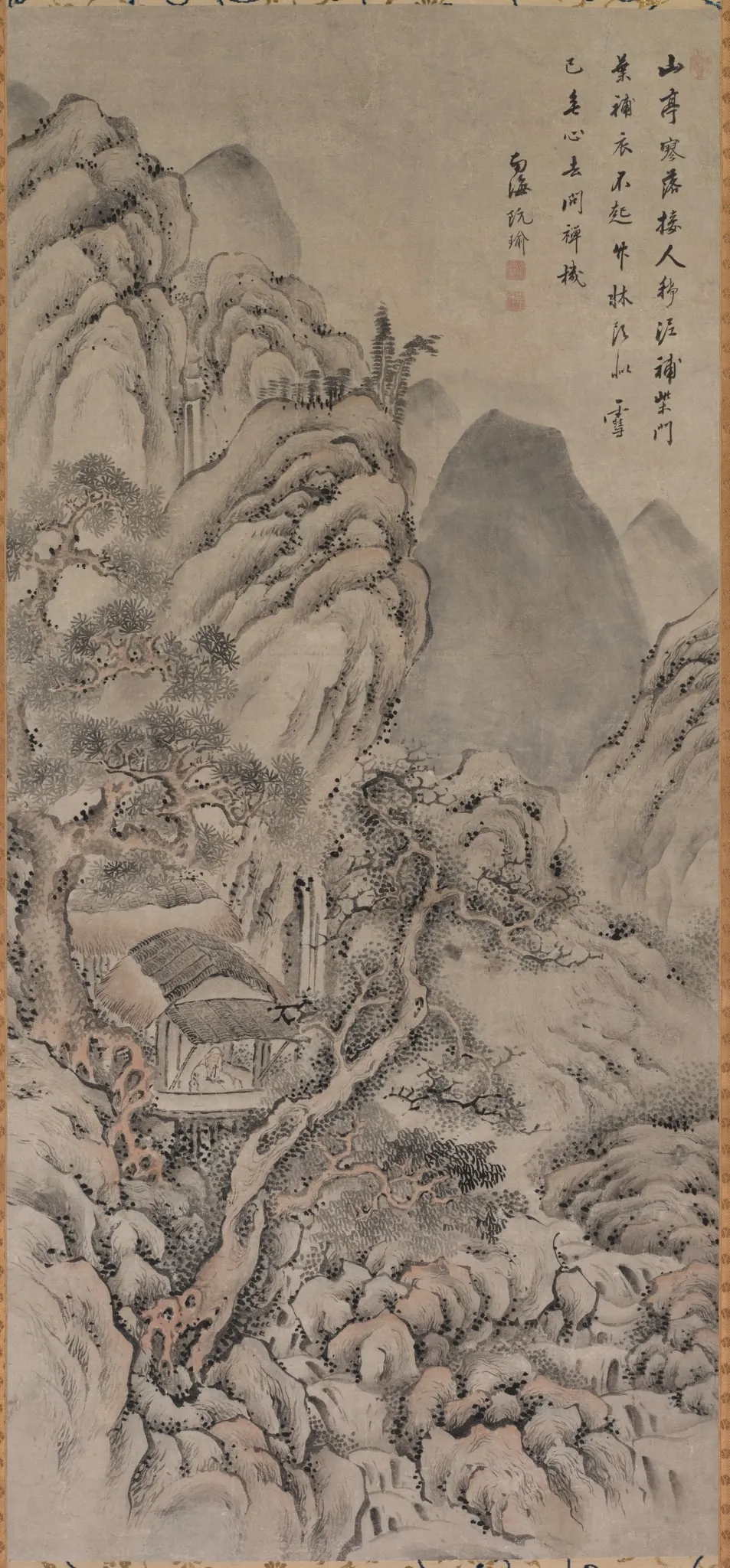
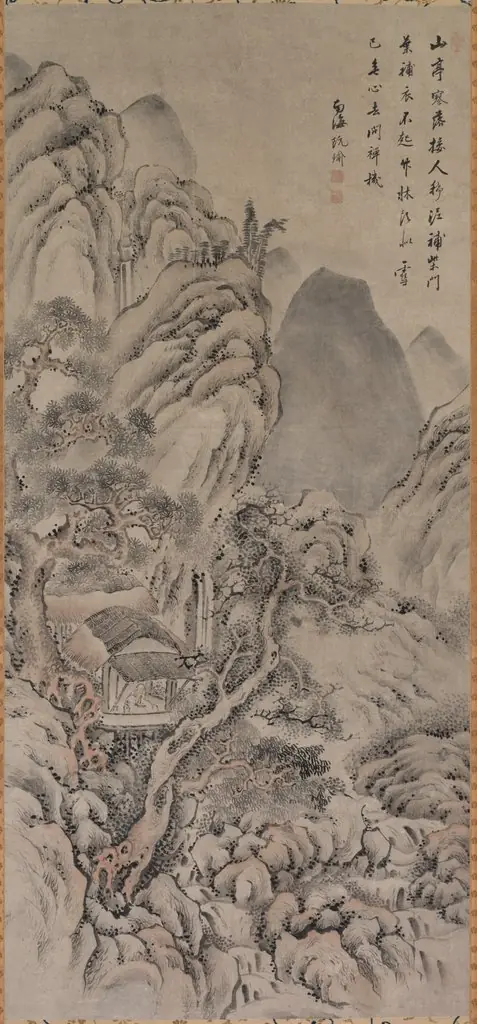
Landscape is an unspecified painting by the Baroque artist Gion Nankai. It dates from 1726 and is held in the collection of the Cleveland Museum of Art.
About this work
Overview
Though primarily known for teaching Confucian ethics, Nankai engaged deeply with Chinese literary and artistic traditions.
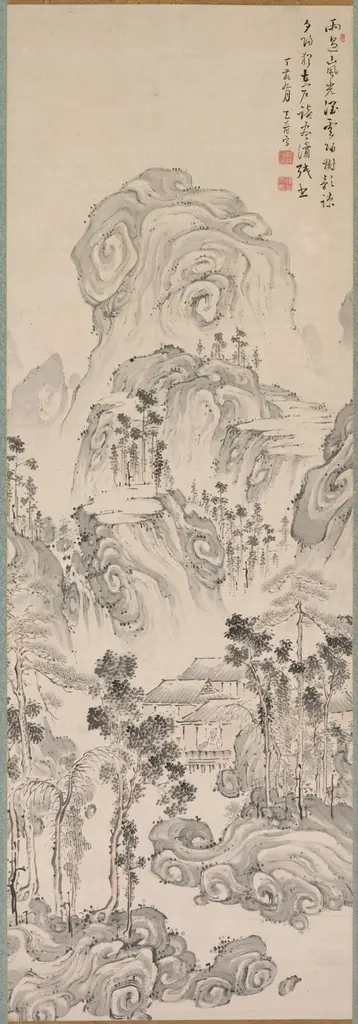
This ink-on-paper landscape is attributed to Gion Nankai, a Japanese scholar and painter active in the 18th century. Though primarily known for teaching Confucian ethics, Nankai engaged deeply with Chinese literary and artistic traditions. The work features a handwritten poem by the Ming-dynasty artist Tang Yin, inscribed directly onto the composition, linking visual and textual expression in a manner characteristic of literati painting.
Subject & Meaning
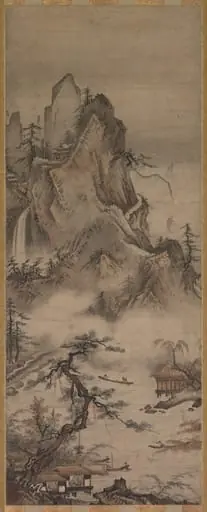
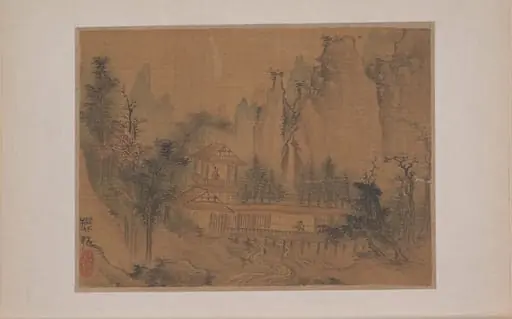
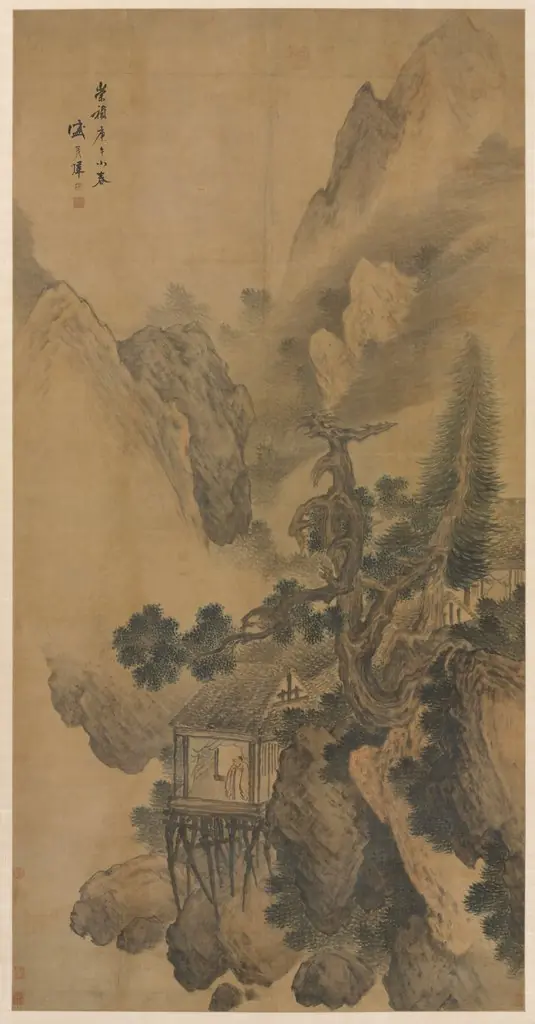
The scene depicts a remote mountain pavilion surrounded by sparse vegetation and a modest brushwood gate, evoking solitude. Tang Yin’s poem, inscribed on the surface, speaks of withdrawal from social life and disengagement from spiritual inquiry. The imagery and text together convey a quiet resignation, reflecting ideals of reclusion valued in East Asian scholarly circles, where nature served as both refuge and mirror for inner states.
Technique & Style
Executed in monochrome ink, the painting employs delicate brushwork to suggest form through suggestion rather than detail. Atmospheric perspective is achieved through graded washes, with distant mountains fading into mist. The inscription, written in a flowing cursive hand, is integrated as a compositional element, not merely an annotation. This fusion of poetry, calligraphy, and image aligns with the literati tradition of self-expressive art.
History & Provenance
The painting passed through Japanese scholarly collections before entering the Cleveland Museum of Art’s holdings. Its inscription by Nankai confirms its origin in the 18th-century Kyoto intellectual milieu, where Chinese literary models were widely studied and adapted. The work’s preservation reflects the enduring influence of Tang Yin’s poetry and the continued reverence for literati aesthetics in Edo-period Japan.
Context
During the Edo period, Japanese literati painters like Nankai looked to Chinese precedents for cultural authority. Tang Yin’s poems, once composed for Ming-era paintings, were reinterpreted by later artists as vehicles for personal reflection. Nankai’s use of this text situates him within a transregional network of scholar-artists who saw painting not as decoration, but as an extension of philosophical contemplation.
Legacy
Nankai’s work exemplifies how East Asian artistic traditions were transmitted and transformed across borders. By adopting Tang Yin’s verse, he participated in a centuries-old practice of poetic reinterpretation. Though not widely known outside scholarly circles, his paintings remain important for understanding how Confucian ideals and literary culture shaped visual expression in Japan beyond official artistic institutions.
Artist & collection