Artwork
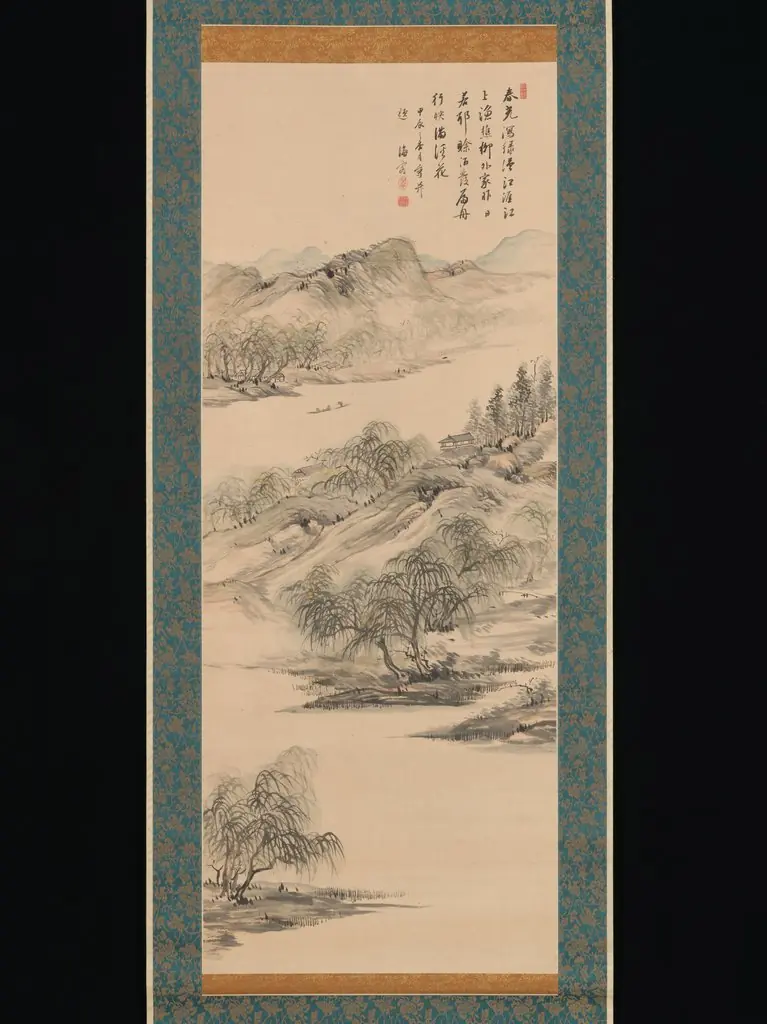
祇園南海筆 「竹窗雨日」図|Window onto Bamboo on a Rainy Day
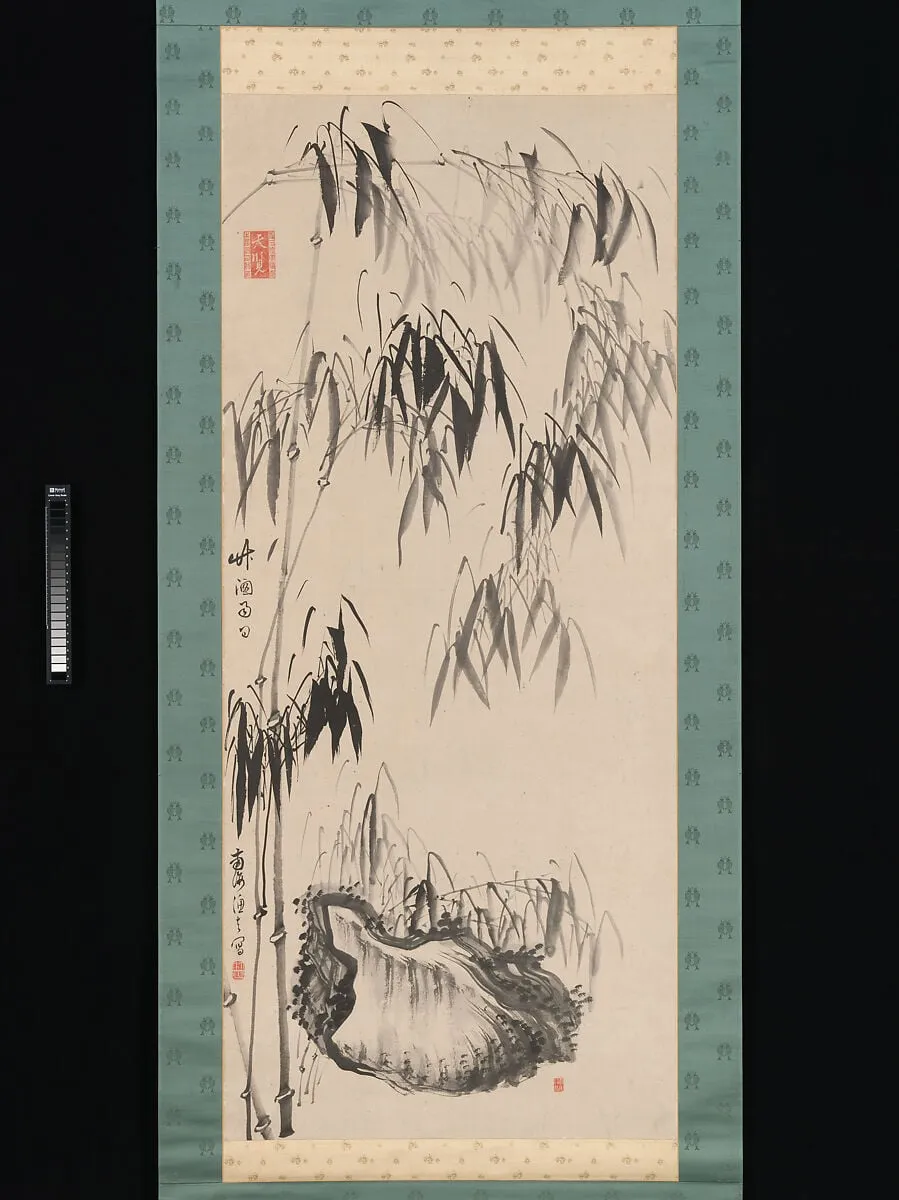
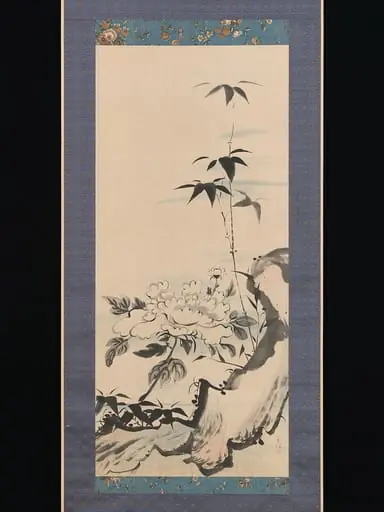
祇園南海筆 「竹窗雨日」図|Window onto Bamboo on a Rainy Day is an ink painting by the Baroque artist Gion Nankai. It dates from 1724 and is held in the collection of the Metropolitan Museum of Art.
About this work
Overview
This approach relies on the viewer's imagination to complete the scene, transforming negative space into the auditory and visual sensation of rain.
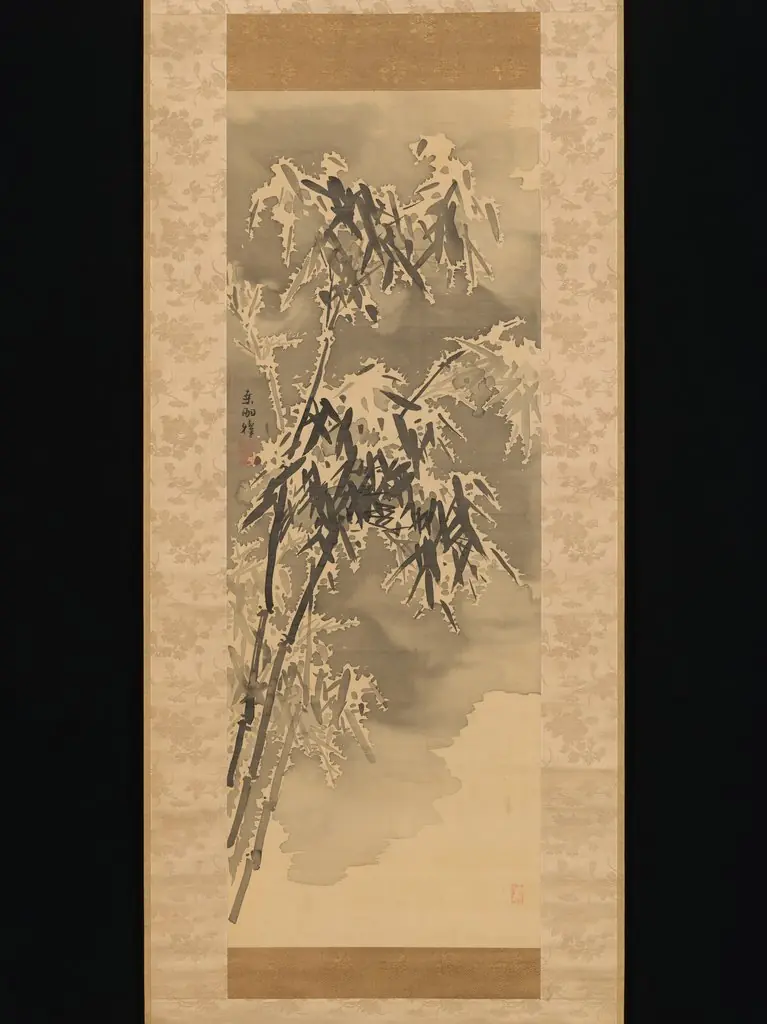
Painted in 1724, 'Window onto Bamboo on a Rainy Day' is a hanging scroll by the Japanese scholar-painter Gion Nankai (1676–1751). Executed in ink on paper, the work depicts a single bamboo stalk bending under the weight of rain. Nankai employs a minimalist composition, leaving the majority of the surface blank to evoke the atmosphere of a rainy day. The artist utilizes varying ink densities and wet-on-wet techniques, allowing the ink to bleed into the paper to simulate the visual effect of falling water and saturated foliage. This approach relies on the viewer's imagination to complete the scene, transforming negative space into the auditory and visual sensation of rain. As a representative work of the Nanga (Southern Painting) tradition, the piece reflects Nankai's synthesis of Chinese literati aesthetics with Japanese sensibilities. Created during the height of his career, the painting demonstrates his mastery of expressive brushwork and his ability to convey mood through restraint rather than detailed realism. The work stands as a significant example of early 18th-century Japanese ink painting, prioritizing spiritual resonance and atmospheric suggestion over literal representation.
Subject & Meaning
The painting centers on a single bamboo stalk, shown bending under the weight of rainfall. While bamboo is a frequent motif in Japanese art, here it is presented not merely as a plant but as a vehicle for conveying a specific sensory experience. The composition evokes the quiet solitude of a rainy day, with the implied sound of falling water suggested by the visual treatment rather than explicit depiction.
Technique & Style
Gion Nankai employed a minimalist technique, using only black ink on paper. The artist's brushwork allows ink to subtly bleed, creating the impression of water-soaked surfaces and rain. A significant portion of the paper remains untouched, functioning as an active element within the composition. This blank space is integral to the work's effect, suggesting the ambient sound of rain and allowing the viewer's imagination to complete the visual and auditory experience, even implying color where none is present.
Artist & collection