Artwork
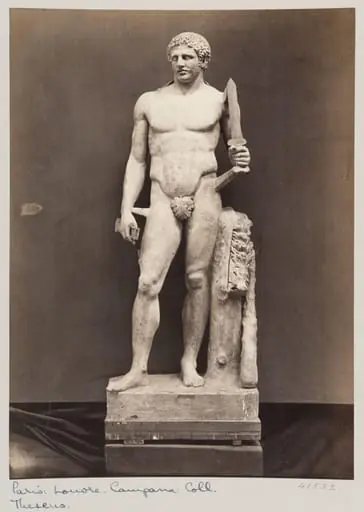
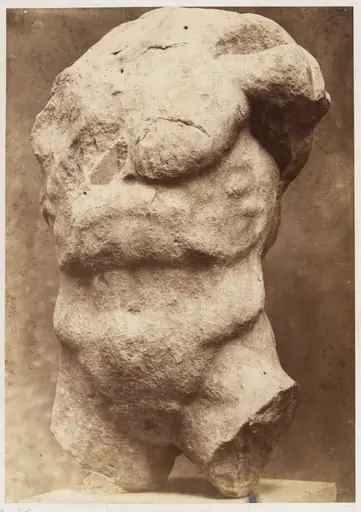
Farnese Hercules, Museum of Naples, Italy
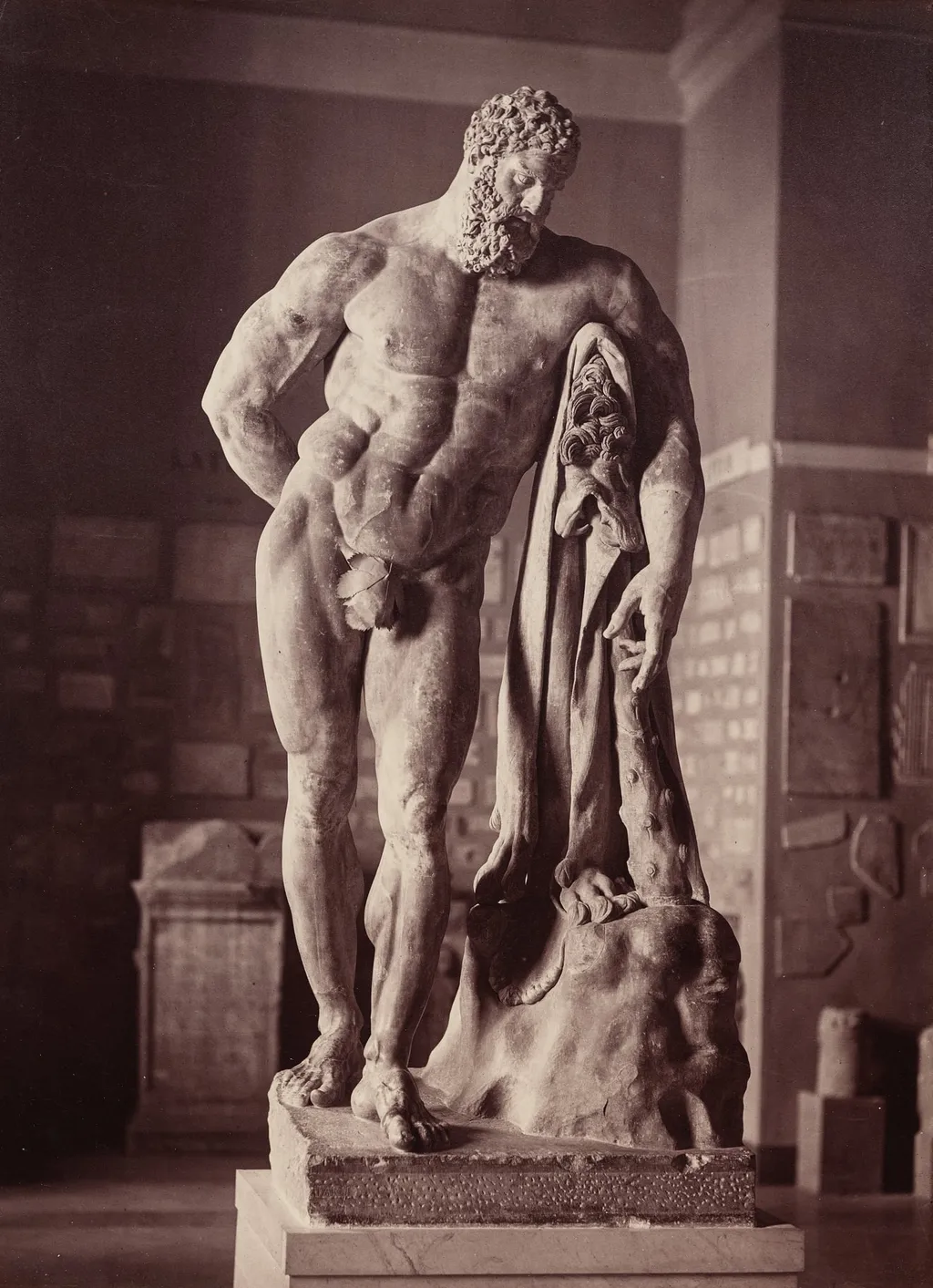
Farnese Hercules, Museum of Naples, Italy is a photography by the Impressionist artist Giorgio Sommer. It dates from 1864 and is held in the collection of the Cleveland Museum of Art.
About this work
This sculpture was actually photographed by Giorgio Sommer, which is interesting because it shows how photography was used to document art back then.
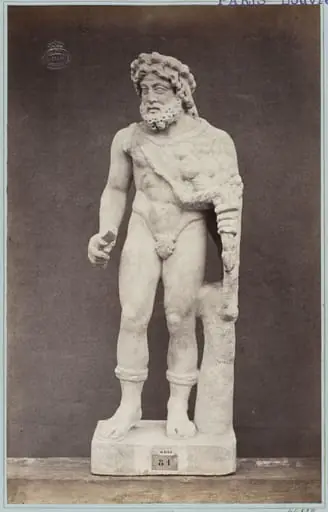
The painting shows a strong man holding a big club.
He's standing still, looking tired.
This sculpture was actually photographed by Giorgio Sommer, which is interesting because it shows how photography was used to document art back then.
The photo is a close-up of the statue, which helps us see the details.
The statue itself is very old, from ancient times.
You can learn more about this style by looking at the work of artist: Giorgio Sommer (Italian, 1834–1914)
Overview
This mid‑19th‑century photograph captures the Farnese Hercules, a monumental ancient marble sculpture now displayed in the National Archaeological Museum of Naples. The image was produced by Italian photographer Giorgio Sommer around 1864, offering a close‑up view that emphasizes the statue’s physicality and the wear of its surface.
Subject & Meaning
The sculpture depicts the mythic hero Hercules at the moment of rest after completing his labors, his massive club resting on his shoulder and his posture conveying both exhausted strength and triumphant endurance. The pose reflects the classical ideal of the heroic male form, embodying physical power tempered by human fatigue.
Technique & Style
Sommer employed the wet‑plate collodion process, then the prevailing photographic method, to render fine tonal gradations and sharp detail. The close framing isolates the statue from its surroundings, allowing the texture of the marble and the subtle shadows that model the musculature to be recorded with clarity uncommon in earlier reproductions.
History & Provenance
The Farnese Hercules was excavated in the early 16th century and entered the Farnese collection before being transferred to Naples in the 18th century. Sommer’s photograph, taken during a period when photography was increasingly used to document museum holdings, later entered the collection of the Cleveland Museum of Art, where it is now preserved as a historical record of the sculpture’s appearance in the 1860s.
Context
Giorgio Sommer (1834–1914) was a prolific photographer of southern Italy, known for his images of archaeological sites, architecture, and artworks. His work contributed to the broader 19th‑century effort to disseminate knowledge of classical antiquities through reproducible media, supporting scholarly study and public interest in ancient art.
Artist & collection

Artist
Giorgio Sommer was one of Europe's most important and prolific photographers of the 19th century. Active from 1857 to 1888, he produced thousands of images of archeological ruins, landscapes, art objects, and portraits.