Artwork
The Tiber, Tuileries Garden, Paris
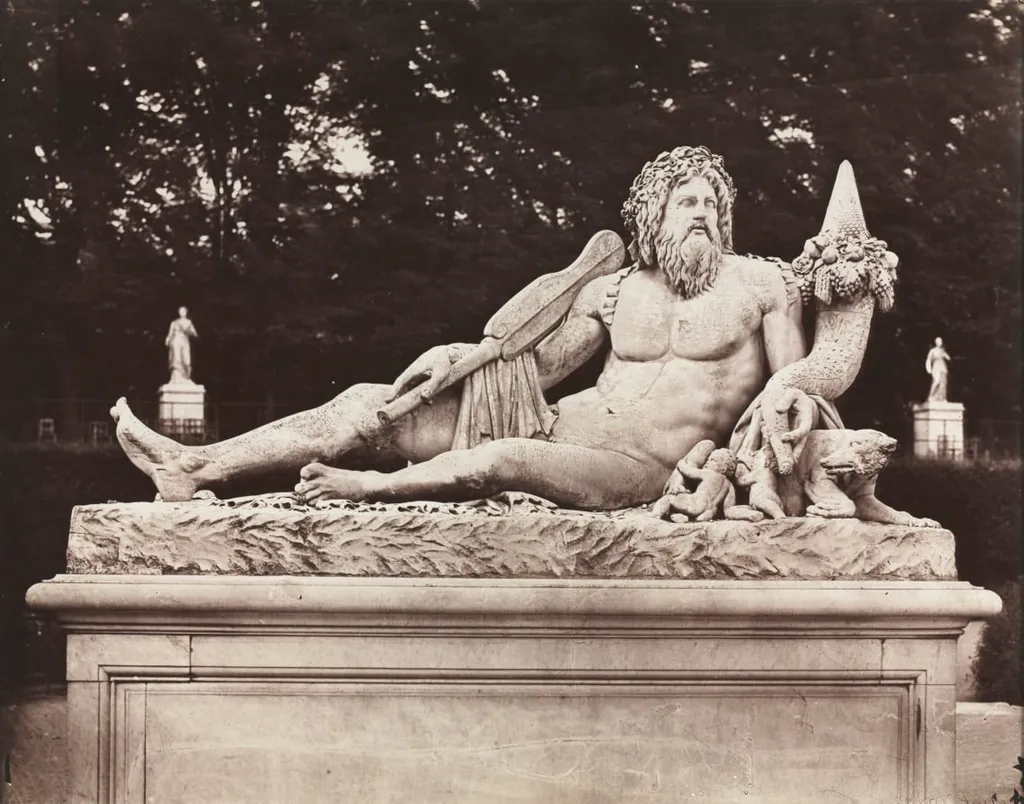
The Tiber, Tuileries Garden, Paris is a photography by the Impressionist artist Charles Nègre. It dates from 1859 and is held in the collection of the Cleveland Museum of Art.
About this work
Overview
This early photographic print captures the stone figure of the river god Tiber, positioned amid the trees and walkways of Paris’s Tuileries Garden. The image is one of a limited set derived from large‑format glass negatives made in the late 1850s, and it documents one of the garden’s four water‑themed sculptures.
Subject & Meaning
The sculpture represents Tiber, the mythological deity of the river that flows through Rome. As a water god, the figure forms part of a quartet of allegorical statues that celebrate the element of water within the garden’s ornamental program.
Technique & Style
The photograph was produced from a sizable glass plate negative, a relatively new medium in the 1850s that permitted fine tonal gradations and sharp detail. The resulting print exhibits a subtle play of light and shadow, echoing the chiaroscuro effects traditionally achieved in painting.
History & Provenance
French painter‑turned‑photographer Charles Nègre received state funding in 1859 to document fifty statues in the Tuileries. Although the commission remained unfinished, Nègre’s glass negatives survived, and this print is among the few unique impressions that were later printed from those plates.
Context
The project reflects mid‑century French interest in combining photography with the documentation of public art, positioning the new medium alongside established practices of architectural and sculptural recording.
Artist & collection

 Versailles, Fountain of Triumphant France
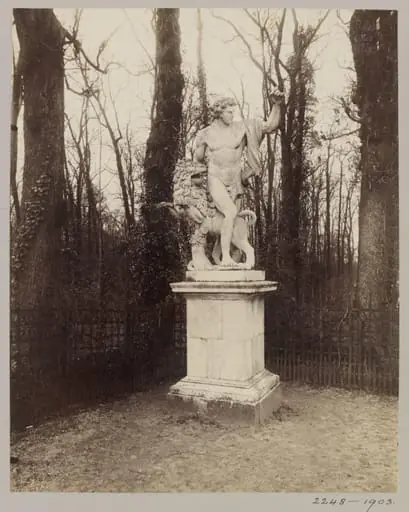 Statue of "Anger", Versailles, France
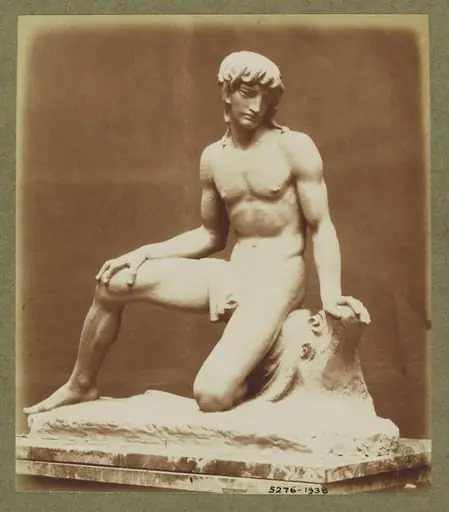 Untitled
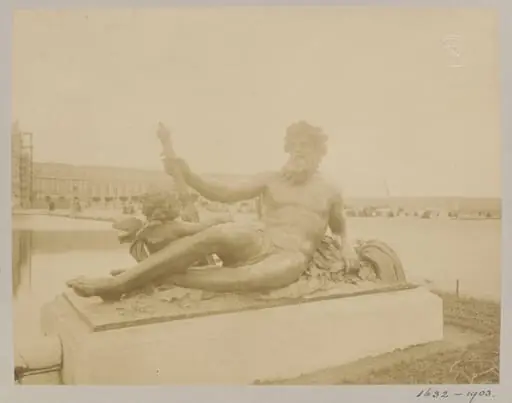 Statue of The "Rhone", Versailles, France
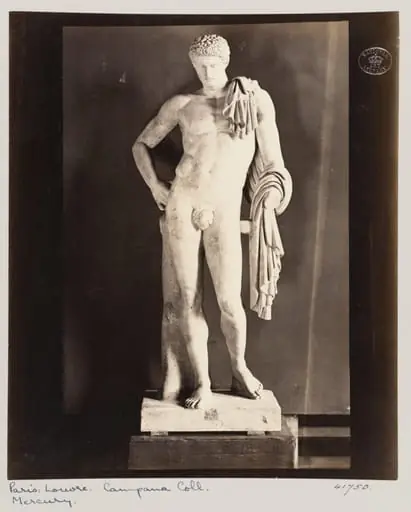 Marble statue of Theseus or Hercules
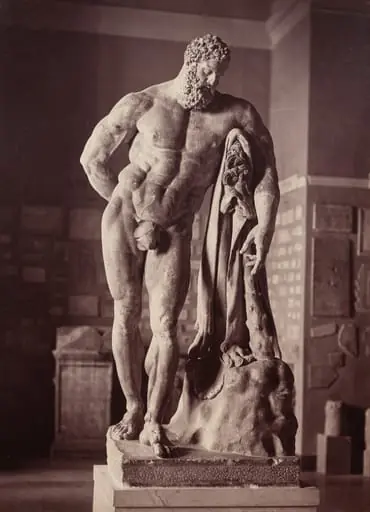 Farnese Hercules, Museum of Naples, Italy
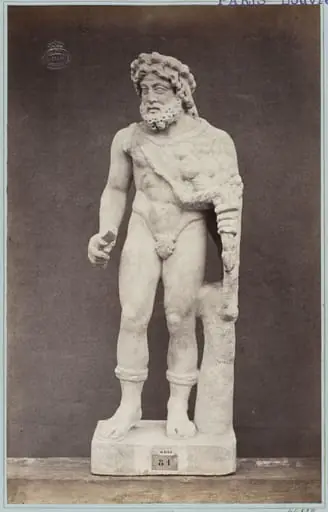 Vertumness statuette in marble
 Untitled
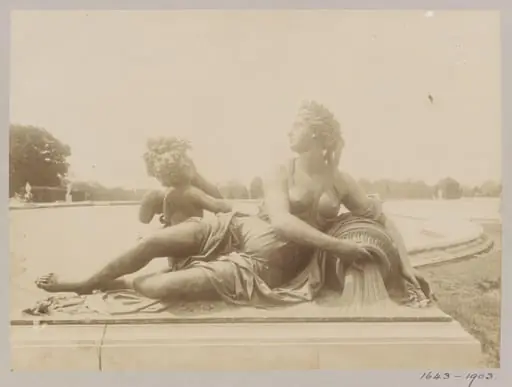 Statue, Versailles, France
 Winged figure slaying a bull in terra cotta