Artwork
Angel of Annunciation
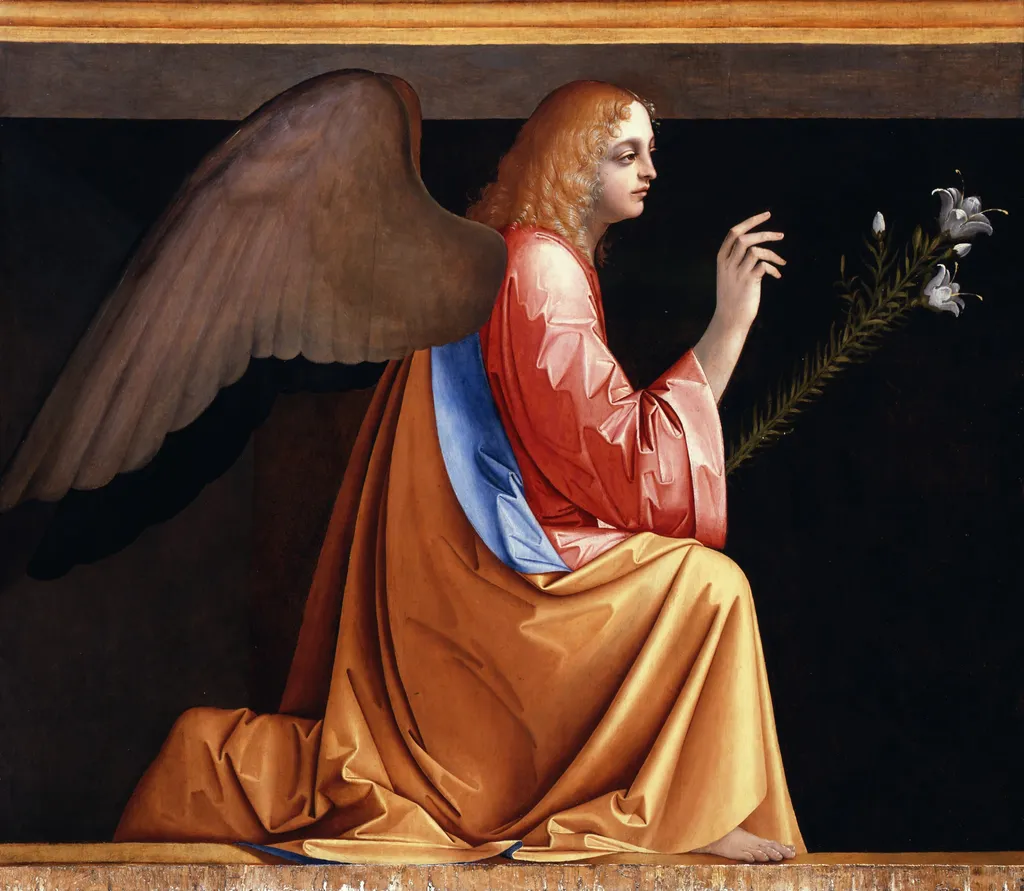
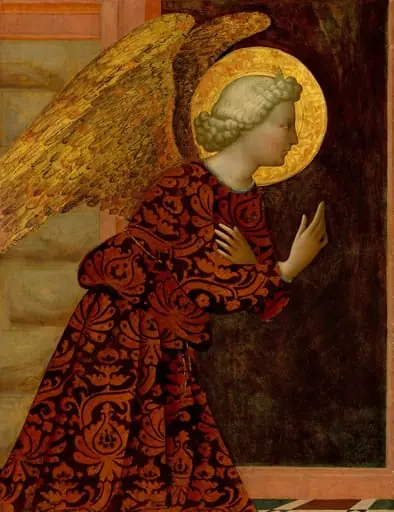
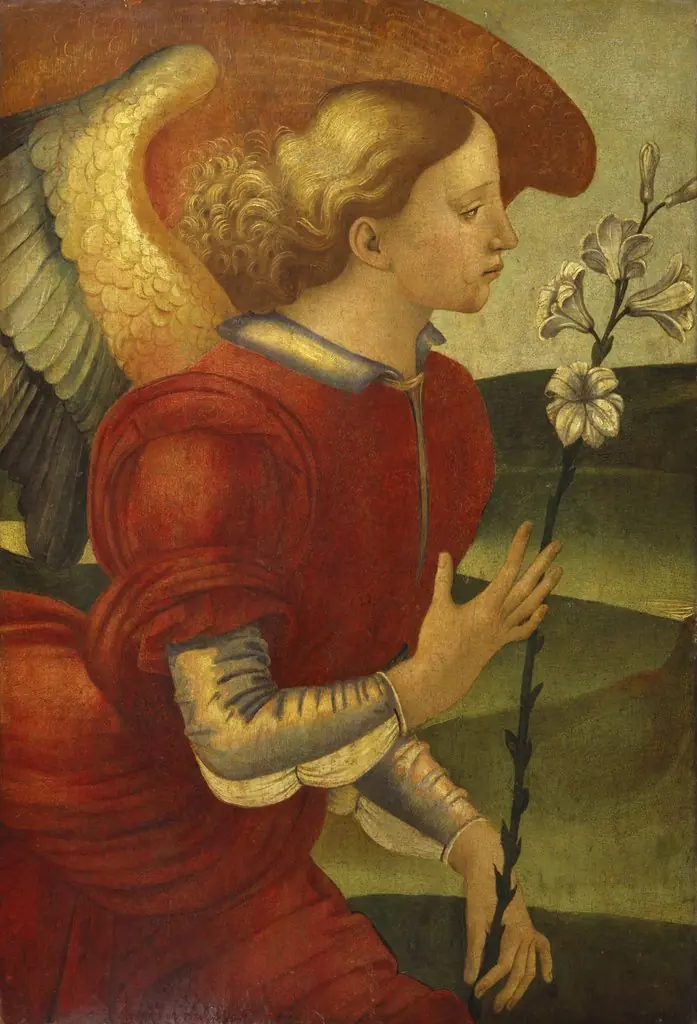
Angel of Annunciation is a paint painting by the Early Renaissance artist Giovanni Agostino da Lodi. It dates from 1502 and is held in the collection of the Gemäldegalerie Berlin.
About this work
Overview
Executed during the early Renaissance, it reflects the transitional style of Lombard painting, blending devotional intensity with emerging naturalism.
Painted in 1502 by Giovanni Agostino da Lodi, this tempera work combines two religious figures in a single composition: the Angel of the Annunciation and John the Evangelist. Though labeled as a single image, the painting presents a hybrid figure whose attributes suggest both roles. Executed during the early Renaissance, it reflects the transitional style of Lombard painting, blending devotional intensity with emerging naturalism.
Subject & Meaning
The figure combines the angelic messenger of the Annunciation with the evangelist traditionally depicted as a scribe. The raised right hand implies inscription, while the white-flowered plant in the left may symbolize purity or divine revelation. The dual identity suggests a theological link between divine proclamation and sacred writing, reinforcing the angel’s role as both herald and recorder of God’s word.
Technique & Style
Rendered in tempera on panel, the painting employs flat, luminous color and precise linear detail characteristic of late 15th-century Lombard practice. The dark background isolates the figure, enhancing its presence. The angel’s drapery, with its red robe and yellow underskirt, is rendered with rhythmic folds, while the curly hair and delicate flowers show attention to organic form, hinting at emerging Renaissance observation.
History & Provenance
The painting has been in the collection of the Gemäldegalerie Berlin since at least the 19th century. Its attribution to Giovanni Agostino da Lodi is based on stylistic parallels with his documented works, particularly in facial modeling and decorative detail. No earlier records of its commission or original location are known, suggesting it may have been a private devotional piece.
Context
Created during a period when Lombard artists were integrating Venetian color and Florentine composition, this work reflects regional experimentation. Religious imagery of the time often merged multiple biblical roles to convey layered spiritual meaning. The emphasis on writing and divine message aligns with broader devotional trends emphasizing the sacred text as a conduit of revelation.
Legacy
Though not widely reproduced, the painting remains a notable example of Lombard early Renaissance panel painting. Its hybrid iconography offers insight into how local workshops adapted traditional subjects to convey complex theological ideas. It contributes to understanding the evolution of religious imagery before the full emergence of High Renaissance naturalism.
Artist & collection
Artist
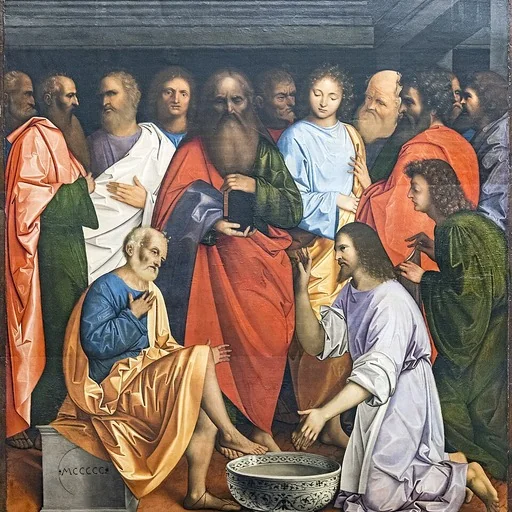
Giovanni Agostino da Lodi was an Italian painter who was active from c. 1495 to c. 1525. The attribution of his works has been dubious for centuries, until his style and career was defined by the American art historian…