Artwork
Figs on a Tazza with Pears, Quinces, Melons, Plums, Mushrooms on a Table, with Figs, Cherries, Peaches, and Acorns on a Ledge Above
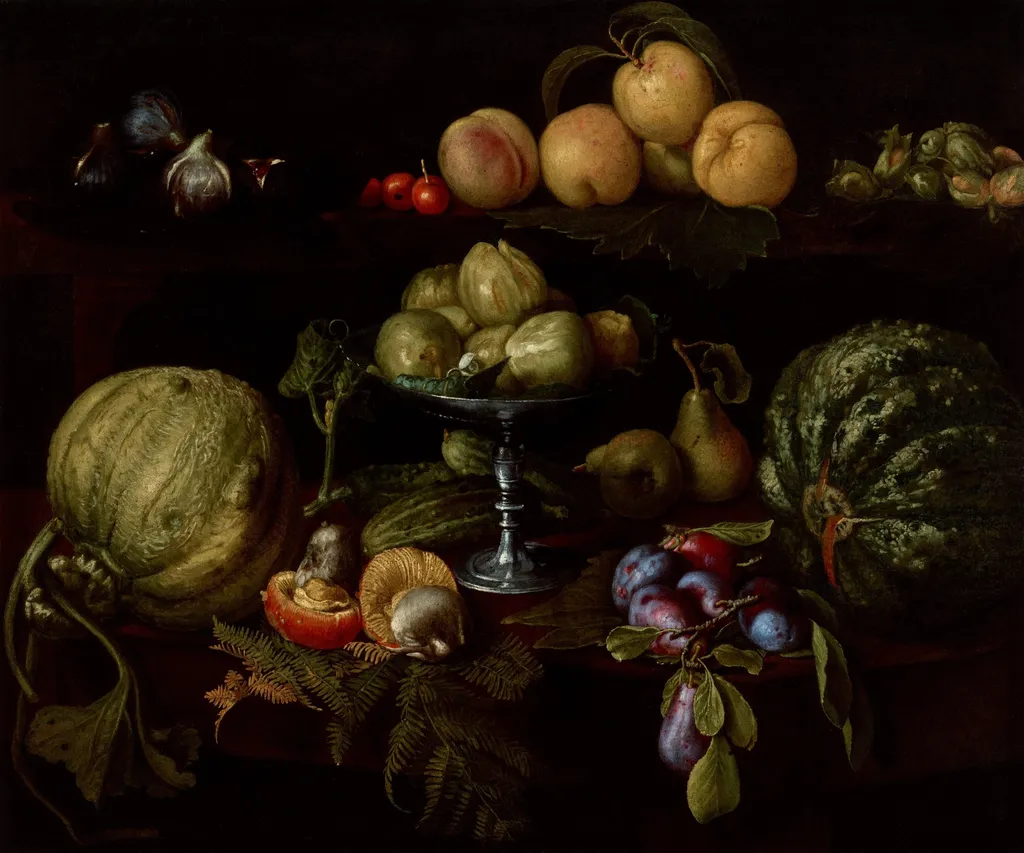
Figs on a Tazza with Pears, Quinces, Melons, Plums, Mushrooms on a Table, with Figs, Cherries, Peaches, and Acorns on a Ledge Above is an oil painting by Giovanni Battista Crescenzi. It dates from 1616 and is held in the collection of the Museum of Fine Arts, Houston.
About this work
Overview
The composition reflects the early-Baroque interest in natural observation, combining cultivated produce with wild elements like acorns and mushrooms.
Painted around 1616 by Giovanni Battista Crescenzi, this oil-on-canvas still life presents an arrangement of seasonal fruits, nuts, and fungi on a tabletop and an upper ledge. The composition reflects the early-Baroque interest in natural observation, combining cultivated produce with wild elements like acorns and mushrooms. Its quiet density and restrained palette suggest a contemplative approach to the ephemeral beauty of the natural world.
Subject & Meaning
The painting gathers a variety of fruits—figs, peaches, plums, cherries—as well as quinces, melons, and mushrooms, alongside acorns. These items, both cultivated and foraged, may allude to abundance, seasonal change, or the transience of earthly things. The inclusion of acorns, often symbolic of potential and growth, alongside decaying fungi, introduces a subtle tension between vitality and decay, common in Northern and Italian still-life traditions of the period.
Technique & Style
Crescenzi employs chiaroscuro to model forms with soft, directional light, enhancing the tactile quality of skins, rinds, and caps. The palette is subdued, dominated by earthy greens, muted reds, and browns, avoiding theatrical contrast in favor of quiet realism. Brushwork is precise yet unobtrusive, emphasizing texture over ornamentation. The arrangement is neither chaotic nor rigid, suggesting a deliberate balance between naturalism and compositional order.
History & Provenance
Crescenzi, born in Rome in 1577, trained as both painter and architect before moving to Spain in 1617, where he later worked on the royal pantheon at El Escorial. This painting likely dates from his final years in Italy, before his relocation. It entered the collection of the Museum of Fine Arts, Houston, where it remains today as one of the few surviving examples of his still-life work, distinct from his more widely known architectural and religious commissions.
Context
In early 17th-century Italy, still-life painting was gaining traction as an independent genre, influenced by Northern European models and the Counter-Reformation’s emphasis on the material world as a reflection of divine order. Crescenzi’s work aligns with this trend, though his Roman background and architectural training may have informed his structured compositions. Unlike Spanish or Flemish peers, he rarely signed or dated such works, making attribution and dating challenging.
Legacy
Crescenzi’s still life is a rare surviving example of his non-religious output, offering insight into his observational skills beyond architecture and fresco. While he is better known for his contributions to Spanish royal projects, this painting reveals a quiet, methodical approach to nature that anticipates later developments in Italian still-life traditions. Its preservation in Houston allows scholarly access to a lesser-known facet of early-Baroque painting in Italy.
Own this work as a print
Artist & collection
Artist
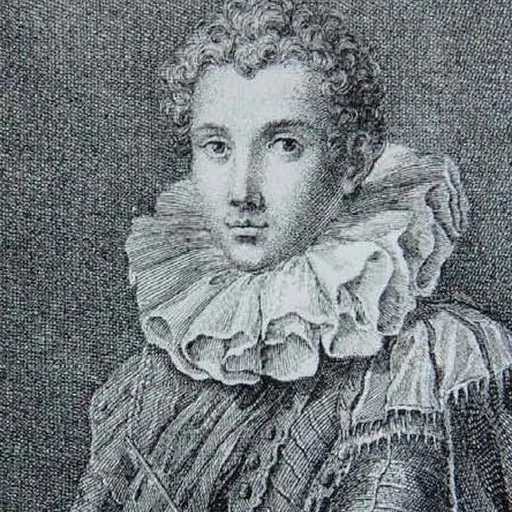
Giovanni Battista Crescenzi (1577–1635) was an Italian painter and architect of the early-Baroque period, active in Rome and Spain, where he helped decorate the pantheon of the Spanish kings at El Escorial.

 Früchtestilleben
 Still Life with Fruit
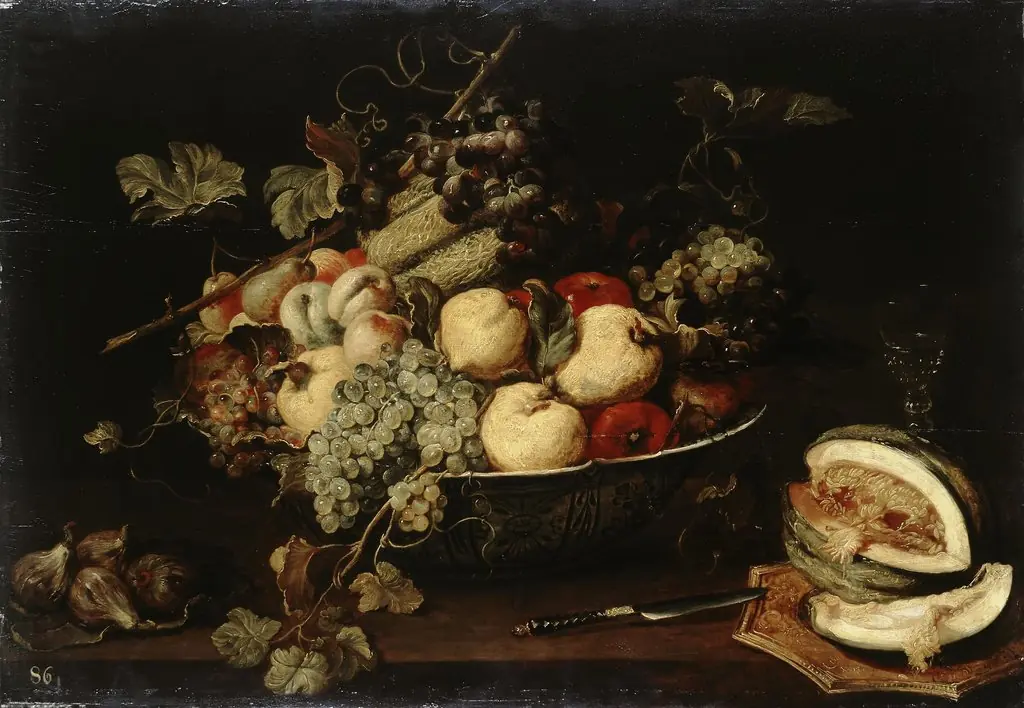 Fruit in a Bowl and a Sliced Melon
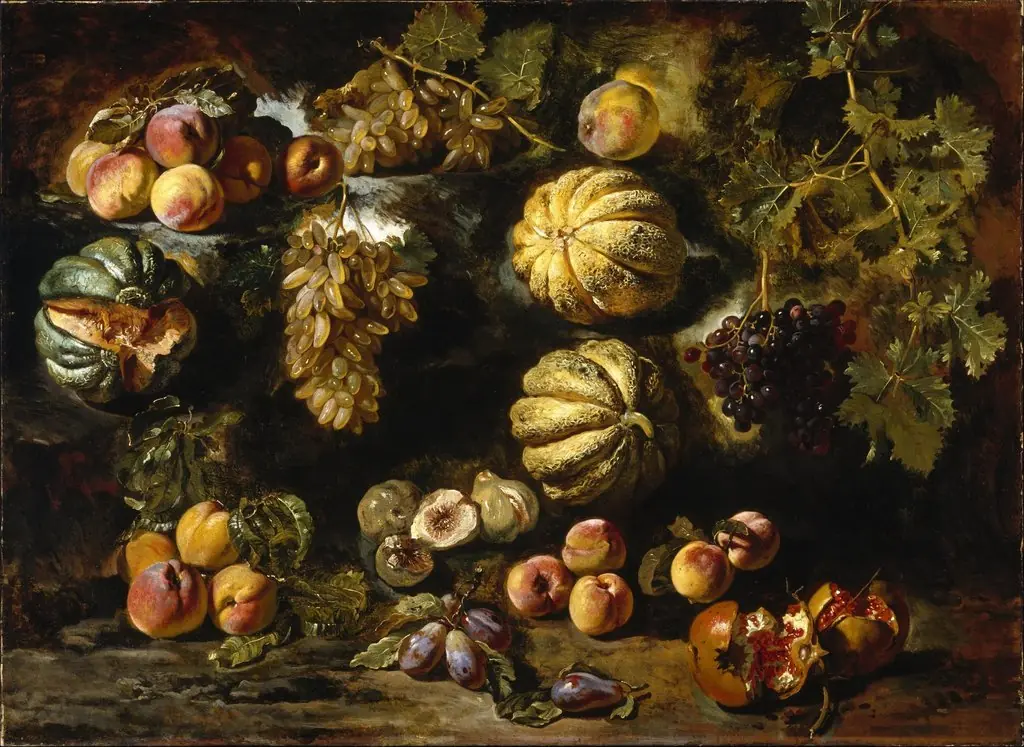 Still Life with Melons, Peaches, Figs, and Grapes
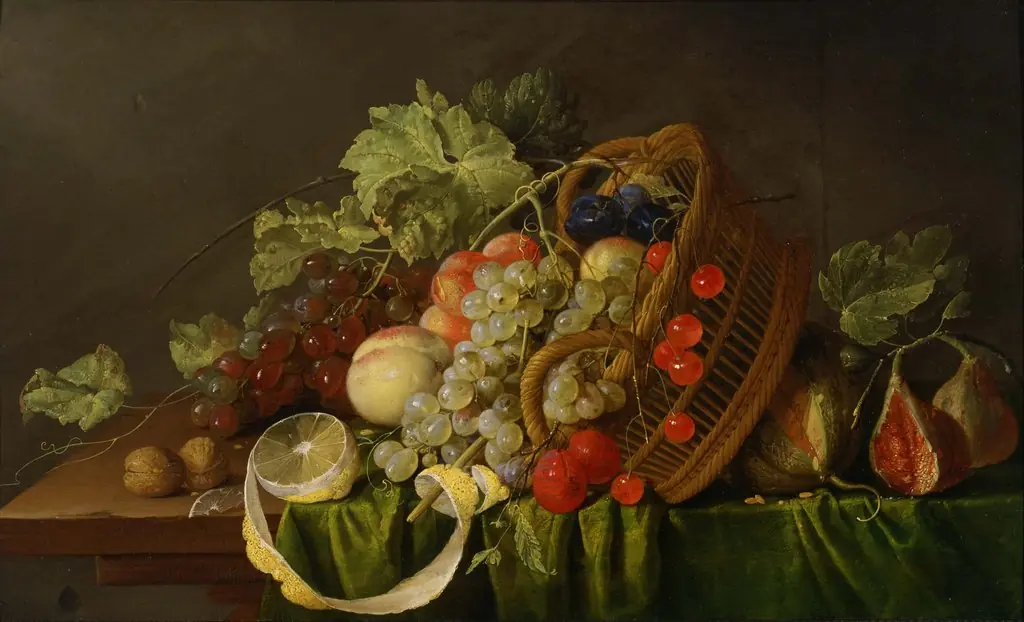 Still Life with a Basket of Fruit
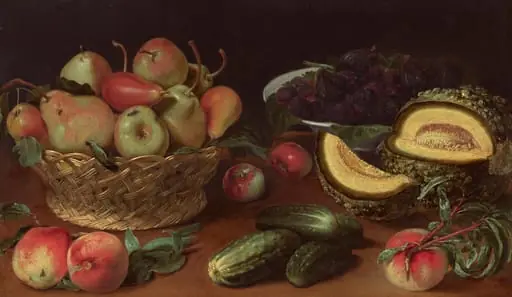 Still Life with Apples, Pears, Cucumbers, Figs, Plums, and a Melon
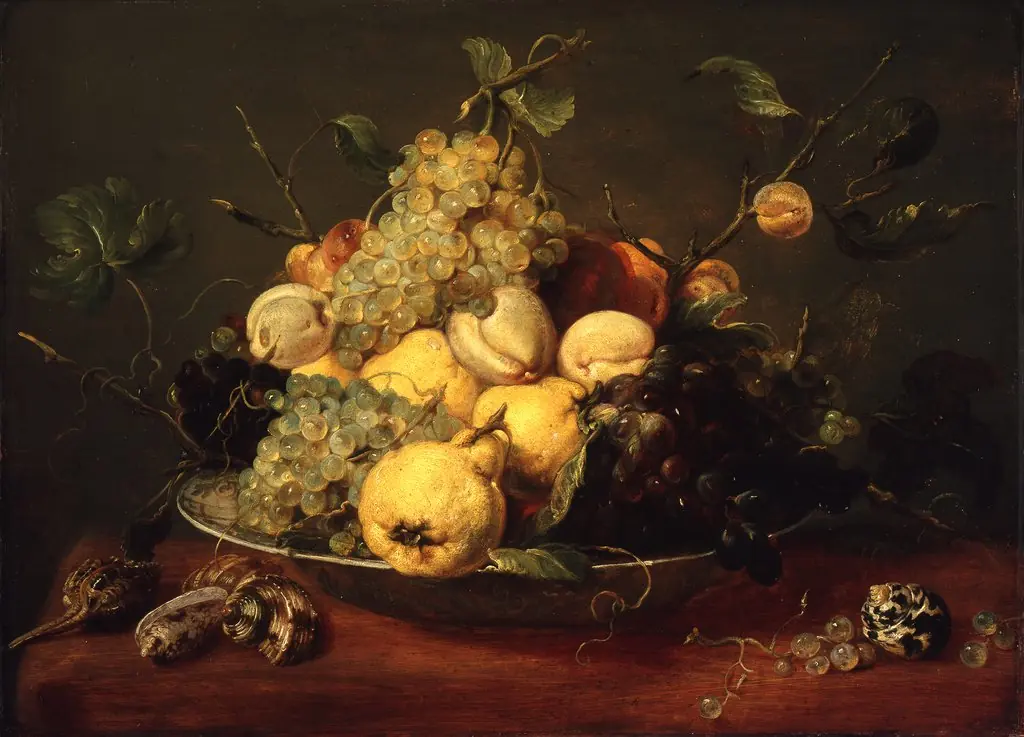 Still life with fruits in a porcelain bowl
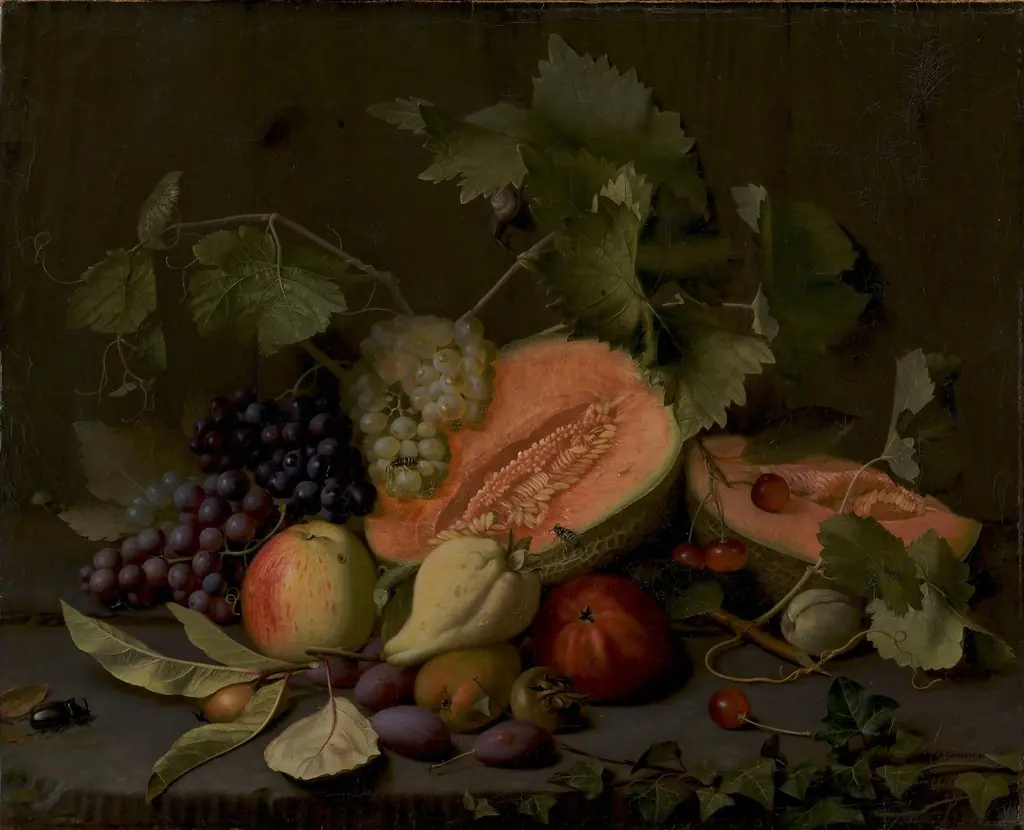 Still Life with Melons and Grapes
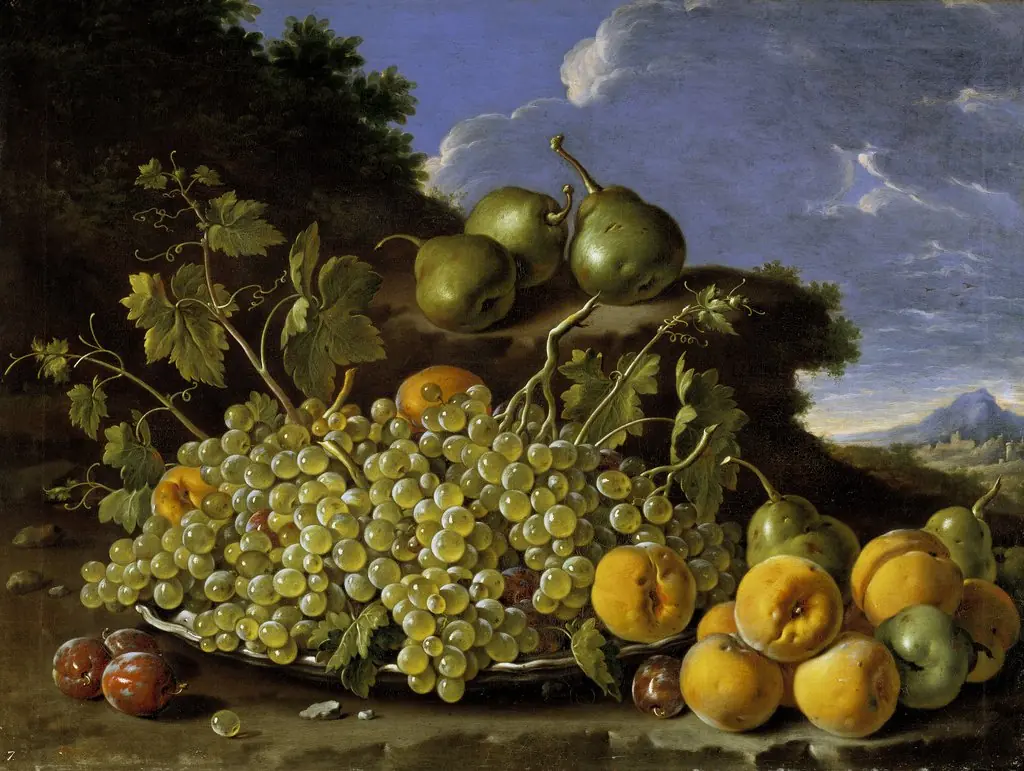 Still Life with Plate of Grapes Peaches Pears and Prunes in a Landscape
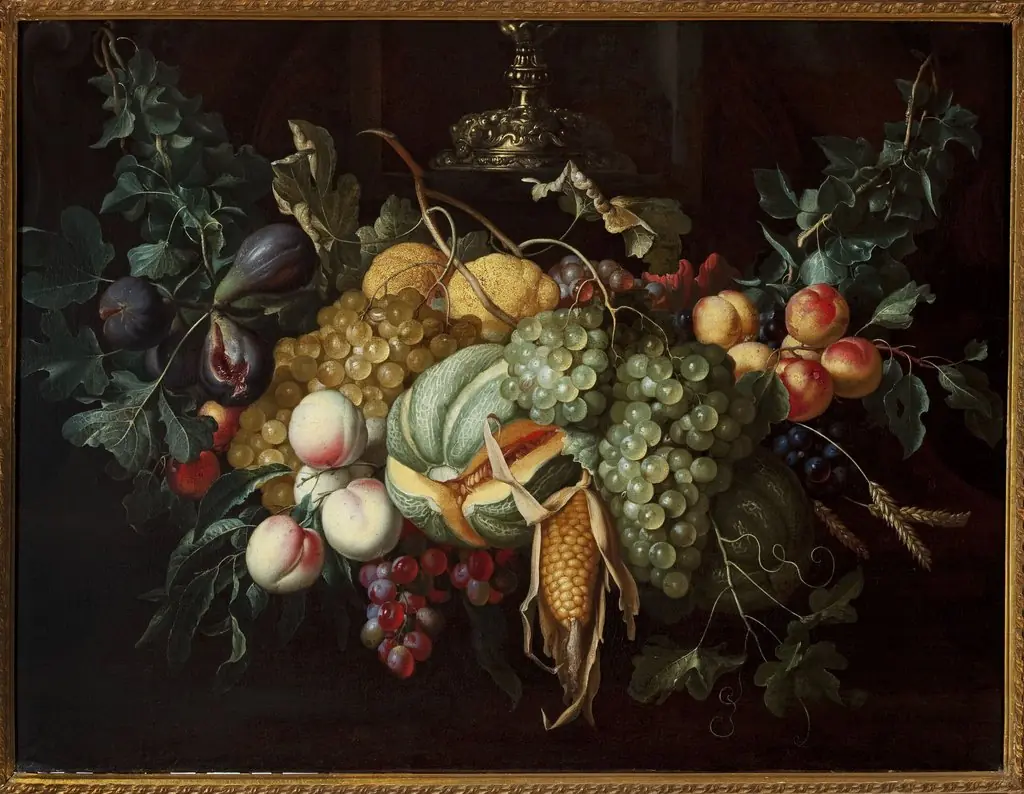 Still life with fruits and corn