Artwork
Fruit in a Bowl and a Sliced Melon
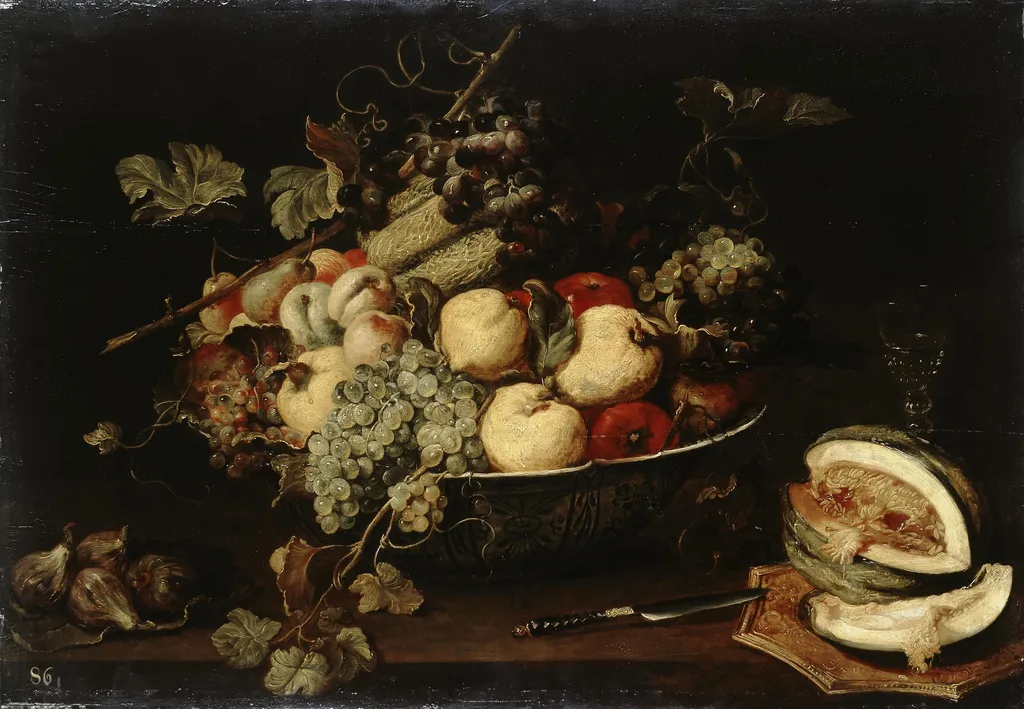
Fruit in a Bowl and a Sliced Melon is an oil painting by the Flemish Baroque painting artist Frans Snyders. It dates from 1650 and is held in the collection of the Hermitage Museum.
About this work
Overview
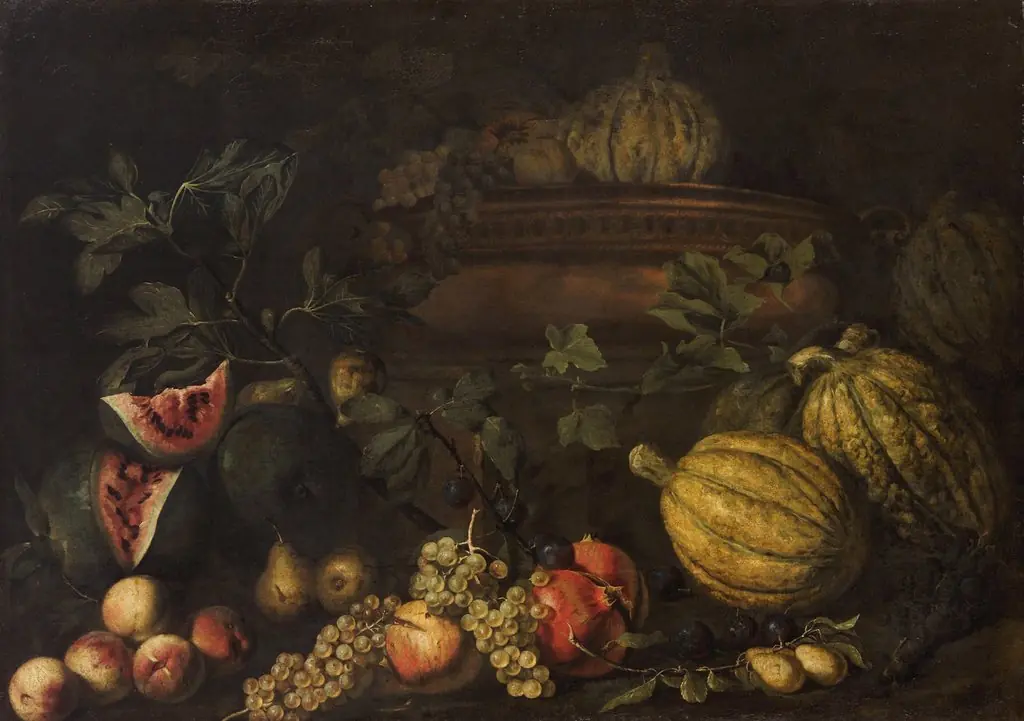
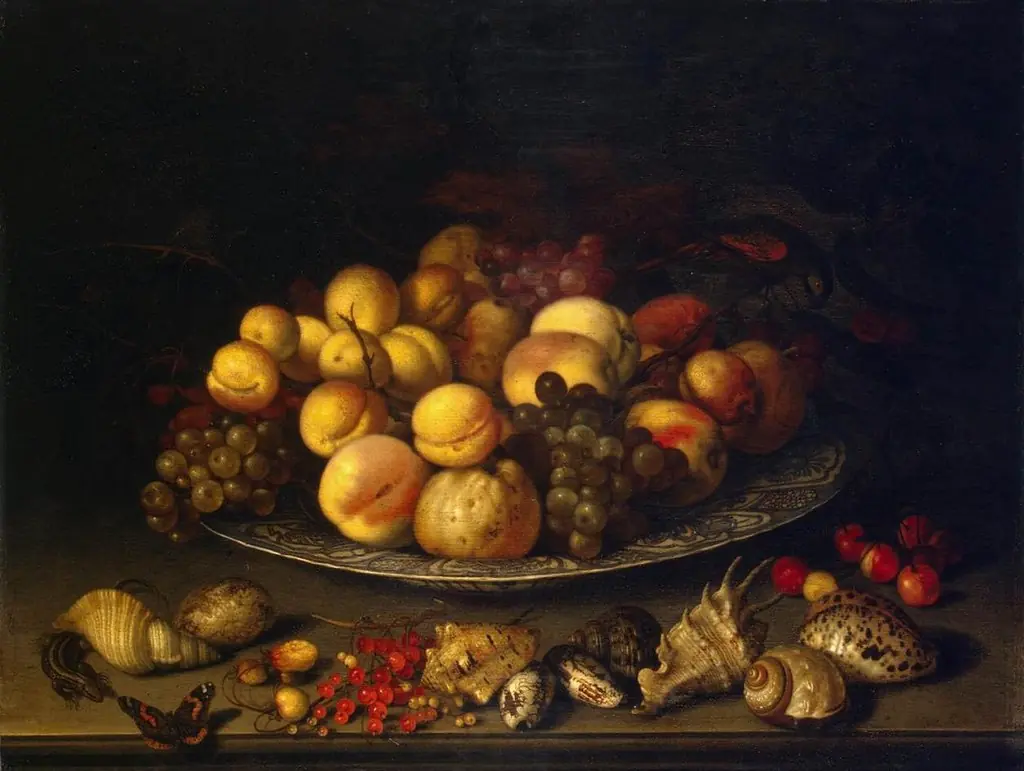
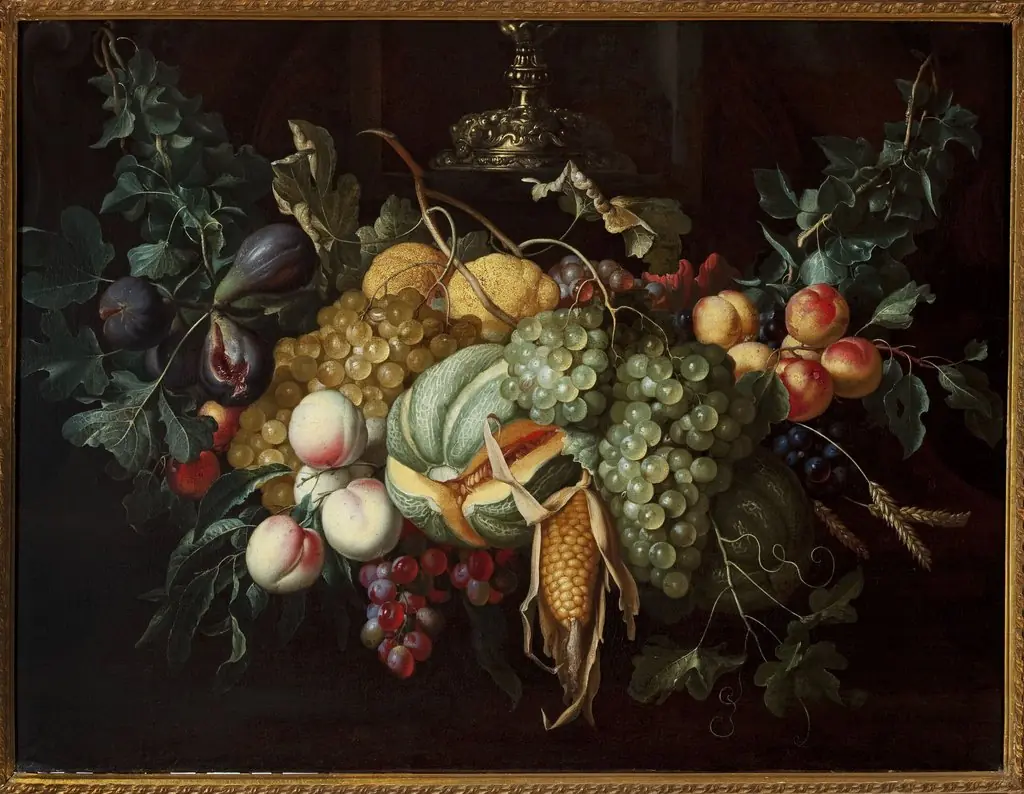
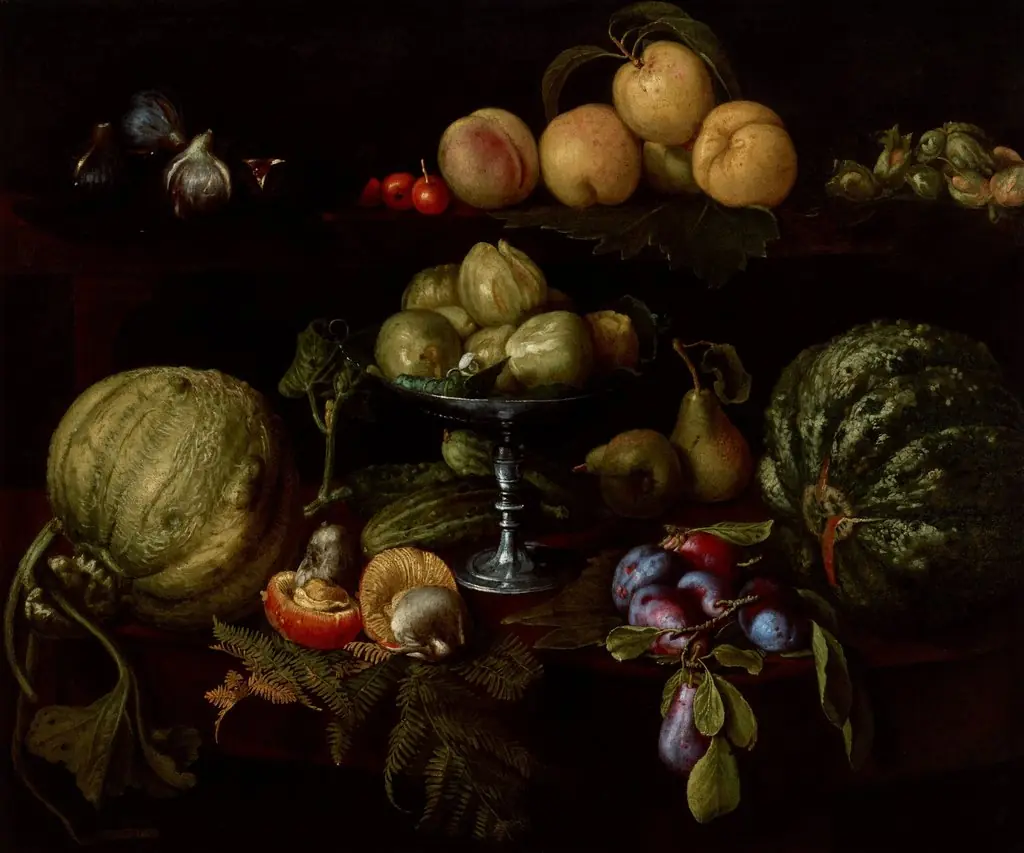
A ceramic bowl overflows with apples, pears, grapes, and plums, while a halved melon rests on a wooden surface nearby, its interior vividly rendered.
Painted around 1650, this oil still life by Frans Snyders presents a loosely arranged collection of fruit on a dark ground. A ceramic bowl overflows with apples, pears, grapes, and plums, while a halved melon rests on a wooden surface nearby, its interior vividly rendered. A knife lies beside it, and scattered figs and leaves suggest recent movement. The composition captures the transient nature of abundance, rendered with careful attention to texture and light.
Subject & Meaning
The painting depicts common table fruits, arranged as if recently gathered or consumed. The sliced melon, with its exposed flesh, and the scattered produce imply impermanence—a quiet reference to the fleeting nature of earthly pleasures. No symbolic religious or allegorical elements are overt, yet the decay implied by fallen leaves and exposed fruit aligns with broader Northern European traditions of memento mori in still life.
Technique & Style
Snyders employs rich, saturated pigments to emphasize the juiciness of the melon and the glossy sheen of the apples. The dark, neutral background intensifies the vibrancy of the fruit, while subtle gradations of light model each surface. Brushwork varies—smooth for skin, textured for rind—creating tactile realism. The arrangement appears spontaneous, yet carefully balanced, reflecting the artist’s mastery of naturalistic detail without rigid symmetry.
History & Provenance
The painting entered the collection of the State Hermitage Museum in Saint Petersburg, likely during the 18th or 19th century, as part of broader European acquisitions of Flemish works. Its presence in the Hermitage underscores the imperial interest in Netherlandish still life during the Enlightenment. No earlier documented ownership is publicly recorded, but its style aligns with Snyders’ mature period in Antwerp.
Context
Created in the mid-17th century, this work reflects the flourishing of still life painting in the Southern Netherlands, where wealthy patrons favored depictions of abundance. Snyders, known for his animal and fruit compositions, contributed to a genre that celebrated material wealth while subtly acknowledging its transience. His approach differed from Dutch counterparts by emphasizing dramatic lighting and dynamic, almost chaotic arrangements.
Legacy
Snyders’ still lifes influenced later generations of Flemish and French painters through their emphasis on naturalism and tactile detail. While not widely replicated, his handling of light and organic forms became a reference point for artists exploring the interplay of texture and shadow. This painting remains a representative example of his mature style, preserved in one of Europe’s major public collections.
Own this work as a print
Artist & collection
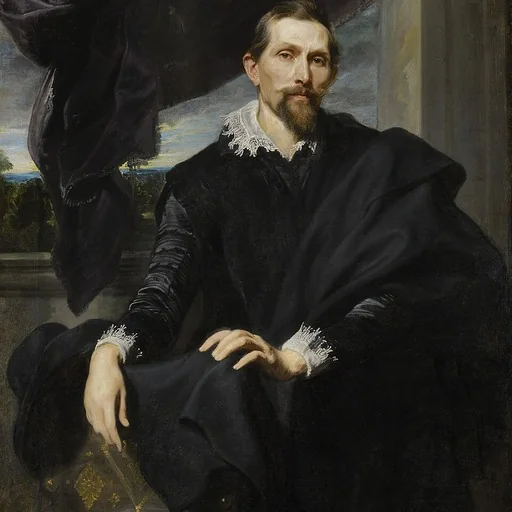
Artist
Frans Snyders or Frans Snijders was a Flemish painter of animals, hunting scenes, market scenes, and still lifes.

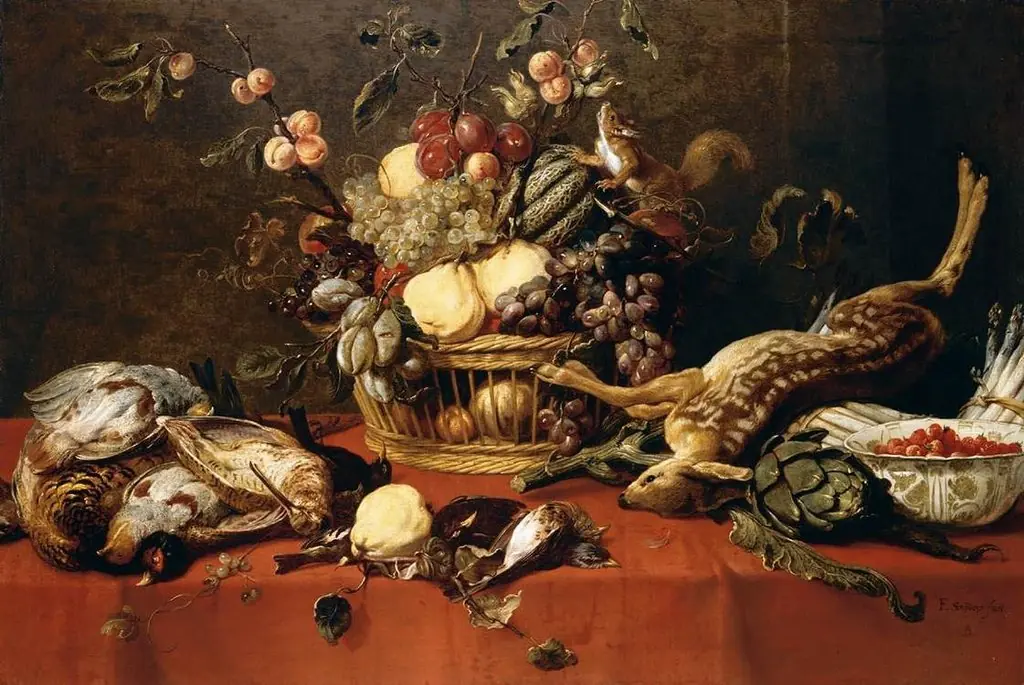 Still life of fruit in a basket together with game, a bowl of fraises-de-bois, artichokes, asparagus and a squirrel upon a table draped with a red cloth
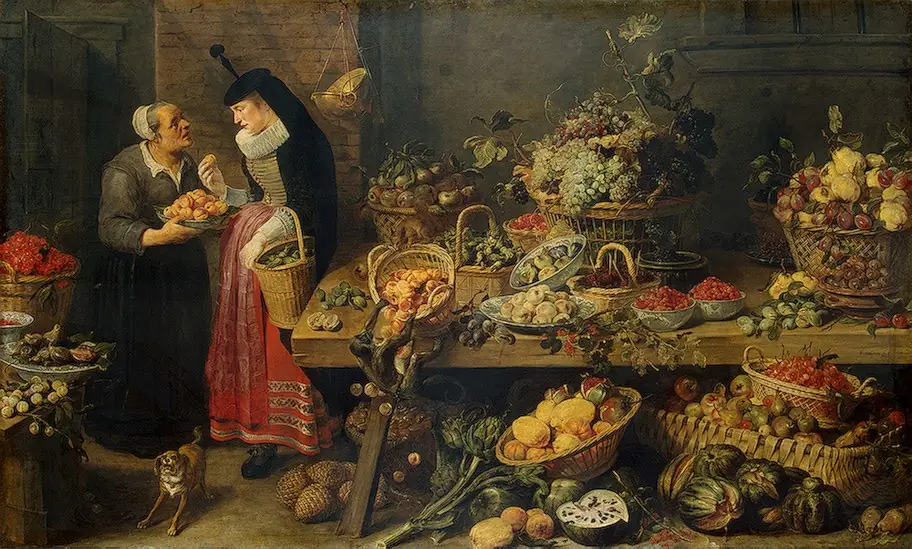 The Fruit Shop
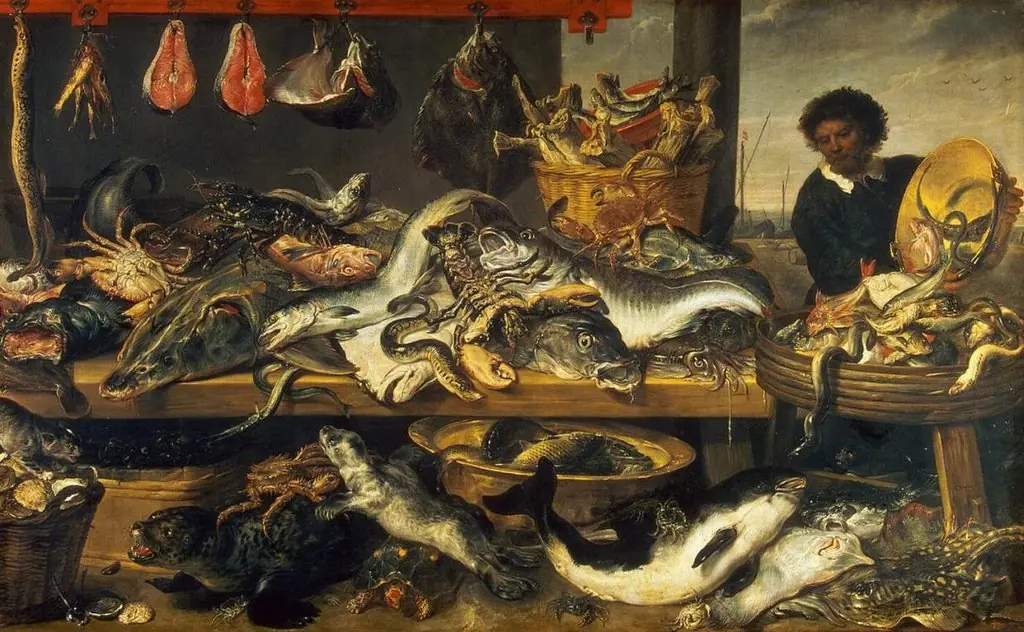 Fish Market
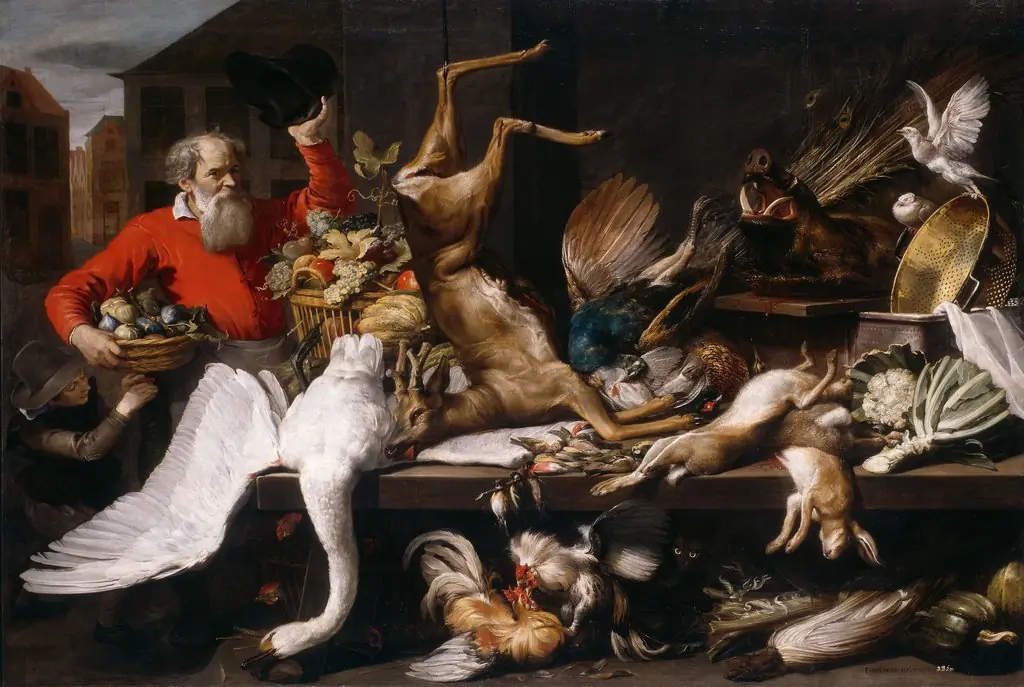 Still Life with Dead Game, Fruits, and Vegetables in a Market
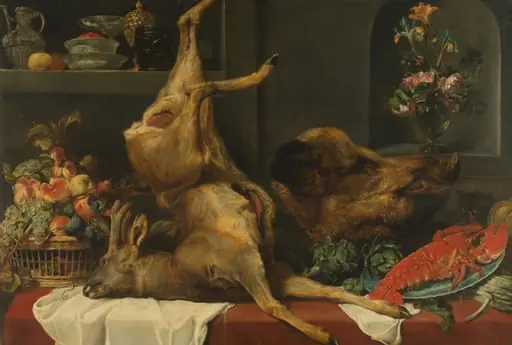 Larder Still life
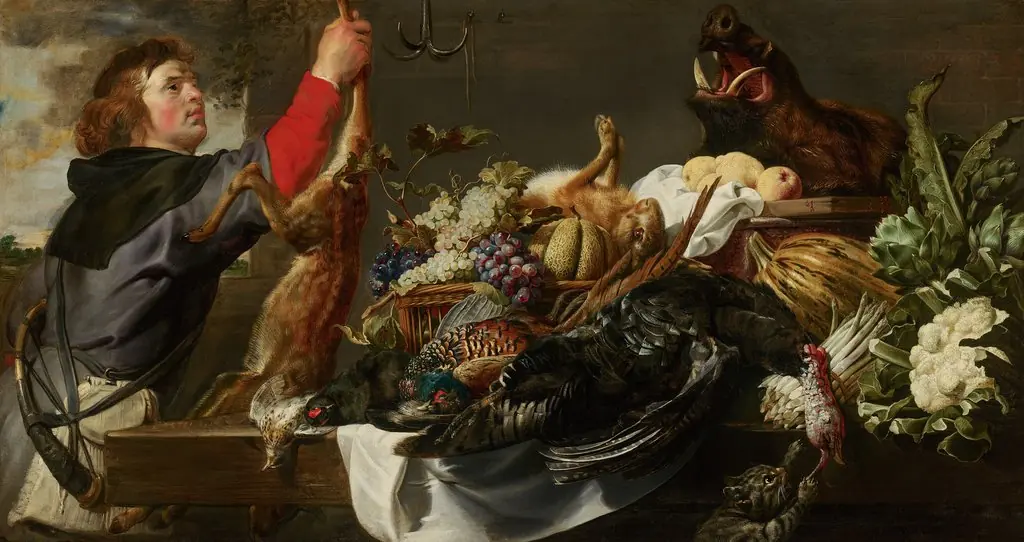 Still Life with Huntsman
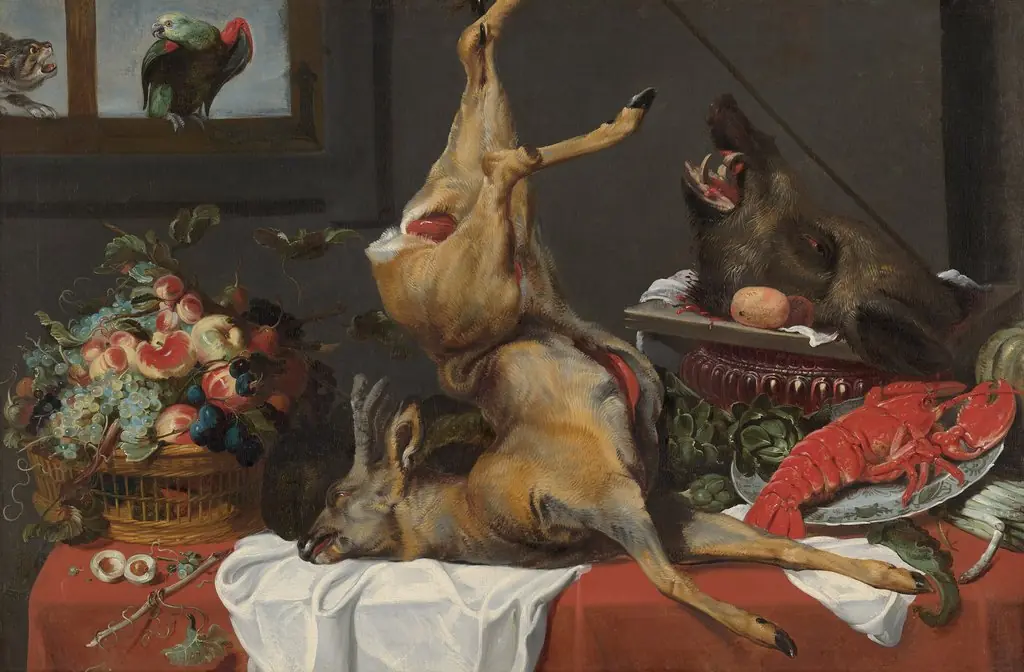 Still Life with a Dead Stag
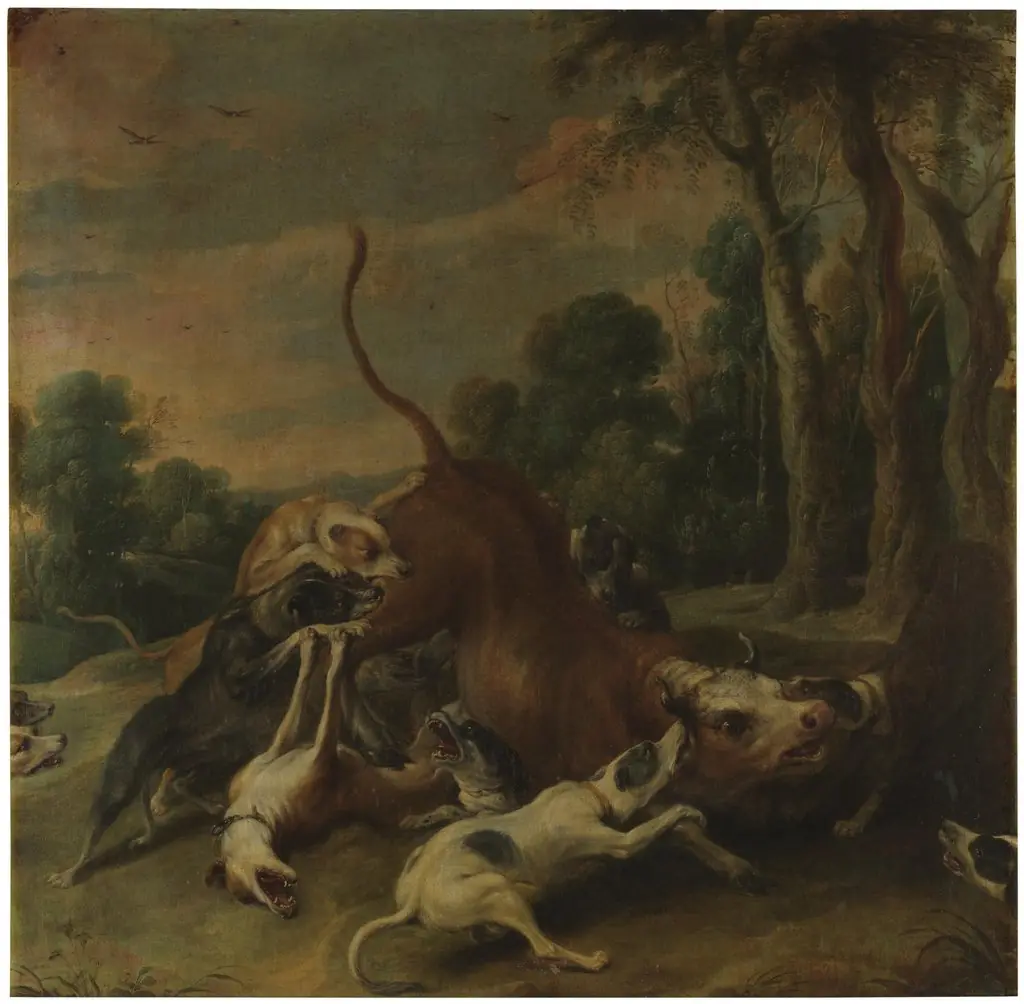 A bull overpowered by dogs