Artwork
Christ on the Route to Calvary
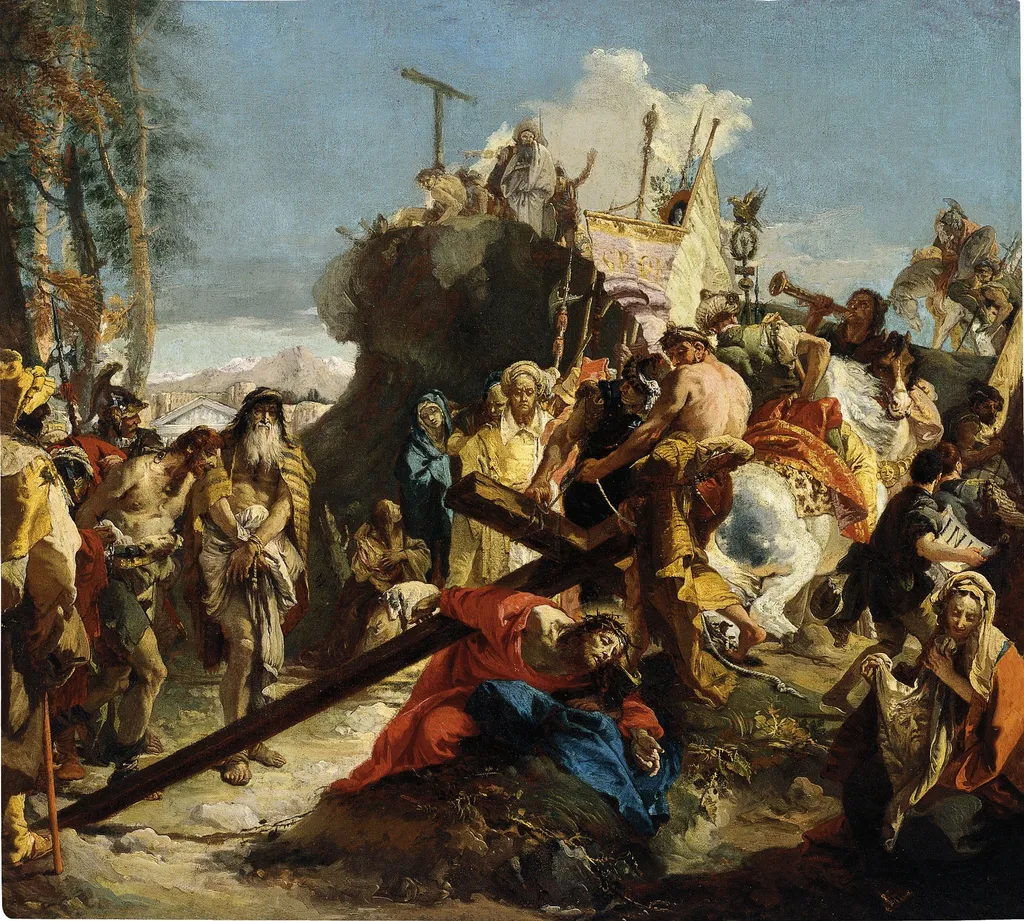
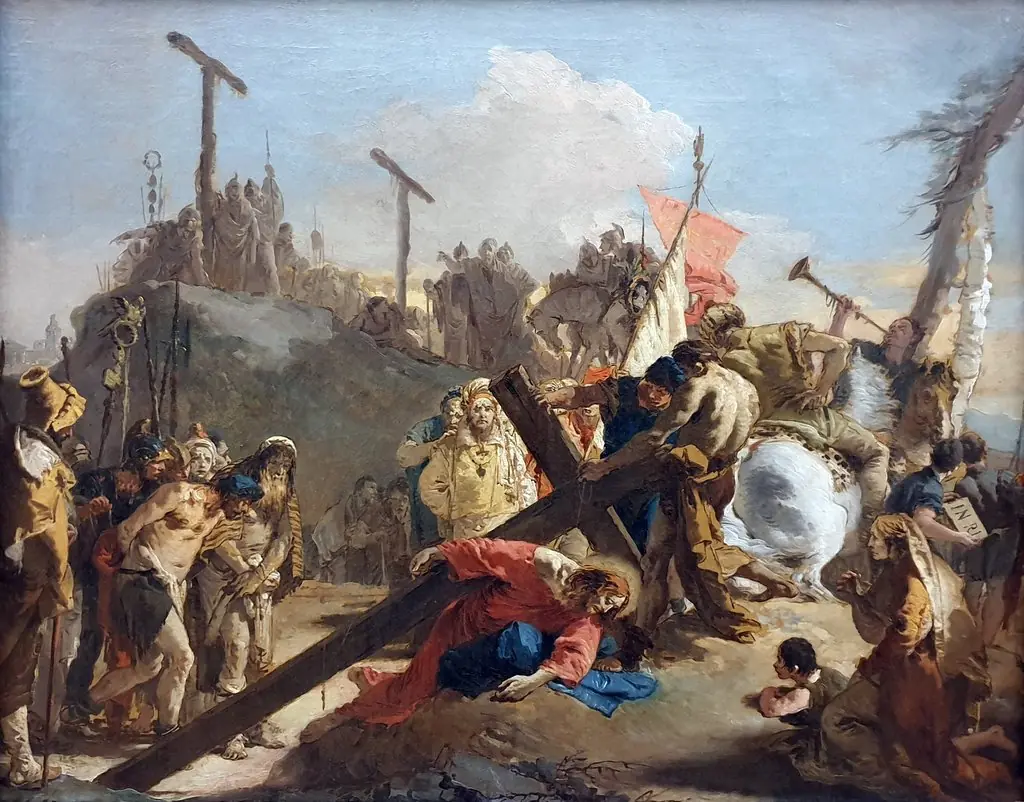
Christ on the Route to Calvary is an oil painting by the Rococo painting artist Giovanni Battista Tiepolo. It dates from 1730 and is held in the collection of the Thyssen-Bornemisza Museum.
About this work
Overview
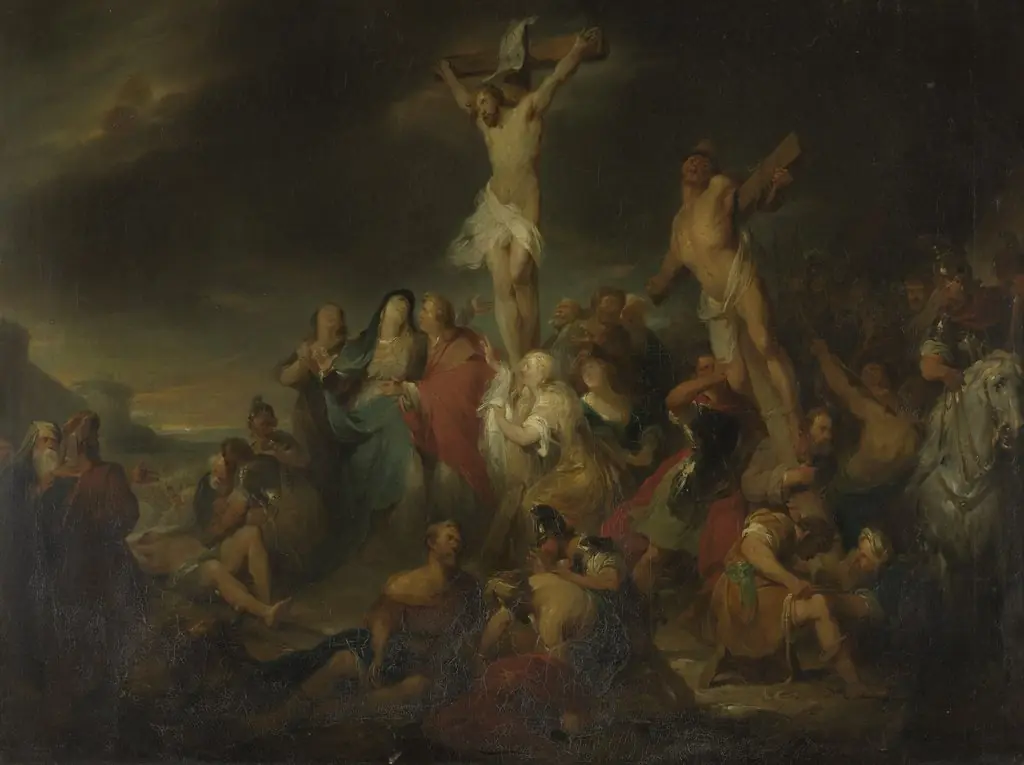
Painted in 1730 by Giovanni Battista Tiepolo, this oil on canvas work portrays Christ en route to his crucifixion. It is part of the collection at the Museu Nacional d'Art de Catalunya in Barcelona. The composition captures a moment of physical and spiritual burden, rendered with Tiepolo’s characteristic command of movement and light, though without overt theatricality.
Subject & Meaning
His upward gaze suggests resignation or divine contemplation, contrasting with the weight of the cross and the indifferent or watchful crowd around him.
The scene illustrates Christ carrying the cross toward Golgotha, a moment of suffering central to Christian narrative. His upward gaze suggests resignation or divine contemplation, contrasting with the weight of the cross and the indifferent or watchful crowd around him. The painting emphasizes human vulnerability amid divine purpose, avoiding overt martyrdom for a quieter, more introspective tone.
Technique & Style
Tiepolo employs fluid brushwork and layered glazes to convey texture in fabric and skin, with the red robe and blue cloak standing out against a muted background. Light falls selectively, highlighting Christ’s form and the cross’s weight. Figures are arranged dynamically but without clutter, allowing emotional gravity to emerge through posture and gesture rather than dramatic expression.
History & Provenance
The painting entered the Museu Nacional d'Art de Catalunya’s collection through the transfer of ecclesiastical artworks following 19th-century secularization policies in Spain. Its origins trace to a private or religious commission in northern Italy, likely intended for devotional use. It remained in regional collections before being cataloged in Barcelona by the early 20th century.
Context
Created during Tiepolo’s early career, this work reflects the transition from Baroque intensity to the lighter, more narrative-driven style of the Rococo. While religious subjects remained common, artists increasingly focused on psychological nuance over grandeur. This painting aligns with broader trends in Venetian painting that prioritized human emotion within sacred stories.
Legacy
Though not among Tiepolo’s most widely reproduced works, this painting exemplifies his ability to convey spiritual tension through restrained composition. It contributes to scholarly understanding of how 18th-century religious art balanced devotion with emerging naturalism, influencing later depictions of Christ’s passion in regional European collections.
Own this work as a print
Artist & collection

Artist
Giovanni Battista Tiepolo, also known as Giambattista Tiepolo, was an Italian painter and printmaker from the Republic of Venice who painted in the Rococo style, considered an important member of the 18th-century Venetian school.