Artwork
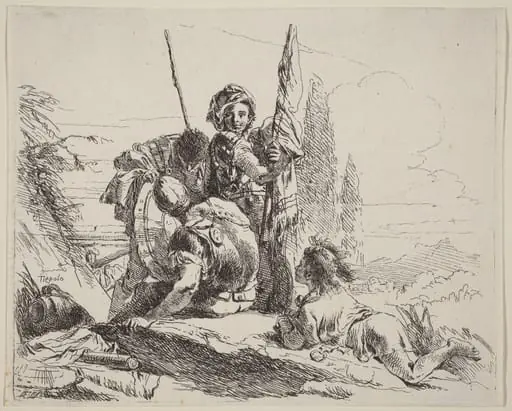
Various Caprices: The Three Soldiers and the Boy
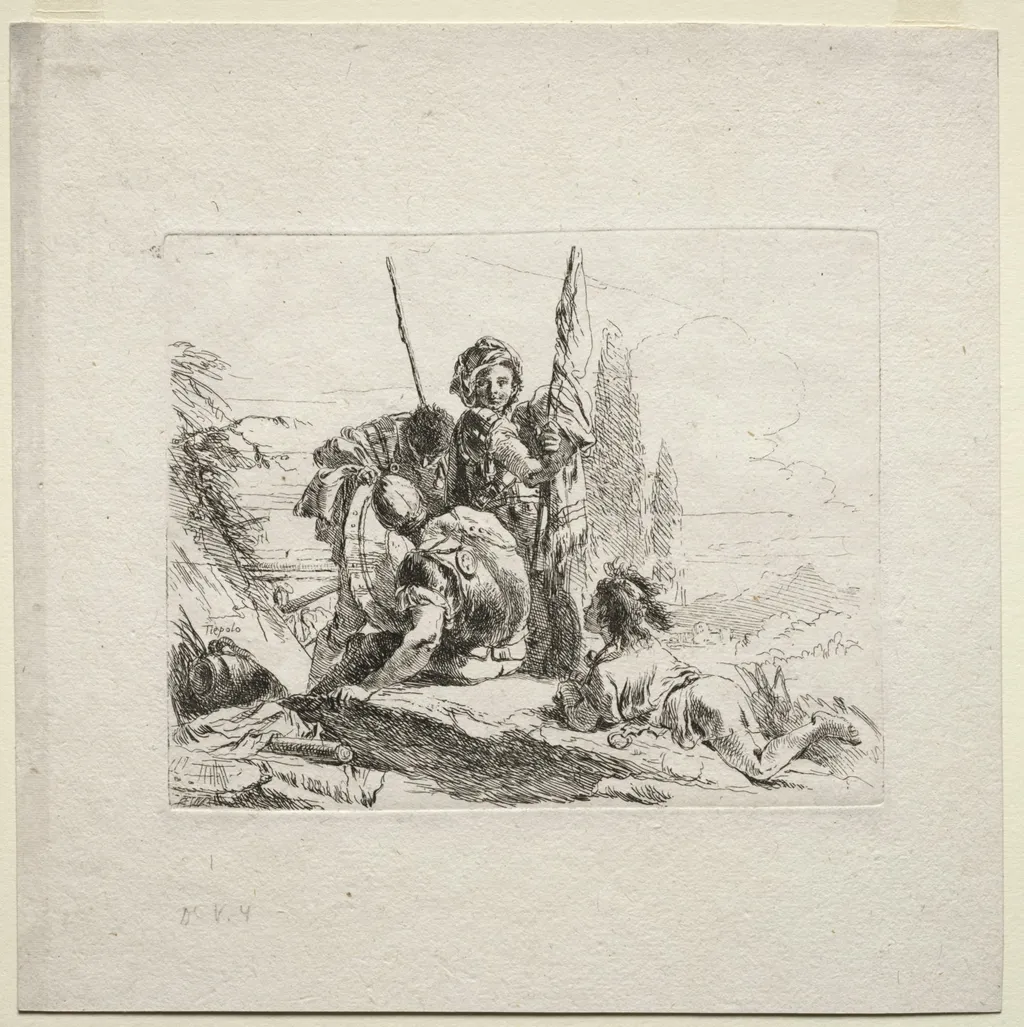
Various Caprices: The Three Soldiers and the Boy is a print by the Baroque artist Giovanni Battista Tiepolo. It dates from 1742 and is held in the collection of the Cleveland Museum of Art.
About this work
Overview
Giovanni Battista Tiepolo's 'Various Caprices: The Three Soldiers and the Boy' is a print from 1742, currently part of The Cleveland Museum of Art's collection.
Subject & Meaning
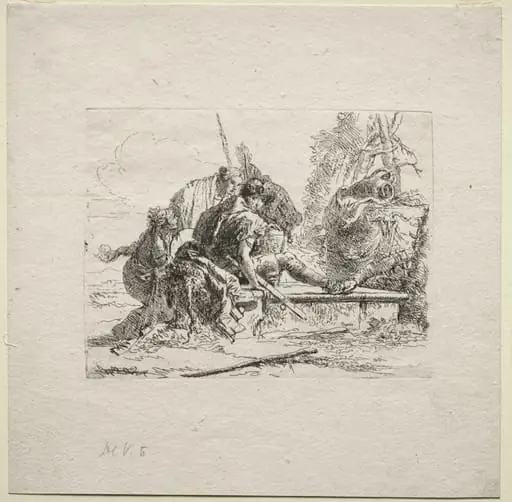
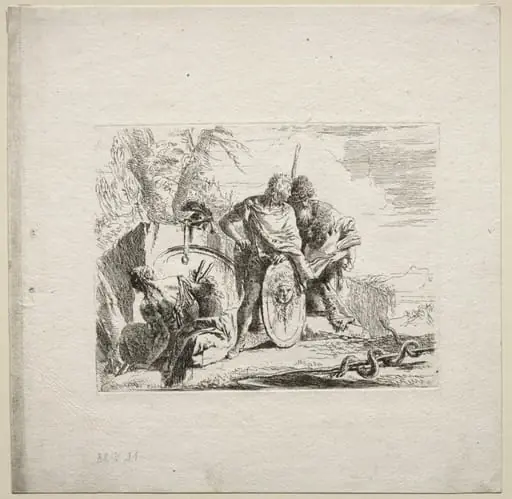
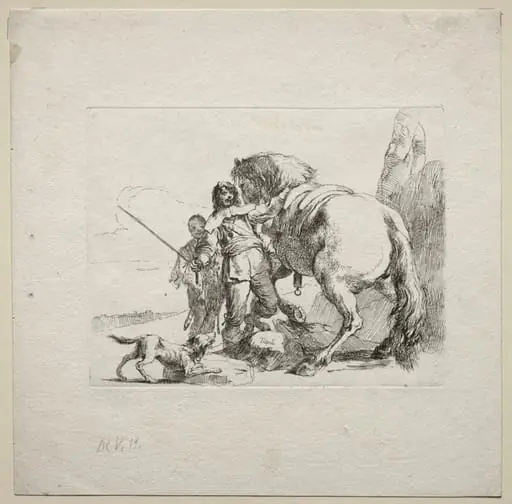
The print depicts a narrative scene of three soldiers on horseback, accompanied by a boy, traversing a wooded terrain. One soldier bears a flag, another a spear, suggesting a specific, possibly historical or literary context.
Technique & Style
Characterized by expressive, loose lines for the horses and trees, with more defined rendering of the human figures. Tiepolo employed shading techniques to achieve depth, particularly evident in the facial expressions and clothing textures.
History & Provenance
Created in 1742 by Giovanni Battista Tiepolo, the work's provenance prior to its current location at The Cleveland Museum of Art is not detailed here.
Context
While the exact source (historical or literary) of the scene is unspecified, its compositional style aligns with Baroque traditions, emphasizing dynamic movement and suggestive narrative.
Legacy
As part of Tiepolo's caprices, this work contributes to the artist's exploration of imaginative and often enigmatic subjects, reflecting his influence in capturing nuanced, story-driven scenes.
Artist & collection

Artist
Giovanni Battista Tiepolo, also known as Giambattista Tiepolo, was an Italian painter and printmaker from the Republic of Venice who painted in the Rococo style, considered an important member of the 18th-century Venetian school.