Artwork
Various Caprices: The Astrologen and the Young Soldier
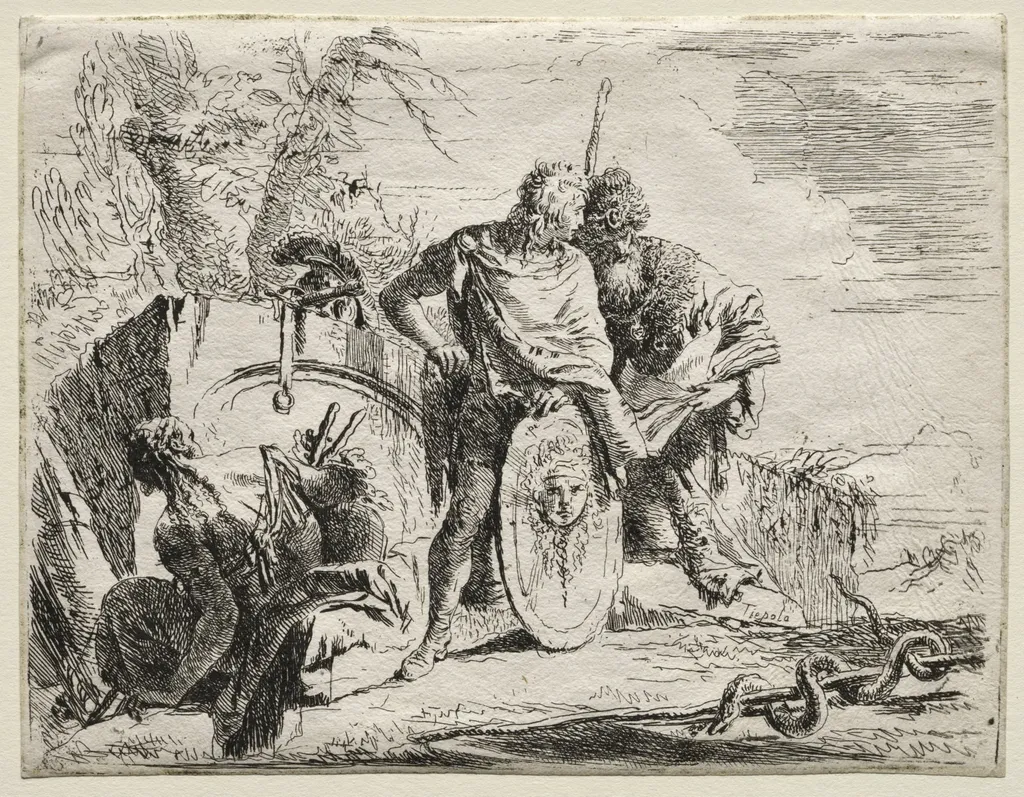
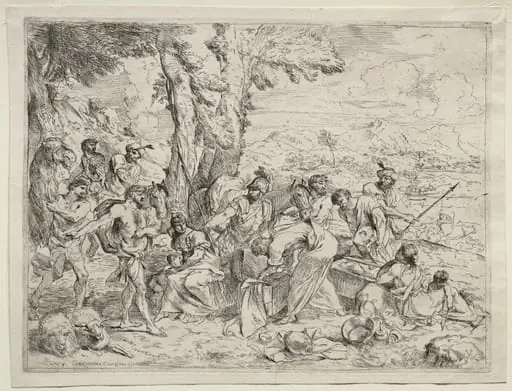
Various Caprices: The Astrologen and the Young Soldier is a print by the Baroque artist Giovanni Battista Tiepolo. It dates from 1742 and is held in the collection of the Cleveland Museum of Art.
About this work
Overview
Created in 1742 by Giovanni Battista Tiepolo, this print belongs to a series titled Various Caprices. It is one of many etchings in which Tiepolo explored imaginative, often enigmatic scenes drawn from myth, history, and fantasy. The work is part of the permanent collection at The Cleveland Museum of Art, where it is studied for its dynamic composition and narrative ambiguity.
Subject & Meaning
The presence of the serpent, alongside the martial attire, implies themes of deception, fate, or hidden peril within a charged encounter.
The scene features two male figures: one holding a shield, standing with composure; the other, gripping a sword, caught mid-movement. Their interaction suggests a moment of tension, possibly a confrontation or ritual. A snake crosses the foreground, introducing an element of foreboding. The presence of the serpent, alongside the martial attire, implies themes of deception, fate, or hidden peril within a charged encounter.
Technique & Style
Tiepolo employed etching and drypoint to achieve fine, expressive lines and subtle tonal contrasts. The figures are rendered with fluid, energetic strokes, while the background—trees and water—is suggested rather than detailed, enhancing the dreamlike quality. Light and shadow are used to model form and direct attention, though without the dramatic intensity of full chiaroscuro, favoring atmospheric suggestion instead.
History & Provenance
The print was produced during Tiepolo’s active period in Venice, when he was developing his Caprices series as independent works, distinct from his large-scale frescoes. It entered the Cleveland Museum of Art’s collection in the 20th century, likely through a broader acquisition of European prints. Its provenance before that remains largely undocumented, though it circulated among collectors familiar with Tiepolo’s graphic work.
Context
Tiepolo’s Caprices emerged in a cultural climate receptive to imaginative, non-narrative imagery. Unlike commissioned religious or historical works, these prints allowed him freedom to experiment with composition and symbolism. They reflect Enlightenment-era interest in allegory and the psychological dimensions of myth, appealing to collectors who valued intellectual curiosity over didactic storytelling.
Legacy
Though less known than his frescoes, Tiepolo’s Caprices influenced later generations of printmakers and Romantic artists drawn to their atmospheric ambiguity. The series demonstrated that etching could convey complex psychological states without literal storytelling. Today, these works are valued for their inventive use of line and their quiet evocation of unseen narratives, offering a counterpoint to the grandeur of his monumental paintings.
Artist & collection

Artist
Giovanni Battista Tiepolo, also known as Giambattista Tiepolo, was an Italian painter and printmaker from the Republic of Venice who painted in the Rococo style, considered an important member of the 18th-century Venetian school.

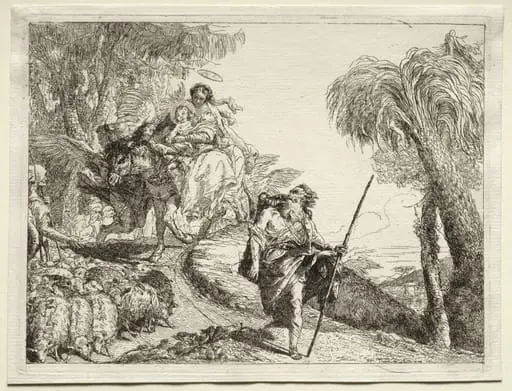 Flight into Egypt: The Holy Family and the Flock of Sheep
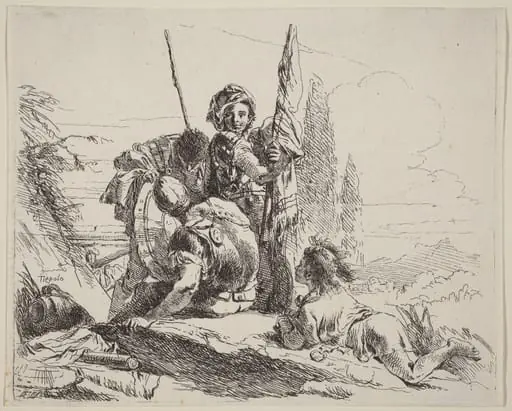 Three Soldiers and a Youth
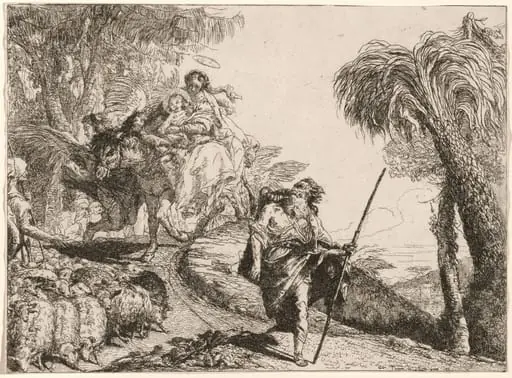 The Holy Family Descending a Path near Shepherds
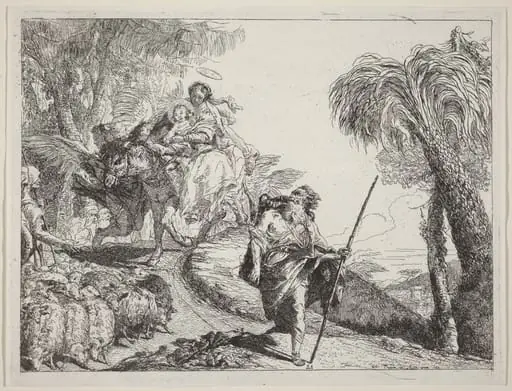 The Flight with Joseph in the Foreground
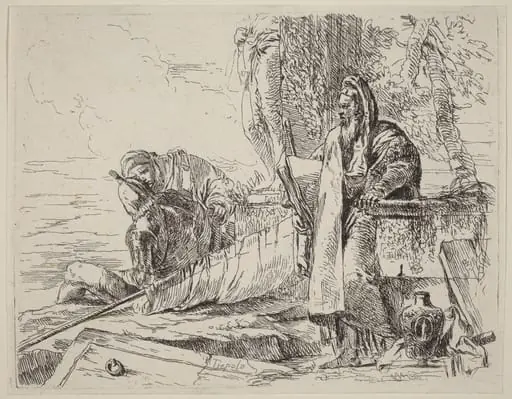 Standing Philosopher and Two Other Figures
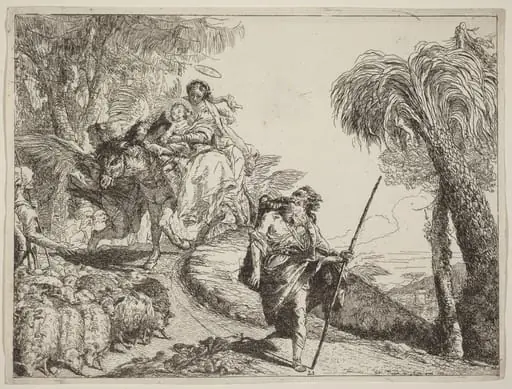 The Flight with Joseph in the Foreground
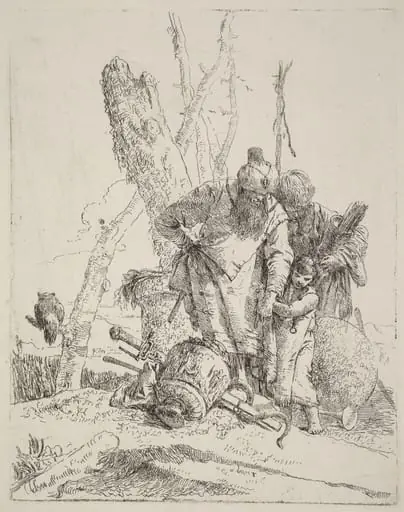 Two Turbaned Magicians and a Boy
 Laban Searching for Idols in Rachel's Baggage