Artwork
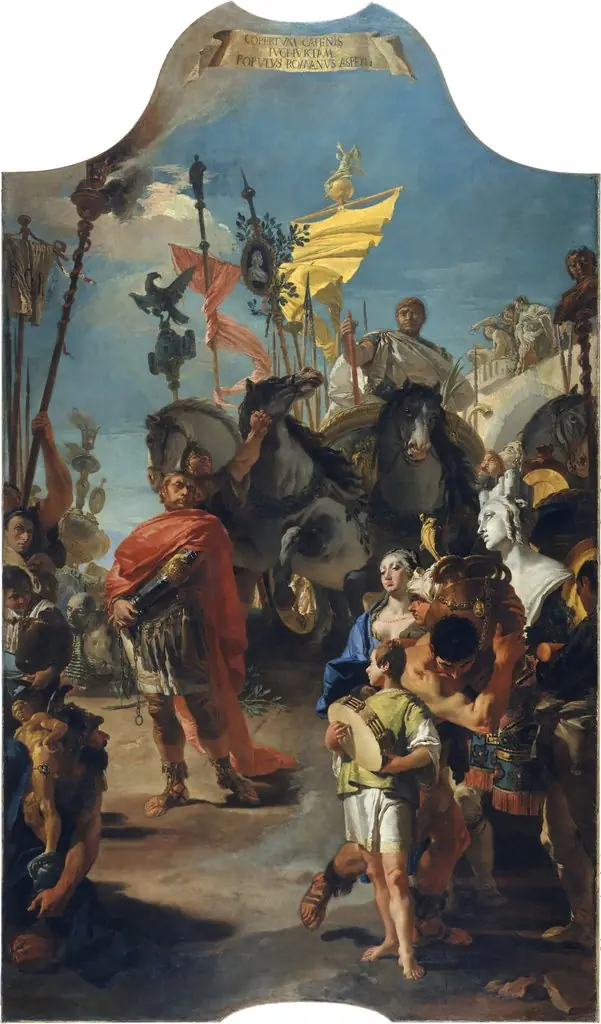
Queen Zenobia before the Emperor Aurelian
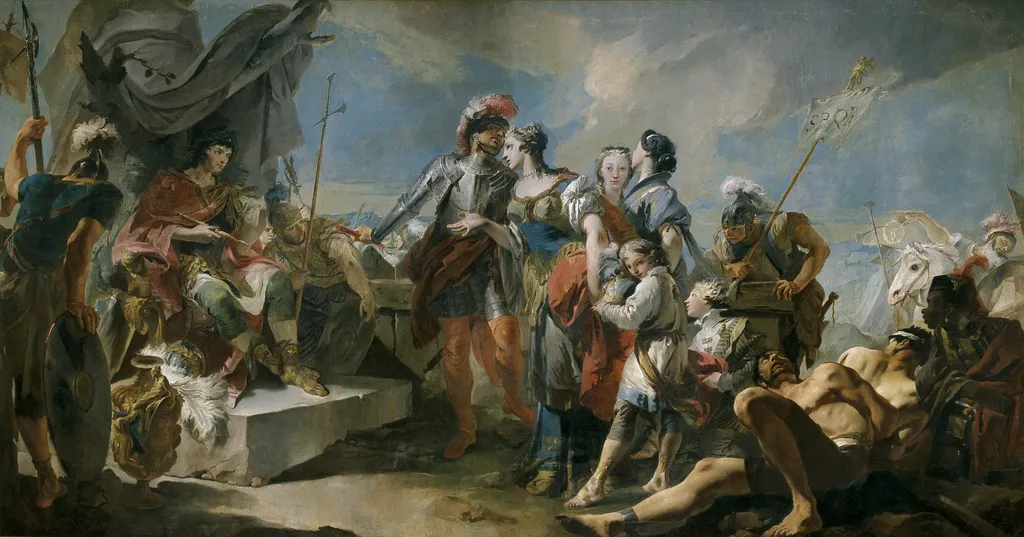
Queen Zenobia before the Emperor Aurelian is an oil painting by the Rococo painting artist Giovanni Battista Tiepolo. It dates from 1717 and is held in the collection of the Museo del Prado.
About this work
Overview
Giovanni Battista Tiepolo’s oil on canvas, executed in 1717, portrays the captured queen Zenobia confronting the Roman emperor Aurelian. The composition is set on a rugged shoreline, where a crowd gathers around the central figures. A storm‑laden sky and a distant vessel frame the dramatic encounter, which is now displayed in Madrid’s Museo del Prado.
Subject & Meaning
The work visualises the moment Zenobia, ruler of Palmyra, is presented before Aurelian after her defeat. She stands beside a armored man and a child, suggesting both political authority and personal loss. The surrounding onlookers, some kneeling, others brandishing flags or weapons, emphasize the themes of conquest, submission, and the shifting fortunes of power.
Technique & Style
Tiepolo employs a luminous palette characteristic of the late Baroque, with stark contrasts between the stormy heavens and the illuminated figures. Loose, energetic brushwork renders the tumultuous sea and sky, while finer detailing defines the combat helmet, shield and other armaments, highlighting the painter’s skill in balancing drama with precise rendering.
History & Provenance
Completed in the early eighteenth century, the canvas entered the Spanish royal collection before being transferred to the national museum. It has remained in the Museo del Prado since the nineteenth century, where it is catalogued among Tiepolo’s works that illustrate historical and mythological subjects.
Context
Zenobia’s rebellion against Rome (c. 267–272 CE) and her eventual capture by Aurelian were popular subjects in European art, symbolising the triumph of imperial order over exotic sovereignty. Tiepolo’s interpretation reflects contemporary interest in grand historical narratives, aligning with the Enlightenment’s fascination with antiquity and moral exempla.
Artist & collection

Artist
Giovanni Battista Tiepolo, also known as Giambattista Tiepolo, was an Italian painter and printmaker from the Republic of Venice who painted in the Rococo style, considered an important member of the 18th-century Venetian school.