Artwork
Saint Roch
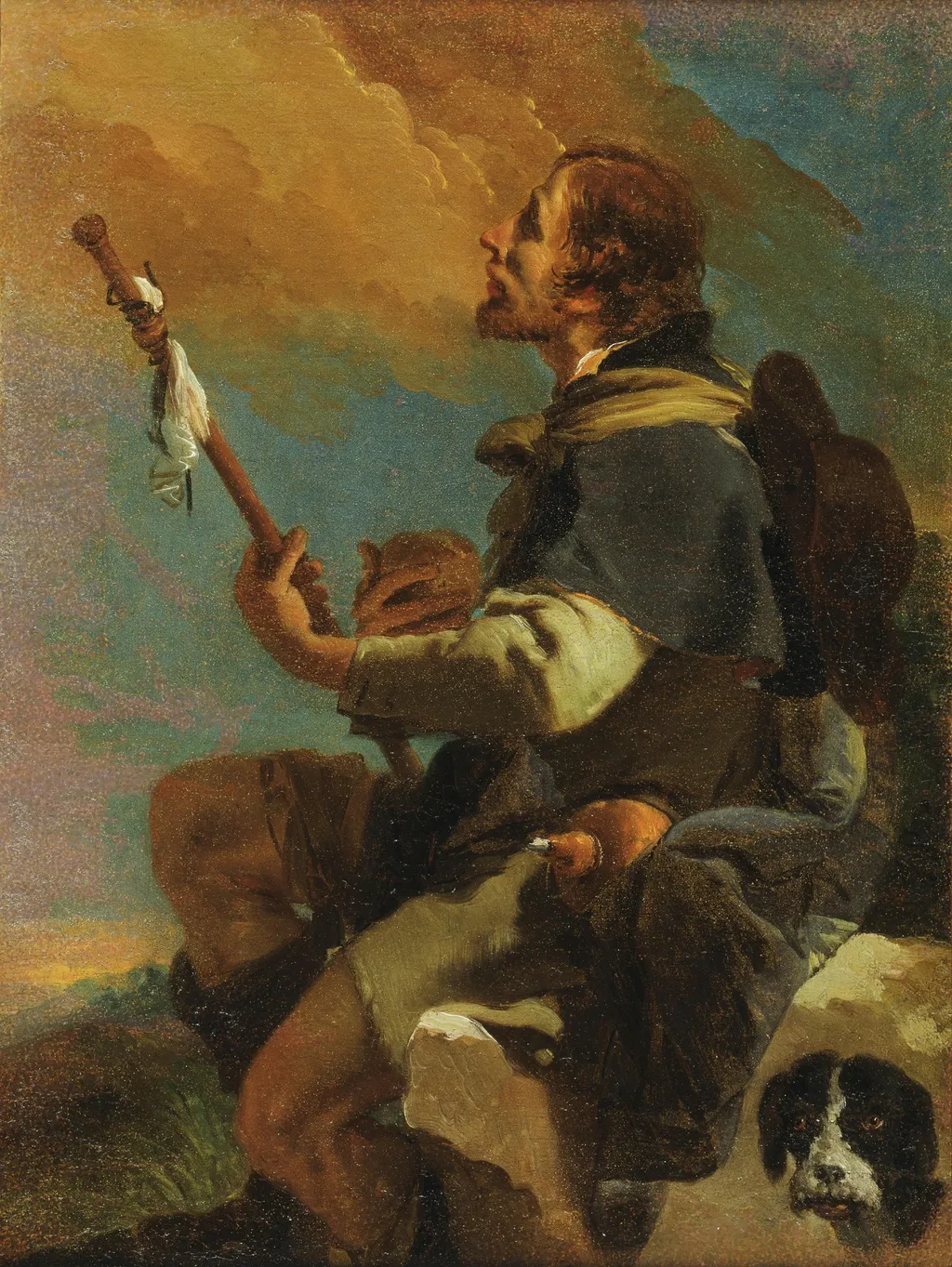
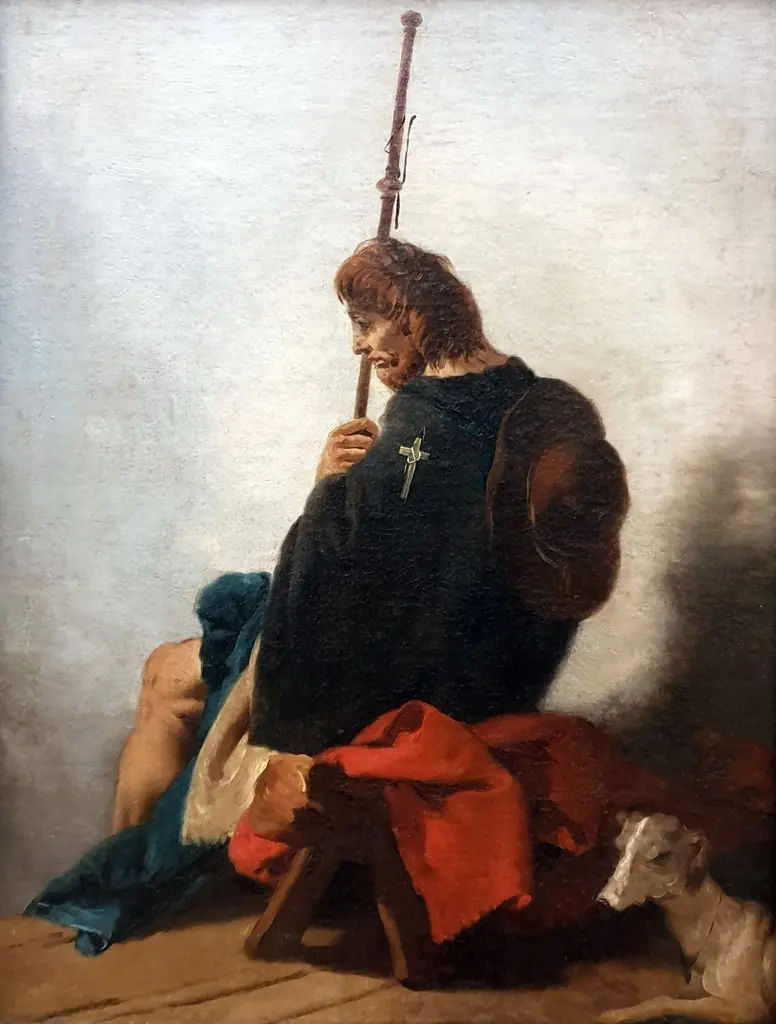
Saint Roch is an unspecified painting by the Rococo painting artist Giovanni Battista Tiepolo. It dates from 1743 and is held in the collection of the Philadelphia Museum of Art.
About this work
Overview
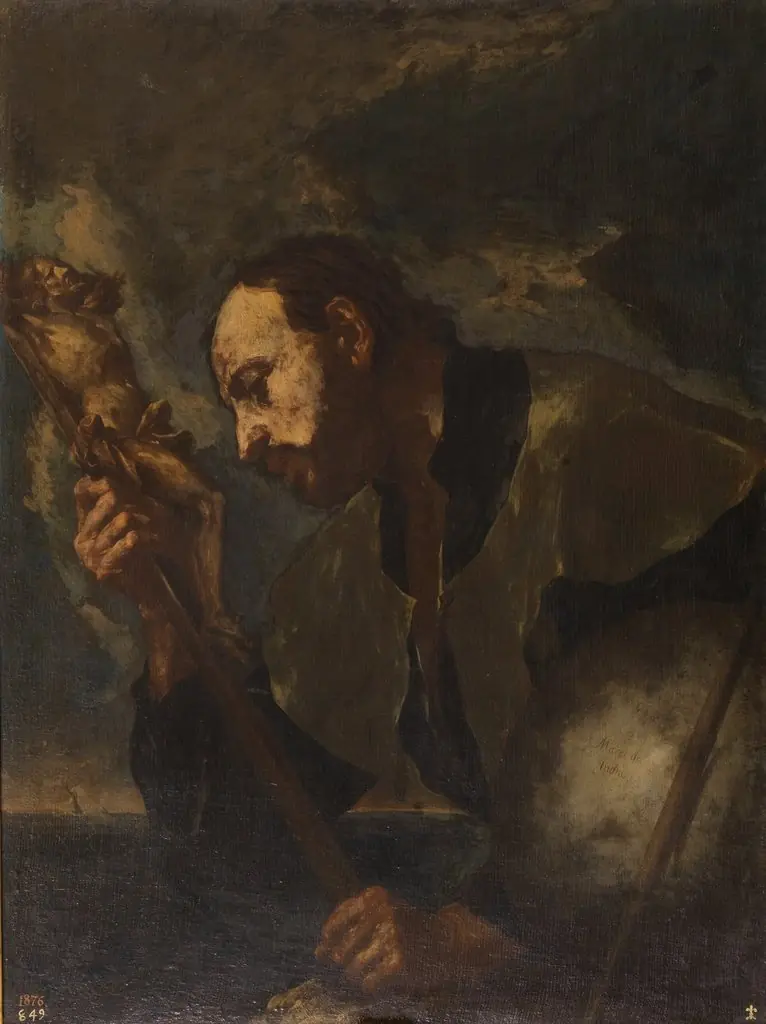
Painted in 1743, Giovanni Battista Tiepolo's Saint Roch portrays the 14th-century French pilgrim and saint during his time of solitude and illness.
Painted in 1743, Giovanni Battista Tiepolo's Saint Roch portrays the 14th-century French pilgrim and saint during his time of solitude and illness. The composition centers on the figure seated upon a rocky outcrop against a luminous, cloud-filled sky, a setting typical of Tiepolo's Venetian Baroque style which emphasizes atmospheric light and open space. Saint Roch is depicted wearing a dark pilgrim's robe, holding a staff in his right hand and a hat in his left, while a dog sits faithfully at his side, referencing the legend of the animal bringing him bread. His left leg is exposed to reveal the plague sore that marked his life, a key iconographic element identifying the subject. Tiepolo renders the figure with a sense of dignified suffering, balancing the physical reality of the disease with a spiritual serenity. This work exemplifies the artist's mature period, characterized by fluid brushwork and a mastery of color and light that elevates religious narrative into a moment of dramatic clarity. The painting reflects the continued veneration of Saint Roch as a protector against the plague in 18th-century Italy, serving as both a devotional image and a showcase of Tiepolo's ability to infuse traditional hagiography with dynamic vitality.
Subject & Meaning
The central figure is Saint Roch, traditionally invoked against plague. He is shown in a dark robe, holding a staff in his right hand and a hat in his left, symbols that identify him as a pilgrim or hermit. The dog at his feet, often depicted with a sore leg, alludes to the legend in which the animal brings him bread.
Technique & Style
Tiepolo employs a restrained palette, contrasting the dark garments with the luminous blue of the sky. The brushwork is smooth, emphasizing the calm demeanor of the saint. The composition is simple, focusing attention on the figure and his companion without elaborate background details.
History & Provenance
Created in the mid‑18th century, the painting entered the Philadelphia Museum of Art’s holdings through acquisition in the 20th century, though precise details of its earlier ownership remain sparse. Its presence in an American museum reflects the broader diffusion of Tiepolo’s work beyond Italy.
Context
Saint Roch was a popular subject for artists during periods of epidemic, offering a visual appeal for devotion. Tiepolo, known for grand frescoes, applied his skill to this more intimate devotional image, aligning with contemporary tastes for personal piety and the veneration of saints.
Own this work as a print
Artist & collection

Artist
Giovanni Battista Tiepolo, also known as Giambattista Tiepolo, was an Italian painter and printmaker from the Republic of Venice who painted in the Rococo style, considered an important member of the 18th-century Venetian school.