Artwork
The Crowning of Merit
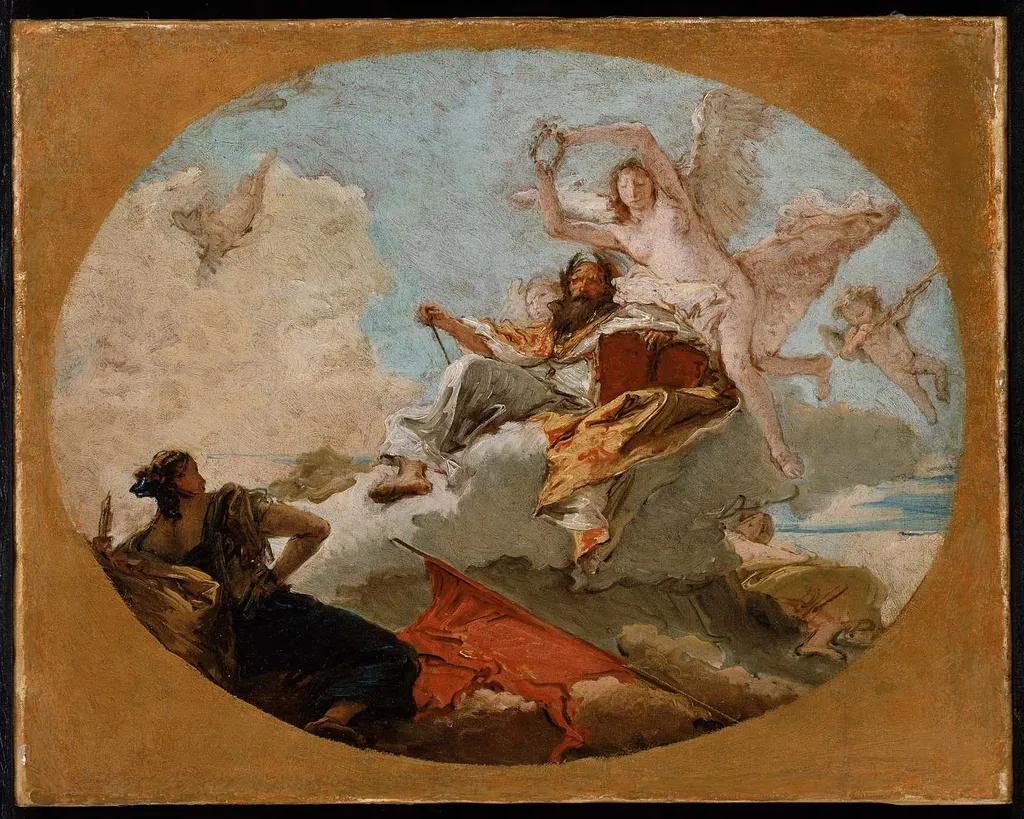
The Crowning of Merit is an oil painting by the Rococo painting artist Giovanni Battista Tiepolo. It dates from 1743 and is held in the collection of the Museum of Fine Arts Boston.
About this work
Overview
The Crowning of Merit is an oil painting by Giovanni Battista Tiepolo, dating to circa 1743, and is classified within the Rococo movement. It is part of the collection at the Museum of Fine Arts, Boston.
Subject & Meaning
The painting depicts a central, white-robed figure seated on a cloud, being crowned with a wreath by an angel. This scene of divine recognition is surrounded by additional celestial and earthly figures, including a contemplative woman in dark attire and a prone figure gazing upwards.
Technique & Style
Tiepolo employed chiaroscuro to create a profound sense of depth and drama, leveraging strong light and shadow contrasts. The work's composition and use of light are characteristic of the Rococo period's emphasis on elegance and emotional intensity.
History & Provenance
Created around 1743, the painting's early history is not detailed here, but it is currently housed at the Museum of Fine Arts, Boston, as part of its permanent collection.
Context
As a Rococo piece, The Crowning of Merit reflects the era's artistic values, emphasizing beauty, grace, and the emotional impact of religious themes through highly expressive and luminous painting techniques.
Legacy
While specific influences or direct artistic descendants are not highlighted, the painting contributes to Tiepolo's reputation as a master of Rococo religious art, notable for its harmonious balance of the sacred and the aesthetically pleasing.
Artist & collection

Artist
Giovanni Battista Tiepolo, also known as Giambattista Tiepolo, was an Italian painter and printmaker from the Republic of Venice who painted in the Rococo style, considered an important member of the 18th-century Venetian school.



 The Apotheosis of Admiral Vettor Pisani
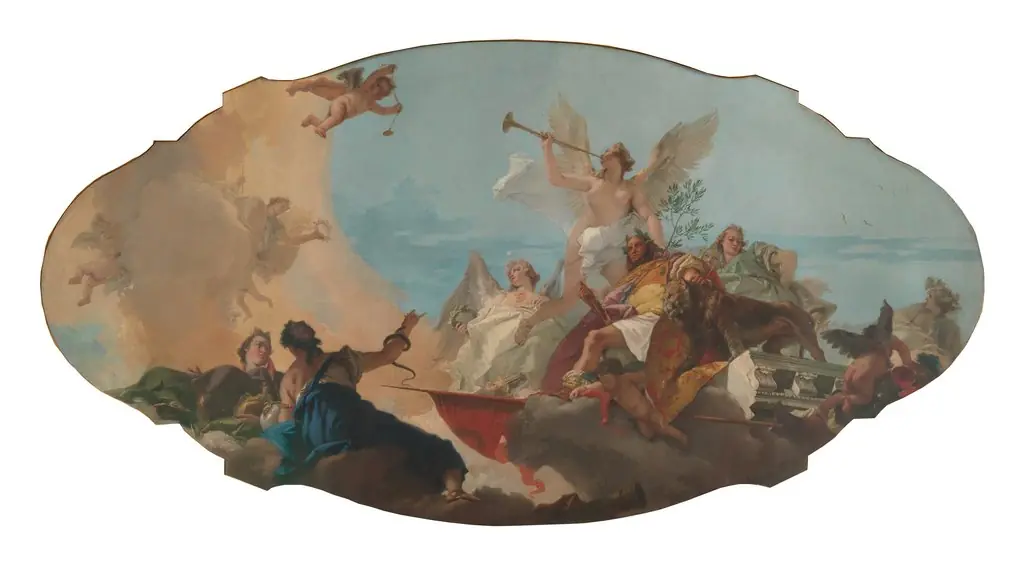 The Glorification of the Barbaro Family
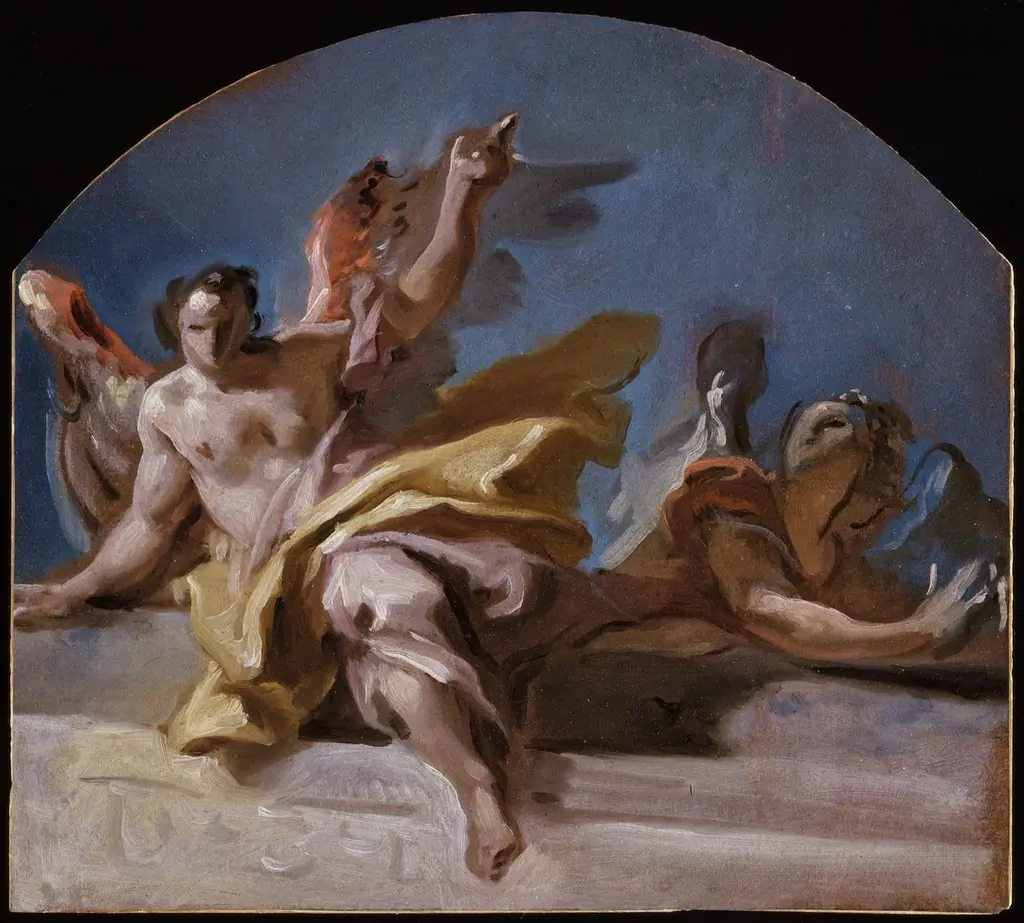 A Study for Two Angels on a Balustrade
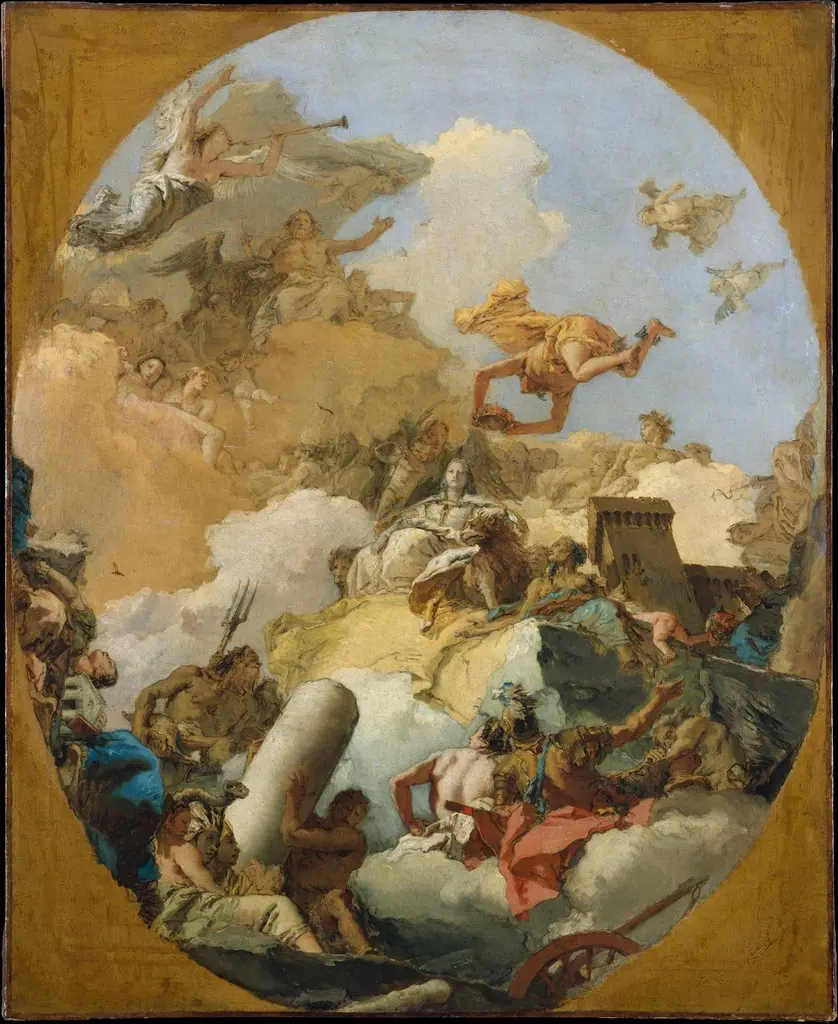 The Apotheosis of the Spanish Monarchy
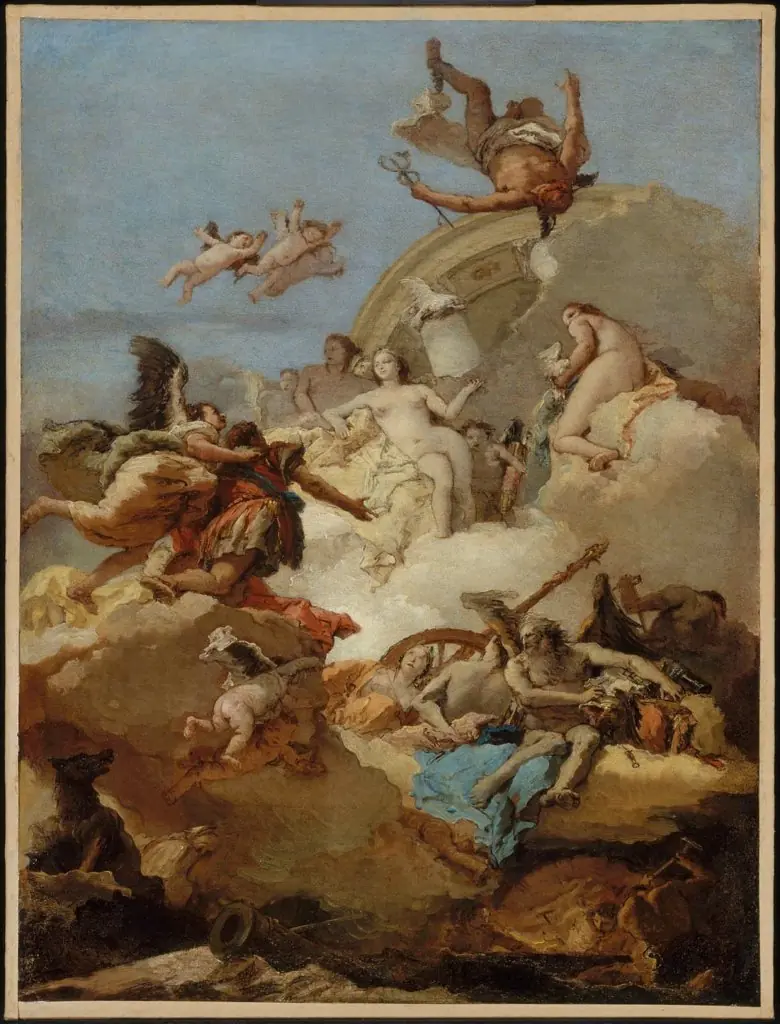 Apotheosis of Aeneas
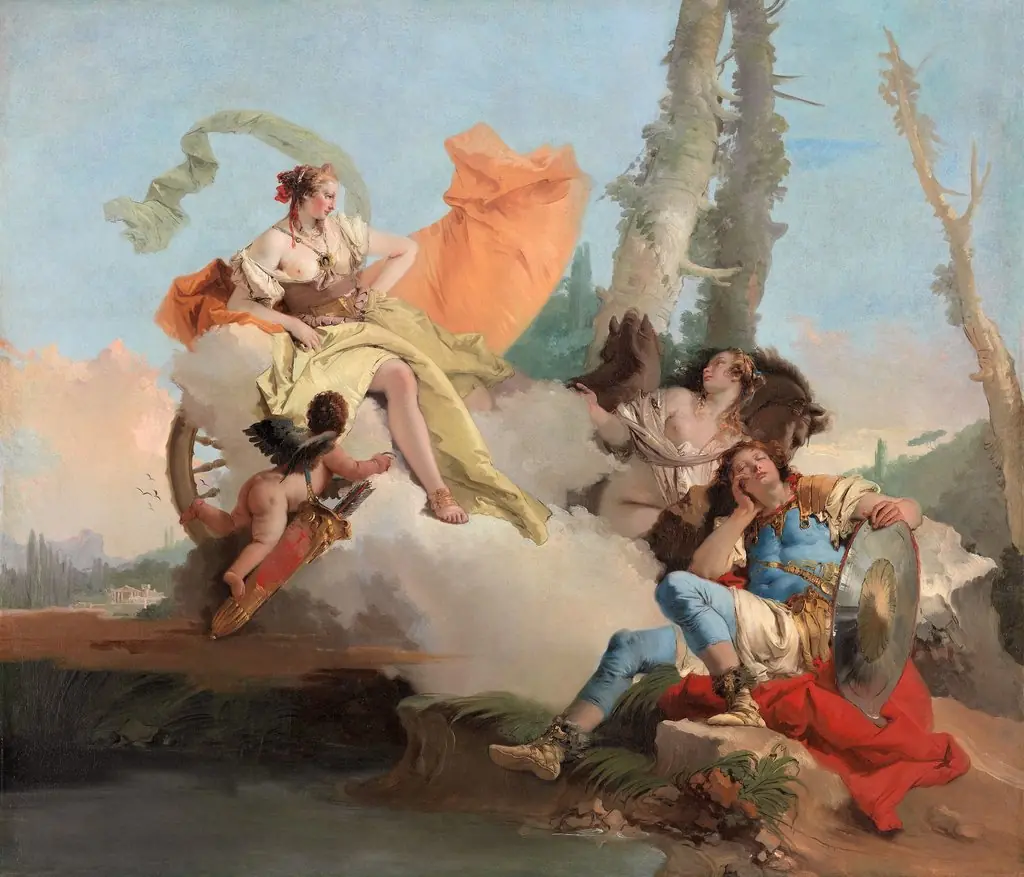 Armida Encounters the Sleeping Rinaldo
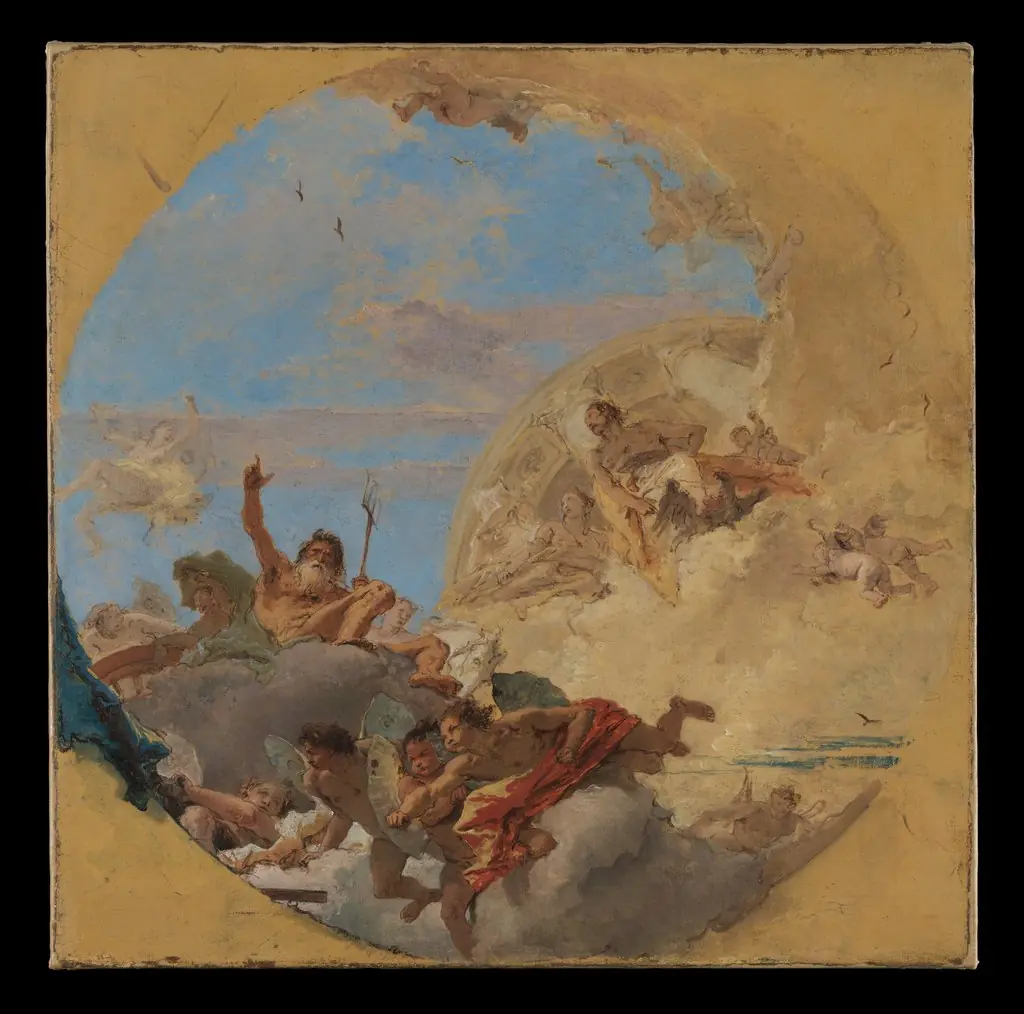 Neptune and the Winds
 Armida Encounters the Sleeping Rinaldo
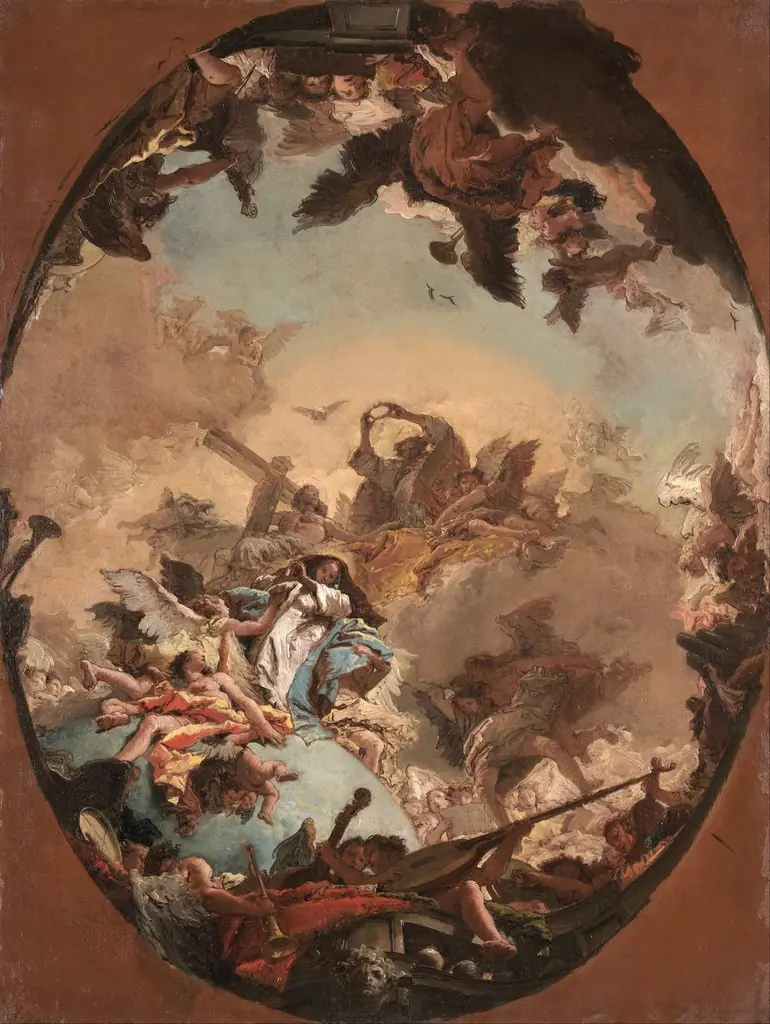 The Coronation of the Virgin
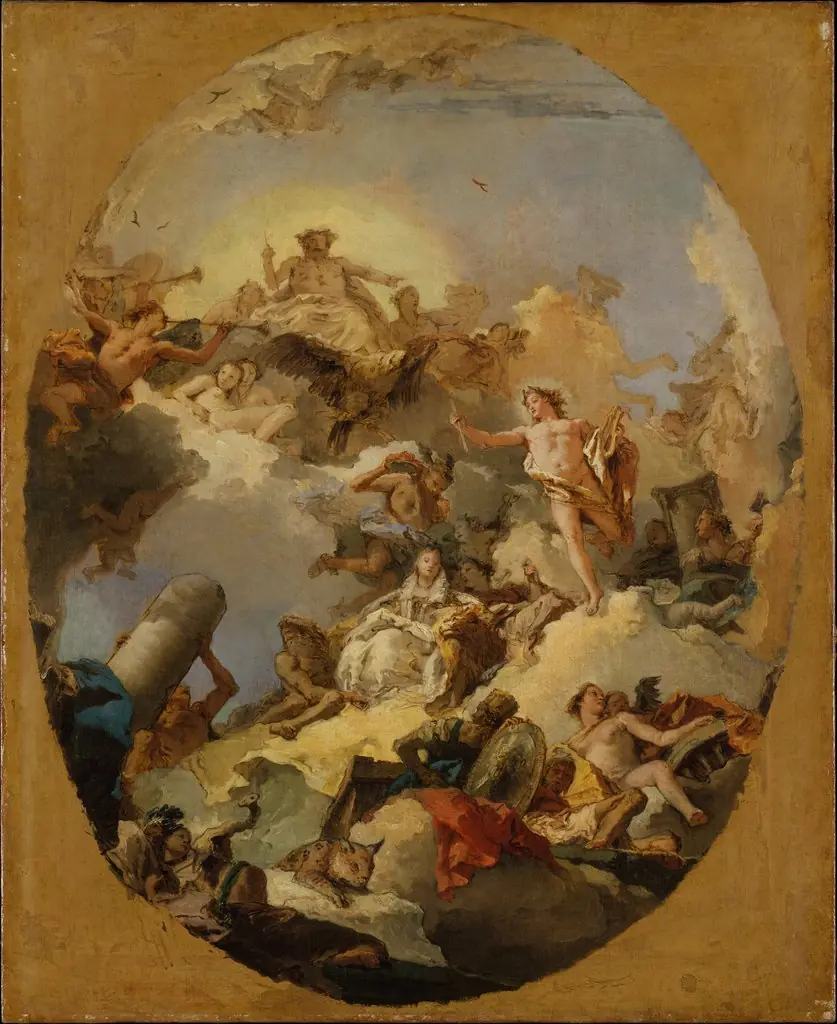 The Apotheosis of the Spanish Monarchy
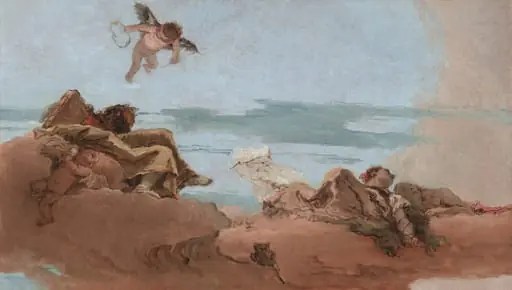 Study for a Ceiling with the Personification of Counsel