Artwork
The Investiture of Bishop Harold as Duke of Franconia
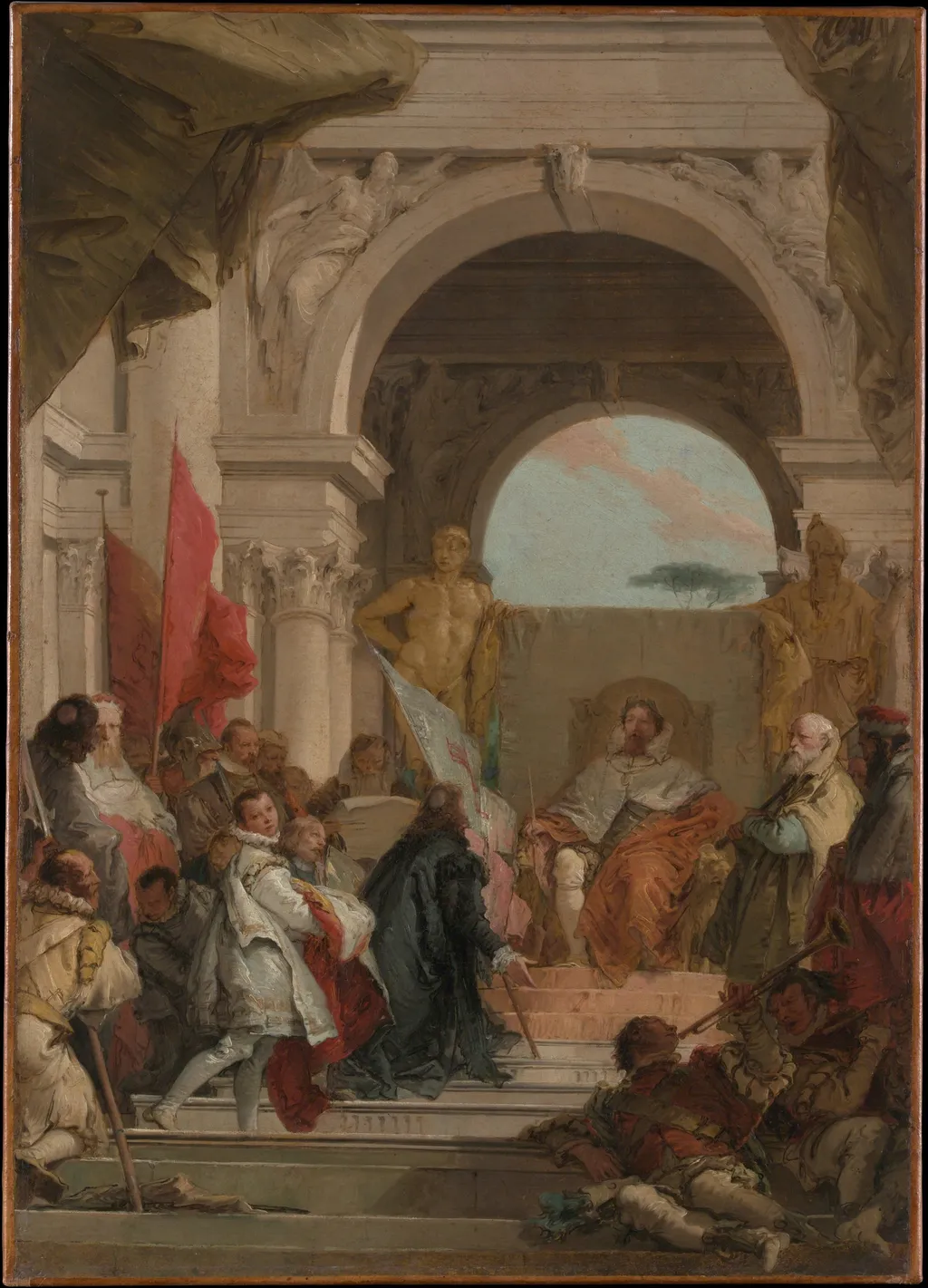
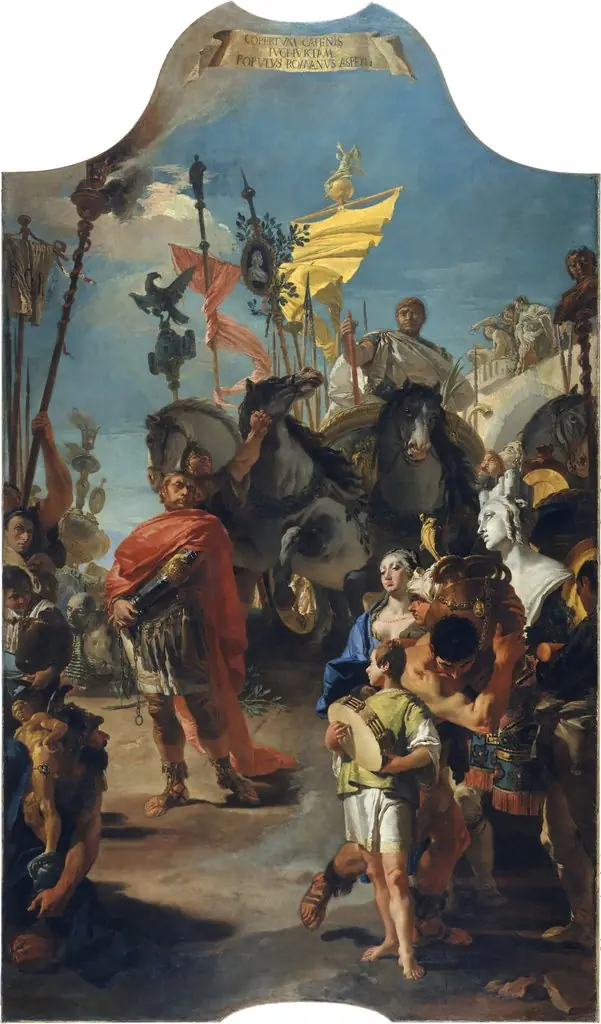
The Investiture of Bishop Harold as Duke of Franconia is an oil painting by the Rococo painting artist Giovanni Battista Tiepolo. It dates from 1751 and is held in the collection of the Metropolitan Museum of Art.
About this work
Overview
Giovanni Battista Tiepolo's oil painting, The Investiture of Bishop Harold as Duke of Franconia, was completed in 1751. This work is characteristic of the Rococo movement and is housed in the collection of The Metropolitan Museum of Art. It portrays a formal ceremony, capturing a moment of significant historical or allegorical importance through its detailed depiction of figures and setting.
Subject & Meaning
The painting illustrates a ceremonial investiture, where a central figure, likely Bishop Harold, is depicted receiving a ducal title.
The painting illustrates a ceremonial investiture, where a central figure, likely Bishop Harold, is depicted receiving a ducal title. Seated on a raised platform and clad in a distinctive red robe, he holds a scroll, symbolizing the authority being conferred. Surrounding him are numerous individuals in rich attire, some bearing objects such as a red flag and a shield with a cross, which collectively suggest themes of power, religion, and governance.
Technique & Style
Executed in oil paint, this work showcases Tiepolo's mastery in rendering elaborate scenes. The composition features a grand architectural setting, with figures arranged under a large stone arch, drawing attention to the central event. The artist's use of rich fabrics and detailed costumes contributes to the opulent aesthetic, reflecting the decorative grandeur often associated with the Rococo period, even in more formal narrative subjects.
Context
Created in the mid-18th century, The Investiture of Bishop Harold as Duke of Franconia aligns with the Rococo movement's broader interest in elaborate narratives and decorative artistry. While Rococo is often recognized for its lighter themes, Tiepolo's painting demonstrates the style's capacity for grand historical or allegorical subjects, reflecting the era's appreciation for ceremonial pomp and the visual representation of significant events within a refined aesthetic.
Own this work as a print
Artist & collection

Artist
Giovanni Battista Tiepolo, also known as Giambattista Tiepolo, was an Italian painter and printmaker from the Republic of Venice who painted in the Rococo style, considered an important member of the 18th-century Venetian school.