Artwork
Einwanderung Abrahams in Kanaan
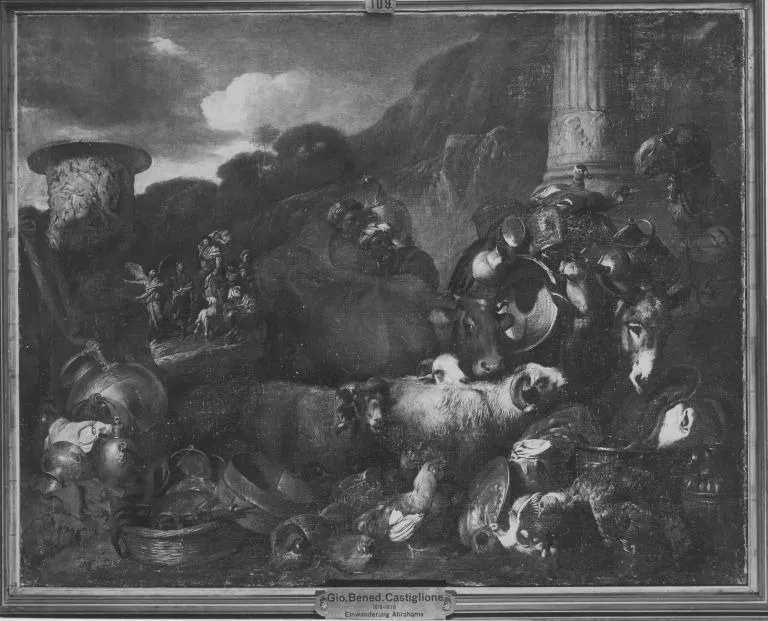
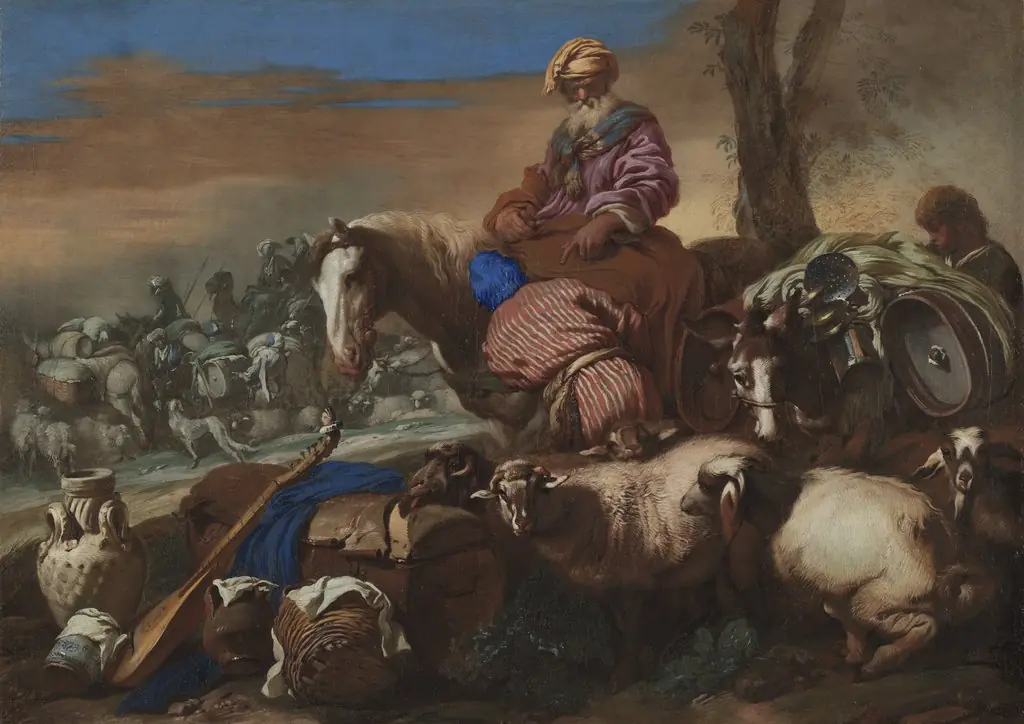
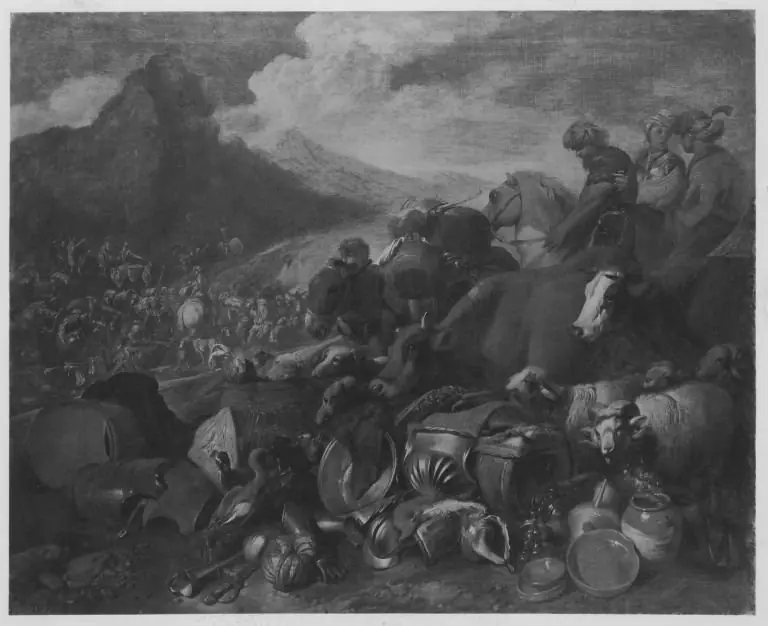
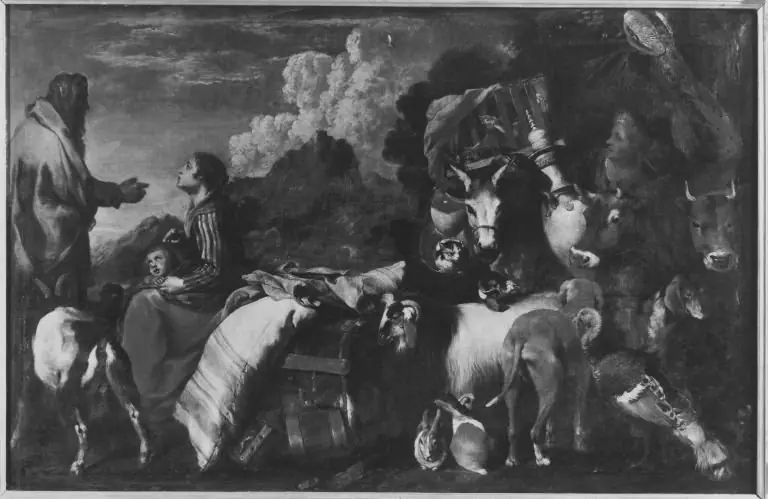
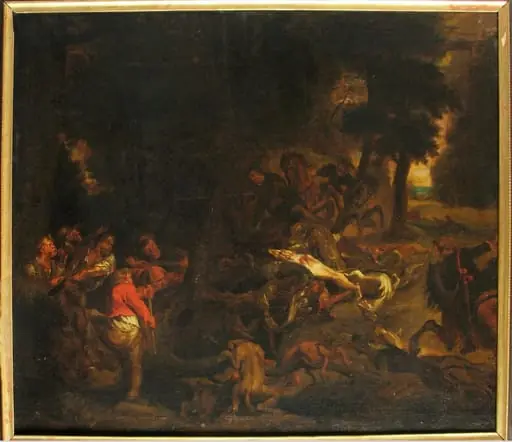
Einwanderung Abrahams in Kanaan is an unspecified painting by the Early Baroque Italian artist Giovanni Benedetto Castiglione. It dates from 1636 and is held in the collection of the Bavarian State Painting Collections.
About this work
Overview
Created during the early Baroque era in Italy, the painting reflects Castiglione’s engagement with narrative subjects drawn from scripture.
Painted in 1636 by Giovanni Benedetto Castiglione, known as Il Grechetto, this work captures the biblical journey of Abraham into Canaan. Created during the early Baroque era in Italy, the painting reflects Castiglione’s engagement with narrative subjects drawn from scripture. Though primarily recognized for his prints and experimental monotypes, this oil painting demonstrates his skill in composing dynamic, human-centered scenes rooted in religious tradition.
Subject & Meaning
The painting illustrates Abraham’s migration to Canaan, as recounted in Genesis, emphasizing themes of faith, displacement, and divine guidance. Figures are arranged in a procession, suggesting movement and endurance. The landscape, though not idealized, grounds the story in a tangible, earthly realm. Castiglione avoids overt drama, instead focusing on quiet resolve, aligning the scene with contemplative interpretations of biblical narrative common in mid-17th-century devotional art.
Technique & Style
Castiglione employs loose, expressive brushwork typical of his Baroque approach, with soft transitions between light and shadow. Figures are rendered with a sense of naturalism, their postures conveying fatigue and determination. The palette is restrained, dominated by earth tones that unify the composition and reinforce the rural setting. His handling of texture—particularly in fabric and terrain—shows an awareness of tactile realism, bridging his draftsmanship with painterly execution.
History & Provenance
The painting was completed during Castiglione’s mature period, after his early years in Genoa and before his later travels to Mantua and Rome. It remained in private collections in northern Italy for much of its early history, with no documented public exhibition until the 19th century. Its current location reflects 20th-century institutional acquisition, though its full provenance prior to that remains partially obscure due to limited archival records.
Context
In the 1630s, Italian artists increasingly turned to biblical and historical subjects as alternatives to mythological themes favored in earlier decades. Castiglione’s focus on Abraham’s journey aligns with a broader Counter-Reformation interest in stories of faith and obedience. His rural settings distinguish his work from the grandeur of Roman Baroque, situating sacred narrative within accessible, everyday landscapes familiar to regional patrons.
Legacy
While Castiglione is better remembered for his etchings and monotypes, this painting exemplifies his ability to merge narrative clarity with atmospheric sensitivity. It influenced later Genoese painters who sought to balance religious gravity with naturalistic detail. Though not widely reproduced, it remains a key example of how Baroque regional styles adapted biblical themes to intimate, human-scale compositions.
Artist & collection
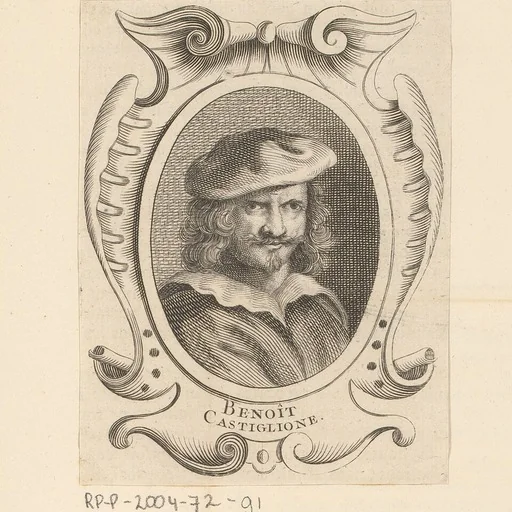
Artist
Giovanni Benedetto Castiglione
Giovanni Benedetto Castiglione (baptized 23 March 1609 – 5 May 1664) was an Italian Baroque painter, printmaker and draftsman, of the Genoese school.