Artwork
Christus bei Maria und Martha (Werkstatt)
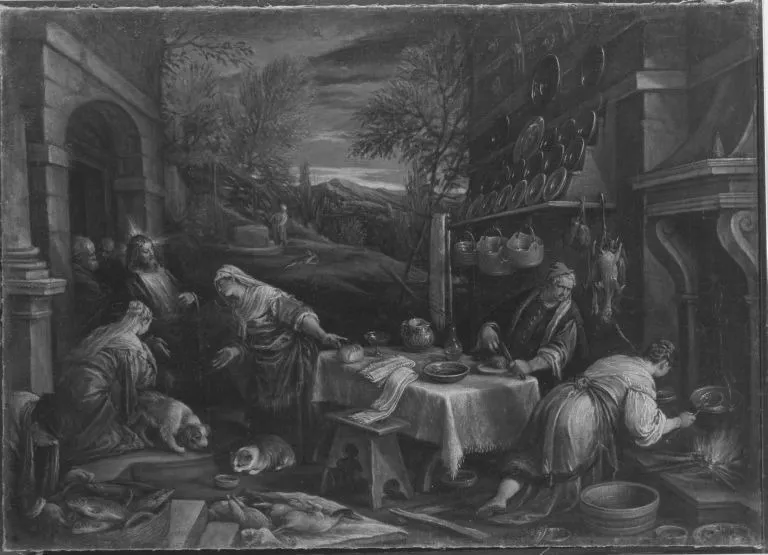
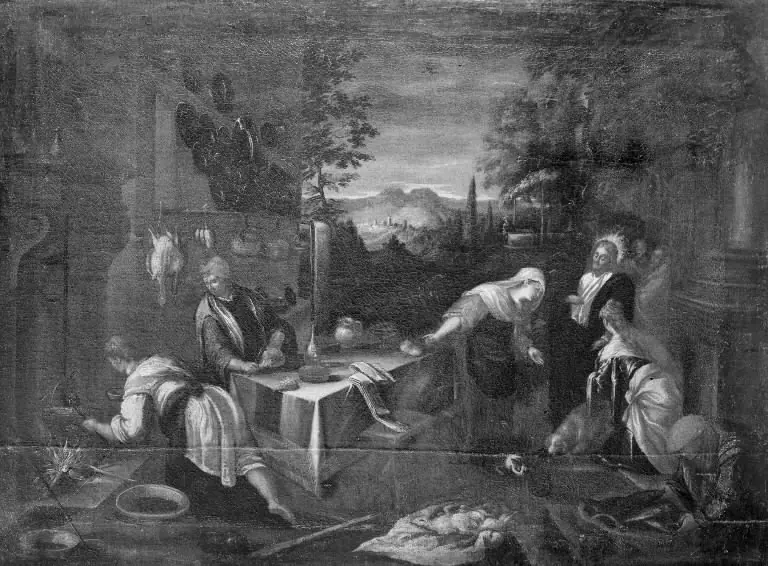
Christus bei Maria und Martha (Werkstatt) is an unspecified painting by the Early Baroque Italian artist Leandro Bassano. It dates from 1595 and is held in the collection of the Bavarian State Painting Collections.
About this work
Overview
The oil painting presents a domestic interior where the biblical figures of Christ, Mary, and Martha are integrated among everyday household activity.
Leandro Bassano’s *Christus bei Maria und Martha* was executed in 1595, placing it at the cusp of the early Baroque era. The oil painting presents a domestic interior where the biblical figures of Christ, Mary, and Martha are integrated among everyday household activity. The work resides in Munich’s Alte Pinakothek, offering a glimpse of Venetian religious narrative rendered through a genre‑scene setting.
Subject & Meaning
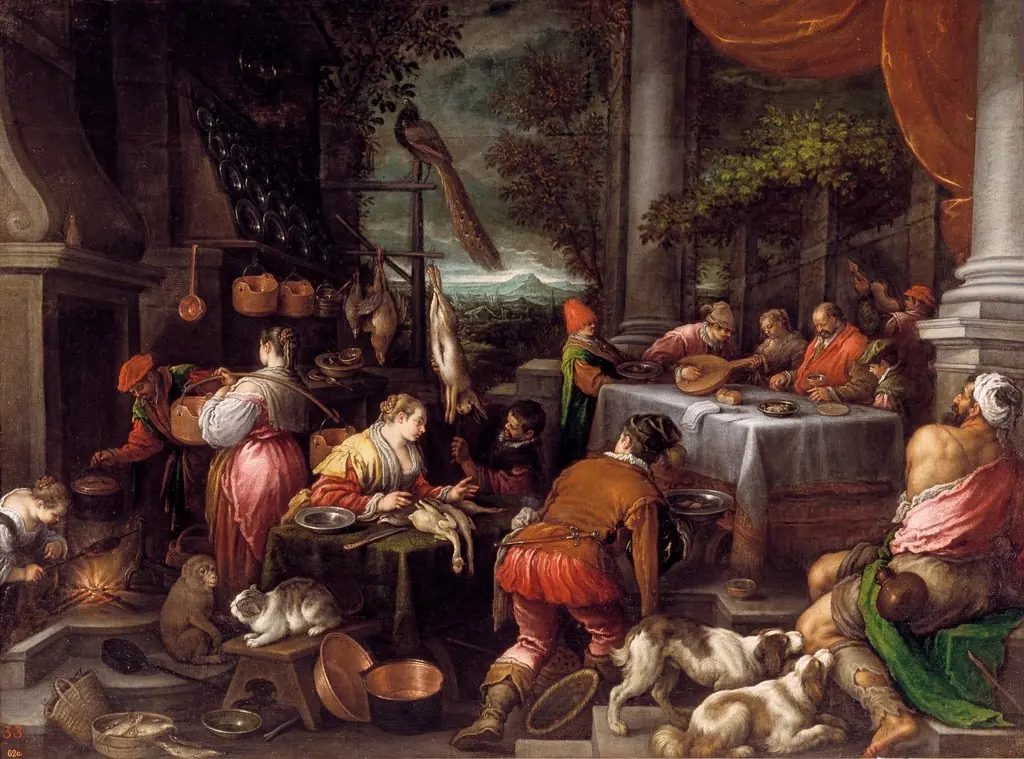
The composition merges the Gospel episode of Christ’s visit to Martha’s home with a bustling kitchen environment. While Martha attends to chores, Mary is shown in a more contemplative posture, inviting reflection on the tension between service and spiritual attentiveness. The inclusion of a child, a dog, and a partially skinned animal underscores the ordinary world that frames the sacred encounter.
Technique & Style
Bassano employs a pronounced chiaroscuro, using deep shadows to model the figures and create a dramatic spatial depth. Light falls on the hands and faces, drawing the viewer’s focus to the gestures that convey the narrative. The painter’s handling of texture—visible in the rough kitchenware and the fur of the animal—adds tactile realism characteristic of the Venetian school.
History & Provenance
Born into the prolific Bassano workshop of Bassano del Grappa, Leandro was the third son of Jacopo Bassano, whose training shaped his early style. After a successful career, he received a knighthood from the Doge of Venice, reflecting his standing in the Republic. The painting entered the Alte Pinakothek collection in the 19th century, where it remains on public display.
Context
The work reflects the late‑Renaissance transition toward Baroque sensibilities within Venetian art, where religious subjects were increasingly set in familiar, domestic scenes. Leandro’s family workshop, which included his brother Francesco, was known for integrating genre elements into sacred narratives, aligning with contemporary tastes for relatable devotional imagery.
Artist & collection
Artist
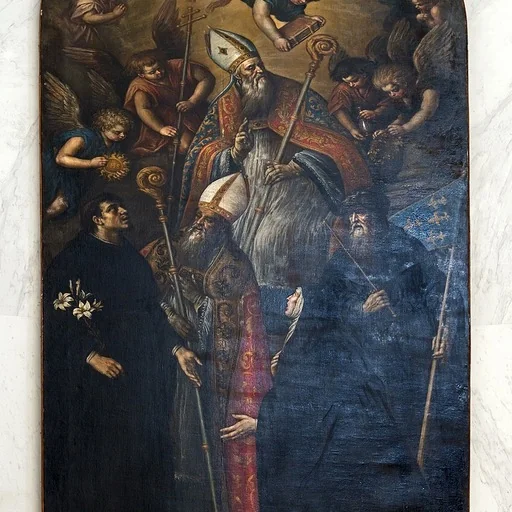
Leandro Bassano (10 June 1557 – 15 April 1622), also called Leandro dal Ponte, was an Italian Renaissance painter from Bassano del Grappa who was awarded a knighthood by the Doge of Venice.

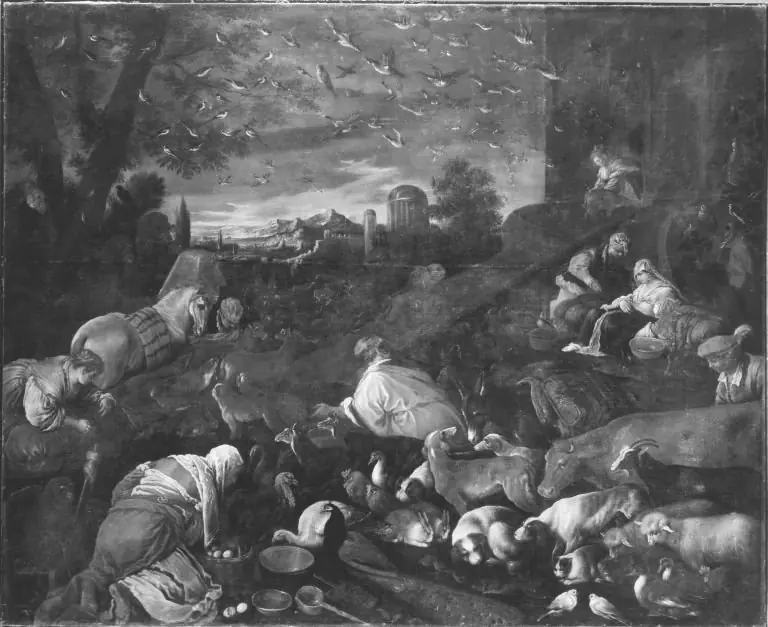 Einzug der Tiere in die Arche Noah (Kopie nach)
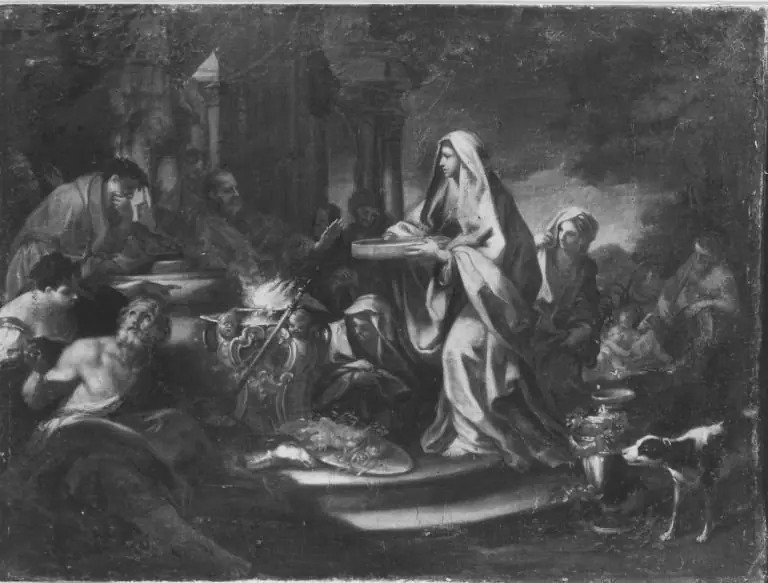 Vestalinnenopfer
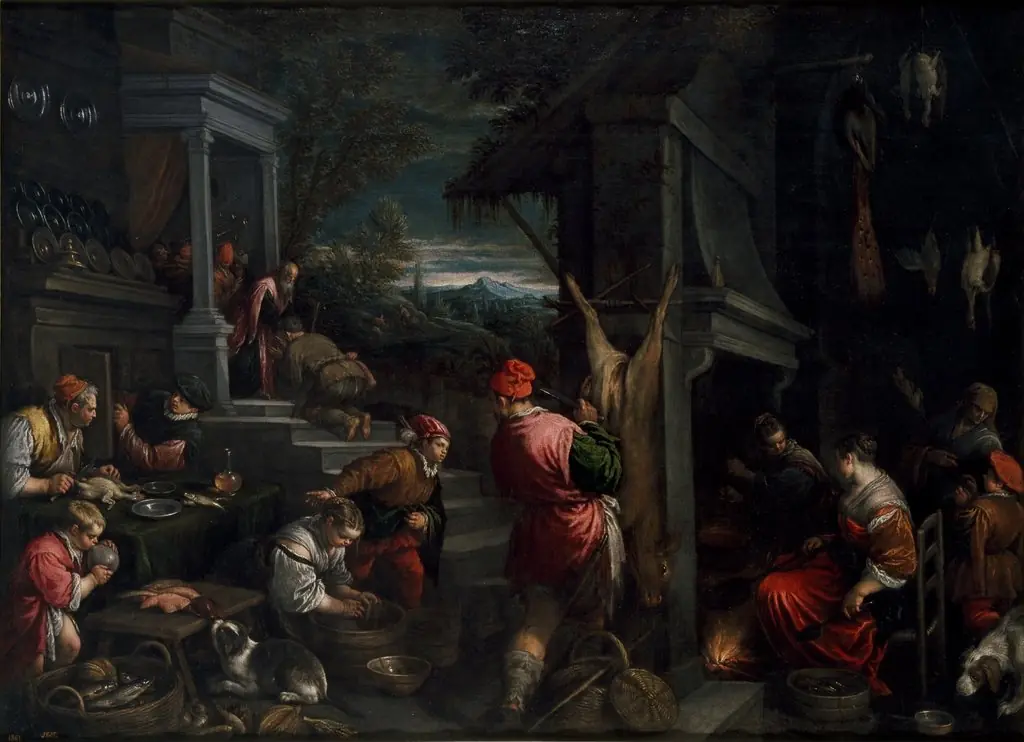 The Return of the Prodigal Son
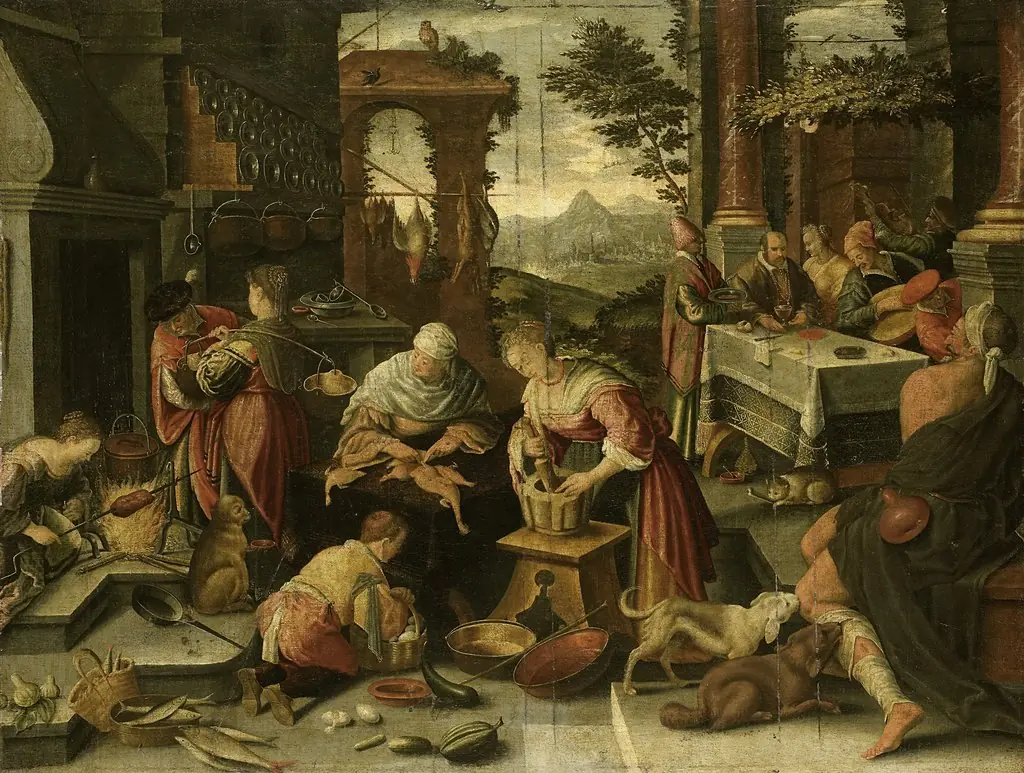 Lazarus and the Rich Man
 Vertreibung der Wechsler aus dem Tempel (Kopie nach)
 Der Sommer (Boas und Ruth)
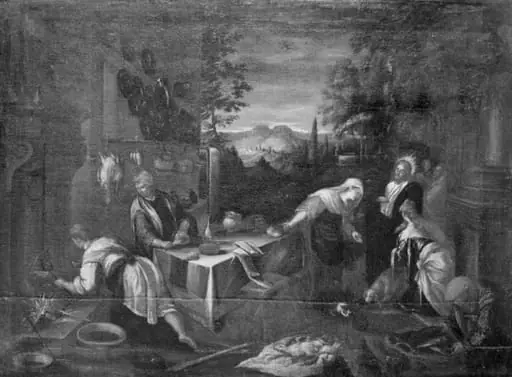 Christ with St Martha and the Virgin Mary
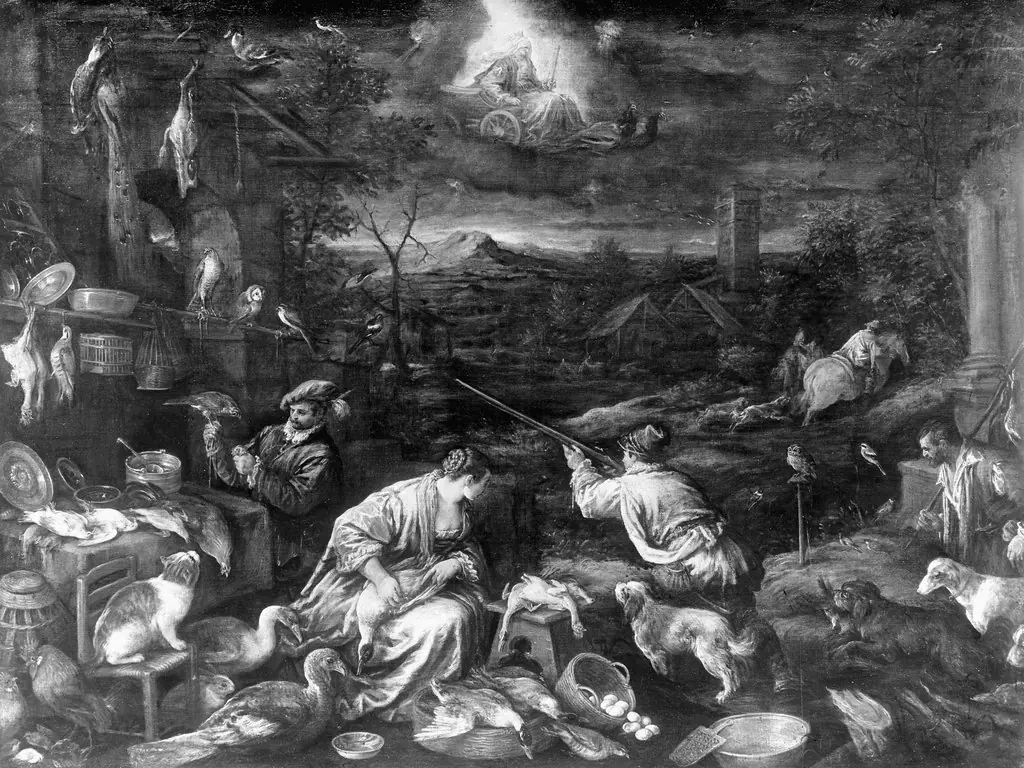 Allegory of the Air
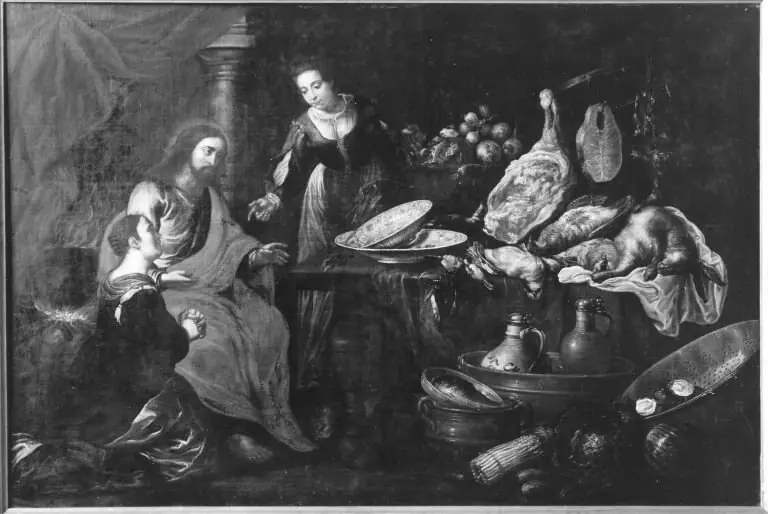 Christus bei Maria und Martha (?)
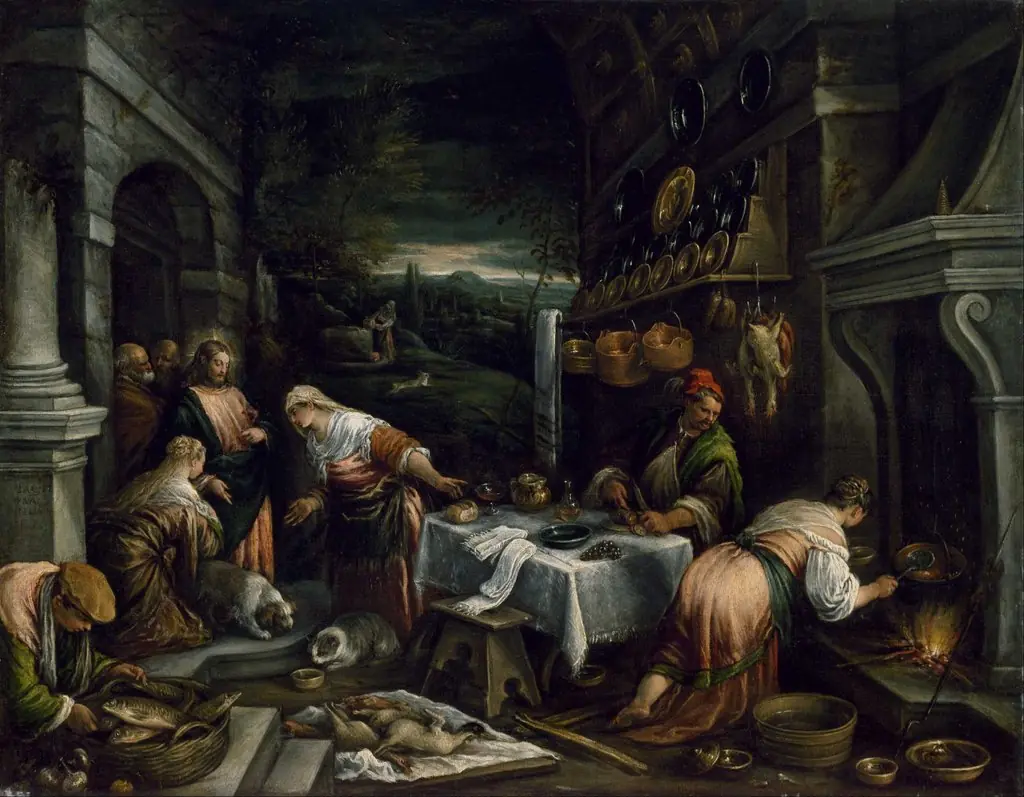 Christ in the House of Mary, Martha, and Lazarus
 Christ with St Martha and the Virgin Mary
 Einwanderung Abrahams in Kanaan