Artwork
The Three Graces
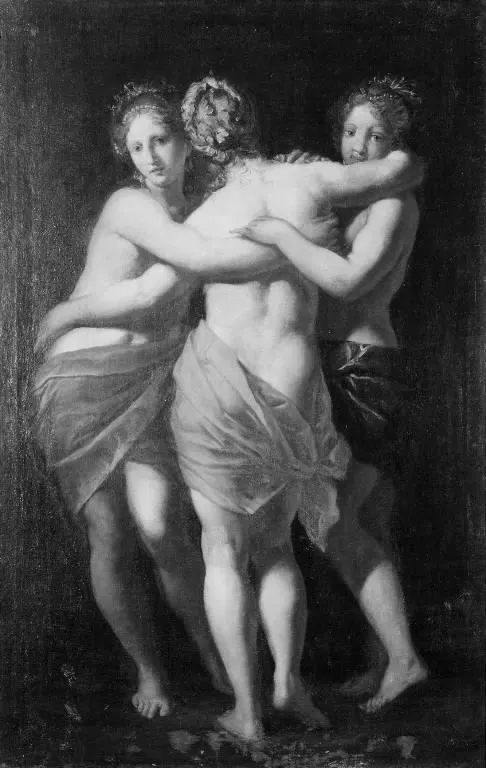
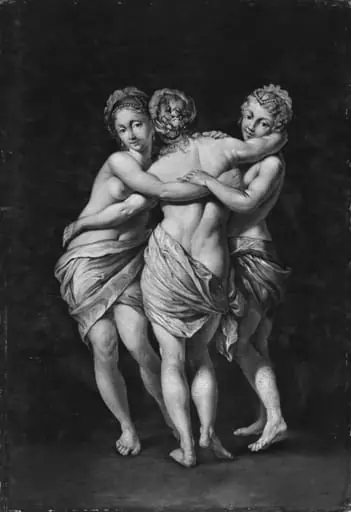
The Three Graces is an oil painting by the Early Baroque Italian artist Giovanni Carboncino. It dates from 1695 and is held in the collection of the Statens Museum for Kunst.
About this work
Overview
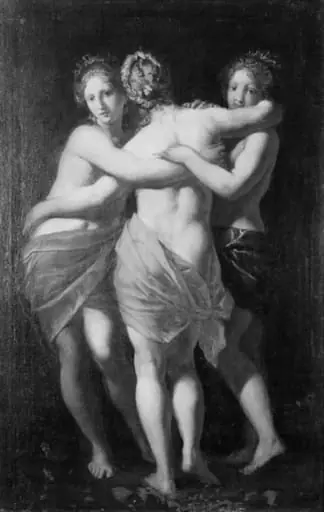
Created in 1695 by Italian Baroque painter Giovanni Carboncino, *The Three Graces* is an oil painting depicting a mythological scene, characterized by intertwined nude female figures set against a dark background.
Subject & Meaning
The painting illustrates the mythological Three Graces, embodying beauty, charm, and fertility. Their intertwined poses and varied orientations (one facing away, the others toward each other) may symbolize the interconnection of these virtues.
Technique & Style
Carboncino employed chiaroscuro to create depth and volume, drawing the viewer's eye to the figures. The naturalistic rendering of the women's bodies, including detailed facial expressions and skin folds, reflects his training and the influence of Titian.
History & Provenance
Trained under Matteo Ponzone, Carboncino primarily worked on religious commissions in Treviso. *The Three Graces* is now part of the Statens Museum for Kunst's collection.
Context
While Carboncino's main output was religious, this work showcases his capability with mythological subjects, aligning with broader Baroque explorations of classical themes in 17th-century Venice.
Legacy
As one of Carboncino's few documented non-religious works, *The Three Graces* provides insight into the artist's versatility and the artistic tastes of late 17th-century Venice, though its broader impact on the Baroque movement is less defined.
Artist & collection
Artist
Giovanni Carboncino (c. 1638 – after 1703) was an Italian painter of the Baroque period, active between 1680 and 1692 mainly in Venice. He was born in Treviso, and became a pupil of Matteo Ponzone. He is also described…