Artwork
The Beheading of Saint John the Baptist
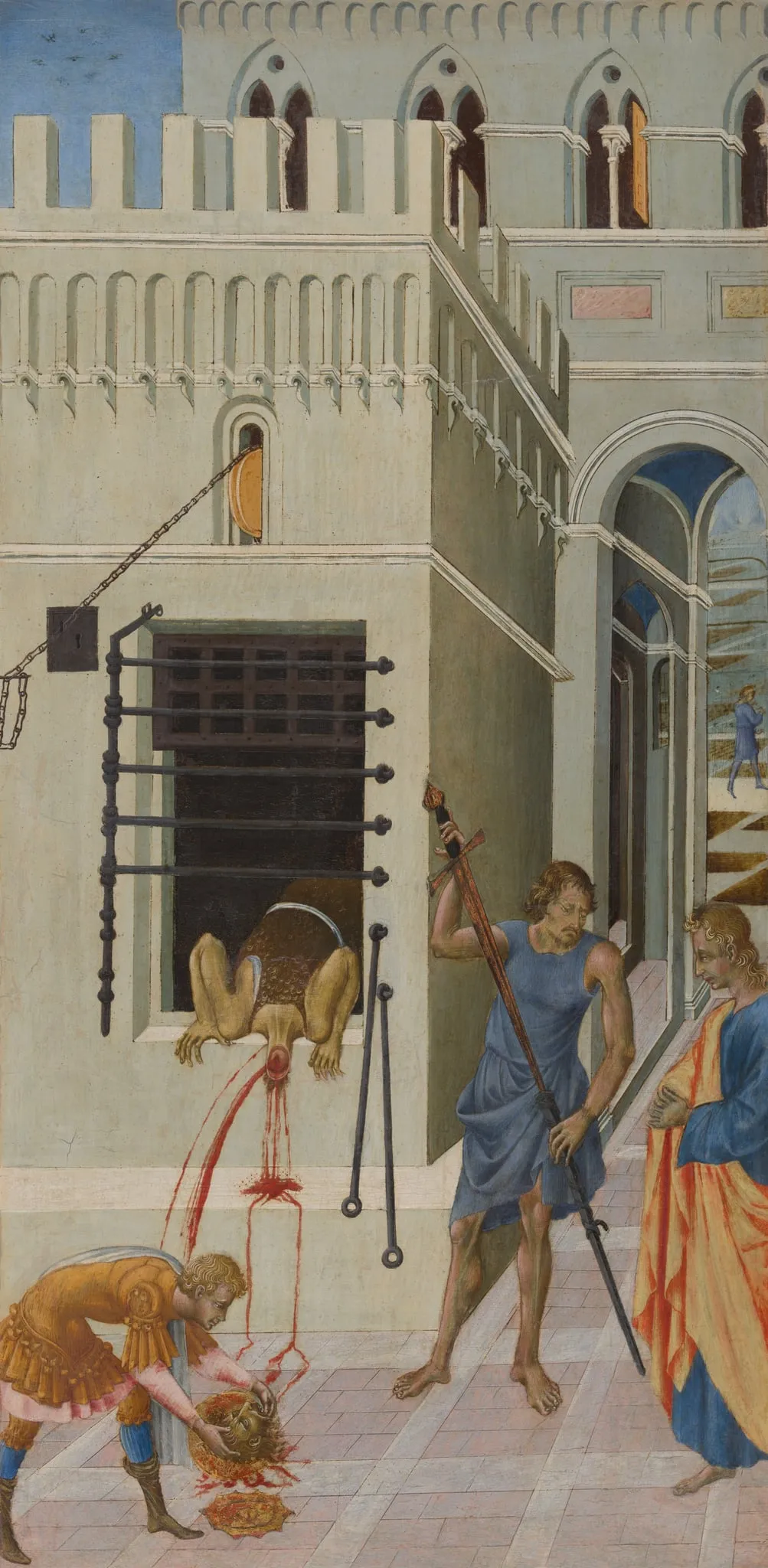
The Beheading of Saint John the Baptist is a tempera painting by the Early Renaissance artist Giovanni di Paolo. It dates from 1458 and is held in the collection of the Art Institute of Chicago.
About this work
Overview
Giovanni di Paolo’s tempera panel portrays the aftermath of John the Baptist’s execution. A severed head rests on a gilded platter while blood streams from the wound, and the executioner calmly sheaths his sword. The surrounding figures maintain composed expressions, set against a rigid architectural backdrop that contrasts with the vivid red of the blood.
Subject & Meaning
The scene captures the biblical moment when King Herod, prompted by Salome, orders John’s beheading. The work emphasizes the stark juxtaposition between the brutality of the act and the serene demeanor of the participants, suggesting a meditation on martyrdom and the indifferent acceptance of divine sacrifice.
Technique & Style
Rendered in tempera on panel, the painting employs flat, bright colors and decorative patterns typical of Sienese art. The composition uses narrow proportions to pack intricate details, while repeated background motifs and a limited palette create visual continuity across the series.
History & Provenance
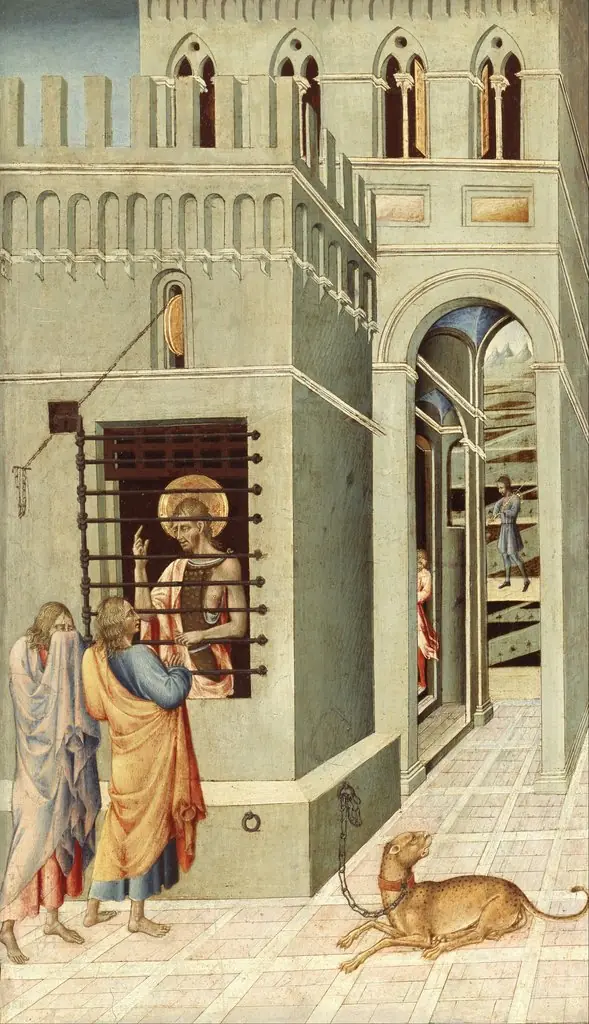
The panel belongs to a twelve‑part narrative cycle depicting John the Baptist’s life, originally assembled in three rows, likely as doors for a shrine housing a relic of the saint. Of the original eleven surviving panels, six, including this one, are now in the collection of the Art Institute of Chicago.
Artist & collection

Artist
Giovanni di Paolo di Grazia was an Italian painter, working primarily in Siena, becoming a prolific painter and illustrator of manuscripts, including Dante's texts.

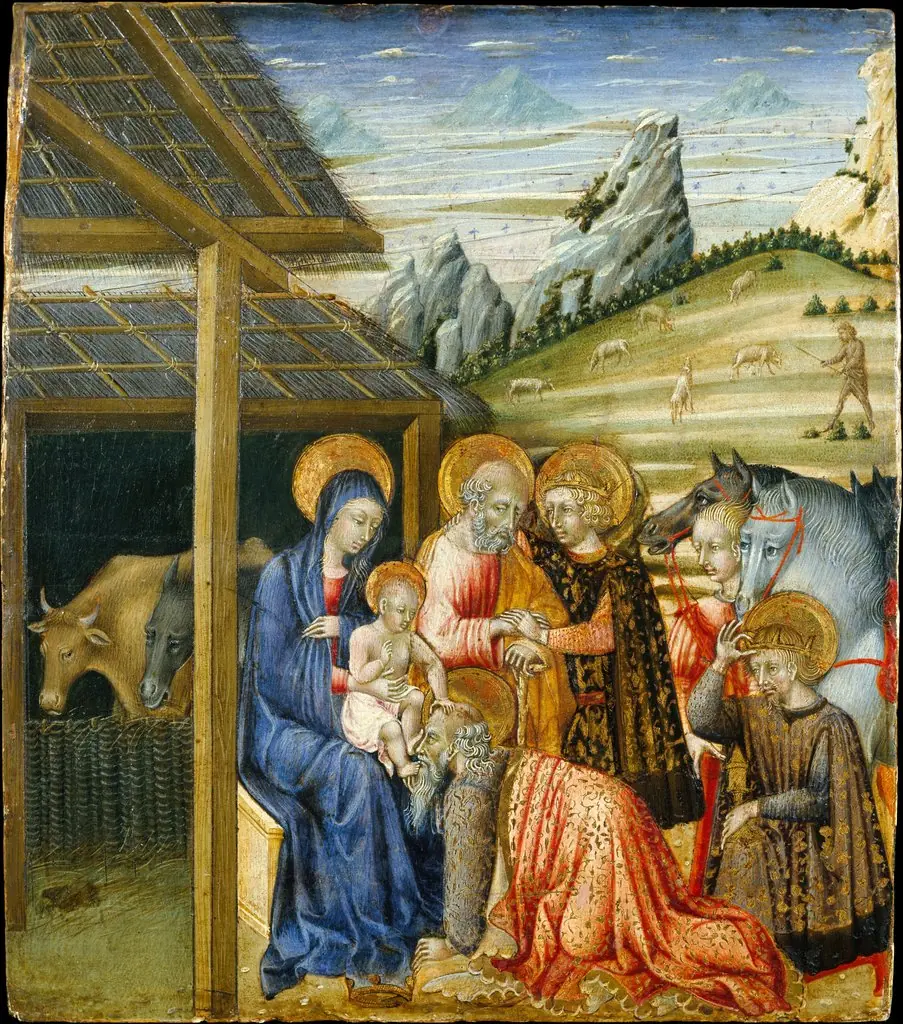 The Adoration of the Magi
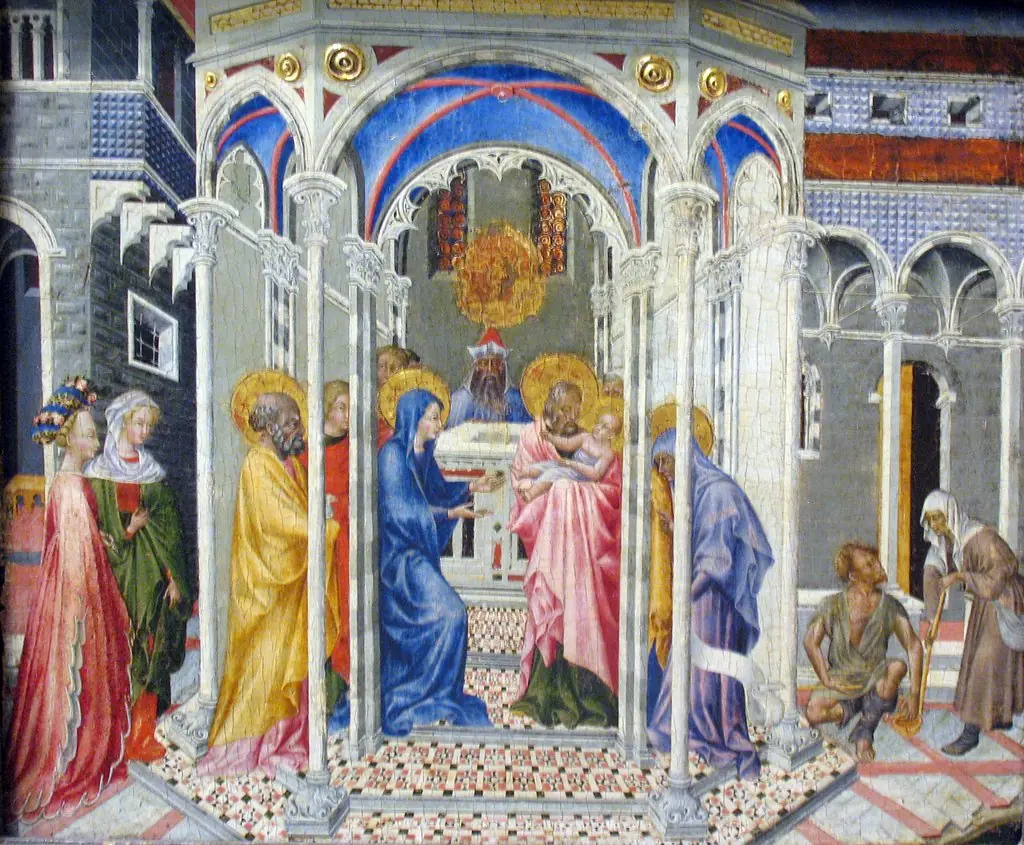 The Presentation of Christ in the Temple
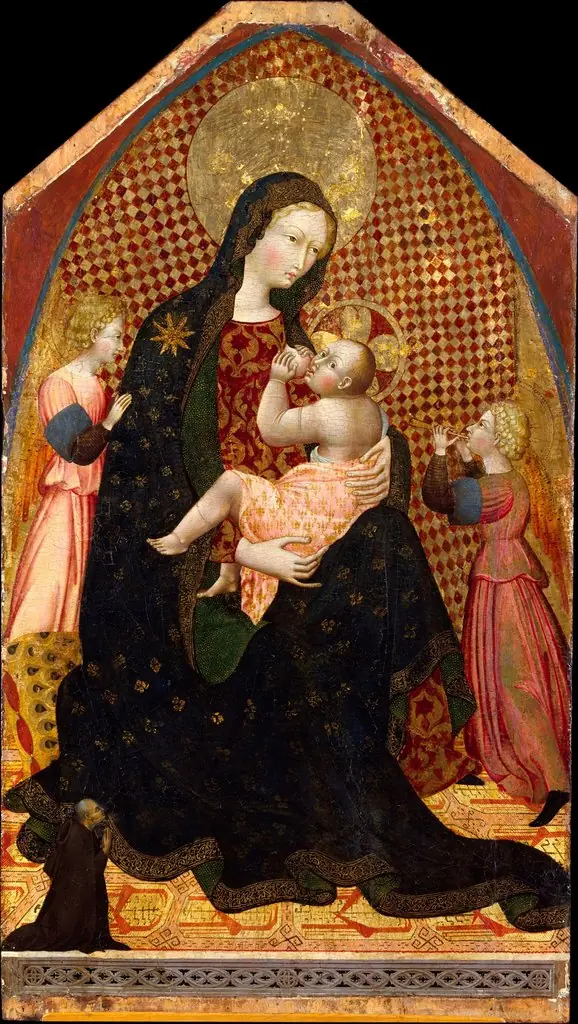 Madonna and Child with Two Angels and a Donor
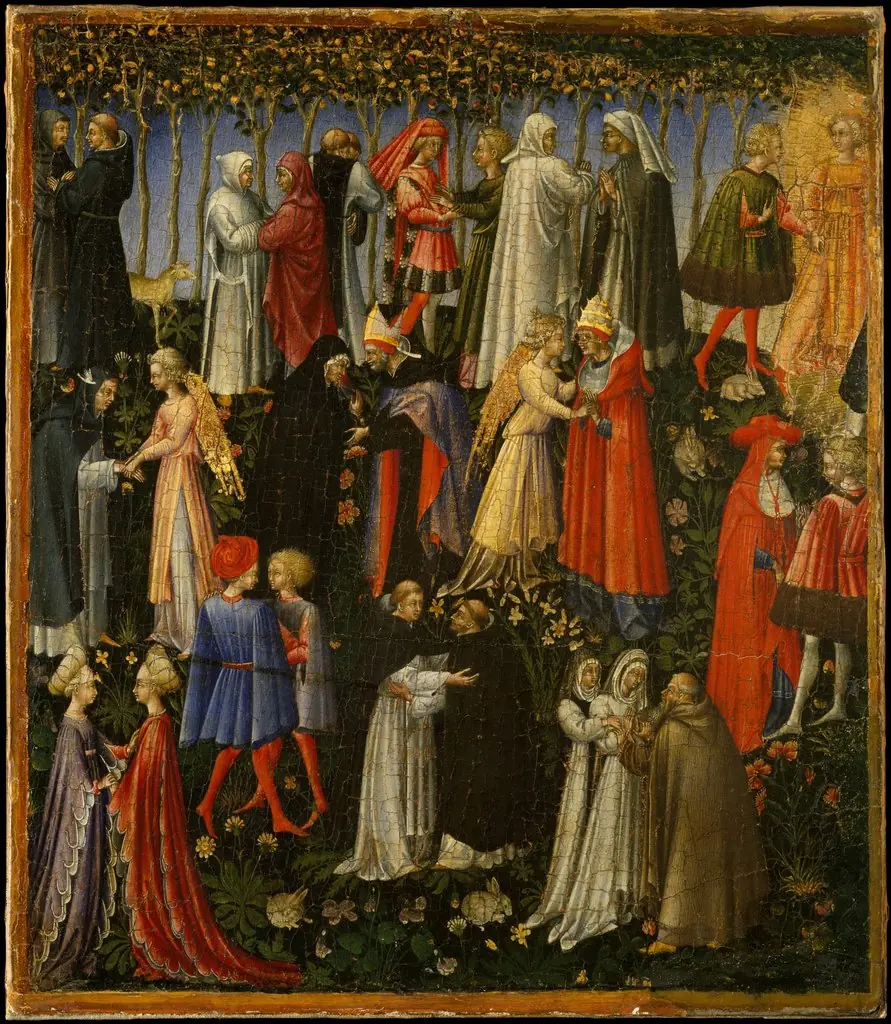 Paradise
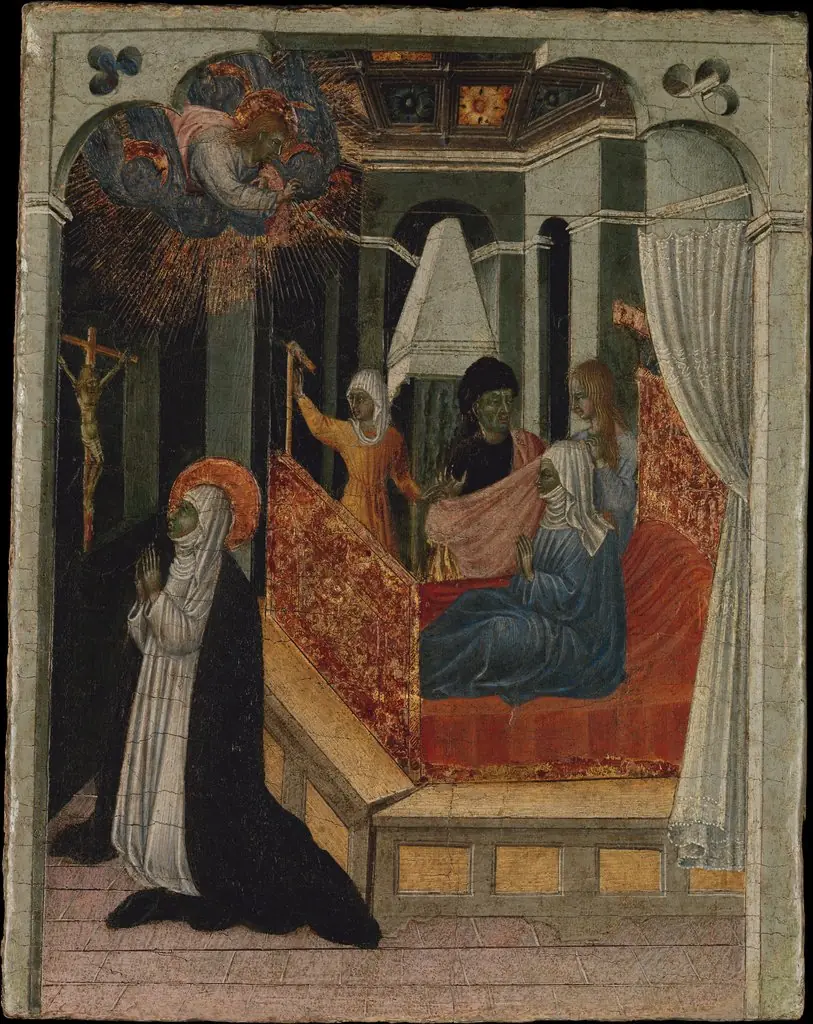 Saint Catherine of Siena Beseeching Christ to Resuscitate Her Mother
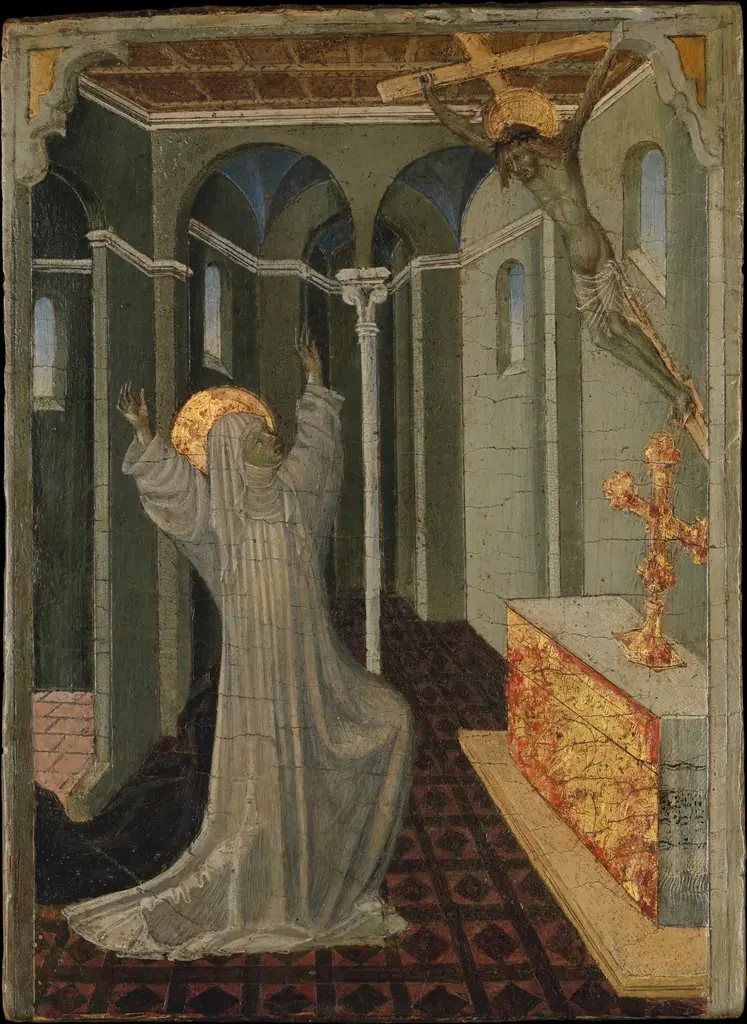 Saint Catherine of Siena Receiving the Stigmata
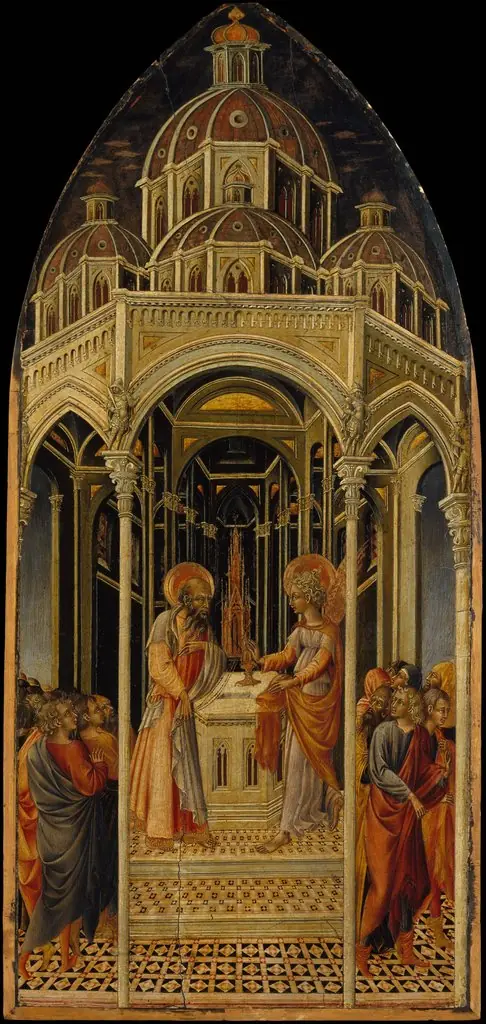 The Annunciation to Zacharias; (verso) The Angel of the Annunciation
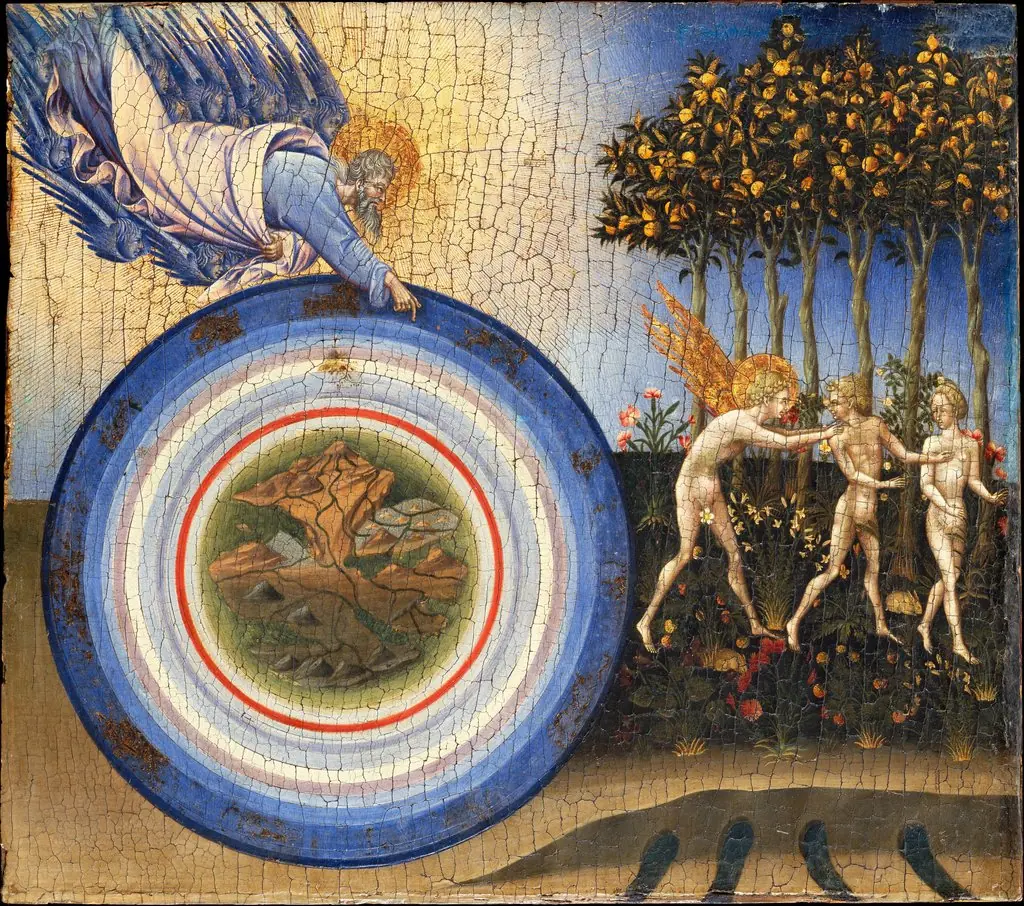 The Creation of the World and the Expulsion from Paradise