Artwork
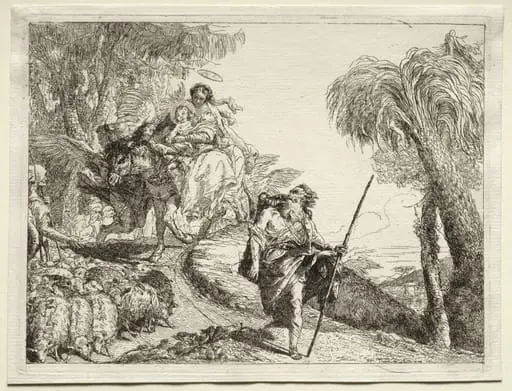
Flight into Egypt: The Holy Family Approaching a Village
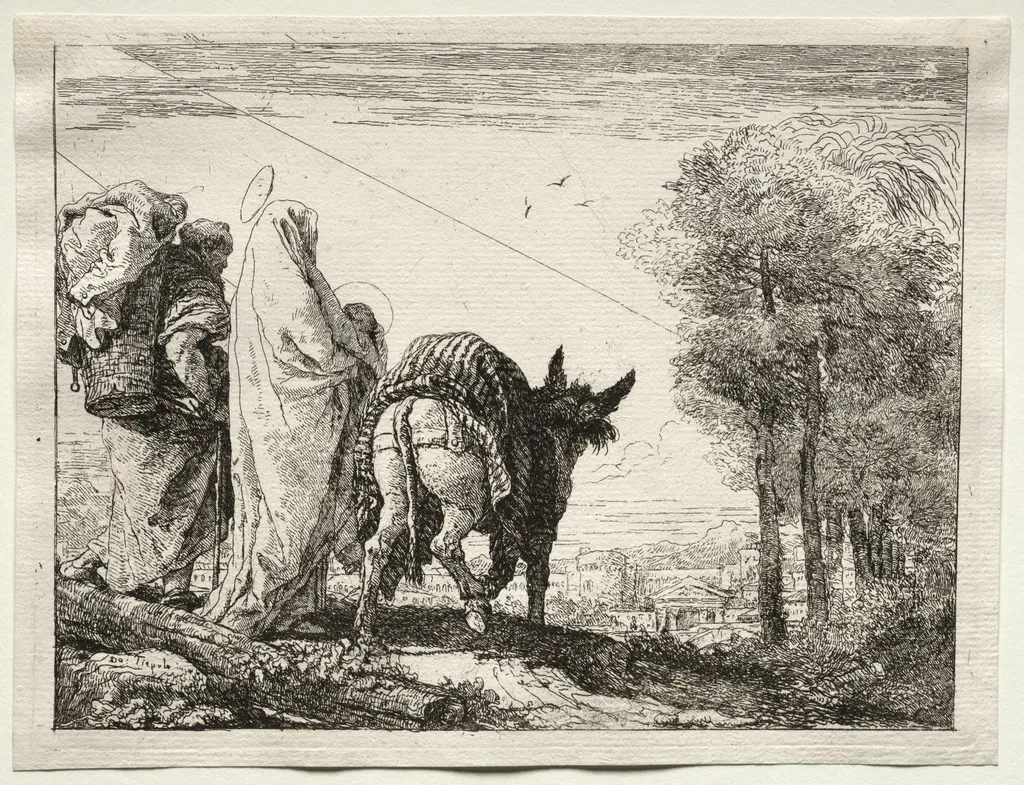
Flight into Egypt: The Holy Family Approaching a Village is a print by the Baroque artist Giovanni Domenico Tiepolo. It dates from 1752 and is held in the collection of the Cleveland Museum of Art.
About this work
Overview
Created in 1752 by Giovanni Domenico Tiepolo, this print depicts the Holy Family’s journey toward a rural settlement.
Created in 1752 by Giovanni Domenico Tiepolo, this print depicts the Holy Family’s journey toward a rural settlement. Executed in etching, it belongs to a series of religious scenes produced during his mature period. The work is part of the Cleveland Museum of Art’s collection and reflects Tiepolo’s skill in narrative printmaking, distinct from his father’s grander frescoes but equally attentive to human gesture and landscape.
Subject & Meaning
The scene illustrates the biblical Flight into Egypt, where Mary, Joseph, and the infant Jesus flee Herod’s persecution. Their quiet approach to a distant village suggests vulnerability and endurance. The modest scale of the figures against the landscape underscores their isolation, while the absence of overt drama invites contemplation rather than spectacle, aligning with devotional imagery of the period.
Technique & Style
Tiepolo employed etching to achieve fine linear detail and subtle tonal gradations. He used chiaroscuro not for theatrical contrast but to model form and suggest atmospheric depth—light filters through trees, casting soft shadows that ground the figures in a tangible space. The delicate rendering of birds and foliage adds naturalism, distinguishing this from more stylized religious prints of the time.
History & Provenance
The print was made during Tiepolo’s active years in Venice, following his training under his father, Giovanni Battista Tiepolo. It circulated among collectors and religious patrons in northern Italy. The Cleveland Museum of Art acquired it in the 20th century as part of a broader effort to build a representative collection of 18th-century Italian graphic art.
Context
In mid-18th-century Venice, religious subjects remained popular in print form, especially for private devotion. Tiepolo’s approach, blending intimacy with observational detail, responded to a growing interest in humanized sacred narratives. His work stood apart from the monumental Baroque style, favoring quiet moments that resonated with Enlightenment-era sensibilities.
Legacy
Tiepolo’s etchings, including this one, influenced later generations of printmakers who sought narrative clarity and emotional restraint. Though less celebrated than his father’s frescoes, his graphic work preserved a delicate, human-centered vision of religious life. Today, it remains a key example of Venetian printmaking’s capacity for subtlety and psychological nuance.
Artist & collection
Artist
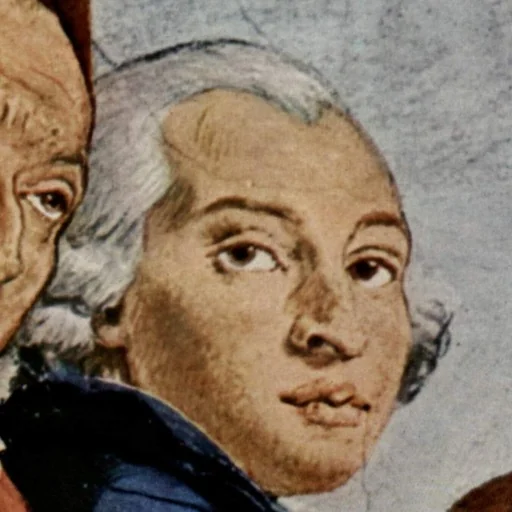
Giovanni Domenico Tiepolo (August 30, 1727 – March 3, 1804) was an Italian painter and printmaker in etching. He was the son of artist Giovanni Battista Tiepolo and elder brother of Lorenzo Baldissera Tiepolo.

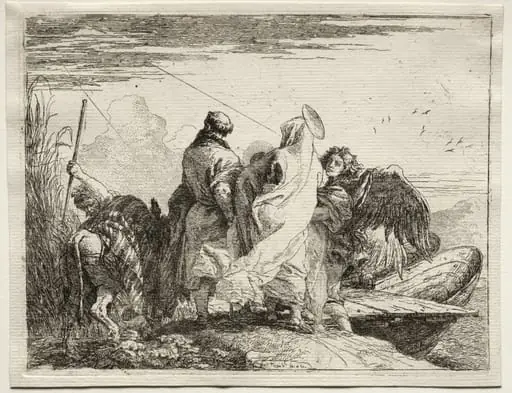 Flight into Egypt: The Holy Family Leaving the Shore
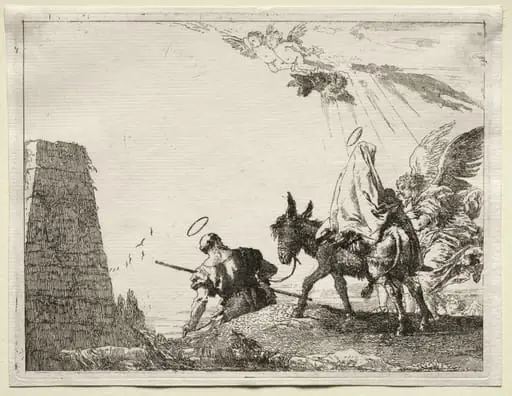 Flight into Egypt: The Holy Family Passing near a Pyramid
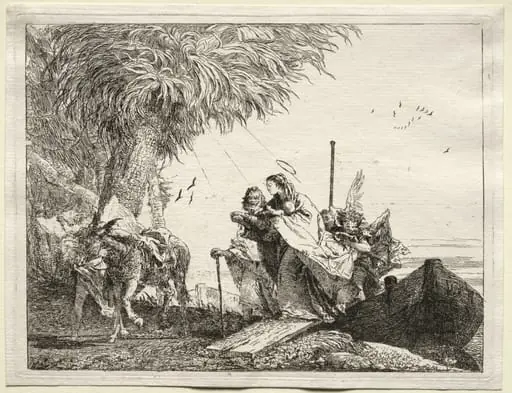 Flight into Egypt: The Holy Family, Disembarking
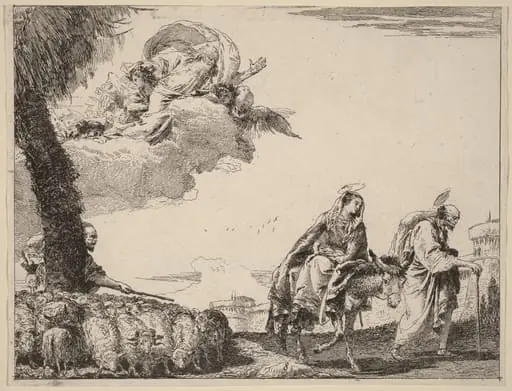 The Flight with the Holy Family at the Right
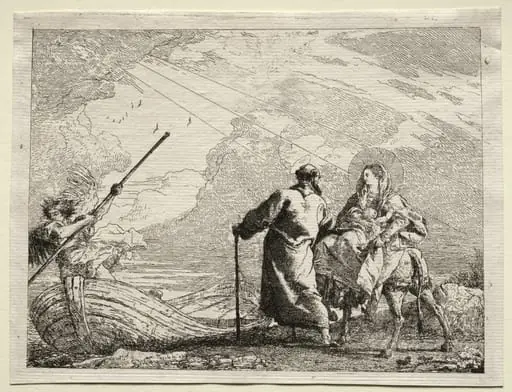 Flight into Egypt: The Holy Family Arriving at the Bank of the River
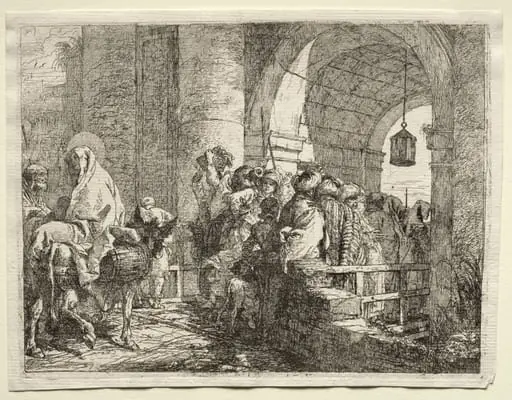 Flight into Egypt: The Holy Family Passing under an Arch
 Flight into Egypt: The Holy Family and the Flock of Sheep