Artwork
Flight into Egypt: The Holy Family and the Flock of Sheep
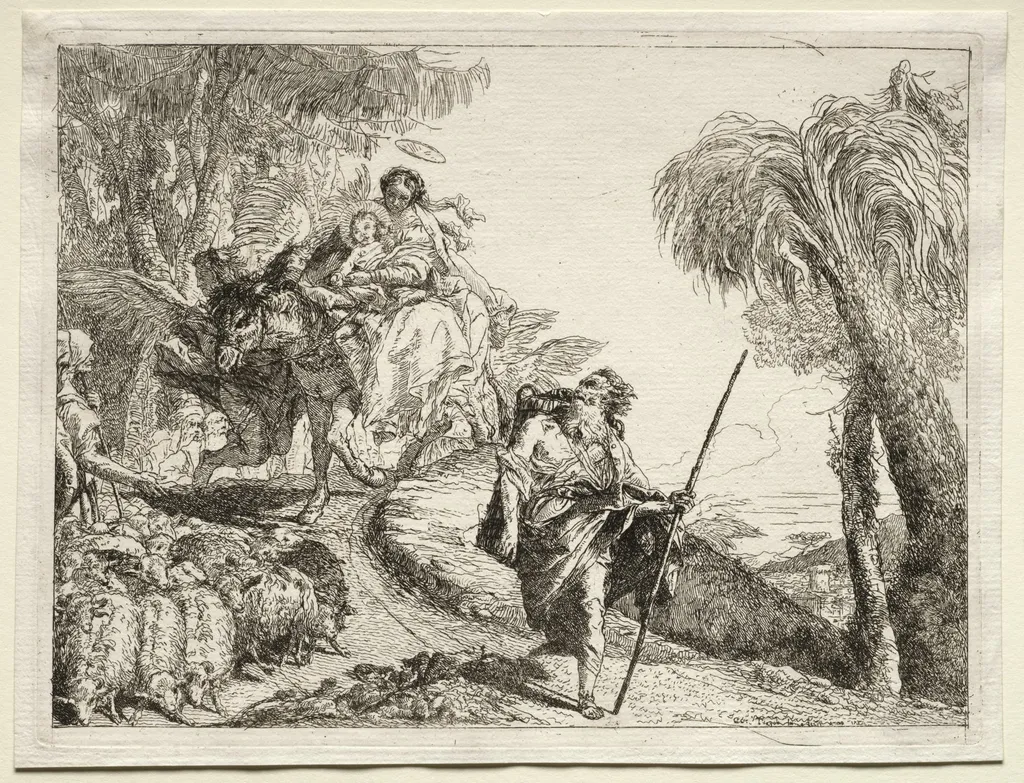
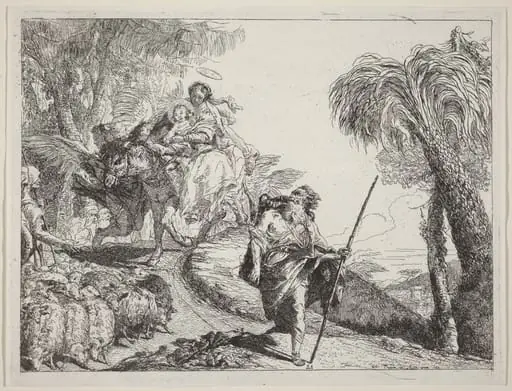
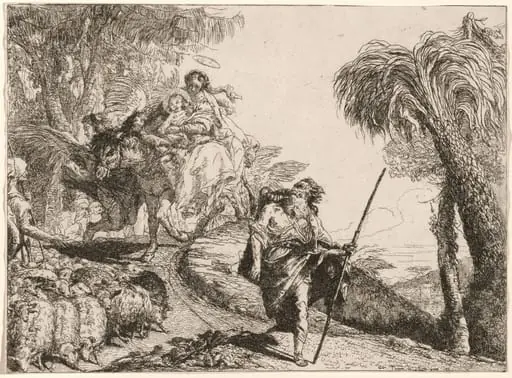
Flight into Egypt: The Holy Family and the Flock of Sheep is a print by the Baroque artist Giovanni Domenico Tiepolo. It dates from 1752 and is held in the collection of the Cleveland Museum of Art.
About this work
Overview
Executed in black-and-white ink, the print reflects Tiepolo’s skill as a printmaker and his training under his father, Giovanni Battista Tiepolo.
Created in 1752 by Giovanni Domenico Tiepolo, this etching depicts the Holy Family’s journey into Egypt, accompanied by a flock of sheep. Executed in black-and-white ink, the print reflects Tiepolo’s skill as a printmaker and his training under his father, Giovanni Battista Tiepolo. It is part of the collection at The Cleveland Museum of Art and exemplifies the artist’s ability to convey narrative through subtle tonal contrasts and precise line work.
Subject & Meaning
The scene illustrates the biblical episode in which Mary, Joseph, and the infant Jesus flee to Egypt to escape Herod’s persecution. Mary sits beneath a tree, cradling the child, while a companion stands nearby with a staff, perhaps symbolizing guidance or protection. The inclusion of sheep evokes pastoral peace, reinforcing the theme of divine care amid displacement. The composition balances quiet intimacy with the broader context of exile and survival.
Technique & Style
Tiepolo employed etching to achieve fine, controlled lines and graduated shading, using hatching and cross-hatching to model form and suggest depth. The contrast between light and dark areas directs the viewer’s eye toward the central figures, while the dense background of trees and animals creates a sense of quiet movement. The style remains grounded in the Rococo tradition, emphasizing grace and narrative clarity over theatrical drama.
History & Provenance
The print was made during Tiepolo’s mature period, following his work on large-scale frescoes and religious commissions. It was likely produced as part of a series of religious subjects intended for private collectors or as studies for larger works. The Cleveland Museum of Art acquired it as part of its broader collection of European prints, preserving it as an example of 18th-century Venetian graphic art.
Context
In mid-18th-century Venice, religious imagery remained popular among patrons, even as secular themes gained ground. Tiepolo’s etchings responded to this demand, blending devotional content with refined draftsmanship. While the Baroque era had emphasized dynamism, Tiepolo’s approach leaned toward restraint, aligning more with the emerging Rococo sensibility that favored elegance and emotional subtlety over grandeur.
Legacy
Giovanni Domenico Tiepolo’s prints, including this one, contributed to the continued relevance of religious subjects in print form during a period of artistic transition. His technical precision and narrative sensitivity influenced later generations of printmakers in Italy and beyond. Though less celebrated than his father’s monumental works, his etchings remain valued for their quiet humanity and refined execution.
Artist & collection
Artist
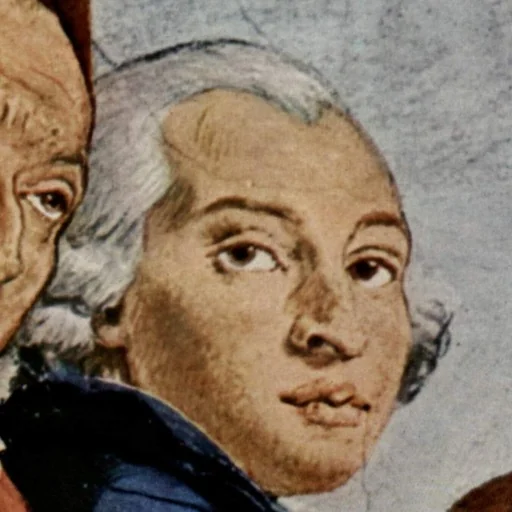
Giovanni Domenico Tiepolo (August 30, 1727 – March 3, 1804) was an Italian painter and printmaker in etching. He was the son of artist Giovanni Battista Tiepolo and elder brother of Lorenzo Baldissera Tiepolo.

 The Flight with Joseph in the Foreground
 The Holy Family Descending a Path near Shepherds
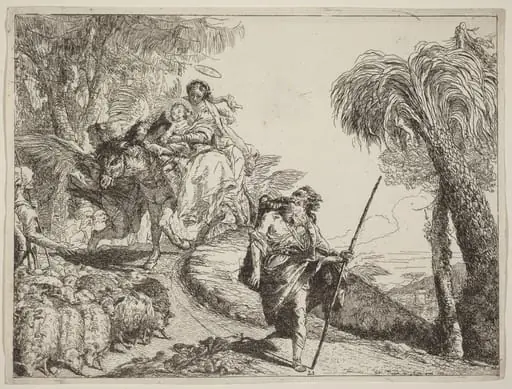 The Flight with Joseph in the Foreground
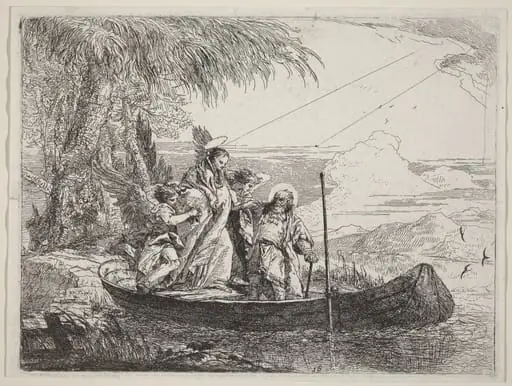 The Madonna, Child, and Angels Entering the Boat
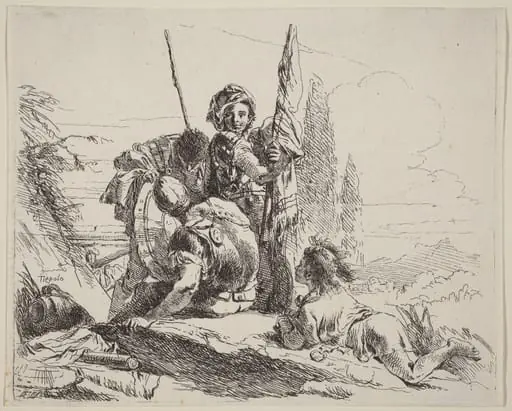 Three Soldiers and a Youth
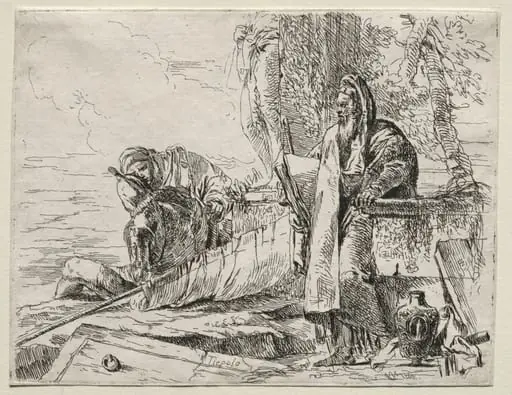 Various Caprices: The Philosopher Holding a Book
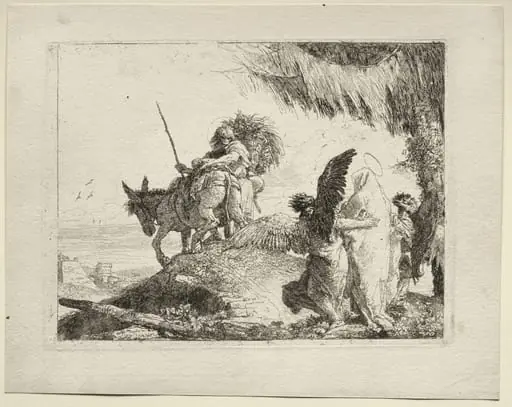 The Flight into Egypt: The Flight with the Madonna at Right Supported by Angels
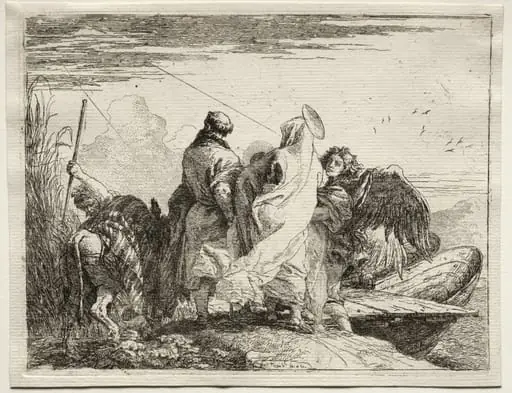 Flight into Egypt: The Holy Family Leaving the Shore