Artwork
Flight into Egypt: Dedication with Winged Figure of Fame bearing the Arms of the Prince-Bishop of Wurzburg
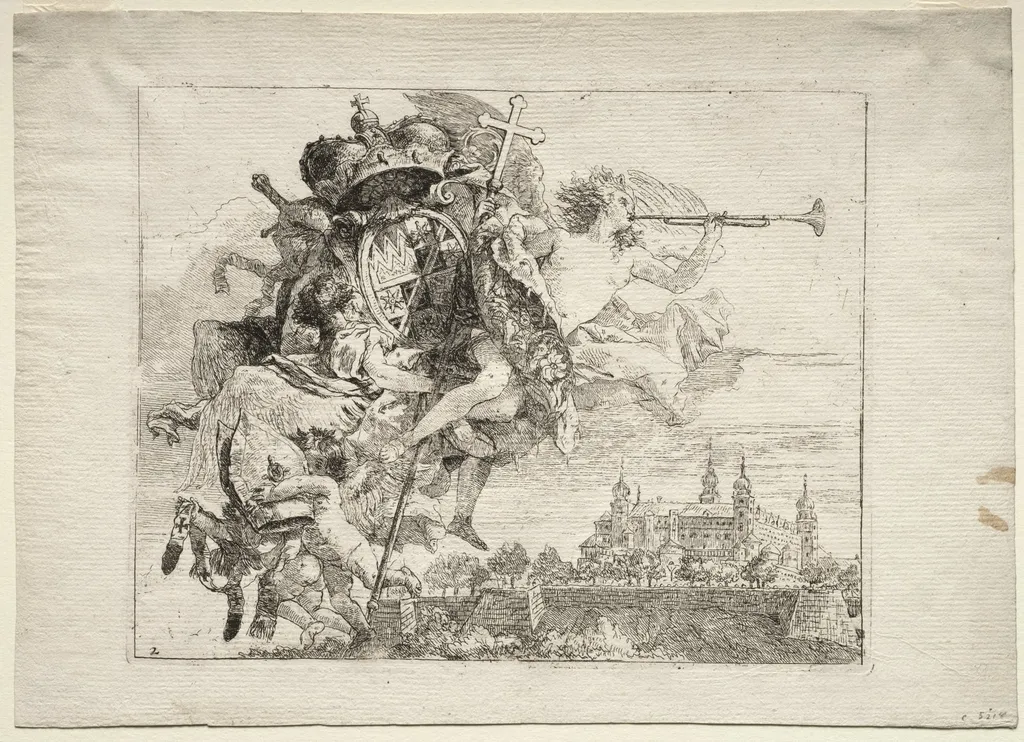
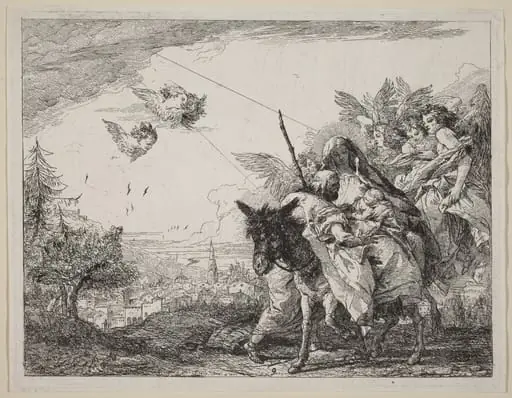
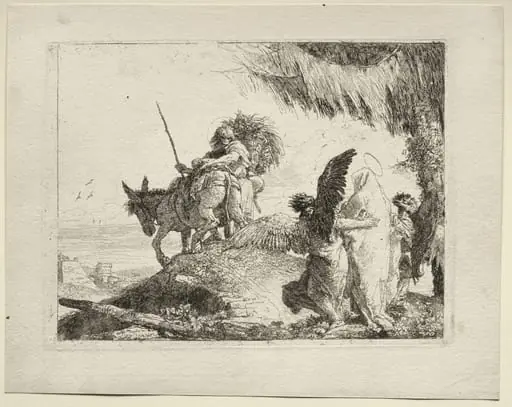
Flight into Egypt: Dedication with Winged Figure of Fame bearing the Arms of the Prince-Bishop of Wurzburg is a print by the Baroque artist Giovanni Domenico Tiepolo. It dates from 1752 and is held in the collection of the Cleveland Museum of Art.
About this work
Overview
It illustrates the Holy Family’s journey to Egypt, but centers on an allegorical winged figure presenting the heraldic shield of the Prince-Bishop of Würzburg.
Created in 1752 by Giovanni Domenico Tiepolo, this print merges a biblical narrative with dynastic symbolism. It illustrates the Holy Family’s journey to Egypt, but centers on an allegorical winged figure presenting the heraldic shield of the Prince-Bishop of Würzburg. The composition blends sacred subject matter with secular patronage, reflecting the intersection of religious tradition and ecclesiastical authority in 18th-century Germany.
Subject & Meaning
The scene reimagines the Flight into Egypt not merely as a religious event but as a ceremonial act of devotion. The winged figure of Fame, holding a cross and a shield emblazoned with the prince-bishop’s arms, elevates the pilgrimage into a public declaration of loyalty. The presence of the Holy Family underscores divine sanction, while the heraldic emblem asserts the patron’s spiritual and political legitimacy within the ecclesiastical state.
Technique & Style
Executed in a light, fluid manner typical of Tiepolo’s draftsmanship, the print employs delicate linework and subtle tonal gradations. Figures are rendered with dynamic poses and expressive gestures, suggesting motion and narrative urgency. The background suggests a hazy landscape with architectural elements, but the focus remains on the central allegorical group. Brushwork is visible, contributing to a sense of immediacy rather than polished finish.
History & Provenance
Commissioned to honor the Prince-Bishop of Würzburg, the work likely served as a devotional or ceremonial object within the bishopric’s court or chapel. Its production as a print allowed wider dissemination among clergy and nobility, reinforcing the bishop’s prestige. The piece remained tied to ecclesiastical collections in southern Germany, with no record of public exhibition until later scholarly cataloging in the 19th century.
Context
In mid-18th-century Germany, ecclesiastical rulers often commissioned art to assert their dual spiritual and temporal authority. Tiepolo’s fusion of biblical imagery with heraldry aligns with regional practices where religious narratives were adapted to glorify patrons. The Rococo aesthetic, with its emphasis on elegance and movement, provided a suitable visual language for such syncretic commissions, balancing piety with political messaging.
Legacy
Though not widely known outside specialized circles, the print exemplifies how religious iconography was repurposed for local dynastic expression in Enlightenment-era Germany. It reflects the enduring role of print culture in disseminating both devotional and political imagery. Scholars now view it as a case study in the negotiation between sacred tradition and secular power within ecclesiastical principalities.
Artist & collection
Artist
Giovanni Domenico Tiepolo (August 30, 1727 – March 3, 1804) was an Italian painter and printmaker in etching. He was the son of artist Giovanni Battista Tiepolo and elder brother of Lorenzo Baldissera Tiepolo.

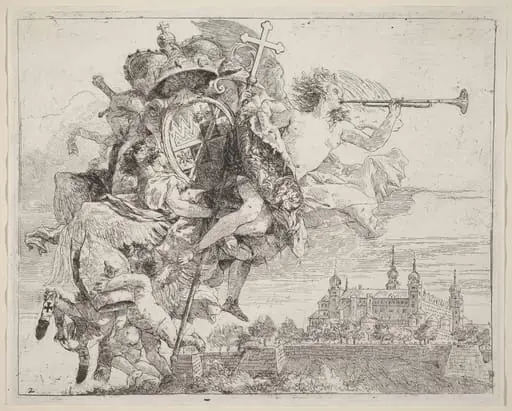 Arms of Karl Philip von Greiffenklau, Prince-Bishop of Wurzburg
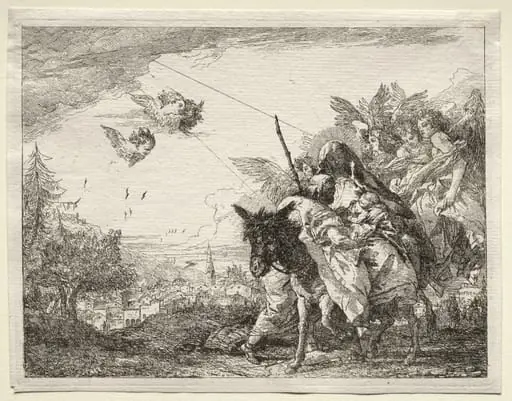 Flight into Egypt: Joseph Pausing to Gaze at the Infant Christ
 Joseph, Standing, Adores the Child
 The Monumental Tablet
 The Skeletons
 Capricci di varie battaglie
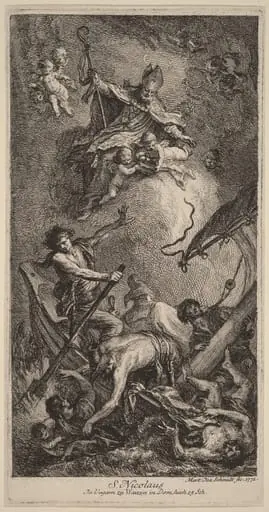 Saint Nicholas Rescuing Sailors
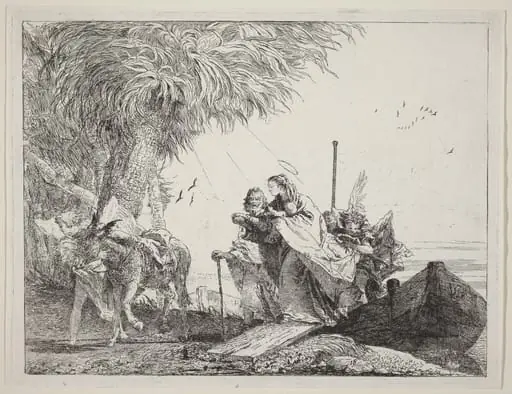 The Holy Family Disembarking
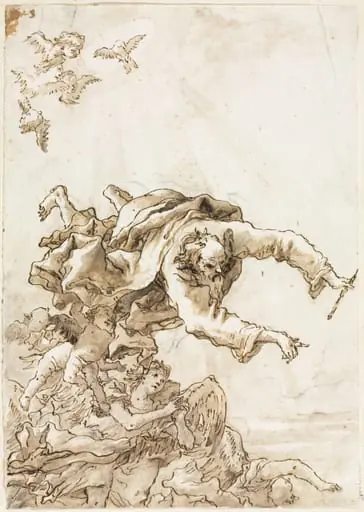 God the Father with Angels and Cherubs
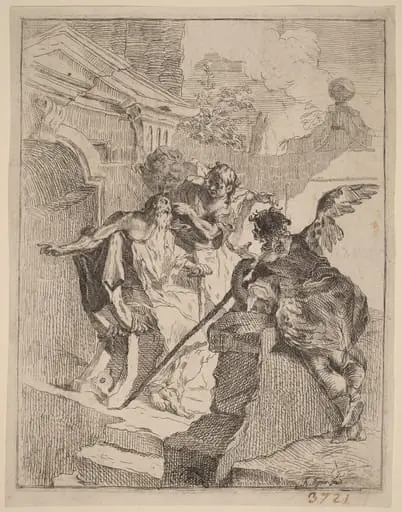 Tobias Healing His Father
 The Flight into Egypt: The Flight with the Madonna at Right Supported by Angels
 Scherzi di Fantasia: Satyr Family with the Obelisk