Artwork
Capricci di varie battaglie
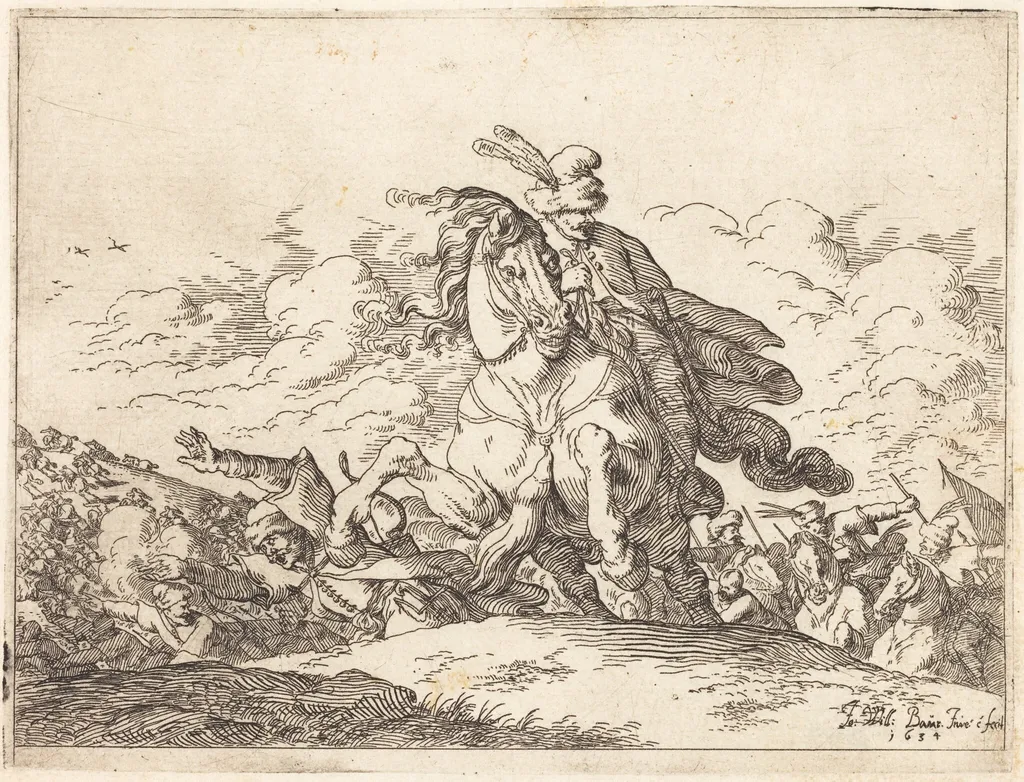
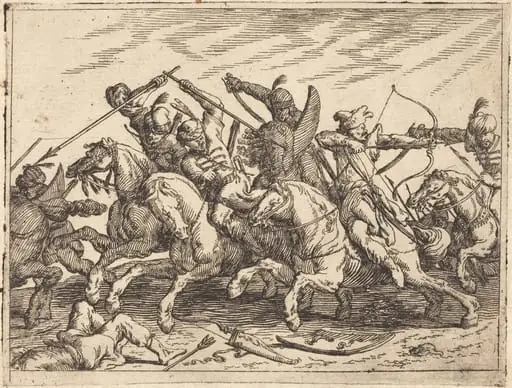
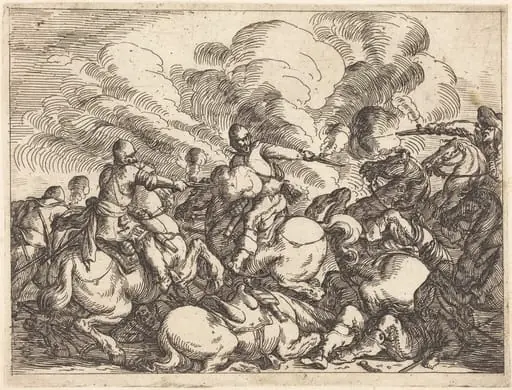
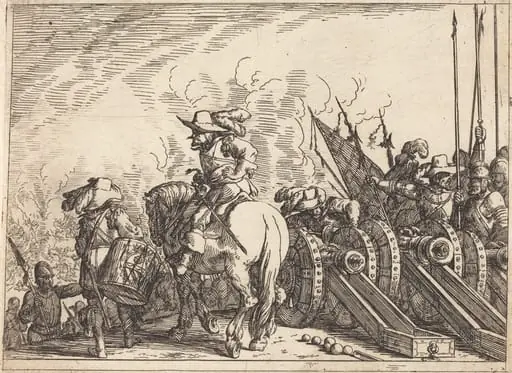
Capricci di varie battaglie is an ink print by the Baroque artist Johann Wilhelm Baur. It dates from 1635 and is held in the collection of the National Gallery of Art.
About this work
Overview
Johann Wilhelm Baur, a German artist active in the early 17th century, produced this etching in 1635 as part of a series titled *Capricci di varie battaglie*.
Johann Wilhelm Baur, a German artist active in the early 17th century, produced this etching in 1635 as part of a series titled *Capricci di varie battaglie*. The work is a single print on laid paper, executed in black ink, and belongs to a body of work that blends historical imagery with imaginative composition. Baur was known for his precision in printmaking and his ability to translate literary themes into visual form, often favoring dynamic, emotionally charged scenes over strict realism.
Subject & Meaning
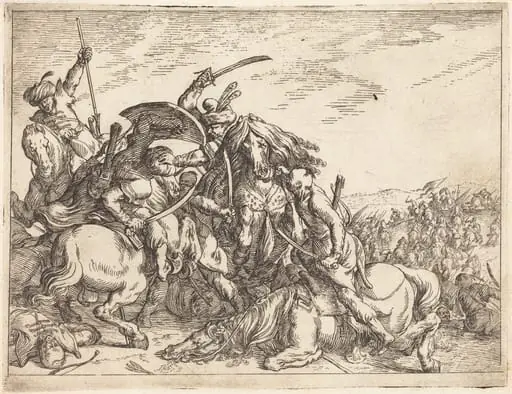
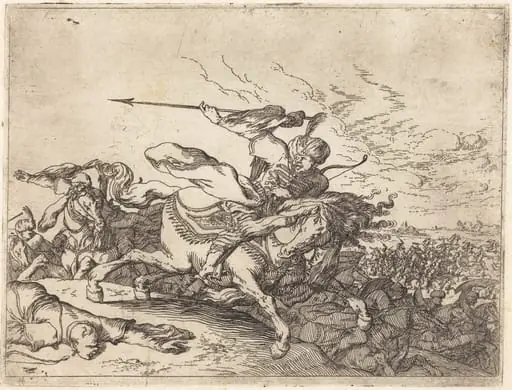
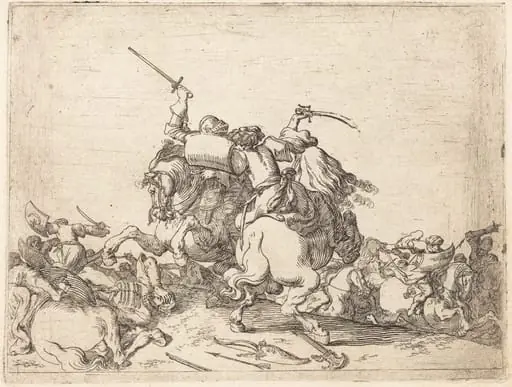
The scene depicts a chaotic confrontation between a towering mounted figure and a group of smaller, distressed individuals. The rider, wielding a sword, dominates the composition, while those below writhe in disarray. The imagery evokes themes of power, violence, and helplessness, but lacks specific historical or narrative references. Rather than documenting a real battle, the image functions as a symbolic allegory, emphasizing emotional intensity over factual accuracy.
Technique & Style
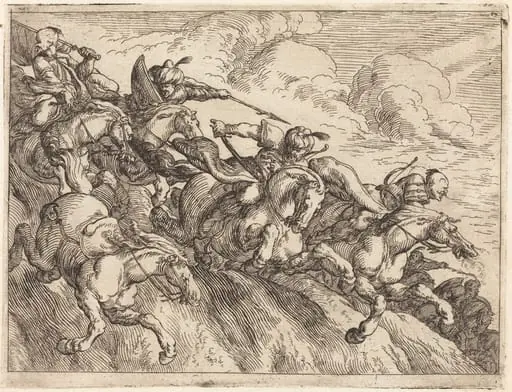
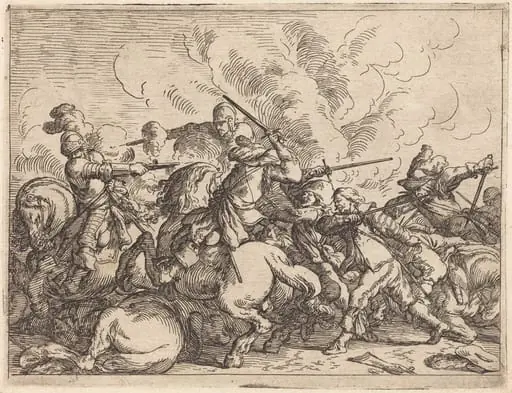
Baur employed fine, incised lines typical of etching to render texture and motion. The horse’s muscular form and swirling mane are defined by sharp, fluid strokes, while the background clouds and scattered figures are suggested with rapid, energetic marks. The contrast between the towering central figure and the compressed, chaotic mass below enhances the sense of imbalance and urgency. The absence of color and the emphasis on line create a dramatic, almost theatrical effect.
History & Provenance
Created in 1635, the etching emerged during Baur’s time in Italy, where he absorbed influences from Italian graphic traditions. It was likely produced as part of a small, private circulation of prints, intended for collectors rather than public display. No definitive record of its early ownership exists, but similar works by Baur were collected by connoisseurs interested in narrative printmaking and the intersection of literature and visual art.
Context
Baur worked during a period when printmaking flourished as a medium for disseminating complex imagery across Europe. His interest in Ovid’s *Metamorphoses* and mythological themes extended to this battle series, where classical ideals of drama and transformation were adapted into contemporary visual language. The work reflects broader trends in Northern European print culture, where artists fused literary inspiration with expressive, sometimes fantastical, depictions of conflict.
Legacy
Though not widely exhibited today, Baur’s *Capricci di varie battaglie* remains a representative example of early Baroque printmaking that prioritized emotional resonance over documentary fidelity. His approach influenced later artists exploring the boundaries between realism and imagination in graphic arts. The etching endures as a testament to the potential of print to convey psychological tension through intricate line work and compositional asymmetry.
Own this work as a print
Artist & collection
Artist
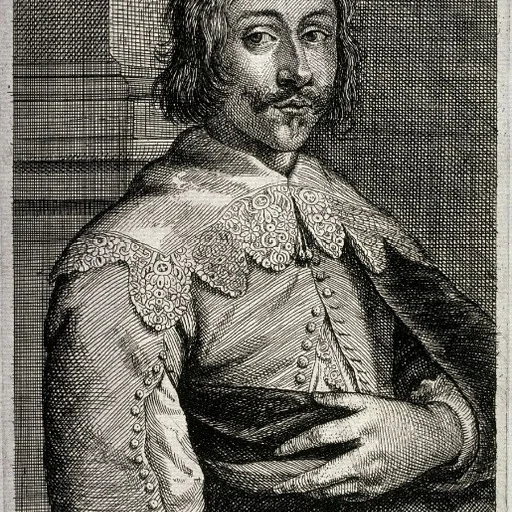
Johann Wilhelm Baur, Joan Guiliam Bouwer, or Bauer (Strasbourg, 31 May 1607 - Vienna, 1 January 1640) was a German engraver, etcher and miniature painter. He is famous for a series of illustrations of Ovid's Metamorphoses.