Artwork
Two Peasants
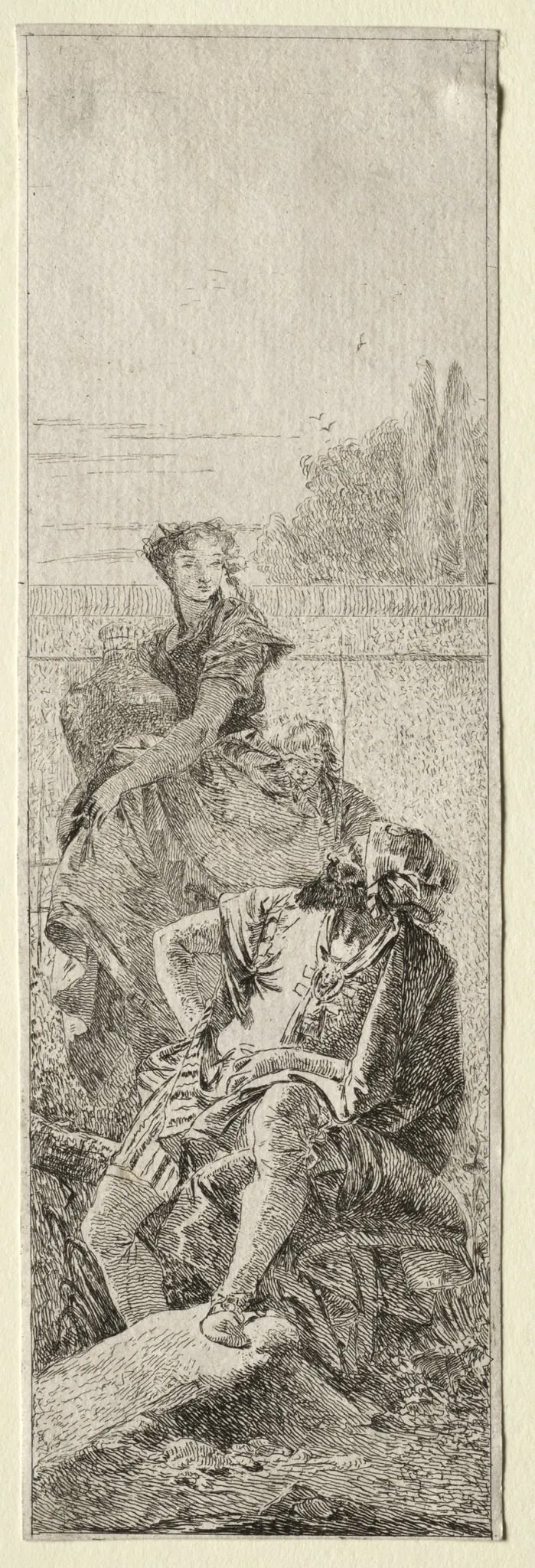
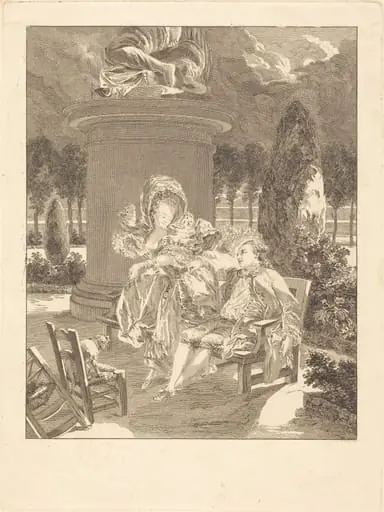
Two Peasants is a print by the Romanticist artist Giovanni Domenico Tiepolo. It dates from 1704 and is held in the collection of the Cleveland Museum of Art.
About this work
Overview
Though lesser known than his father, Giovanni Domenico developed a distinctive graphic style marked by observational clarity and restrained elegance.
Giovanni Domenico Tiepolo created *Two Peasants* around 1704 as a delicate etching, reflecting his dual practice as both painter and printmaker. The work is held in the Cleveland Museum of Art’s collection. Though lesser known than his father, Giovanni Domenico developed a distinctive graphic style marked by observational clarity and restrained elegance. This piece exemplifies his interest in everyday rural life, rendered with minimal but precise lines.
Subject & Meaning
The print portrays two rural laborers seated on a rocky outcrop, their postures suggesting a moment of rest. One figure, dressed in a headscarf and loose garment, leans back casually; the other, in a buttoned jacket and hat, sits upright with a bent leg. Their attire and posture imply class and regional identity, but no narrative or moral is imposed. The scene captures quiet dignity in ordinary life, avoiding sentimentality or caricature.
Technique & Style
Tiepolo employed soft, fluid etching lines and subtle chiaroscuro to model form and suggest depth. Light shading defines the contours of the figures’ clothing and the terrain behind them, while the background hills and trees are rendered in faint, rapid strokes. The technique prioritizes immediacy over detail, aligning with the sketchlike quality common in 18th-century draftsmanship. The result is a sense of spontaneity, as if the scene were observed and recorded in real time.
History & Provenance
Created during Tiepolo’s early career, *Two Peasants* likely originated as a preparatory study or independent work from his time in Venice. It entered the Cleveland Museum of Art’s collection through established acquisition channels in the 20th century. While its exact early ownership is undocumented, its survival reflects the growing appreciation for Tiepolo’s graphic works beyond his father’s monumental frescoes.
Context
In early 18th-century Venice, artists increasingly turned to prints to explore secular and domestic subjects. Tiepolo’s focus on peasants aligned with a broader interest in realism, distinct from mythological or religious themes favored by his father. His etchings responded to rising demand for intimate, accessible imagery among collectors and fellow artists, positioning him as a bridge between grand decoration and quiet observation.
Legacy
Though overshadowed by his father’s fame, Giovanni Domenico Tiepolo’s graphic works influenced later generations of draftsmen interested in everyday life. *Two Peasants* exemplifies his ability to convey character and atmosphere with economy. His prints are now recognized for their sensitivity and technical finesse, contributing to a broader reassessment of his role in Venetian art beyond the shadow of his family’s legacy.
Artist & collection
Artist
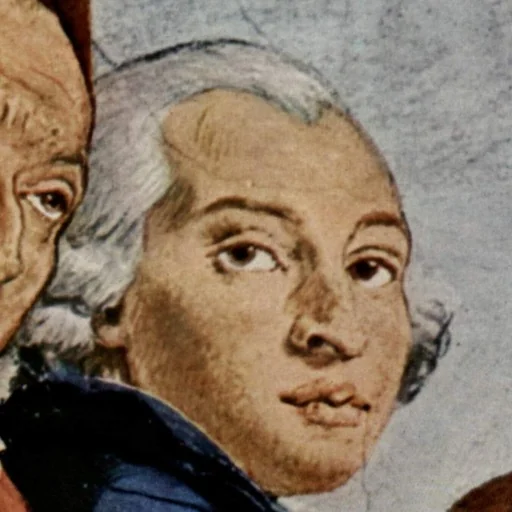
Giovanni Domenico Tiepolo (August 30, 1727 – March 3, 1804) was an Italian painter and printmaker in etching. He was the son of artist Giovanni Battista Tiepolo and elder brother of Lorenzo Baldissera Tiepolo.

![La lezione di violincello [The Violin Lesson], by Mosè Bianchi](https://artifactworldgallery.com/img/mose-bianchi--la-lezione-di-violincello-the-violin-lesson--409ab16368cea0c8-w320.webp) La lezione di violincello [The Violin Lesson]
La lezione di violincello [The Violin Lesson]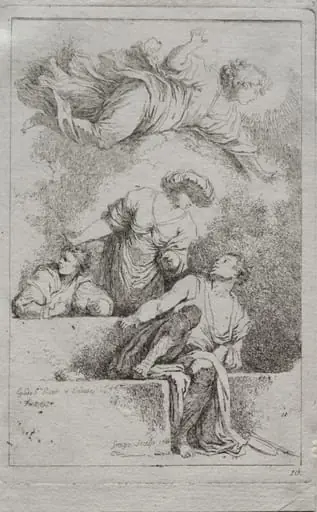 The Disciples at the Tomb
 Martyrdom of St. Agatha
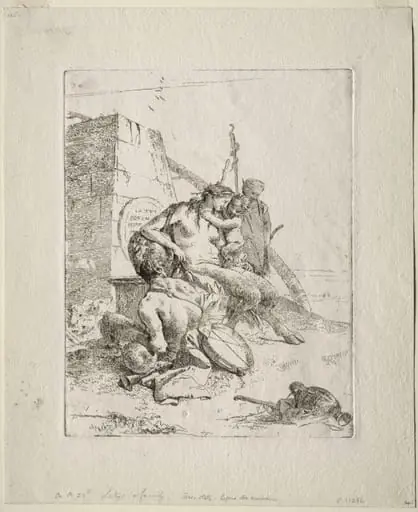 Scherzi di Fantasia: Satyr Family with the Obelisk
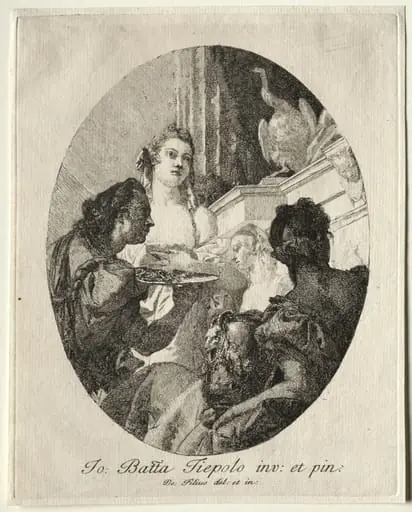 Three Women Presenting Gifts of Marc Anthony to Cleopatra
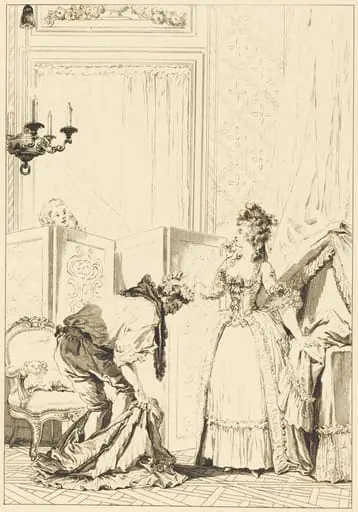 Le cocu battu et content
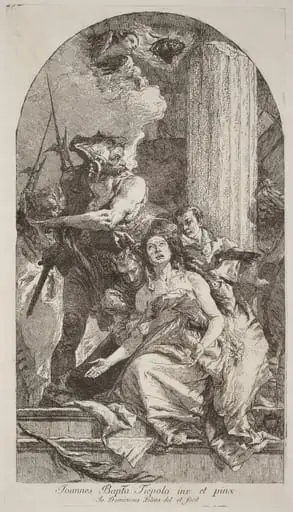 Martyrdom of Saint Agatha
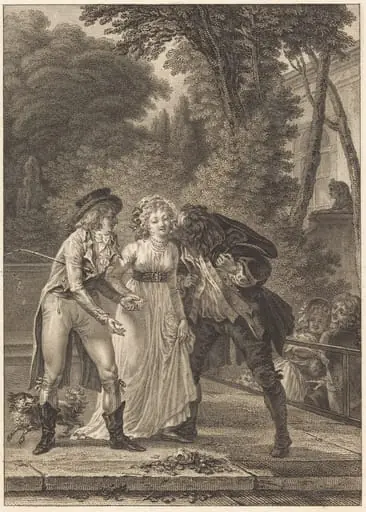 Le baiser rendu: Le baiser rendu
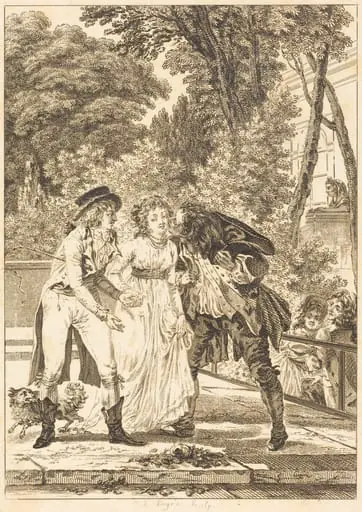 Le baiser rendu: Le baiser rendu
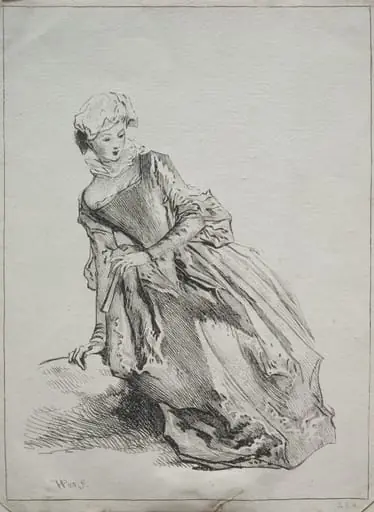 Woman Seated
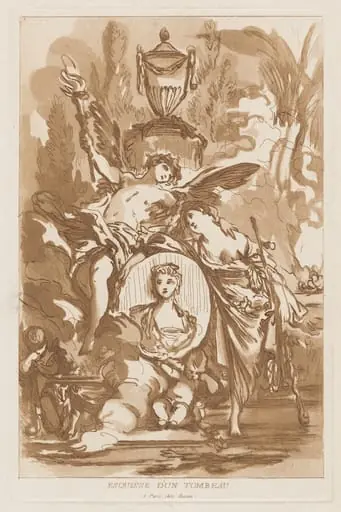 Esquisse d’un tombeau (Sketch for a Tomb)
 La soiree des Thuileries