Artwork
Diego
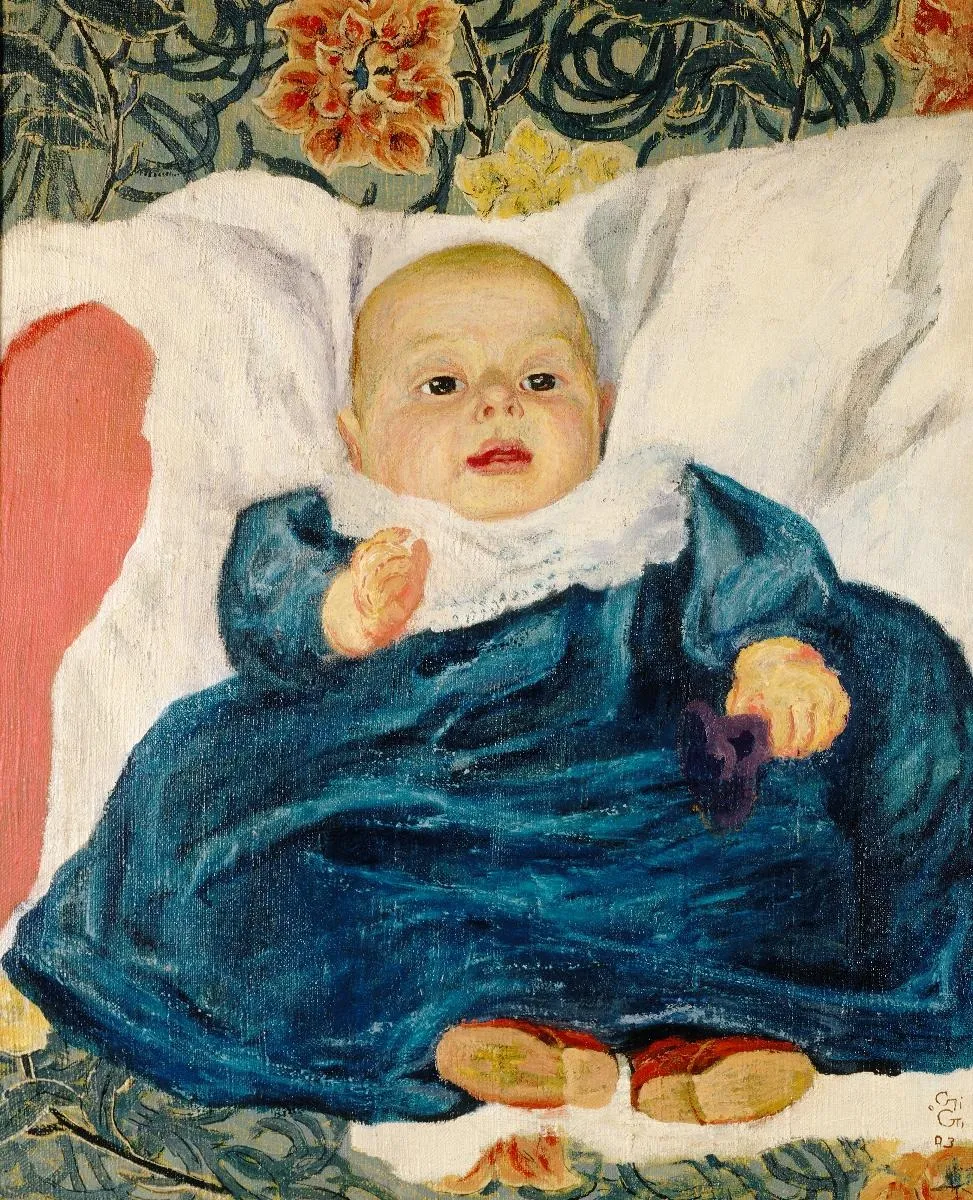
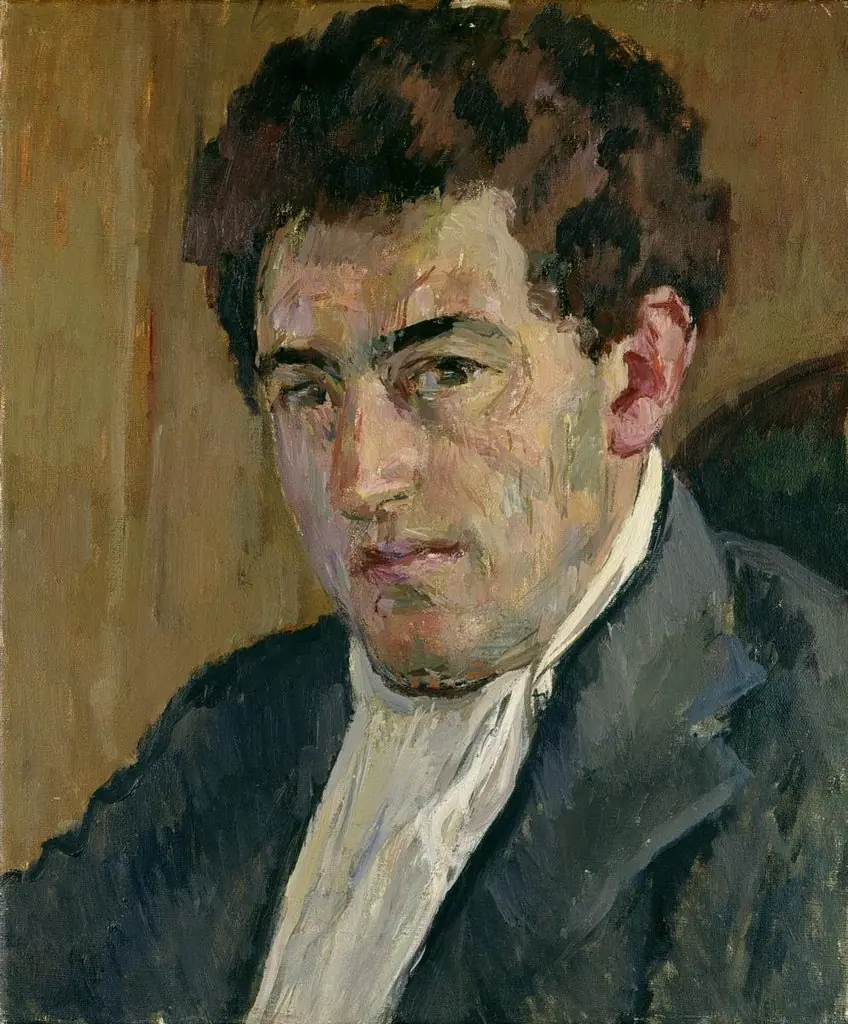
Diego is an oil painting by the Post-Impressionist artist Giovanni Giacometti. It dates from 1903 and is held in the collection of the Kunsthaus Zürich.
About this work
Overview
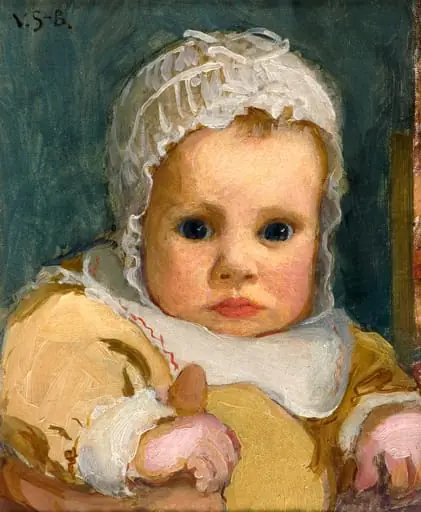
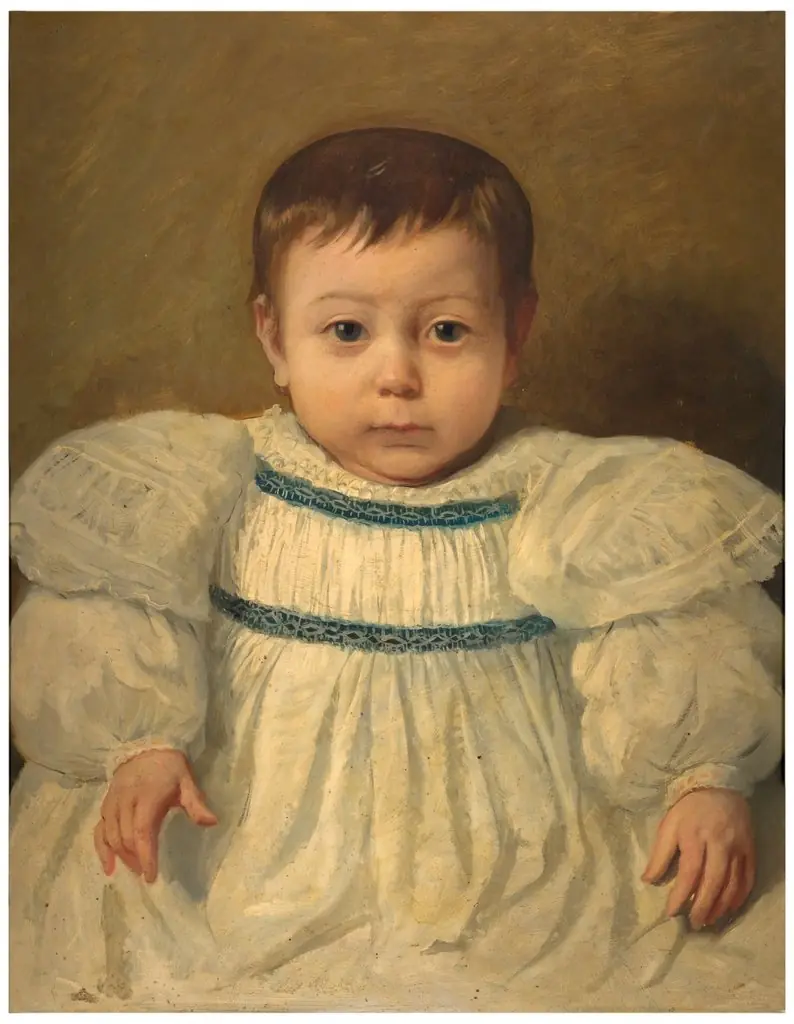
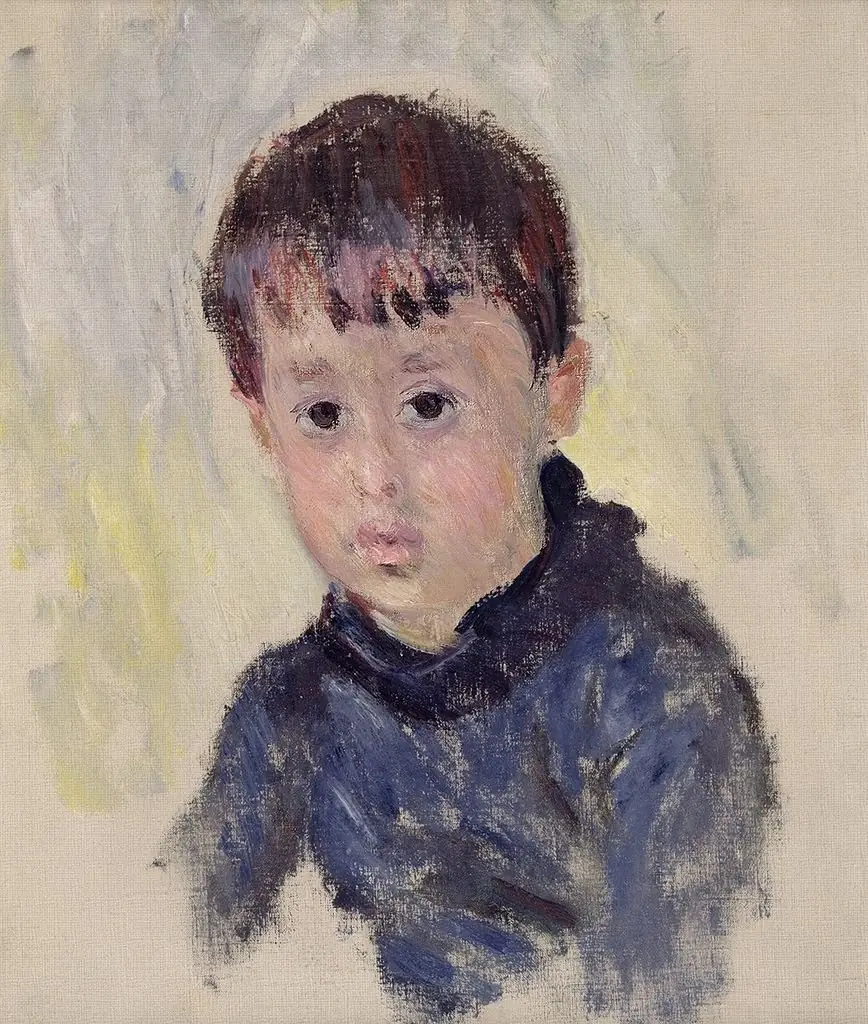
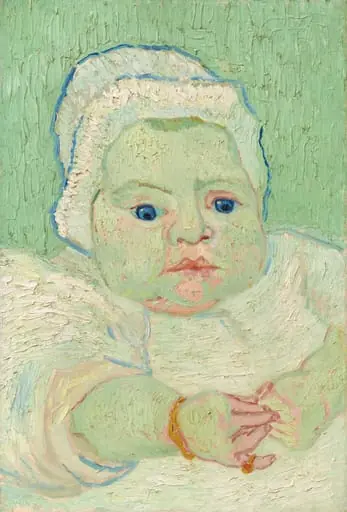
Painted in 1903 by Swiss artist Giovanni Giacometti, this oil work depicts his infant son Diego. Executed during the Post-Impressionist era, the painting reflects a quiet, intimate approach to portraiture, emphasizing domestic tenderness over dramatic narrative. It resides in the Kunsthaus Zürich collection, where it stands as a personal record of familial life rather than a public statement.
Subject & Meaning
The subject is Diego Giacometti, the artist’s young son, shown reclining on a white linen blanket. His stillness and direct gaze convey a sense of quiet presence rather than staged sentiment. The simplicity of the pose and the absence of external context suggest a moment of private observation, underscoring the artist’s focus on the vulnerability and serenity of early infancy.
Technique & Style
Color is restrained—pale flesh, deep blue, and muted reds—creating a harmonious, subdued tonality characteristic of Post-Impressionist domestic scenes.
Giacometti employed soft, blended brushwork to render the infant’s skin and fabric textures, avoiding sharp definition in favor of gentle transitions. The background’s floral motif is rendered with loose, decorative strokes, contrasting with the focused realism of the figure. Color is restrained—pale flesh, deep blue, and muted reds—creating a harmonious, subdued tonality characteristic of Post-Impressionist domestic scenes.
History & Provenance
Created in 1903, the painting remained within the Giacometti family before entering the Kunsthaus Zürich collection. Its preservation reflects the artist’s personal significance to the work, as well as the institution’s interest in documenting Swiss artistic practice beyond its more famous figures. No major exhibitions or sales are documented prior to its institutional acquisition.
Context
At the turn of the 20th century, Swiss artists increasingly turned to intimate, everyday subjects as a counterpoint to academic grandeur. Giovanni Giacometti’s approach aligns with broader European trends that valued emotional authenticity over idealization. His work, though less known than his sons’, contributes to a quiet tradition of familial portraiture in Swiss modernism.
Legacy
While not widely exhibited, the painting endures as a quiet testament to Giovanni Giacometti’s role as both artist and father. It offers insight into the domestic world that shaped his sons, Alberto and Diego, whose later work would diverge radically in style. The painting’s modest scale and emotional restraint distinguish it from the more monumental art of its time.
Artist & collection
Artist
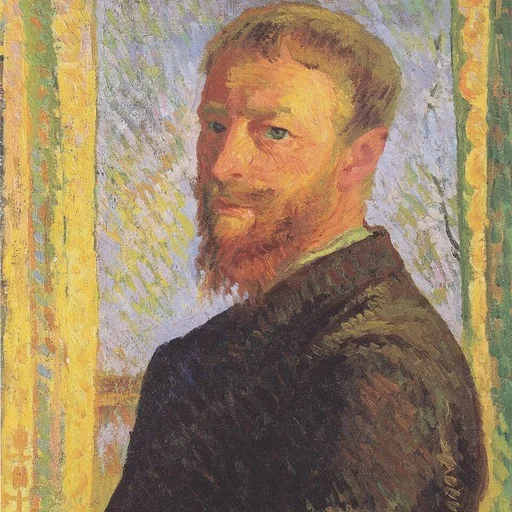
Giovanni Ulrico Giacometti (7 March 1868 – 25 June 1933) was a Swiss painter. He was the father of artists Alberto and Diego Giacometti and architect Bruno Giacometti.