Artwork
Hagar and the angel in the desert
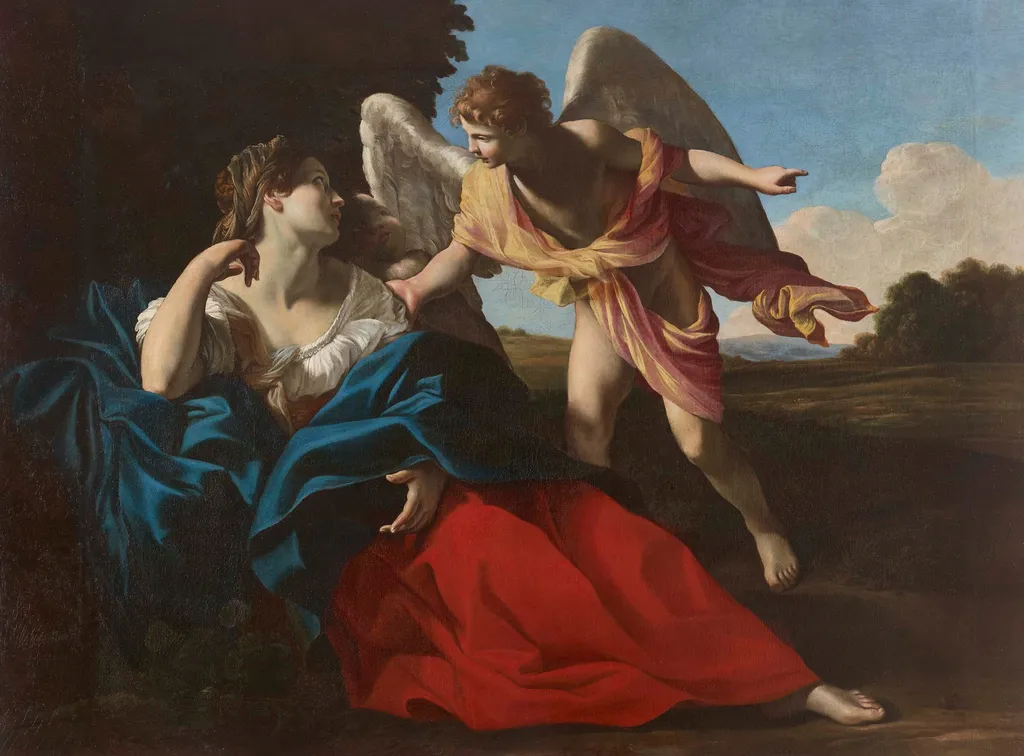
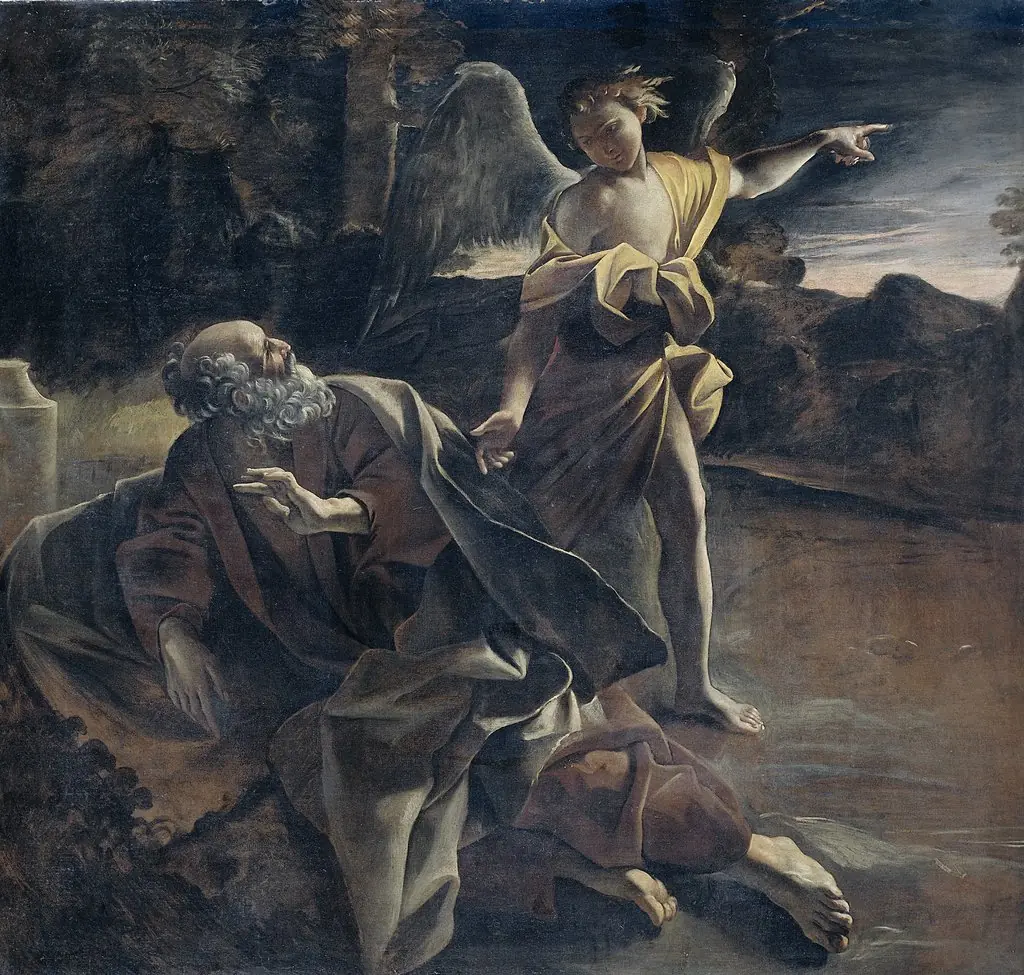
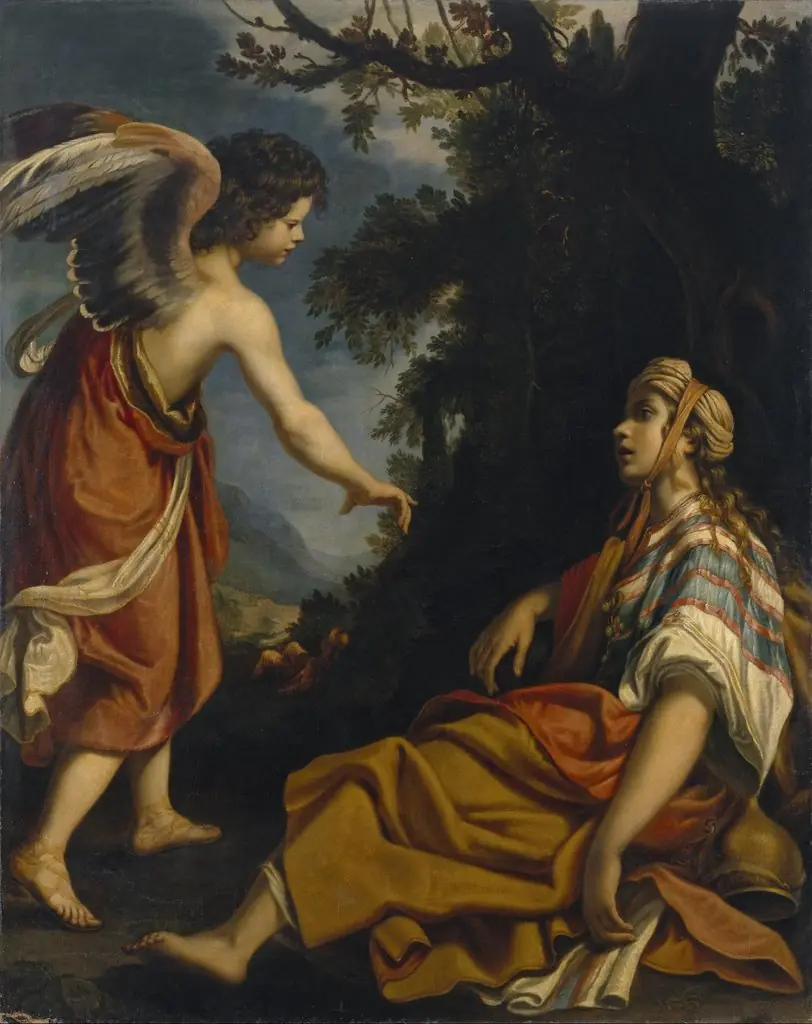
Hagar and the angel in the desert is an oil painting by the Early Baroque Italian artist Giovanni Lanfranco. It dates from 1616 and is held in the collection of the Department of Paintings of the Louvre.
About this work
Overview
Giovanni Lanfranco’s 1616 oil painting portrays the biblical encounter between Hagar and an angel set within a desert landscape. The composition centers on a seated woman in vivid red attire, her gaze turned leftward, while a winged messenger in a bright robe extends a hand toward her. The work belongs to the collection of the Palace of Versailles.
Subject & Meaning
The scene draws from Genesis, where Hagar, the Egyptian maid of Abraham, receives divine reassurance after fleeing into the wilderness. Lanfranco captures the moment of celestial comfort, emphasizing Hagar’s reflective expression and the angel’s protective gesture, suggesting themes of exile, divine intervention, and maternal sorrow.
Technique & Style
Lanfranco employs the Baroque chiaroscuro of light and shadow to model the figures, granting them a three‑dimensional presence against a backdrop of distant trees, blue sky, and drifting clouds. The contrast between the luminous white wings and the darker drapery accentuates the spiritual drama, while the vivid reds and blues enhance visual intensity.
History & Provenance
Created in the early seventeenth century, the painting reflects Lanfranco’s training within the Bolognese school and the influence of Annibale Carracci’s classicism. It entered the French royal collection during the reign of Louis XIV and is now displayed among the artworks of the Palace of Versailles, illustrating the cross‑national appreciation of Italian Baroque religious narratives.
Own this work as a print
Artist & collection
Artist
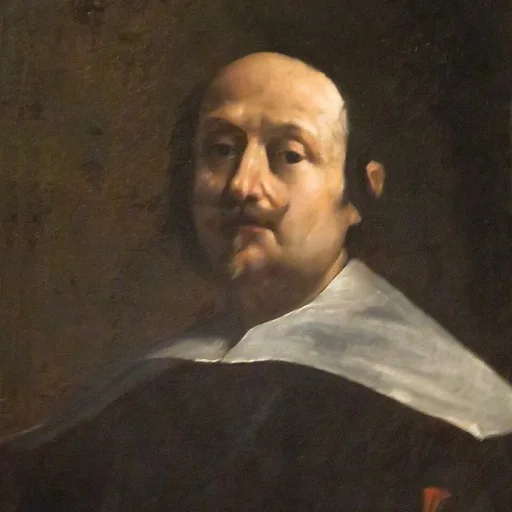
Giovanni Lanfranco (26 January 1582 – 30 November 1647) was an Italian Baroque painter. He was a distinguished artist of the Bolognese school, deeply influenced by Annibale Carracci's’ classicism.

Museum
Department of Paintings of the Louvre
Continue through works from the same source collection.