Artwork
Le coup de vent (The Gust of Wind)
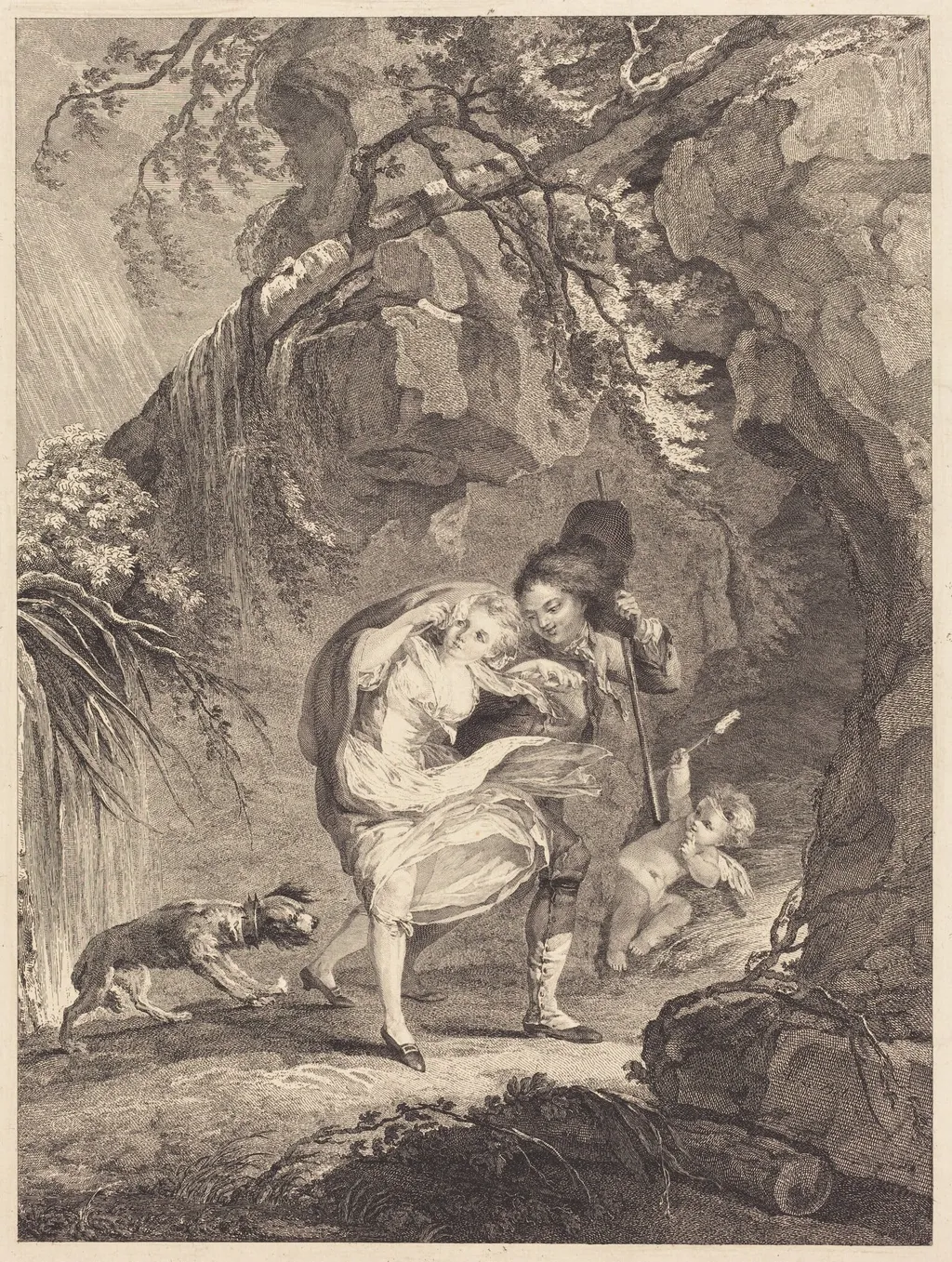
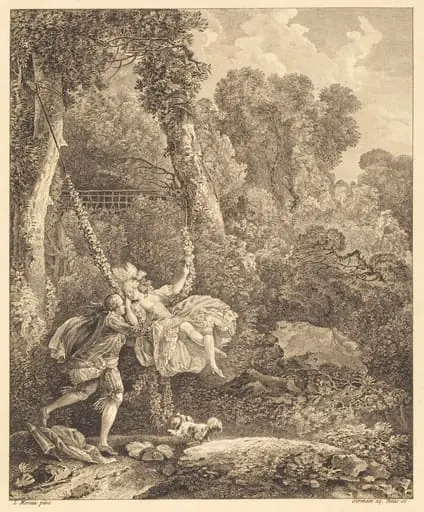
Le coup de vent (The Gust of Wind) is an ink print by the Romanticist artist Abraham Girardet. It dates from 1785 and is held in the collection of the National Gallery of Art.
About this work
Overview
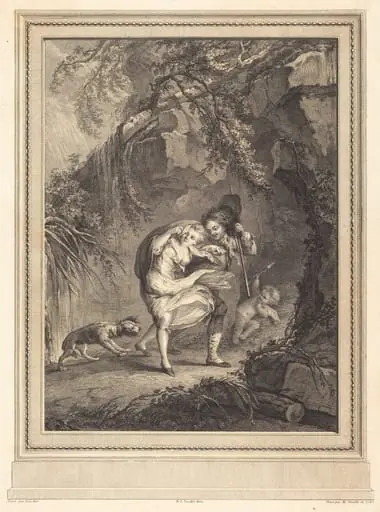
Le coup de vent, an etching from 1785 by Abraham Girardet, captures a fleeting moment of natural force interacting with human figures.
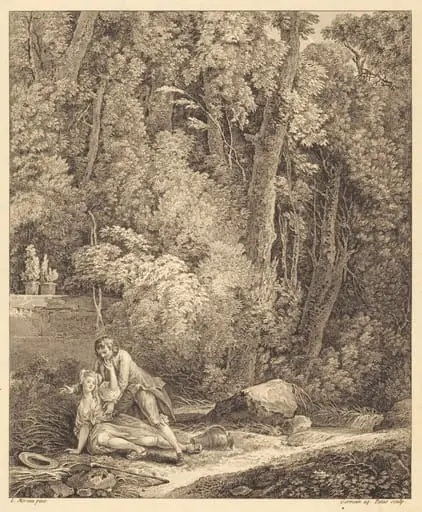
Le coup de vent, an etching from 1785 by Abraham Girardet, captures a fleeting moment of natural force interacting with human figures. The composition centers on a woman whose garments ripple as if caught mid-motion by a sudden breeze. A man nearby, stick in hand and hat slightly tilted, observes her, while a child and dog rest calmly on the ground. The scene unfolds against a rugged landscape of cliffs and cascading water, grounding the drama in a tangible natural setting.
Subject & Meaning
The scene depicts an intimate, unguarded moment between figures caught in the whims of nature. The woman’s flowing attire and the man’s attentive posture suggest a quiet narrative of surprise or delight, not panic. The stillness of the child and dog contrasts with the wind’s motion, reinforcing the transient nature of the event. The work avoids moralizing, instead presenting a lyrical observation of everyday life touched by elemental force.
Technique & Style
Girardet employed fine, controlled lines typical of etching to render texture and movement. Delicate hatching and cross-contouring simulate the flutter of fabric, while varying line weight defines the cliffs and water. The background is rendered with looser strokes, creating depth without distraction. The technique emphasizes tactile realism and kinetic energy, hallmarks of late 18th-century graphic art that valued precision and atmospheric suggestion.
History & Provenance
Created in 1785, the etching emerged during Girardet’s active period in Switzerland and France, where he produced numerous prints for illustrated publications. Though not widely documented in early collections, it aligns with his known interest in genre scenes and natural phenomena. The work likely circulated among collectors of prints, valued for its technical finesse and delicate storytelling rather than grand historical themes.
Context
In the late 1700s, etchings like this one were popular for their accessibility and ability to convey narrative in domestic settings. Girardet’s work reflects the era’s fascination with nature’s subtleties and everyday emotion, paralleling developments in literature and painting. Unlike grand historical prints, this piece belongs to a quieter tradition—focused on fleeting, personal moments rendered with technical care.
Legacy
Le coup de vent remains a modest but refined example of 18th-century printmaking, illustrating how etching could capture motion and mood with minimal means. While not widely reproduced in later centuries, it endures in institutional collections as evidence of Girardet’s skill in translating natural dynamics into graphic form. Its quiet charm continues to reflect the period’s appreciation for nuanced, observational art.
Artist & collection