Artwork
The Grove
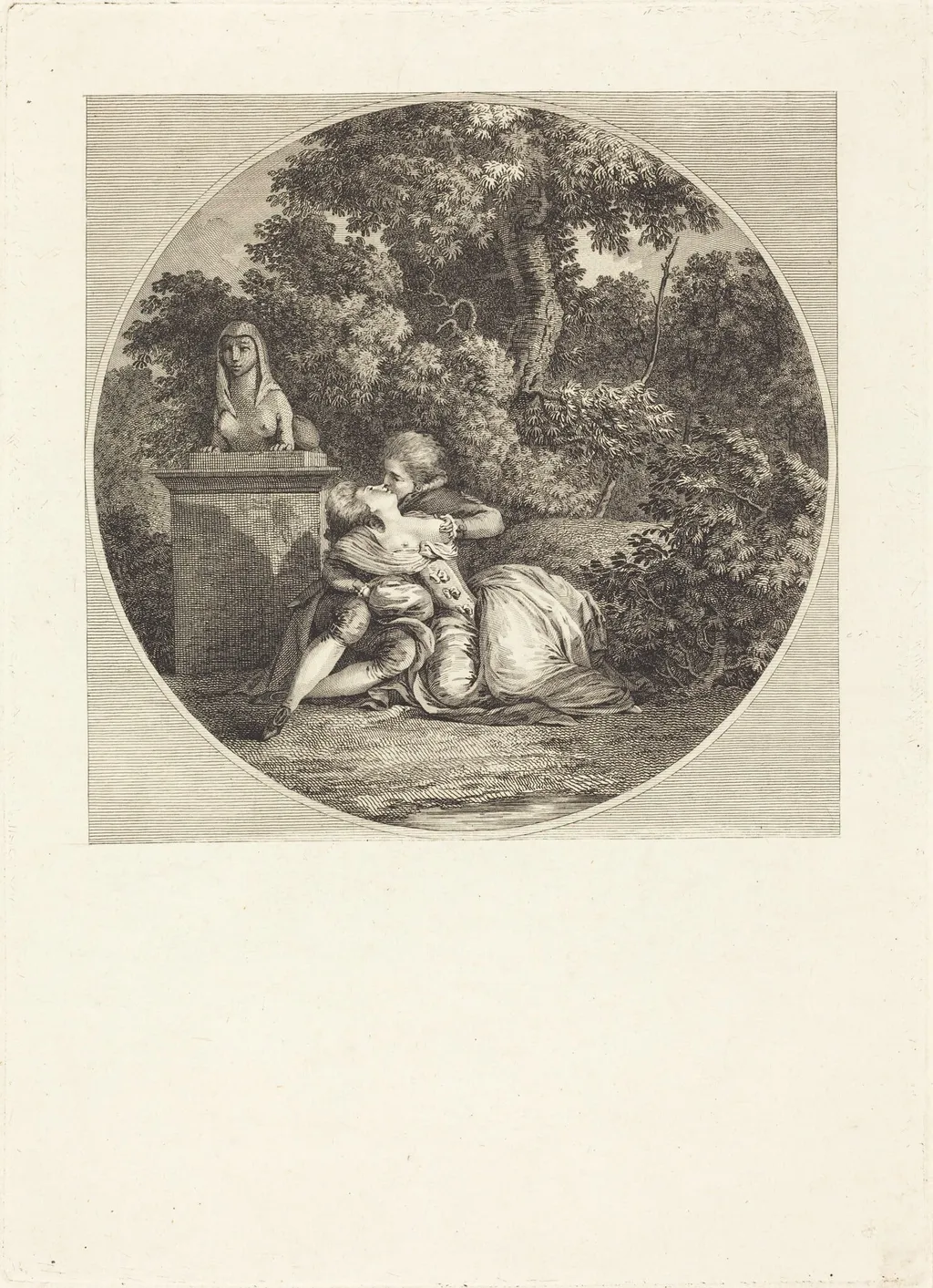
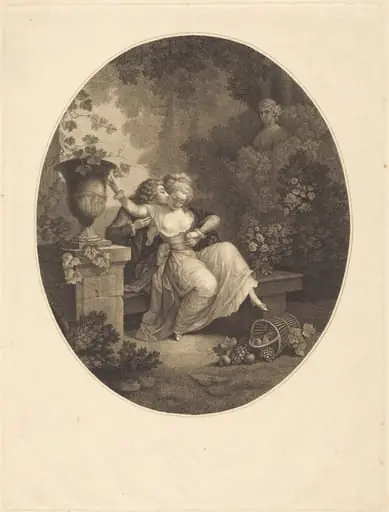
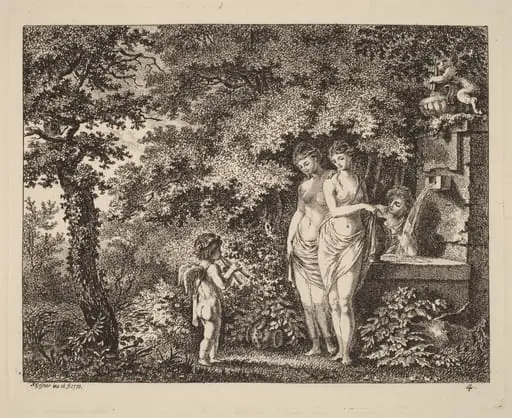
The Grove is an ink print by the Baroque artist French 18th Century. It dates from 1750 and is held in the collection of the National Gallery of Art.
About this work
This painting is reminiscent of the works of French 18th Century artists, who often depicted romantic and idyllic scenes in their art.
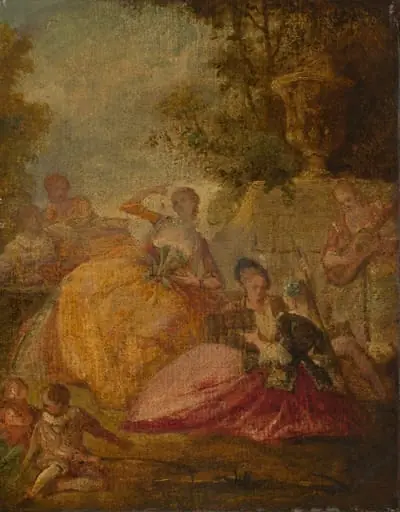
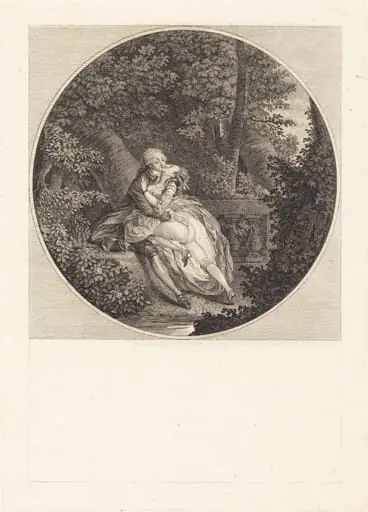
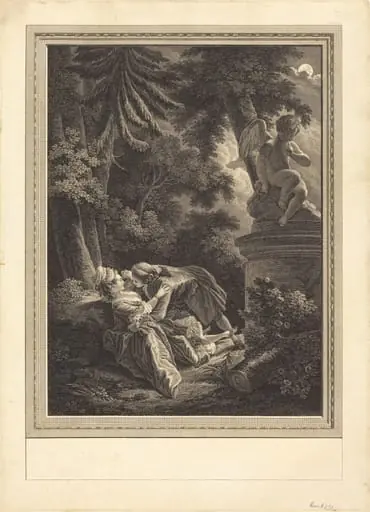
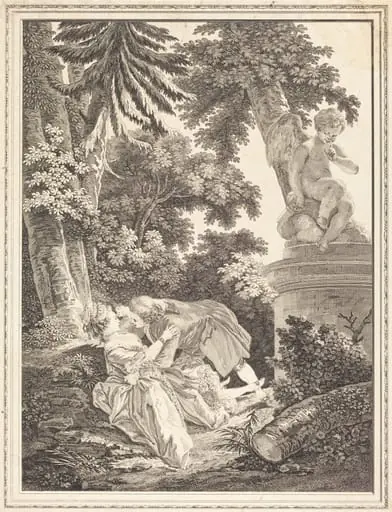
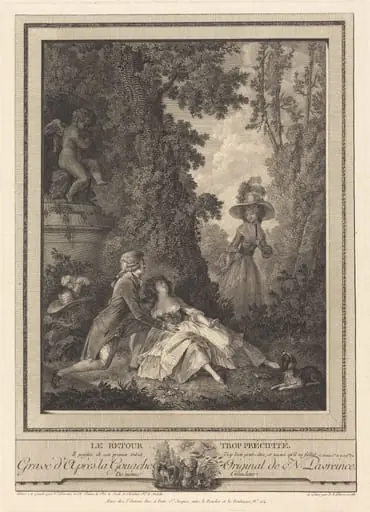
The painting depicts a romantic scene in a lush grove, with a couple embracing in the foreground. The man is seated on the ground, while the woman sits on his lap, her head tilted back as he kisses her neck. A statue of a woman stands on a pedestal to the left, surrounded by trees and foliage.
The scene is rendered in muted tones, with the couple's clothing and the statue's drapery depicted in intricate detail. The background is filled with dense foliage, creating a sense of seclusion and intimacy.
This painting is reminiscent of the works of French 18th Century artists, who often depicted romantic and idyllic scenes in their art.
Overview
The work titled *The Grove* is a print created through a combination of etching and engraving techniques. Executed on paper, the image presents a secluded woodland setting where a couple shares an intimate moment, while a sculpted female figure rests on a pedestal nearby. The composition is dominated by muted hues and densely packed foliage, establishing a tranquil, enclosed atmosphere.
Subject & Meaning
At the foreground, a seated man holds a woman on his lap; she leans back as he kisses her neck, suggesting a private, romantic encounter. To the left, a statue of a woman, draped and poised on a pedestal, introduces a classical reference that may allude to idealized beauty or the timeless nature of love within a natural sanctuary.
Technique & Style
The image is rendered through the precise lines of engraving combined with the tonal richness of etching, allowing for fine detail in the clothing, drapery, and foliage. The artist employs a restrained palette of earth tones, emphasizing texture over color. The intricate cross-hatching conveys depth in the dense vegetation and the smooth surfaces of the figures.
Context
The composition echoes the aesthetic of 18th‑century French art, where pastoral scenes and sentimental encounters were common. By employing a classical statue within a romantic tableau, the print aligns itself with the period’s fascination with antiquity and the idealization of love set against idyllic nature.
Legacy
While the print itself remains a modest example of the era’s printmaking, it illustrates the continued appeal of romanticized nature and classical motifs in visual culture. Its technical execution demonstrates the skillful integration of etching and engraving, offering insight into the methods artists used to convey intimate narratives within a single, portable image.
Artist & collection

Artist
This artist worked in late 18th-century France, making portrait paintings and etched prints.