Artwork
The Flagellation; (reverse) The Madonna of Mercy
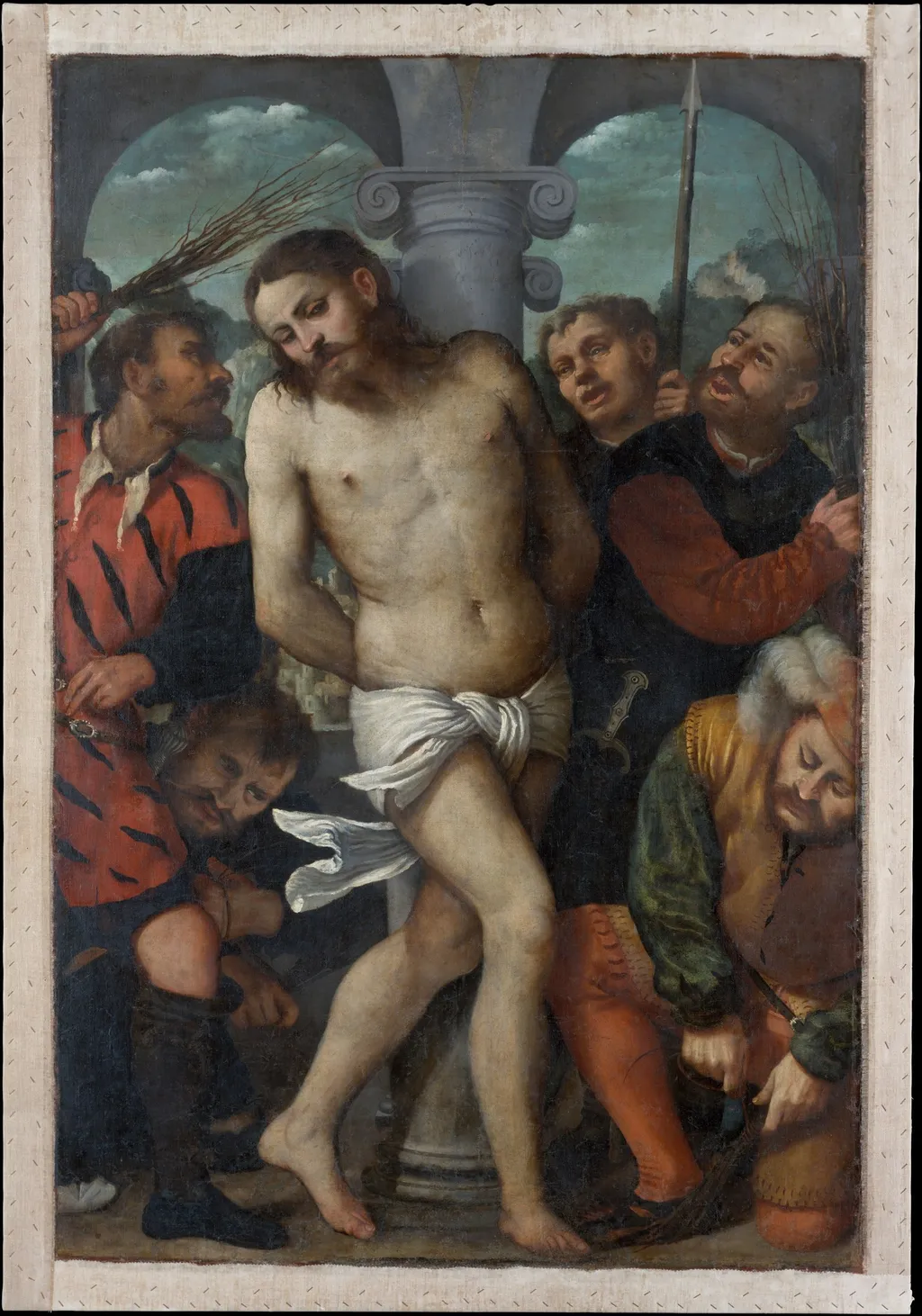
The Flagellation; (reverse) The Madonna of Mercy is an unspecified painting by the Mannerist artist Girolamo Romanino. It dates from 1540 and is held in the collection of the Metropolitan Museum of Art.
About this work
Overview
The work, which reflects the artist's engagement with Mannerist aesthetics, is presently housed in the collection of The Metropolitan Museum of Art.
Girolamo Romanino, an Italian painter active in the Veneto and Lombardy regions, completed *The Flagellation* around 1540. This painting is notable for being double-sided, featuring a religious narrative on its obverse and *The Madonna of Mercy* on its reverse. The work, which reflects the artist's engagement with Mannerist aesthetics, is presently housed in the collection of The Metropolitan Museum of Art.
Subject & Meaning
The primary scene depicts a shirtless figure, bound to a broken column, surrounded by five individuals whose reactions vary from concern to hostility. A man in red leans in, holding a bundle of sticks, while an older woman on the right reaches out, her face turned away in distress. This intense moment of suffering is contrasted by the protective imagery of the Virgin Mary on the panel's reverse.
Technique & Style
Romanino's execution of *The Flagellation* exemplifies a Mannerist style through its dramatic tension and emotional intensity. The artist masterfully uses strong contrasts between light and shadow, a technique known as chiaroscuro, to highlight the central figure's form and create a sense of urgency. This approach showcases the diverse stylistic explorations characteristic of Romanino's long career.
Artist & collection

Artist
Girolamo Romani, known as Romanino (c. 1485 – c. 1566), was an Italian High Renaissance painter active in the Veneto and Lombardy, near Brescia. His long career brought forth several different styles.