Artwork
Virgin and Child with St. John
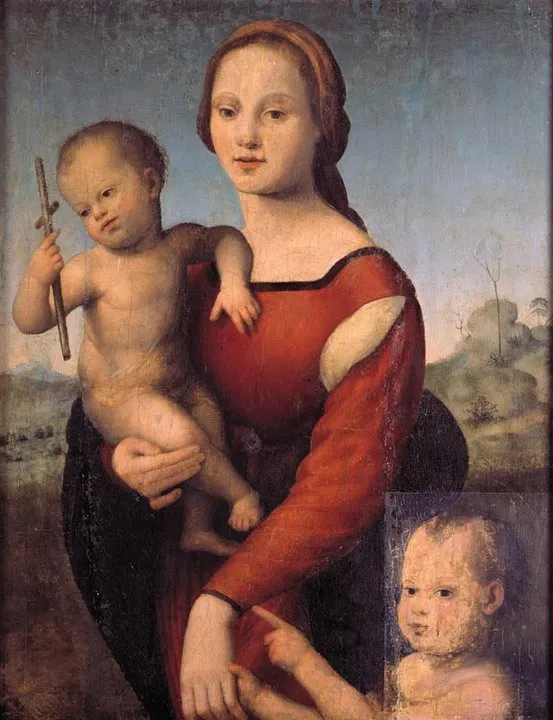
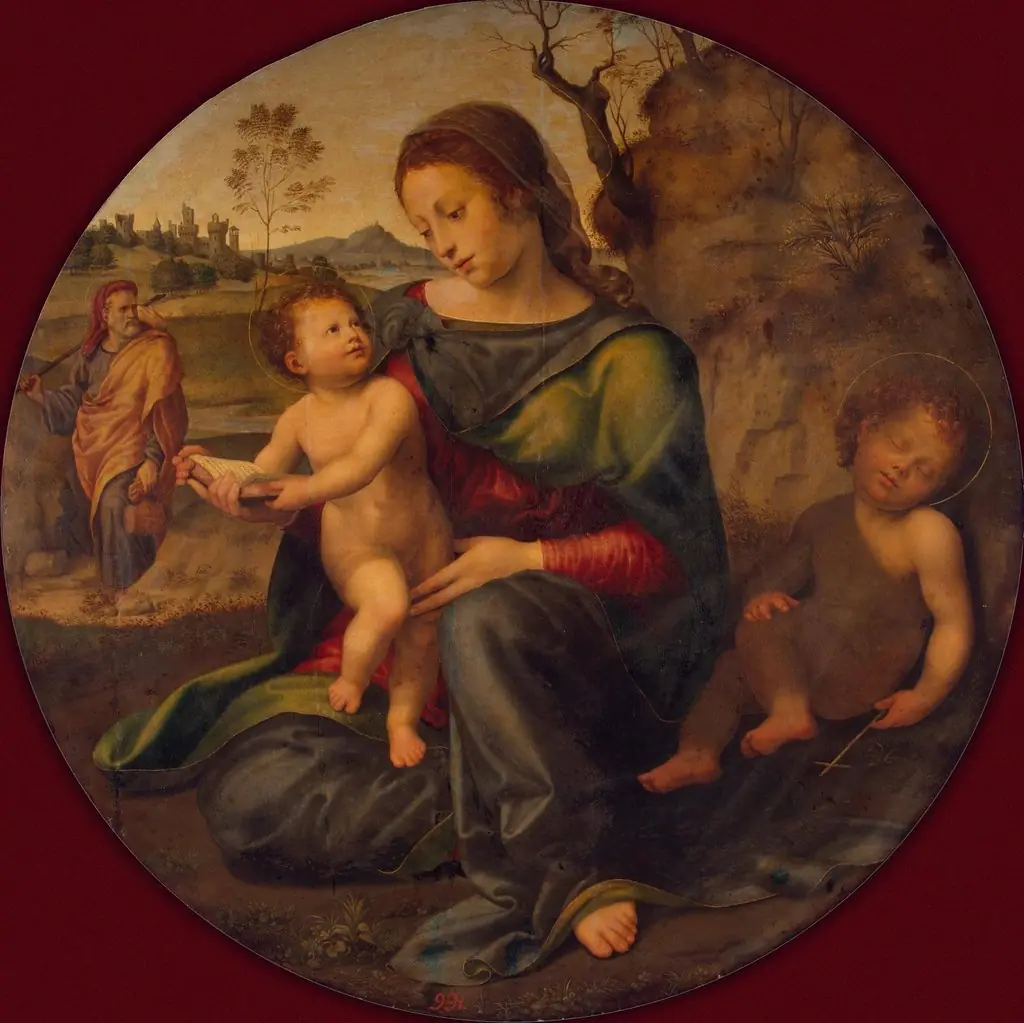
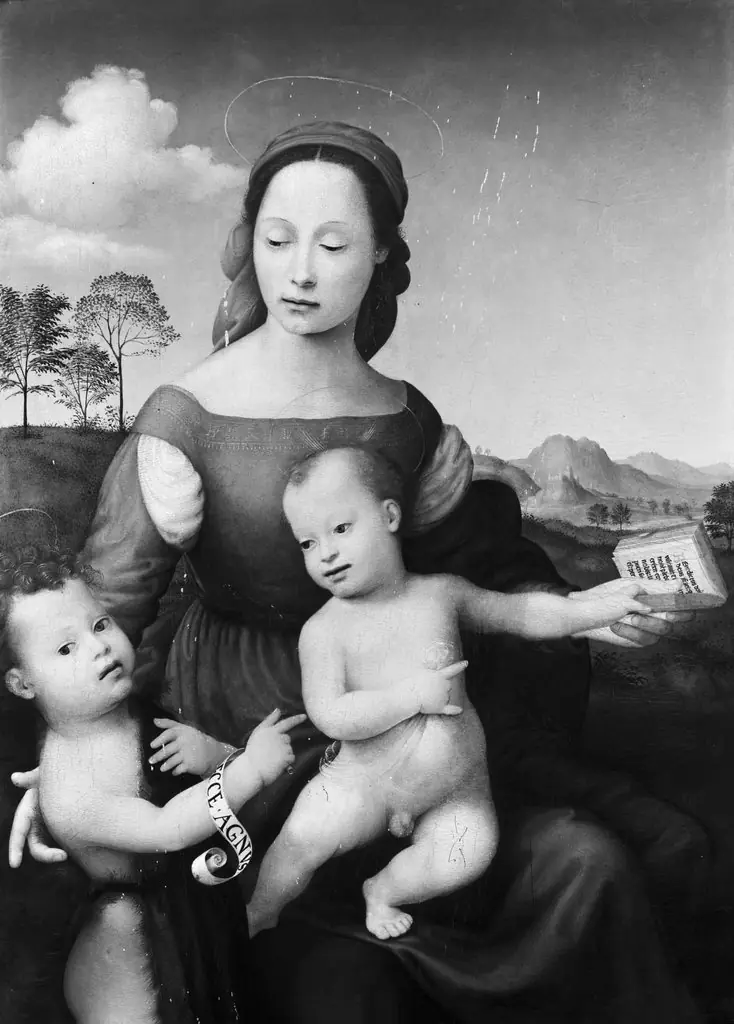
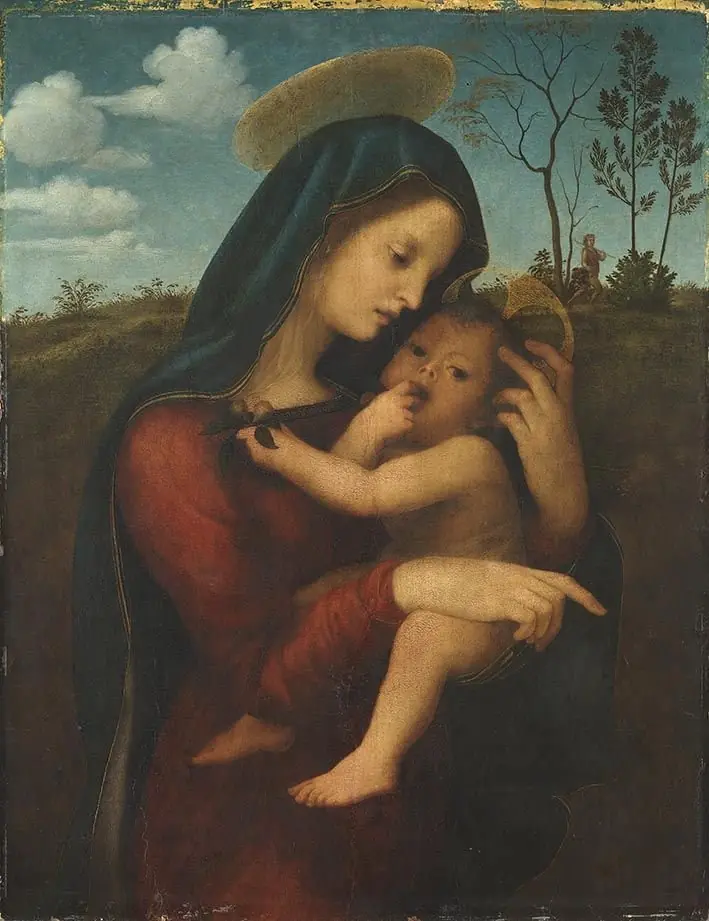
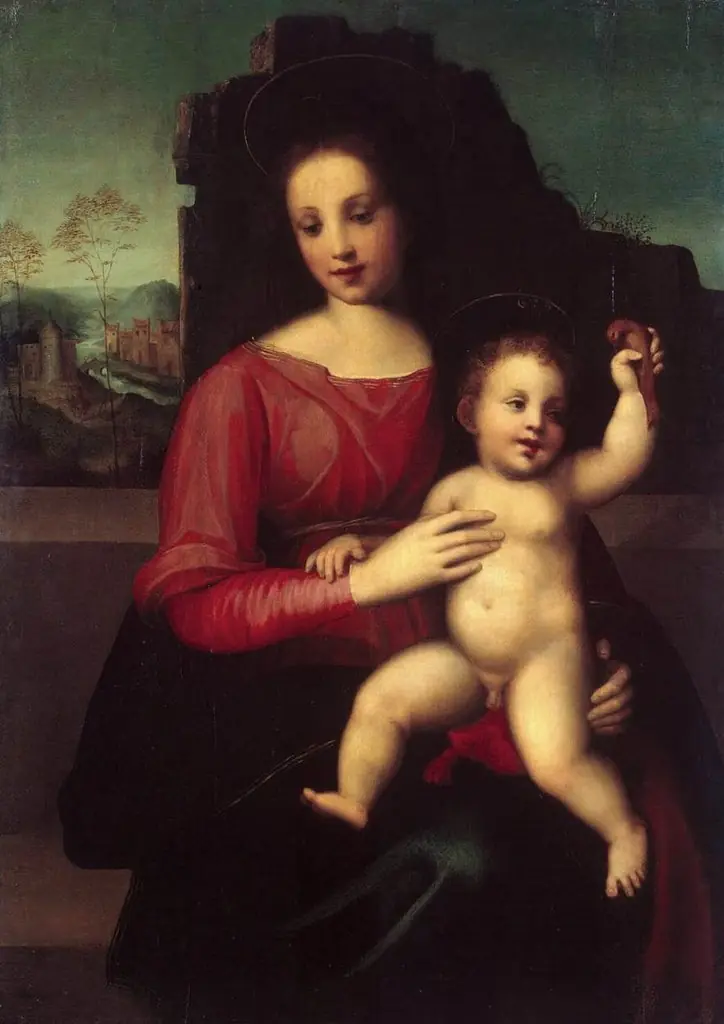
Virgin and Child with St. John is an oil painting by Giuliano Bugiardini. It is held in the collection of the National Museum of Fine Arts, Argentina.
About this work
Overview
It is now part of the collection at the National Museum of Fine Arts in Buenos Aires, having traveled far from its original context in Tuscany.
Giuliano Bugiardini, a Florentine painter of the early 16th century, executed this oil-on-panel work depicting the Virgin Mary, the Christ Child, and the infant John the Baptist. The painting reflects the devotional traditions of Renaissance Florence, where intimate religious scenes were common in private worship. It is now part of the collection at the National Museum of Fine Arts in Buenos Aires, having traveled far from its original context in Tuscany.
Subject & Meaning
The composition centers on the Virgin holding the Christ Child, who grasps a small wooden cross—a symbol of his future sacrifice. The naked infant John the Baptist stands beside them, his presence signaling his role as the forerunner of Christ. The nudity of both children underscores their innocence and spiritual purity, while the Virgin’s gaze and posture convey quiet contemplation, reinforcing the sacred nature of the moment.
Technique & Style
Bugiardini employed oil paint to achieve subtle gradations of light and soft transitions between forms. The figures are rendered with gentle modeling, their volumes defined without harsh contours. The Virgin’s red robe stands out against a muted, atmospheric background, drawing focus to the central group. The handling of fabric and skin suggests influence from Florentine masters like Raphael, though with a quieter, more restrained sensibility.
History & Provenance
The painting likely originated in a private Florentine chapel or domestic setting during the 1510s or 1520s. Its journey to Buenos Aires remains undocumented, but it entered the museum’s collection in the 20th century, possibly through European dealers or collectors. No early inventories or commissions have been definitively linked to the work, leaving its early ownership obscure.
Context
In early 16th-century Florence, devotional images of the Holy Family were widely produced for both public and private use. Bugiardini, trained in the workshop of Michelangelo, worked within a tradition that favored emotional restraint and harmonious composition. This painting aligns with contemporaneous works by artists like Fra Bartolomeo, emphasizing spiritual calm over dramatic intensity.
Legacy
Though not among Bugiardini’s most widely studied works, this painting exemplifies the quiet devotional style of his mature period. It contributes to the understanding of how Florentine artists adapted High Renaissance ideals for intimate religious contexts. Its presence in South America highlights the global dispersion of Renaissance art through colonial and modern collecting networks.
Artist & collection
Artist
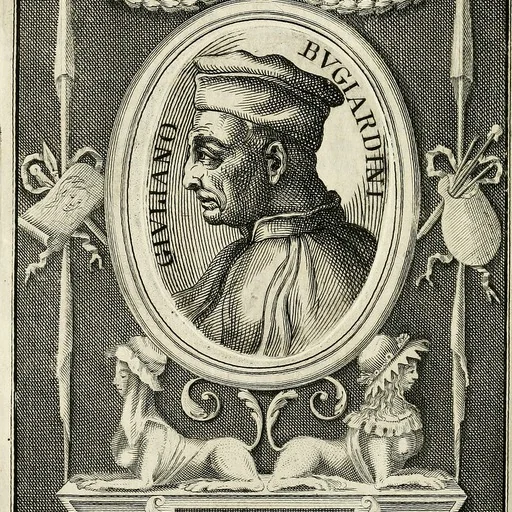
Giuliano di Piero di Simone Bugiardini (29 January 1475 – 17 February 1555) was an Italian Renaissance painter.

Museum
National Museum of Fine Arts, Argentina
Continue through works from the same source collection.