Artwork
Dum Romae consulitur morbus imperat
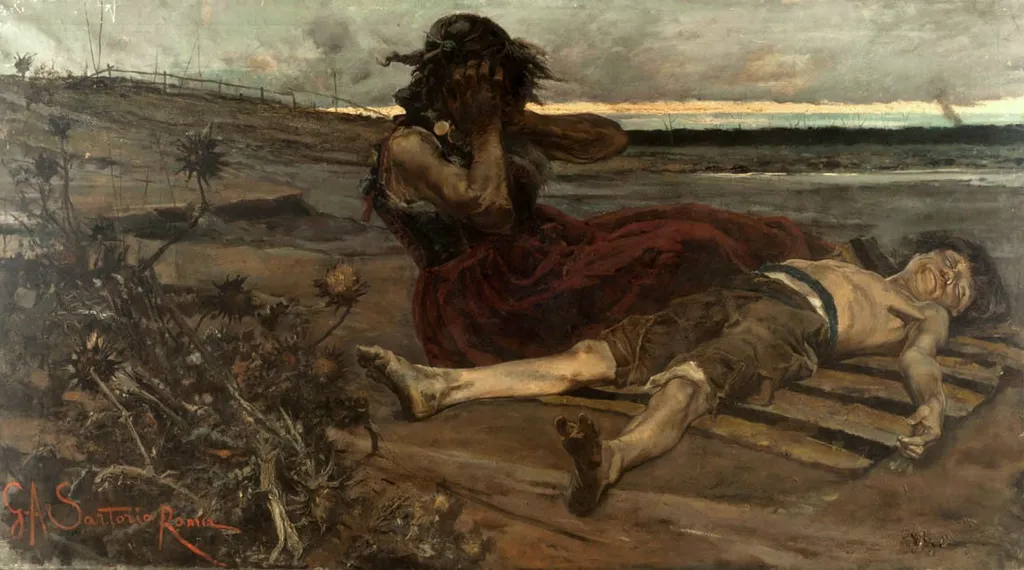
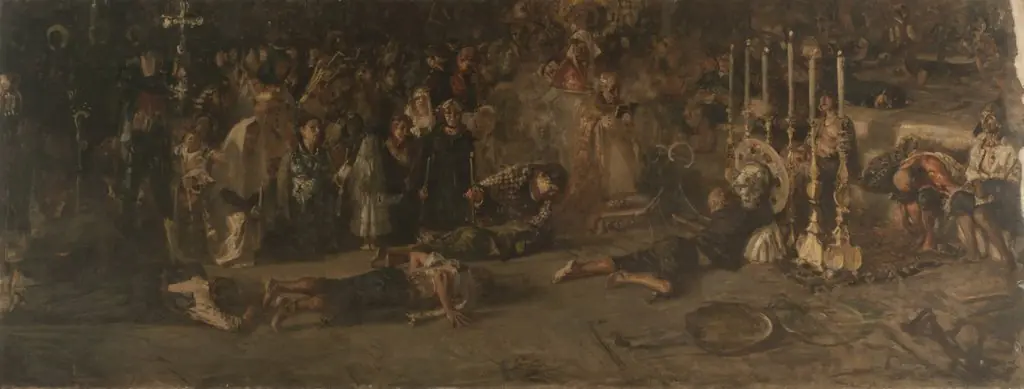
Dum Romae consulitur morbus imperat is an oil painting by the Post-Impressionist artist Giulio Aristide Sartorio. It dates from 1892 and is held in the collection of the National Museum of Fine Arts, Argentina.
About this work
Overview
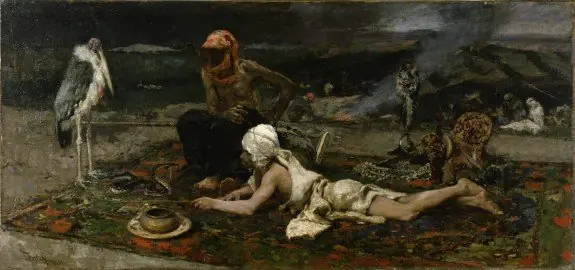
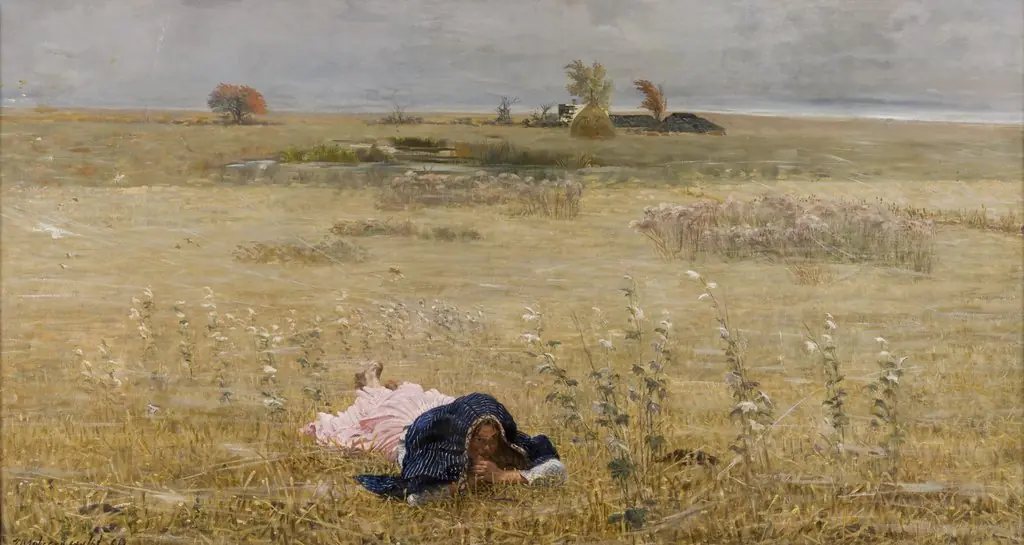
Giulio Aristide Sartorio’s 1892 oil canvas titled *Dum Romae consulitur morbus imperat* resides in the National Museum of Fine Arts in Buenos Aires. The composition presents a bleak tableau in which a woman in a vivid red dress sits beside a prone, partially clothed man, set against a stark, water‑filled landscape under a clouded sky.
Subject & Meaning
The work captures a moment of grief and abandonment: the woman’s wind‑tossed hair and the man’s turned head suggest a recent tragedy. Scattered dead vegetation and twisted twigs reinforce a sense of desolation, while the contrasting red garment draws attention to the lingering presence of human emotion amid the surrounding emptiness.
Technique & Style
Executed in oil, Sartorio employs a muted palette for the background, allowing the bright red dress to dominate the visual field. Loose, expressive brushwork defines the sky and water, whereas the figures are rendered with finer detail, highlighting the tension between atmospheric ambience and narrative focus.
History & Provenance
Painted in the late nineteenth century, the canvas entered the collection of Argentina’s National Museum of Fine Arts, where it has been displayed as part of the museum’s European holdings. Its acquisition reflects the museum’s early efforts to assemble representative works of Italian Symbolist and Realist painters.
Context
Created during a period when Sartorio explored themes of mortality and social alienation, the painting aligns with contemporary European trends that emphasized emotional intensity over idealized historic scenes. The title, a Latin phrase meaning “while Rome is consulted, disease rules,” underscores a critique of societal neglect in the face of suffering.
Artist & collection

Museum
National Museum of Fine Arts, Argentina
Continue through works from the same source collection.