Artwork
One Hundred Horses

One Hundred Horses is an ink painting by the Qing Painting artist Giuseppe Castiglione. It dates from 1728 and is held in the collection of the National Palace Museum.
About this work
Overview
One Hundred Horses is a monumental silk and ink scroll measuring roughly 7.76 meters in width, executed in 1728 for the Yongzheng emperor of the Qing court. The work was created by the Italian Jesuit painter Giuseppe Castiglione, who served the Chinese imperial workshop under the name Lang Shining. It now belongs to the National Palace Museum in Taipei.
Subject & Meaning
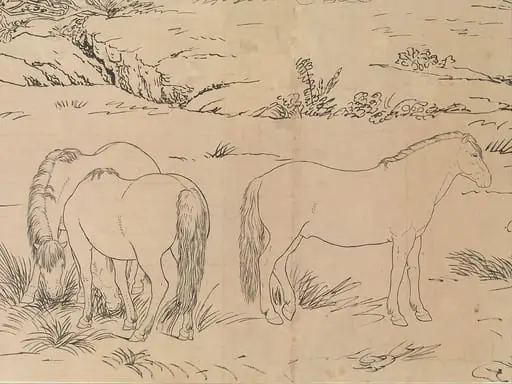
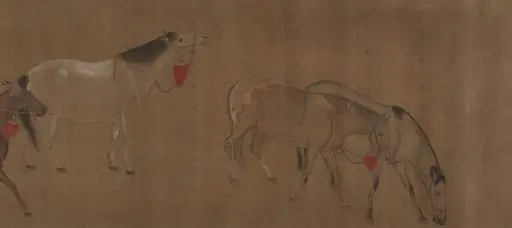
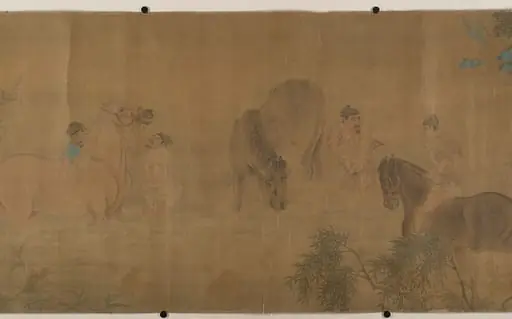
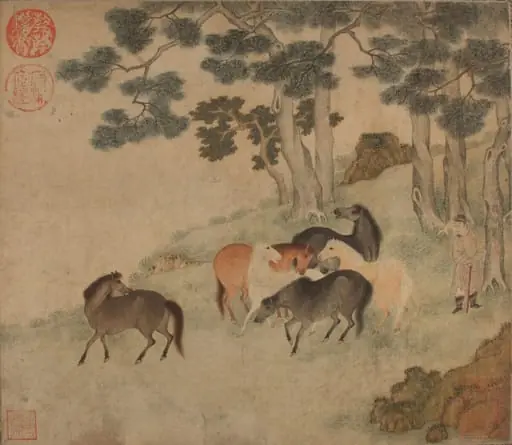
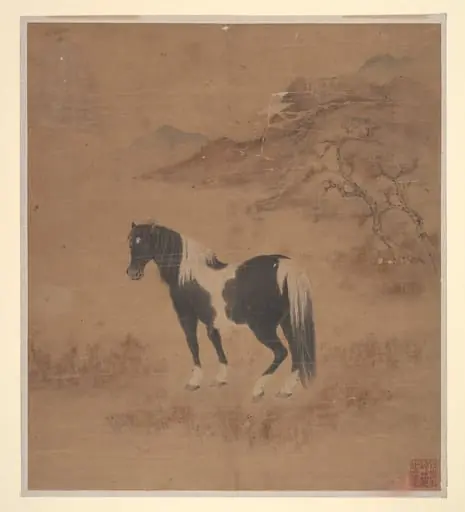
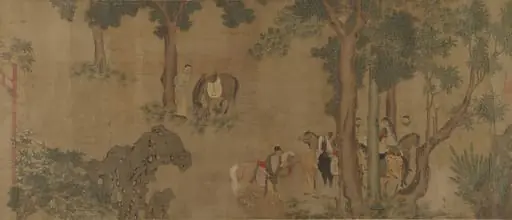
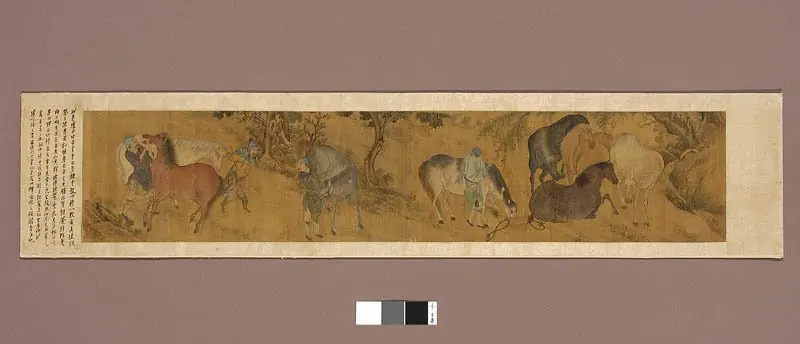
The composition presents an expansive, level landscape populated by a multitude of horses grazing or moving in small groups. A meandering river, scattered trees, and distant hills frame the scene, while riders on horseback and a modest tent near the water suggest a pastoral setting that celebrates the vitality of the imperial stables and the harmony between man, animal, and nature.
Technique & Style
Castiglione combines Chinese brushwork with subtle Western modeling, employing a restrained palette of muted greens, browns, and pale blues. Variations in horse size create atmospheric depth without harsh outlines, while the soft rendering of foliage and sky conveys a tranquil ambience. The integration of linear perspective and delicate shading reflects the artist’s cross‑cultural synthesis.
History & Provenance
The scroll was completed in 1728 for the Yongzheng emperor and remained in the imperial collection until the mid‑20th century. It entered the National Palace Museum’s holdings in Taipei, where it is displayed as part of the museum’s Qing dynasty assemblage. A preparatory sketch dated to 1723–1725 is held by the Metropolitan Museum of Art in New York.
Artist & collection