Artwork
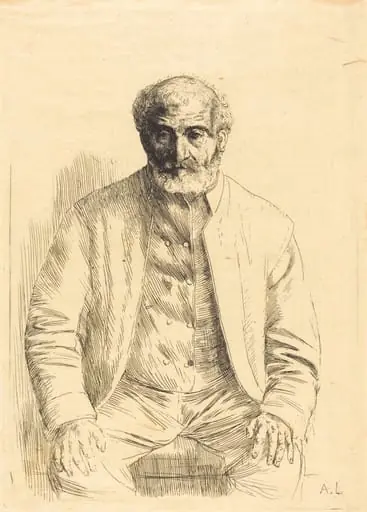
Orphan Man, Standing
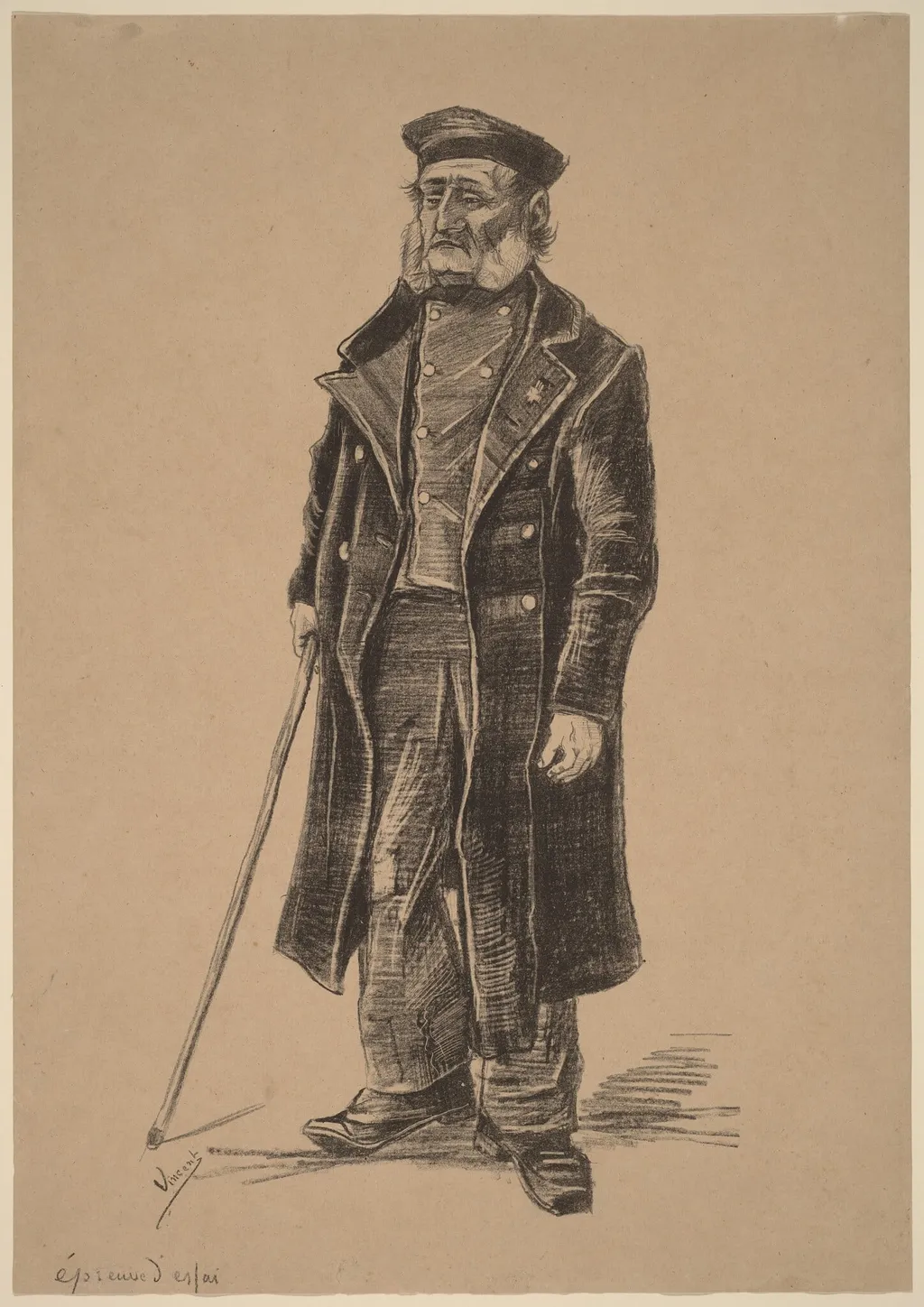
Orphan Man, Standing is a crayon print by the Impressionist artist Vincent van Gogh. It dates from 1882 and is held in the collection of the National Gallery of Art.
About this work
Overview
Made during his time in the Netherlands, the piece reflects his focus on drawing and observational study before he turned to oil painting.
Created in 1882, *Orphan Man, Standing* is a crayon lithograph on tan wove paper, among Vincent van Gogh’s earliest printed works. Made during his time in the Netherlands, the piece reflects his focus on drawing and observational study before he turned to oil painting. The technique combines lithographic printing with manual scraping to alter tonal surfaces, resulting in a textured, intimate image that prioritizes emotional presence over polish.
Subject & Meaning
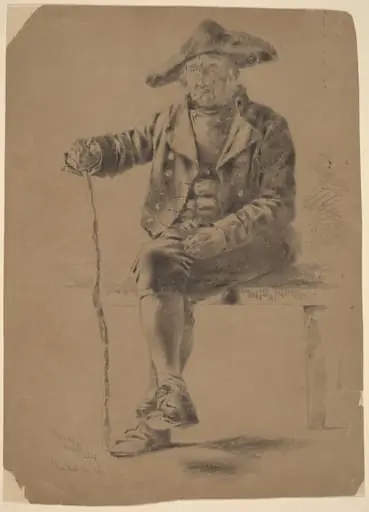
The figure is an elderly man, dressed in a dark, worn coat and cap, standing alone with a cane and one hand resting on his hip. His weathered face, thick beard, and solemn gaze suggest hardship and solitude. Van Gogh did not idealize his subject; instead, he portrayed him with unembellished dignity, reflecting his interest in the lives of working-class and marginalized people during this phase of his career.
Technique & Style
Van Gogh employed crayon lithography, a method allowing direct drawing on stone, then printed with ink. He scraped the surface to lighten areas and enhance contrast, creating a rough, tactile quality. The lines are swift and uneven, capturing the texture of fabric and skin without refinement. This deliberate informality gives the figure a sense of immediacy, as if observed in passing rather than posed.
History & Provenance
The print was made during van Gogh’s stay in The Hague, where he lived modestly and studied under his cousin-in-law Anton Mauve. It was part of a series of figure studies intended to develop his draftsmanship. The work remained in private hands for decades before entering a public collection, where it now serves as a key example of his formative years as a visual artist.
Context
In 1882, van Gogh was deeply engaged with social realism, influenced by French artists like Jean-François Millet and the Dutch tradition of depicting laborers. He sought to convey human dignity through unadorned representation, often drawing from the urban poor. This work aligns with his broader goal of using art as a means of empathy, not decoration, before his later stylistic evolution.
Legacy
Though created before his signature color-driven style emerged, *Orphan Man, Standing* reveals the foundations of van Gogh’s artistic voice: emotional honesty, attention to the overlooked, and a commitment to expressive line. It remains a significant document of his transition from amateur draftsman to committed artist, influencing later perceptions of his early work as deeply human rather than merely preparatory.
Own this work as a print
Artist & collection
Artist
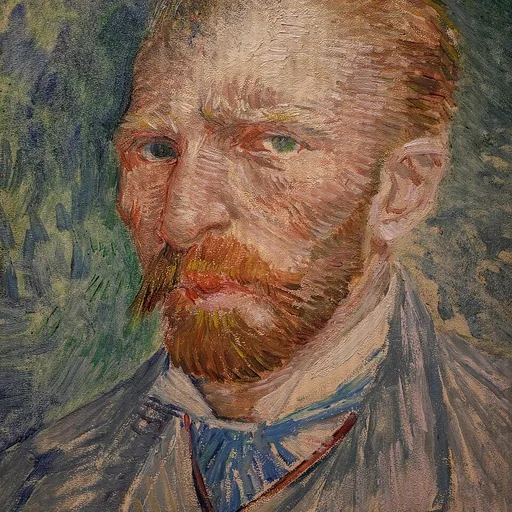
Vincent Willem van Gogh was a Dutch Post-Impressionist painter who is among the most famous and influential figures in the history of Western art.